How to Cut Laminate Sheet With Utility Knife: Step-by-Step
To cut a laminate sheet with a utility knife, first measure and mark your sheet carefully on the back side.
Secure it firmly on a stable surface with clamps and a straightedge along the cut line.
Use a sharp, comfortable utility knife to score the laminate at about a 45-degree angle, making multiple passes with moderate pressure.
Snap the sheet cleanly by supporting the score line on the edge. Finish by smoothing edges with fine sandpaper. Keep following for detailed tips and safety advice.
Key Takeaways
- Measure and mark the cut line on the laminate’s back side using a straightedge for accuracy.
- Secure the sheet with clamps and place masking tape over the cut line to prevent chipping.
- Use a sharp utility knife held at a 45-degree angle, making multiple light passes to score the laminate deeply.
- Align the scored line with a sturdy table edge, then snap the sheet sharply using steady downward pressure.
- Lightly sand the cut edges with fine-grit sandpaper to smooth out splinters and burrs.
Measure and Mark Your Laminate Sheet Accurately
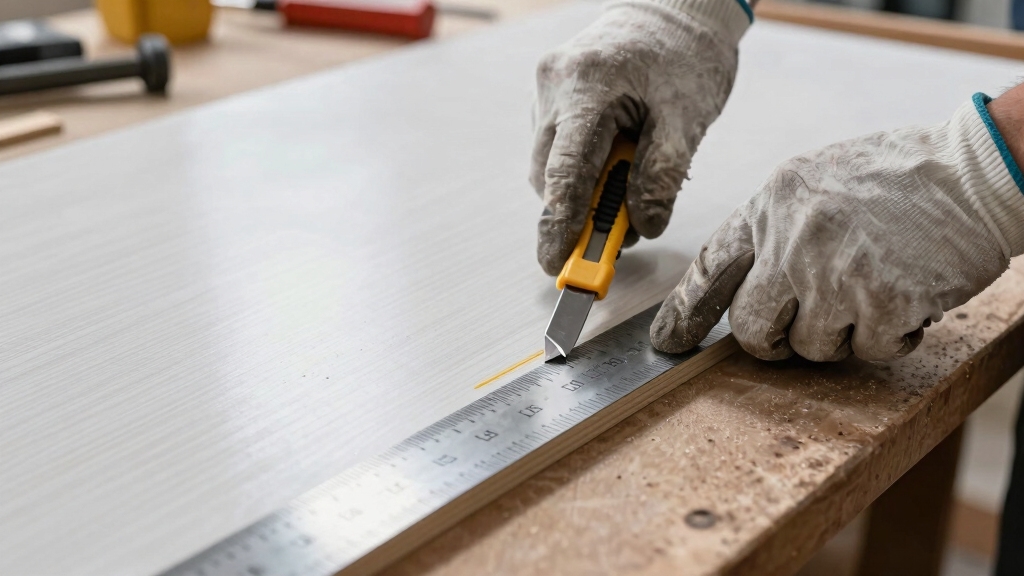
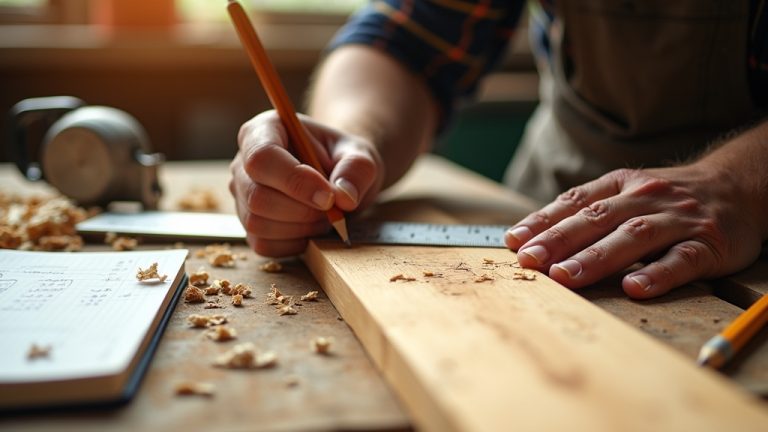
Before you start cutting, make sure you measure the surface area carefully and mark the cut line clearly on your laminate sheet.
Use a reliable tape measure and double-check dimensions to avoid costly mistakes.
Mark the cut line with a fine pencil or a fine-tip marker to guarantee visibility without damaging the surface.
Place the sheet on a flat, stable surface to prevent shifting during marking.
Use a straightedge or metal ruler to draw a precise, straight line.
Avoid freehand marks, as they can lead to uneven cuts.
Make your measurements on the back side of the laminate whenever possible to keep the finished surface clean and free from markings.
Accurate measuring and clear marking set the foundation for a clean, professional cut.
Ensure that the surface is well-supported and securely clamped to prevent movement during cutting, as proper material support is essential for accuracy and safety.
Prepare Your Workspace and Safety Gear for Laminate Cutting
When you set up your workspace, make sure the laminate sheet lies flat on a sturdy worktable made of plywood or metal to provide solid support during cutting.
Secure the sheet by clamping a straight metal ruler or a wood 2×4 along the cut line to guide your knife and prevent slipping.
Apply masking tape over the cut line to protect the surface from chipping or scratches.
Don’t forget safety gear; wear protective gloves to shield your hands from sharp blades and safety glasses to protect your eyes from debris.
Keep your work area clean and well-lit to maintain precision and avoid accidents.
Preparing your workspace and safety gear correctly sets the foundation for a smooth, accurate laminate cutting process.
For best results, ensure you use a fine-toothed blade or appropriate cutting tool designed to minimize chipping and maintain clean edges.
Pick the Best Utility Knife and Blade for the Job
When you’re picking out a utility knife, go for one that has a sharp blade and feels comfortable in your hand. A good grip is crucial because it helps you maintain control while cutting.
And don’t forget—if the blade gets dull, swap it out right away! A dull blade can really mess up that laminate surface.
Also, think about the type of blade you need. Fine-tooth blades are your best bet for making those clean, precise cuts on laminate sheets. They really do make a difference in achieving a smooth finish!
For best results, consider adhesives with water resistance if you plan to bond or repair laminate after cutting.
Blade Sharpness Importance
Maintain a sharp utility knife blade to guarantee clean, precise cuts on your laminate sheets. A dull blade tears the surface, causing rough edges and uneven cuts, which compromises the finish.
You’ll want to replace blades regularly or sharpen them if possible to maintain peak cutting performance. Using the right blade type also matters; standard utility blades work well for scoring, while fine-tooth blades suit edge refinements.
Below is a quick reference for blade sharpness and types:
| Blade Condition | Cutting Quality | Recommended Use |
|---|---|---|
| New | Clean, precise | Scoring & trimming |
| Slightly dull | Minor roughness | Light scoring |
| Dull | Ragged edges | Replace blade |
| Fine-tooth | Smooth edges | Edge finishing |
| Specialty | Specific tasks | Router & saw edges |
Keep blades sharp for consistent, professional results. Regular inspections for blade dullness can help identify when it’s time to replace or sharpen your blade, ensuring optimal cutting performance.
Handle Grip Selection
A sharp blade is only part of the equation for a clean cut. You also need a utility knife with a handle that offers a firm, comfortable grip.
Look for a knife with an ergonomic design that fits your hand well. This reduces fatigue during repeated scoring passes.
A textured or rubberized surface helps prevent slipping, especially if your hands get sweaty or you’re wearing gloves. Avoid overly bulky handles that limit control or too slim ones that dig into your palm.
Balance is key; the knife should feel steady without being heavy. Since you’ll apply moderate pressure while cutting, a secure grip guarantees precision and safety.
Choosing the right handle means you can focus on guiding the blade accurately along the marked line without struggling to hold the knife steady.
For woodworking tasks, it is also important to consider ergonomic features that minimize hand fatigue and improve control during extended use.
Blade Types Overview
Selecting the right blade type is essential for a clean, efficient cut when working with laminate sheets. You want a sharp utility knife blade, preferably a snap-off or heavy-duty type, to maintain precision and reduce surface damage.
Dull blades cause chipping and require excessive pressure, risking injury. For finer cuts, consider a fine-tooth blade if you switch to a circular saw, but for utility knives, standard carbon steel blades work best.
Make sure your blade is securely locked in the handle to avoid slips. Keep extra blades on hand so you can replace dull ones immediately. Choosing the proper blade and keeping it sharp guarantees smooth scoring lines and clean breaks, helping you maintain control and finish your project efficiently. Additionally, scoring both sides of the laminate sheet with a shallow cut before full cutting can significantly reduce chipping and improve edge quality, a technique known as scoring the laminate.
How to Score Laminate With the Right Pressure
When you’re scoring laminate, it’s all about finding that sweet spot with your pressure. You’ll want to apply moderate pressure while holding the blade at a slight angle. This helps you score the laminate cleanly without any fuss.
Instead of trying to cut through in one go, make multiple passes over the same line. Gradually deepen your cut—this way, you won’t risk breaking the laminate or making a messy line. Keeping an eye on the blade angle and pressure is key; it ensures you get a straight, smooth score. This makes snapping the sheet a whole lot easier later on!
For the best results, always ensure your workspace is clear of obstructions to prioritize safety.
Applying Moderate Pressure
Apply moderate pressure when scoring the laminate to guarantee a clean, controlled cut without damaging the surface. Press too lightly, and the blade won’t penetrate enough; press too hard, and you risk gouging or chipping the laminate.
Hold the utility knife firmly but don’t force it. Maintain a slight angle as you drag the blade steadily along the marked line, ensuring consistent contact. This balance helps the blade score deeply without slipping or tearing.
Focus on smooth, deliberate strokes rather than speed. Moderate pressure also prevents blade dulling and keeps the cut line straight.
Remember, the goal is to weaken the laminate along the score, setting you up for a clean snap later.
Stay steady, and you’ll get precise results every time. Using the correct blade type and maintaining steady pressure are essential for achieving professional-quality cuts and avoiding material damage.
Multiple Scoring Passes
Once you’ve mastered the right pressure, scoring the laminate multiple times will deepen the cut gradually without risking damage.
You’ll want to make several light passes along the cut line, increasing pressure only slightly with each pass. This guarantees a clean, controlled score, reducing the chance of chipping or tearing the laminate surface.
| Pass Number | Pressure Level |
|---|---|
| 1 – 3 | Light |
| 4 – 6 | Moderate |
| 7 – 9 | Firm |
| 10+ | Slightly Firm |
For best results, using a blade with a high tooth count is recommended to achieve smooth, precise cuts on laminate surfaces, ensuring minimal chipping and a professional finish through multiple scoring passes with the high tooth count blade.
Blade Angle Control
Maintain a consistent blade angle of about 45 degrees as you score the laminate to guarantee a clean, controlled cut. This angle lets you apply enough pressure to score deeply without gouging the surface.
Hold the utility knife firmly, but don’t press too hard. Moderate pressure helps prevent slipping and keeps the blade from tearing the laminate.
Keep your wrist steady and guide the blade along the marked line, making multiple passes to deepen the score gradually.
If the angle shifts too shallow or steep, you risk uneven scoring or blade damage. By controlling the blade angle and pressure, you reduce chipping and get a smooth, precise cut line, making the snapping process easier and cleaner.
Using a blade with precision ground teeth can further enhance the accuracy of your cuts and minimize material damage.
Snap the Laminate Cleanly Along the Score Line
Snap the laminate sheet firmly along the scored line to separate it cleanly.
After scoring the line deeply with multiple passes, position the sheet on a sturdy surface with the scored line aligned to the edge.
Place a straight piece of wood or a ruler directly under the score to support the sheet.
Stand on the support board beside the score line to stabilize the laminate.
Then, apply steady downward pressure on the overhanging portion beyond the score line to snap it sharply.
This method leverages the weakened score line to break the sheet without cracking or splintering.
Avoid forcing the snap; if it resists, score the line a few more times.
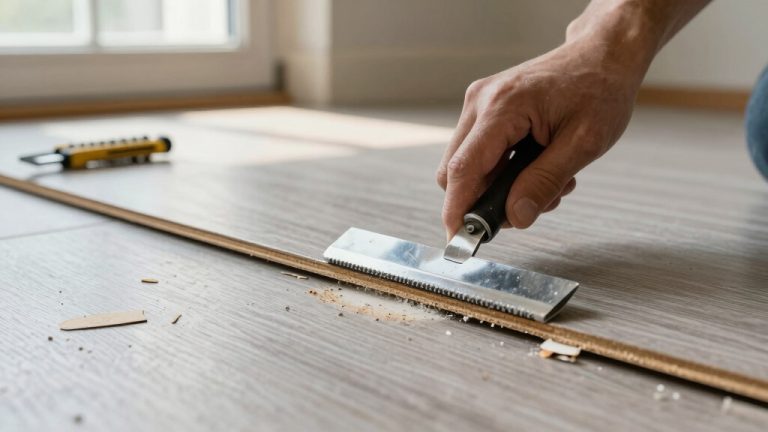
Smooth and Clean Laminate Edges After Cutting
After breaking the laminate cleanly along the scored line, you’ll often find rough or uneven edges that need attention. To get smooth, clean edges, you should:
- Lightly sand the edges with fine-grit sandpaper to remove splinters and burrs.
- Use a file or sanding block to even out any uneven spots or chips.
- Wipe the edges with a cloth dampened with lacquer thinner or the recommended solvent to clean residue.
- Avoid touching the fresh cut edges with your fingers to prevent contamination or damage.
These steps guarantee your laminate edges look professional and fit perfectly when installed. Taking the time to clean and smooth the cut edges improves both the appearance and durability of your project.
Avoid Common Laminate Cutting Mistakes
When cutting laminate sheets, you’ll want to avoid common mistakes that can ruin both your material and your project’s finish.
First, never use a dull blade; it causes jagged cuts and surface damage. Always secure the sheet firmly with clamps and use a straight edge to guide your knife.
Avoid cutting with the laminate face side up unless you have the right tools, as this can lead to chipping. Don’t rush the scoring process; make multiple passes with moderate pressure instead of forcing a single deep cut.
Also, avoid snapping the sheet without proper support beneath the score line; this can cause uneven breaks.
Finally, don’t neglect safety gear. Wear gloves and glasses to protect yourself from sharp blades and flying debris.
Frequently Asked Questions
Can I Cut Laminate Sheets Without Clamping Them Down?
You really shouldn’t cut laminate sheets without clamping them down.
Clamping keeps the sheet stable and prevents slipping, which guarantees a straight, clean cut and reduces the risk of injury.
Without clamps, the sheet can move, leading to uneven cuts or damage.
Use a straight metal rule or wood piece as a guide and clamp it securely to maintain control and precision while scoring and snapping the laminate.
How Do I Prevent the Utility Knife Blade From Dulling Quickly?
To prevent your utility knife blade from dulling quickly, always use a sharp blade and replace it as soon as you notice resistance or rough cuts.
Apply moderate pressure instead of forcing the blade through the laminate. Score the sheet multiple times instead of trying to cut it in one pass.
Also, use a straight metal rule to guide your cut, reducing blade wear caused by slipping or uneven pressure.
What Is the Best Way to Store Leftover Laminate Sheets?
You wouldn’t want to toss leftover laminate sheets in a messy pile, but stacking them flat on a clean, dry surface works best.
Keep them away from moisture and direct sunlight to prevent warping or discoloration.
If space is tight, store them upright, leaning gently against a wall with a protective barrier underneath.
Label each sheet clearly so you can grab what you need quickly without sifting through a jumble.
Can I Use a Utility Knife on Textured Laminate Surfaces?
Yes, you can use a utility knife on textured laminate surfaces, but you’ll need a sharp blade and patience.
Score the surface repeatedly along a straight guide, applying moderate pressure to avoid tearing.
Masking tape over the cut line helps prevent chipping. Since texture adds resistance, expect to make several passes before snapping the sheet cleanly.
Always wear protective gloves and glasses to stay safe during cutting.
How Do Temperature Changes Affect Laminate Cutting Accuracy?
Temperature changes can cause laminate sheets to expand or contract, affecting your cutting accuracy.
When it’s warmer, the sheet might expand slightly, making your measurements and cuts a bit off.
Cooler temperatures can shrink it, causing gaps or uneven edges after installation.
To stay precise, cut laminate in a temperature-controlled environment or let the sheet acclimate to room temperature before measuring and scoring.
This helps you get clean, accurate cuts every time.
Cut Laminate Cleanly With a Utility Knife
Cutting laminate with a utility knife is as straightforward as slicing through butter when you follow the right steps.
Measure and mark carefully, use a sharp blade, and apply steady pressure to score cleanly.
Then, snap the sheet confidently along the line and finish by smoothing the edges.
Avoid rushing or using dull tools. These simple habits will guarantee your cuts are precise, safe, and professional every time.