Cherry vs Mahogany: Which Wood Should You Choose?
When choosing between cherry and mahogany, consider cherry’s rapid darkening with fine, straight grain and superior hardness (950–995 lbf). This makes it ideal for indoor furniture and precision work.
Mahogany offers richer, stable reddish tones with greater density (~40 lbs/ft³) and flexibility, suited for high-traffic or outdoor uses. Cherry provides better moisture resistance due to natural oils, while mahogany stains evenly and dries faster.
Understanding these nuances helps you select the perfect wood for durability and aesthetics, with more details available below.
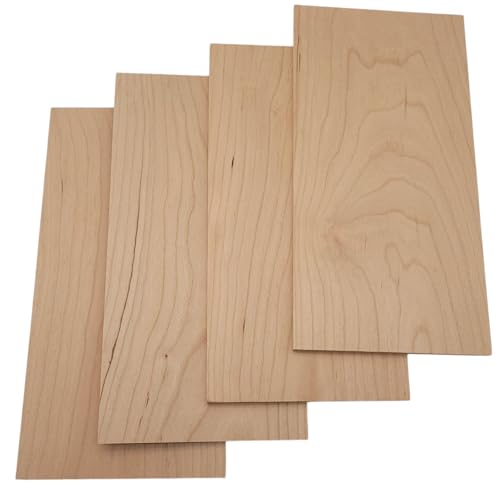
- Dimensions: Premium hardwood board measuring 1/4 inch thick, 6 inches wide, and 12 inches long…
- Versatility: It is softer than Maple or Oak. This makes it easier to work with but susceptibility to…
- Material: High-quality solid hardwood that’s completely unfinished, allowing for customized staining…

- Kiln Dried
- African Mahogany
- Surfaced hit or miss @ 1-15/16″
Key Takeaways
- Cherry wood darkens quickly with sun exposure, displaying fine straight grain, while mahogany darkens slightly with a coarser, sometimes interlocked grain.
- Cherry is harder (Janka 950–995 lbf) and denser with more natural oils, ideal for indoor furniture; mahogany is denser and more flexible, suited for outdoor and marine use.
- Cherry is easier to work with due to its fine grain and smooth texture; mahogany requires sharper tools and careful cutting to avoid splintering.
- Cherry is primarily sourced domestically in the Eastern U.S., offering stable supply and lower ecological impact; mahogany is tropical, imported, and faces stricter sustainability regulations.
- Cherry is more budget-friendly ($5–$10/board foot), while mahogany commands higher prices (~$15) due to prestige, rich coloration, and limited sustainable sourcing.
Cherry vs Mahogany: Quick Comparison for Your Project
| Feature | Cherry | Mahogany |
|---|---|---|
| Janka Hardness | 950–995 lbf | 800–900 lbf |
| Density | About 36 lbs/ft³ | About 40 lbs/ft³ |
| Color | Light pink to reddish-brown; darkens quickly | Deep reddish-brown to dark red; darkens gradually |
| Grain | Fine, straight, smooth | Coarser, straight to interlocked |
| Impact Resistance | Excellent | Good |
| Flexibility | Good | Higher |
| Moisture Resistance | Excellent due to natural oils | Excellent |
| Decay Resistance | Very Good | Very Good |
| Workability | Easier to cut and shape | Requires sharper tools; more splintering risk |
| Staining | Can blotch without sealer | Stains evenly |
| Drying Rate | Slower | Faster |
| Availability | Widely available in Eastern U.S. | Imported from tropical regions |
| Sustainability | Generally easier to source domestically | More regulated; sustainable sourcing is important |
| Price | About $5–$10 per board foot | Around $15 per board foot |
| Best Uses | Furniture, cabinetry, musical instruments, precision woodworking | Flooring, boatbuilding, outdoor and high-traffic projects |
| Main Advantage | Fine grain, hardness, easy workability, and warm color | Density, flexibility, durability, and rich reddish appearance |
| Main Drawback | Slower drying and potential staining blotchiness | Higher cost and greater splintering risk |
Color and Grain Differences Between Cherry and Mahogany

Although both cherry and mahogany are prized for their rich hues, they differ markedly in color and grain characteristics.
Cherry starts as light pink to reddish-brown and darkens substantially in sunlight within days due to its photo-reactivity. Its fine, straight, smooth grain contains distinctive pitch pockets, creating short black streaks and purplish-brown tints with a delicate pattern.
Cherry wood begins light and quickly deepens in sunlight, showcasing fine grain with unique pitch pockets and subtle streaks.
In contrast, mahogany begins deep reddish-brown to dark red and darkens only slightly over long periods. It features coarser grain that ranges from straight to interlocked, with uniform color, leaning toward orange tints accented by brownish streaks.
This precise contrast in initial coloration, darkening behavior, and grain texture defines the fundamental visual distinction between cherry and mahogany woods. When finishing mahogany, using a gel stain is often recommended to enhance the grain without overpowering the wood’s natural beauty.
Hardness, Density, and Durability Compared
Beyond their distinct visual characteristics, cherry and mahogany differ conspicuously in physical properties such as hardness, density, and durability. These factors directly impact their performance in various applications.
Cherry ranks higher on the Janka hardness scale, around 950–995 lbf, compared to mahogany’s 800–900 lbf. This gives cherry superior impact resistance.
Mahogany, however, is denser at approximately 40 lbs/ft³ versus cherry’s 36 lbs/ft³, offering greater flexibility. Both woods resist decay well, but cherry’s higher natural oils enhance moisture and rot resistance. This makes it favorable for outdoor use.
- Cherry: harder, less dense, better impact and moisture resistance
- Mahogany: denser, more flexible, slightly less hard
- Durability: nearly equal decay resistance, with subtle functional differences
While cherry is generally softer than walnut, it shares similar photosensitivity traits that affect its color and aging process.
Workability and Finishing Properties of Cherry and Mahogany
When you cut and shape cherry, you really appreciate how smooth and easy it’s to work with. It’s a breeze compared to mahogany, which can be a bit tricky since it might splinter if the grain shifts unexpectedly.
Now, when it comes to finishing, cherry does a great job accepting stains and polishes, but you’ll want to use a sealer to avoid any blotching. On the flip side, mahogany dries faster and stains evenly, so you don’t need to do as much prep work.
Understanding the differences in drying rates and how each type of wood behaves with its grain is super important. It makes a big difference in getting that flawless finish you’re after, no matter which wood you choose.
For cherry, choosing a finish that offers both deep penetration and enhances warm tones, such as penetrating oils, is key to achieving lasting beauty and protection.
Cutting And Shaping Ease
Mastering the cutting and shaping of cherry and mahogany requires understanding their distinct workability traits.
You’ll find cherry easier to manipulate due to its fine, straight grain and smooth texture. This minimizes tool resistance and allows precise detailing.
Mahogany, however, demands more care because its coarser, sometimes interlocked grain can cause splintering, especially where the grain direction shifts.
Consider these key points:
- Cherry’s consistent grain lets you cut and shape with minimal tear-out, ideal for intricate cabinetry and refined profiles.
- Mahogany dries faster, so you must adjust cutting speed to avoid splintering during shaping.
- Both woods respond well to sharp tools, but cherry’s softness reduces wear on blades, enhancing your efficiency.
Additionally, understanding the impact of grain patterns on workability and tool wear can help optimize machining techniques for both woods.
Understanding these nuances optimizes your workflow and improves the quality of your final product.
Staining And Polishing Behavior
Achieving a flawless finish on cherry and mahogany requires understanding their unique staining and polishing responses.
Cherry accepts stains and polishes smoothly but is prone to blotching without a sealer because of its variable grain and pitch pockets. To avoid uneven coloring, apply a pre-stain conditioner or sealer.
Mahogany, with its uniform, straight grain, stains evenly and dries faster, eliminating the need for a sealer. However, you should be cautious during polishing, as mahogany’s coarser grain demands finer abrasives for a mirror-like surface.
Both woods respond well to oil-based polishes, highlighting their natural luster. When finishing cherry, work systematically to maintain smoothness. With mahogany, focus on grain direction to prevent splintering during polishing. For best results, use a gradual grit progression when sanding to achieve a smooth, even surface before applying finishes.
Drying And Grain Challenges
Beyond staining and polishing, drying and grain characteristics present notable challenges that influence your approach to working with cherry and mahogany.
Cherry’s drying process is slower, increasing the risk of surface checking and internal stresses. This requires careful monitoring to avoid defects.
Mahogany dries faster but demands caution with its interlocked grain, which can cause tear-out or splintering during machining.
Consider these key points:
- Cherry’s fine, straight grain eases shaping but contains pitch pockets that may complicate sanding and finishing.
- Mahogany’s coarser, sometimes interlocked grain provides strength but complicates planing and shaping, increasing tear-out risk.
- Both woods benefit from controlled drying environments to maintain dimensional stability and prevent warping or cracking during seasoning.
Applying the appropriate exterior finish can also help protect wood from moisture and UV damage during and after the drying process.
Understanding these factors guarantees peak workability and finishing quality for your projects.
Origins and Varieties of Cherry and Mahogany
Although both cherry and mahogany are prized hardwoods, their origins and varieties differ markedly. This influences availability and characteristics.
Cherry primarily originates from the Eastern United States. Key varieties include American, Wild Black, and Mountain Black cherry. Each variety offers subtle differences in grain and color but shares consistent workability and hardness.
Mahogany, conversely, comes from tropical regions such as Latin America and Africa. Its major varieties include Honduran, Big Leaf, Mexican, and Brazilian mahogany. Each exhibits distinct grain interlocking and color depth.
Understanding these origins helps you anticipate wood behavior during processing and final appearance. Cherry’s domestic sources guarantee uniformity and accessibility, while mahogany’s diverse tropical provenance results in broader variation in density and grain. This requires more specific selection for project requirements. Additionally, pairing woods with compatible color shifts is important for sustained visual balance over time.
Availability and Sustainability of Cherry and Mahogany
Knowing where cherry and mahogany come from sets the stage for understanding their availability and sustainability.
Cherry grows domestically in the Eastern United States, offering broad accessibility and a stable supply. Mahogany, however, is imported from tropical regions and faces stricter export regulations due to endangered status concerns.
Here’s what you need to take into account:
- Cherry’s widespread availability in North America means you can source it consistently without sustainability worries.
- Mahogany’s supply depends on certified sustainable harvesting, limiting flexibility and increasing environmental scrutiny.
- Sustainable sourcing for mahogany requires compliance with international regulations, while cherry’s domestic origin reduces ecological impact.
- Like maple and poplar, ensuring wood comes from certified sustainable sources is essential for maintaining forest health and long-term wood quality.
Price Differences Between Cherry and Mahogany
You’ll often find that cherry wood is more budget-friendly compared to mahogany, with prices typically ranging from $5 to $10 per board foot. Mahogany usually costs around $15 per board foot.
This price disparity stems from mahogany’s status as an imported tropical hardwood with restricted sustainable sourcing, driving costs higher. Cherry’s domestic availability in the Eastern U.S. contributes to its moderate pricing.
Additionally, mahogany’s prestige and rich coloration justify its premium market value, especially for luxury or statement pieces. When budgeting, you’ll notice cherry suits indoor furniture projects efficiently.
Mahogany’s higher cost aligns with applications demanding both aesthetic prominence and enhanced durability. Understanding these price differences helps you balance cost against project requirements without compromising wood quality or availability.
When choosing finishes for either wood, consider deep-penetration oils to enhance durability and maintain natural grain beauty.
Best Uses and Durability of Cherry and Mahogany
When selecting wood for your project, understanding the specific strengths of cherry and mahogany guarantees peak performance and longevity.
Cherry, with its higher Janka hardness (950–995 lbf) and greater natural oils, excels indoors where impact resistance and moisture resistance matter.
Mahogany, denser and more flexible, suits high-traffic or outdoor environments, including boatbuilding.
Consider these key points:
- Cherry fits fine furniture, cabinetry, and musical instruments, offering smooth workability and subtle darkening over time.
- Mahogany thrives in flooring and marine applications, delivering superior durability and water resistance.
- Both resist decay, but cherry’s hardness grants slightly better impact resistance. Mahogany flexes to absorb shock.
Choose based on the intended use and environmental exposure to maximize durability and aesthetic appeal.
For woodworking projects requiring smooth finishes, pairing these woods with precision sanding tools ensures optimal surface quality and durability.
How to Choose Between Cherry and Mahogany for Your Project
Selecting between cherry and mahogany hinges on evaluating project-specific requirements such as environmental conditions, desired aesthetics, and budget constraints.
If you want a wood that darkens rapidly and develops a fine, straight grain with distinctive pitch pockets, cherry fits well.
Its higher hardness (950–995 lbf) and natural oils provide superior moisture resistance, making it ideal for indoor projects requiring refined detail and moderate durability.
Conversely, if you prefer a deeper reddish-brown tone with consistent straight to interlocked grain and a slightly lower hardness (800–900 lbf), mahogany offers richer color and smoother staining without blotching.
Consider availability and cost: cherry is more abundant and affordable, while mahogany’s premium price reflects its luxury appeal.
Match your choice with desired grain pattern, workability, and stain response for optimal outcomes.
Why Mahogany Suits High-Traffic and Outdoor Projects
Boasting exceptional durability and water resistance, mahogany excels in high-traffic and outdoor applications where longevity and structural integrity are critical.
Mahogany’s durability and water resistance make it ideal for high-traffic, outdoor projects requiring lasting strength.
You’ll find mahogany’s density (around 40 lbs/ft³) and flexibility ideal for enduring constant use and environmental stress. Its natural water resistance reduces swelling and decay, making it perfect for exterior projects.
Consider these key factors:
- Density and Impact Resistance: Mahogany’s 800–900 lbf Janka hardness combined with superior flexibility absorbs impacts better in busy environments.
- Water Resistance: Its natural oils and tight grain structure prevent moisture penetration, essential for outdoor durability.
- Structural Stability: Mahogany resists warping and maintains integrity under fluctuating weather conditions, ensuring long-term performance.
These attributes position mahogany as the best choice for demanding, high-traffic, and outdoor woodworking projects.
Frequently Asked Questions
Can Cherry and Mahogany Be Used Together in the Same Furniture Piece?
Yes, you can use cherry and mahogany together in the same furniture piece, but you need to consider their differences carefully.
Cherry darkens faster and has a finer grain, while mahogany is denser with a coarser texture.
To guarantee uniform finishing and stability, you must account for their varying hardness, moisture resistance, and staining behavior.
Proper sealing and matching wood movement will help you achieve a cohesive, durable result.
How Do Cherry and Mahogany React to Humidity Changes Over Time?
When it comes to humidity changes, cherry and mahogany each dance to their own tune.
You’ll notice cherry, with its fine grain and higher natural oils, resists moisture absorption better, minimizing swelling or shrinking.
Mahogany, denser and coarser-grained, handles humidity with greater dimensional stability but can be prone to slight warping if humidity fluctuates abruptly.
Both woods perform well, but cherry’s natural resins give it a slight edge against humidity’s effects over time.
Are There Any Health Concerns or Allergies Linked to Cherry or Mahogany Wood?
You should know cherry and mahogany can cause allergic reactions in sensitive individuals.
Cherry wood dust often triggers respiratory irritation and skin sensitization due to its natural oils and resins.
Mahogany dust also poses similar risks, including dermatitis and asthma-like symptoms from prolonged exposure.
Always use proper ventilation, dust extraction, and personal protective equipment when working with either wood to minimize health hazards linked to inhaling fine wood particles or direct skin contact.
What Is the Best Type of Finish for Outdoor Cherry Wood Furniture?
The best finish for outdoor cherry wood furniture is a high-quality, penetrating oil finish combined with a UV-resistant topcoat. This approach maximizes the wood’s natural moisture resistance while protecting it from sunlight’s photo-reactive darkening effects.
You should apply tung or teak oil first to nourish the grain. Then seal with a spar varnish or marine-grade polyurethane to guarantee durability against weather, UV rays, and mildew. This preserves both appearance and structural integrity.
How Long Does It Take for Cherry and Mahogany Wood to Season Properly?
You should allow cherry wood about 6 to 12 months to season properly, depending on thickness and drying conditions.
Its fine grain requires careful moisture reduction to prevent warping.
Mahogany typically takes slightly less time, around 4 to 8 months, due to its denser, coarser grain and faster drying rate.
Both woods benefit from controlled air drying followed by kiln drying for peak stability and reduced internal stresses.
- Dimensions: Premium hardwood board measuring 1/4 inch thick, 6 inches wide, and 12 inches long…
- Versatility: It is softer than Maple or Oak. This makes it easier to work with but susceptibility to…
- Material: High-quality solid hardwood that’s completely unfinished, allowing for customized staining…
- Kiln Dried
- African Mahogany
- Surfaced hit or miss @ 1-15/16″
The Key Differences Between Cherry and Mahogany
Choosing between cherry and mahogany is like selecting the perfect key to release your project’s potential.
Cherry, with its warm hues and smooth grain, symbolizes elegance and refinement, ideal for indoor pieces.
Mahogany, dense and resilient, stands as a fortress against wear and weather, perfect for high-traffic or outdoor use.
By understanding their distinct properties, you guarantee your creation not only endures but flourishes, embodying both beauty and strength in every grain.
Last update on 2026-10-11 / Affiliate links / Images from Amazon Product Advertising API