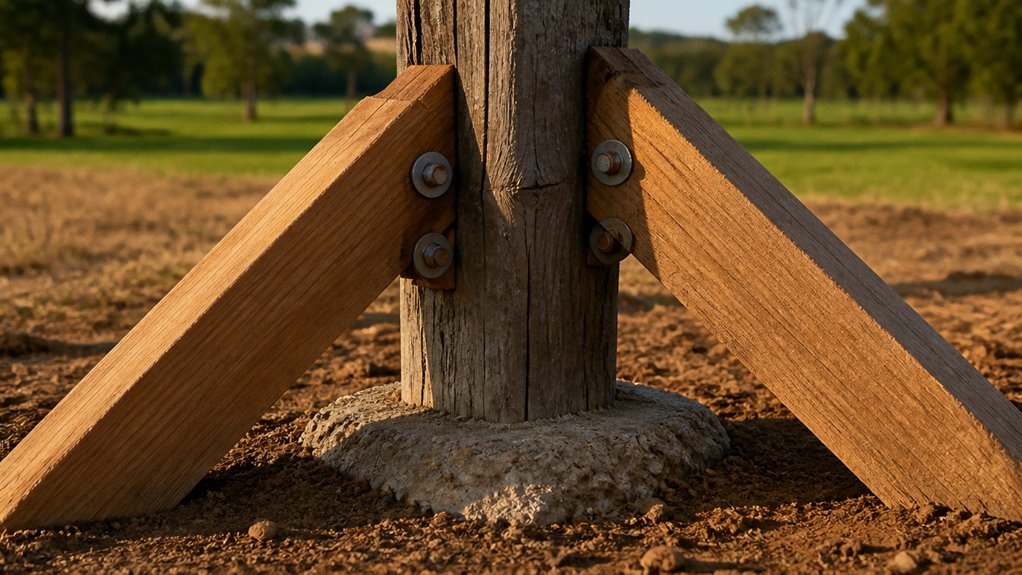
How to Brace a Fence Post: Step-by-Step Guide
To brace a fence post, you’ll set deep anchor posts, typically 36 to 42 inches deep, ensuring they’re plumb and stable.
Use an H-brace assembly with a horizontal brace snugly fitted between posts and a diagonal wire tightened with a strainer to resist leaning and twisting.
Secure all connections firmly with corrosion-resistant fasteners and avoid gaps to prevent weakening.
Proper bracing turns individual posts into a strong framework that lasts.
Explore the essential steps and tips to perfect your brace installation and maintenance.
Key Takeaways
- Install brace posts at corners, ends, and gates to prevent leaning and twisting under wire tension.
- Set posts at least 36 to 42 inches deep, extending below the frost line in cold climates for stability.
- Use H-braces or diagonal wood braces to create triangular support resisting lateral forces and racking.
- Secure horizontal braces firmly between posts and attach diagonal brace wire tightened with strainers for rigidity.
- Regularly inspect brace wires and pins, tighten as needed, and replace any rotted or damaged components.
Why You Need to Brace Fence Posts?

Although fence posts may seem sturdy on their own, you need to brace them to prevent leaning and twisting under the tension of stretched wire or rails.
Bracing is essential at corners, ends, and gate posts where stress concentrates. Without proper bracing, posts can rack, pull, or tilt, compromising fence integrity.
Bracing is crucial at high-stress points to prevent posts from racking, pulling, or tilting.
You should set posts plumb and make certain the horizontal brace contacts both posts firmly. Strong bracing counters the forces from stretched wire or rails, maintaining alignment and stability.
Temporary braces help keep posts vertical during concrete curing or backfilling. By installing a robust brace system, you reduce maintenance needs and extend fence life.
Ultimately, bracing transforms individual posts into a durable framework capable of resisting continuous lateral forces. Use proper hardware rated above the actual load to ensure secure and long-lasting bracing connections.
Fence Post Brace Depth: How Deep to Set Posts
When setting fence posts, you should embed them deep enough to guarantee stability and resist shifting forces. For standard 6-inch posts, USDA guidelines recommend a minimum burial depth of 42 inches.
Brace posts, especially at corners and ends, should be set at least 36 inches deep. However, going deeper improves resistance to soil movement and frost heave.
Make sure the hole extends below the frost line in cold climates to prevent post heaving. Proper depth also helps maintain the posts plumb and supports tight brace connections.
Avoid shallow settings that invite leaning under tension. Remember, stable brace posts form the foundation for your fence’s structural integrity.
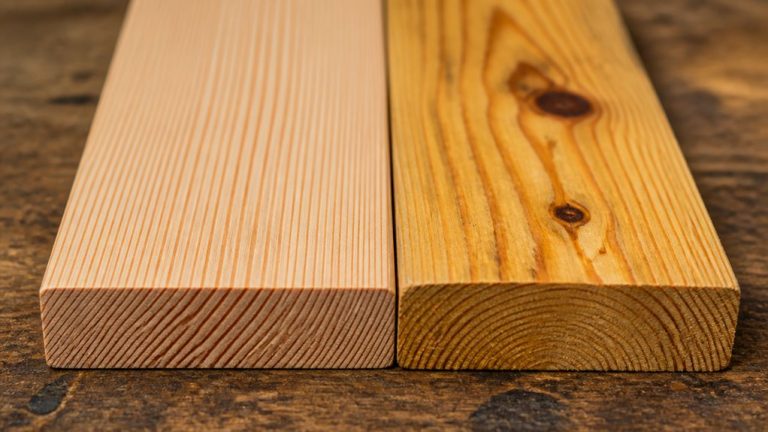
Using kiln-dried lumber for your brace posts can further enhance durability and reduce the risk of warping and insect damage.
Selecting the Right Brace Type for Your Fence
Choose the right brace type to guarantee your fence withstands tension and environmental stress.
For corner, end, or gate posts, H-braces offer superior rigidity by combining two vertical posts with a horizontal rail and diagonal wire.
Single diagonal wood braces form a strong triangular support, ideal for simpler or shorter fence runs.
Horizontal braces paired with tensioned wire provide effective resistance against twisting and pulling forces.
Temporary 2×4 braces can stabilize posts during installation or repairs but aren’t suitable for long-term use.
Adjustable wire-strainer systems help you fine-tune brace tension, ensuring a rigid frame.
Select a brace type based on fence length, expected load, and environmental conditions.
Proper selection maximizes durability and minimizes maintenance while keeping your posts plumb and aligned under load.
Using precise adjustments like those found in adjustable fence systems can greatly improve overall structural stability.
Build an H-Brace Step-by-Step
Start by installing the end post firmly in the ground, ensuring it’s plumb and secure.
Next, set the brace post in line with the fence, maintaining proper spacing for the horizontal brace to fit snugly between posts.
Drill matching holes through the end post, horizontal brace, and brace post to accommodate brace pins.
Slide the horizontal brace into place and secure it with the pins.
Then, attach brace wire diagonally from the lower staple on the end post to the upper hole on the brace post.
Tighten the wire with a strainer until the assembly is rigid and free of gaps.
- Position posts plumb and aligned
- Drill precise holes for pins
- Secure horizontal brace firmly
- Tension brace wire tightly for stability
To ensure long-lasting strength, it is essential to use precise measurements and alignment during installation.
How to Install and Tighten Brace Wire?
Run the brace wire diagonally across the brace assembly, fastening it securely near the ground on the end post and higher up on the brace post.
Use heavy-duty staples or wire clamps to anchor the wire firmly at these points.
Next, use a come-along or an in-line ratchet strainer to tighten the wire, removing all slack.
Keep tension steady until the brace assembly becomes rigid and gap-free, ensuring the posts remain plumb and firmly aligned.
Avoid over-tightening, which can damage posts or hardware.
Check that the wire lies flat without twists or kinks, and that staples are driven flush to prevent wire damage.
Proper tension on the brace wire stabilizes the fence against pull, twist, and rack, maintaining structural integrity under load.
For maintaining the brace posts, consider using a natural drawing salve to soothe any minor skin irritations or splinters caused during installation.
Temporary Fence Post Bracing Methods
When you need quick support for a leaning post, a 2×4 brace set at a 45-degree angle can do wonders. It’s a simple yet effective way to stabilize things.
Plus, temporary stakes are another great option. They can help keep your posts plumb while you’re backfilling or letting the concrete cure.
Both of these methods are super handy for providing that essential, short-term rigidity. They really come in clutch before you install any permanent bracing.
It’s all about making sure everything stays in place until you’re ready for the next steps!
For longer-lasting protection, consider using vinyl post wraps to shield your posts from moisture and weather damage.
Quick 2×4 Supports
Secure a leaning fence post quickly by using a 2×4 brace angled at about 45 degrees for temporary support. This method stabilizes the post while you backfill or allow concrete to cure. Here’s how to do it effectively:
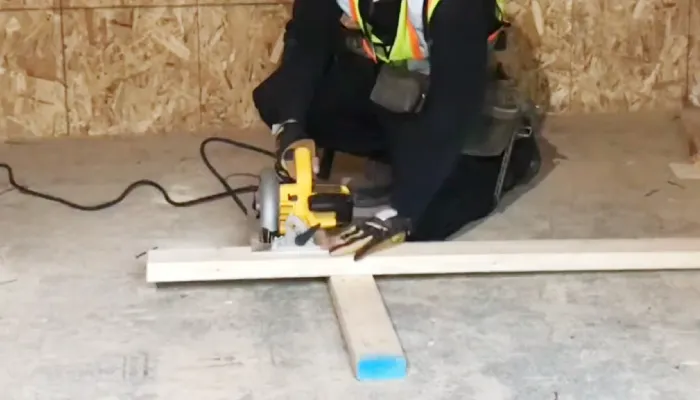
- Cut a 2×4 long enough to reach from the post base to a secure spot on the ground.
- Position the brace so it contacts the post near mid-height and anchors firmly into the soil.
- Nail or screw the brace to the post, ensuring a tight fit to prevent movement.
- Check the post for plumb and adjust the brace angle if needed.
This quick 2×4 support holds the post steady, preventing lean and reducing frustration during fence installation. For longer-lasting stability, consider using controlled weight and pressure techniques similar to those used in flattening warped plywood.
Using Temporary Stakes
Temporary 2×4 braces offer quick support, but sometimes you need an even simpler, adjustable solution. Temporary stakes provide just that.
Drive one or two stakes firmly into the ground near the post, positioning them to resist the direction of lean. Use strong, flexible ties or straps to secure the post to the stakes, allowing you to tighten or loosen the tension as needed.
This method stabilizes the post during backfilling or concrete curing without permanent hardware. Make sure stakes are driven deep enough for solid anchorage in varying soil conditions.
Temporary stakes work best on level ground and for shorter durations since they lack the rigidity of full brace assemblies. Always check that the post remains plumb, adjusting stake tension frequently until the post sets securely.
For best results, ensure that stakes are spaced evenly and secured using heavy-duty brackets designed for outdoor stability.
Proper Post and Brace Placement for Stability
When you’re setting up your posts, make sure to dig them deep enough—ideally, around 36 to 42 inches.
This depth helps ensure they’re anchored solidly and can resist frost heave.
Now, let’s talk about the braces.
Position them so that the horizontal member fits snugly between the posts.
It’s important to keep those posts perfectly vertical.
If they’re not straight, it can lead to stability issues and make your fence lean under tension.
For long-lasting protection of your wooden posts, consider applying penetrating sealers to help stabilize the wood fibers and resist moisture damage.
Post Depth Requirements
Although proper post depth varies with soil conditions and fence type, ensuring your end and brace posts are set deeply is essential for stability.
Shallow posts risk leaning and structural failure under tension. Follow these key depth guidelines:
- Set a 6-inch post at least 42 inches deep in typical soil for solid anchoring.
- Install brace anchor posts no less than 36 inches deep, deeper if soil is loose or sandy.
- Extend post holes below the frost line in cold climates to prevent heaving.
- Backfill firmly or use concrete to maintain vertical alignment and resist movement.
For added strength and durability, use corrosion-resistant fasteners when securing braces to posts.
Brace Positioning Essentials
When positioning braces, ensure the horizontal member fits snugly between posts while both remain perfectly vertical and aligned. This guarantees maximum stability and prevents leaning under fence tension.
Set brace posts deep enough to resist frost heave and soil movement. The horizontal brace should contact both posts firmly, forming a rigid triangle when combined with a diagonal wire or brace. Avoid gaps and don’t let braces trap water.
Proper spacing and alignment are critical for structural integrity.
| Aspect | Recommendation |
|---|---|
| Post Alignment | Vertical and plumb |
| Brace Fit | Snug horizontal contact |
| Post Depth | Minimum 36-42 inches deep |
| Water Drainage | Prevent water pooling on brace |
Follow these essentials for a durable brace system.
Avoid These Common Fence Post Bracing Errors
Since fence post bracing is critical to the stability and longevity of your fence, avoiding common mistakes is essential.
Proper fence post bracing is key to ensuring your fence remains stable and durable over time.
Neglecting proper bracing can lead to leaning posts, structural failure, and costly repairs.
Here are four common errors to avoid:
- Setting posts too shallow. Insufficient depth compromises stability, especially in frost-prone areas.
- Improper brace alignment. The horizontal brace must contact both posts while keeping them plumb.
- Loose brace wire. Failing to tighten the wire lets the assembly shift under tension.
- Using inadequate materials. Weak or water-trapping braces reduce lifespan and strength.
Tips for Maintaining and Inspecting Fence Braces
Regularly inspecting and maintaining your fence braces guarantees they continue to provide the necessary support against tension and environmental stress.
Check for loose brace pins, sagging horizontal rails, and slack brace wire. Tighten wire strainers promptly to remove any slack and prevent post movement.
Look for signs of rot, especially at wood joints and ground contact points, and replace any compromised components.
Make certain brace posts remain plumb and the horizontal member fits snugly without gaps.
Clear debris and avoid water pooling on braces to reduce decay.
After severe weather, recheck tension and alignment since shifting soil or impact can loosen braces.
Routine maintenance extends brace life and keeps your fence structurally sound under load, preventing costly repairs or fence failure.
Frequently Asked Questions
What Tools Are Best for Drilling Brace Pin Holes?
You’ll want a cordless drill with a sharp spade bit or auger bit sized for your brace pins. These bits create clean, precise holes quickly through wood posts.
A drill with variable speed helps you control drilling depth and avoid splitting. For tougher hardwoods, a brad-point bit works well.
Keep a clamp handy to steady the post while you drill. This ensures accuracy and safety as you prepare holes for brace pins.
Can Metal Posts Be Braced Using the Same Methods?
You can brace metal posts using similar methods, but you’ll need to adjust for material differences.
Metal posts don’t absorb tension like wood, so you’ll rely more on clamps, bolts, or welded connections instead of nails or staples.
Diagonal braces and tension wires still work, but you’ll want to ensure secure fastening and avoid damaging the metal.
Using specialized drill bits and hardware designed for metal will help maintain structural integrity and effective bracing.
How Often Should Brace Wire Tension Be Rechecked?
You should check brace wire tension at least once a year and after any severe weather or mechanical impact.
Wire can loosen over time due to temperature changes, ground movement, or fence load shifts.
Use a wire strainer or come-along to retighten it until the brace assembly is rigid and gap-free.
Regular inspections help maintain fence stability and prevent leaning or twisting of posts under tension.
What Weather Conditions Most Affect Brace Longevity?
You might think rain is the main culprit, but fluctuating temperatures and moisture cycles actually impact brace longevity the most.
Freeze-thaw cycles cause soil movement, loosening posts and tension wires.
Prolonged humidity accelerates wood rot and metal corrosion, weakening braces.
Harsh sun exposure dries and cracks wood, reducing strength.
Are There Eco-Friendly Materials for Fence Bracing?
You can use eco-friendly materials like sustainably sourced hardwood or bamboo for fence bracing. Both offer durability without harmful chemicals.
Recycled metal braces also work well and reduce waste.
For wire tensioning, opt for galvanized or stainless steel wire, which lasts longer and resists rust, minimizing replacements.
Avoid treated lumber with toxic preservatives to protect soil and groundwater.
Using these materials helps you build strong, sustainable fence braces that last.
Final Thoughts on Bracing Fence Posts for Long-Term Stability
Bracing your fence posts is like laying a strong foundation for a building. It holds everything steady against pressure and time.
When you set braces deep and tight, you’re not just supporting wood; you’re creating a backbone that resists lean and collapse.
Remember, a well-braced fence stands firm like a guardian, protecting your property with lasting strength.
Take care to inspect and maintain those braces. They’re the silent pillars of your fence’s durability.