What to Do With Sawdust From Dust Collector: Reuse Ideas
You should collect sawdust using dust collectors with sealed bags or containers and store it in closed metal bins away from heat or ignition sources to prevent fire risks.
Keep the area clean and never use compressed air for cleaning, as it disperses dust dangerously.
Separate contaminated sawdust from clean for proper disposal or reuse.
Untreated sawdust can absorb spills or be composted correctly.
Following these steps will help you handle sawdust safely and comply with regulations while minimizing hazards.
Key Takeaways
- Store clean sawdust from dust collectors in sealed, metal containers away from heat to minimize fire and explosion risks.
- Separate contaminated sawdust with paint, varnish, or chemicals from clean sawdust before disposal or reuse.
- Reuse clean, dry sawdust as an absorbent for oil-based spills or in compost when untreated and unpainted.
- Dispose of contaminated or treated sawdust following local hazardous waste regulations using approved containers and facilities.
- Maintain dust collectors and clean filters regularly to prevent dust buildup and reduce fire hazards.
Collect and Store Sawdust Safely

Collecting and storing sawdust safely starts with separating clean sawdust from contaminated material to maximize reuse options.
Separating clean sawdust from contaminants is essential for safe collection and maximizing reuse potential.
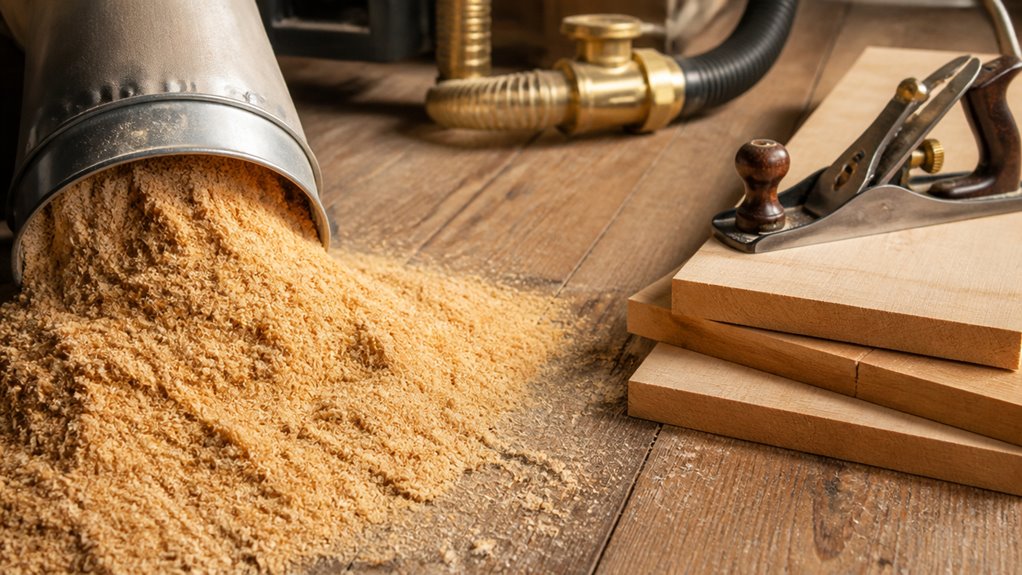
Use dust collectors to pull sawdust away from tools, trapping it in bags or containers.
Make sure you regularly clean baghouse or cyclone filters to prevent buildup and maintain system efficiency.
Keep clean sawdust segregated in closed, metal containers to reduce overflow and minimize fire risk.
Avoid mixing sawdust with paint, varnish, or chemical residues during collection.
Store containers away from heat sources and ignition points.
Monitor storage volumes closely to prevent overfilling, which can compromise safety.
Using dust collectors with anti-static cyclone design helps capture nearly all debris before filter contact, improving safety and performance.
Control Sawdust Dust in Your Workshop
Effectively controlling sawdust dust in your workshop requires a combination of targeted extraction, proper ventilation, and careful cleanup practices. Use dust collectors at the source of dust generation, such as saws and sanders, to capture particles immediately.
Make certain your workspace has adequate ventilation to disperse residual dust. Avoid using compressed air for cleaning, as it disperses dust into the air. Instead, vacuum with a HEPA filter or damp mop surfaces regularly to prevent buildup.
Vacuum models with HEPA filtration technology are especially effective at capturing fine dust particles down to 0.3 microns, improving indoor air quality.
| Method | Purpose | Recommendation |
|---|---|---|
| Dust Collector | Capture dust at source | Install on all major tools |
| Ventilation | Air quality control | Use exhaust fans or vents |
| Vacuuming | Remove settled dust | Use HEPA-filter vacuums |
| Damp Mopping | Clean surfaces | Avoid dry sweeping |
| Enclosures | Contain dust | Use on high-dust operations |
Reuse Sawdust as an Absorbent Material
You know, you can actually reuse clean, dry sawdust to tackle those pesky oil-based spills. It’s a great way to boost safety and keep your workshop nice and tidy.
Just sprinkle some sawdust over the spill, let it do its thing for a bit, and then carefully collect it up. Oh, and try to do it gently to avoid sending dust flying everywhere!
And don’t forget about storage! Keep any leftover sawdust in sealed metal containers, and make sure to stash them away from heat sources. It’s a smart move to minimize any fire risks when you’re gearing up for your next cleanup.
For efficient cleanup of sawdust and other debris, consider using a wet/dry vacuum designed for construction sites to manage both fine dust and larger particles safely.
Effective Spill Cleanup
When dealing with oil-based spills such as automotive oil or varnish, sawdust proves to be a highly effective absorbent material.
You can quickly control spills by sprinkling dry sawdust directly onto the liquid, allowing it to absorb for several minutes.
After absorption, scoop or vacuum the saturated sawdust into a container to prevent dust from dispersing into the air.
Keep the used sawdust away from heat or open flames to avoid fire hazards.
To maximize effectiveness:
Use clean, dry sawdust separated from contaminated material.
Apply enough sawdust to fully cover the spill.
Collect absorbed sawdust carefully to minimize airborne particles.
Store unused absorbent sawdust in sealed containers for future use.
This method provides a practical, efficient solution for managing oil-based spills in your workspace.
For safe disposal, always follow local regulations regarding hazardous waste management to prevent environmental contamination.
Safe Sawdust Storage
Having absorbed spills efficiently, sawdust must be stored properly to maintain its usefulness and safety as an absorbent material. Separate clean sawdust from contaminated or treated dust to guarantee effective reuse.
Store dry sawdust in sealed metal containers to prevent moisture absorption and reduce fire risk. Avoid overfilling containers to minimize overflow and spontaneous combustion hazards.
Keep stored sawdust away from open flames, heat sources, and ignition points, as dry wood dust is highly combustible. When handling recovered sawdust, use vacuum or scoop methods to limit airborne particles.
Label containers clearly and place them in a well-ventilated, secure area dedicated to absorbent material storage. Regularly inspect storage units for damage or contamination to preserve sawdust quality for future spill cleanup tasks.
For woodworking environments, using tools with anti-kickback designs can help reduce the generation of fine dust particles that complicate sawdust reuse and storage.
Compost Untreated Wood Sawdust Properly
Composting untreated wood sawdust requires careful segregation to guarantee it breaks down effectively without introducing harmful chemicals.
You must make certain the sawdust is from untreated, unpainted, and unvarnished wood to avoid contaminants that can degrade compost quality. Properly managing sawdust in your compost system enhances biodegradation and nutrient cycling.
Collect sawdust exclusively from clean, untreated wood sources.
Mix sawdust with nitrogen-rich materials like grass clippings or kitchen scraps to balance carbon-to-nitrogen ratios.
Maintain moisture levels around 40-60% to facilitate microbial activity.
Regularly turn the compost pile to aerate and accelerate breakdown.
Avoid excessive moisture as it can lead to fiber damage and reduce compost quality.
Dispose of Contaminated or Treated Sawdust
First things first, you’ll want to spot any sawdust that’s contaminated with stuff like paint, varnish, oil, or treated wood residue. Once you’ve identified that, make sure to separate it from the clean material.
When it comes time to dispose of the contaminated sawdust, remember to use approved containers and stick to the methods outlined by your local regulations. It’s always a good idea to double-check the federal, state, or provincial rules too, just to make sure you’re disposing of everything safely and in compliance.
Because treated sawdust can release harmful chemicals, proper disposal as hazardous waste is essential to protect health and the environment.
Identify Contaminated Sawdust
Proper identification of contaminated sawdust is critical to guarantee safe handling and disposal. You need to distinguish clean sawdust from that mixed with hazardous substances to comply with regulations and prevent environmental harm.
Contaminated sawdust typically originates from treated wood or contains residues from paints, varnishes, or oils.
Look for these signs to identify contaminated sawdust:
- Presence of colored dust or residues indicating paint, varnish, or chemical treatments.
- Sawdust collected near or from treated wood or surfaces coated with protective finishes.
- Sawdust saturated with oils, solvents, or other liquid contaminants.
- Odors or visual evidence of chemical additives or stains on the sawdust.
Using finishes with low-VOC formulas can help reduce the risk of hazardous residues in sawdust.
Approved Disposal Methods
Handling contaminated or treated sawdust requires following strict disposal protocols to minimize environmental impact and comply with regulations.
You should collect the sawdust mixed with paint, varnish, oil, or treated wood residue separately and place it in approved containers designed for hazardous or contaminated waste.
Avoid composting or mulching treated sawdust, as chemicals can leach into the environment. Instead, send it to authorized waste facilities or designated trash disposal sites.
Make certain containers are sealed tightly to prevent dust dispersion and reduce fire risk. Keep the sawdust away from ignition sources during storage and transport.
Regularly monitor waste accumulation and arrange timely removal to maintain safety. Following these approved disposal methods helps you manage treated sawdust responsibly and supports environmental compliance.
For surfaces exposed to moisture, consider using water-resistant coatings to limit contamination from treated sawdust residues.
Follow Local Regulations
When disposing of contaminated or treated sawdust, it’s essential to comply with local regulations to guarantee safe and legal waste management.
Treated sawdust often contains chemicals that classify it as hazardous waste, requiring specific handling and disposal methods. You should:
Identify if sawdust contains paint, varnish, oils, or chemical treatments.
Store contaminated sawdust in approved, sealed containers to prevent leaks.
Consult local, state, or federal guidelines to determine disposal requirements.
Use authorized waste facilities for treated or hazardous sawdust, avoiding composting or general landfill if prohibited.
Following these steps minimizes environmental impact, reduces health risks, and assures compliance with legal standards.
Always prioritize safety and verify regulations before disposal to avoid penalties or contamination.
For woodworking projects, it is recommended to avoid varnishes on wood surfaces to preserve natural properties and reduce hazardous waste concerns.
Prevent Fire and Dust Hazards in Sawdust Storage
Although sawdust is a useful byproduct, its fine particles pose significant fire and dust explosion risks if stored improperly.
You should store sawdust in closed, metal containers with secure lids to minimize exposure to ignition sources.
Avoid allowing bins to overflow, and schedule regular, timely removal to prevent accumulation.
Keep sawdust away from heat, sparks, and open flames, since dry wood dust is highly combustible.
Maintain good housekeeping around dust collectors, baghouses, and cyclone systems to reduce buildup and lower hazards.
Never use compressed air to clean sawdust deposits, as it disperses dust into the air, increasing explosion risk.
Frequently Asked Questions
Can Sawdust Be Used in Homemade Particleboard or Wood Composites?
Yes, you can use sawdust in homemade particleboard or wood composites, but it needs to be clean and dry.
Combine the sawdust with a suitable adhesive, like resin or glue, and compress it under pressure to form a solid panel.
Avoid sawdust contaminated with paint, oil, or chemicals, as it compromises strength and safety.
Properly processed, sawdust enhances material density and reduces waste, making your composites more sustainable and cost-effective.
How Can Sawdust Be Used as a Soil Amendment Beyond Composting?
You can use sawdust as a soil amendment by mixing it with nitrogen-rich materials to balance its high carbon content.
Incorporate sawdust into garden beds to improve soil aeration and moisture retention.
Avoid applying untreated sawdust directly without nitrogen additives, as it may temporarily lock nutrients.
Also, make sure sawdust is free from contaminants.
This method enhances soil structure and supports microbial activity, boosting plant health beyond traditional composting.
Is Sawdust Safe for Use in Animal Bedding or Pet Cages?
You might want to think twice before using sawdust as animal bedding or in pet cages. Only clean, untreated sawdust is suitable, as contaminated or chemically treated dust can pose health risks.
Make sure the material is free from paint, varnish, or oils to avoid respiratory or skin irritation.
Properly sourced sawdust can provide a soft, absorbent layer, but always verify its origin and quality to keep your animals safe and comfortable.
What Are Creative Craft Uses for Clean Sawdust at Home?
You can use clean sawdust to create textured paint, mixing it with glue or paint for a rustic finish.
It’s perfect for making homemade fire starters by combining sawdust with wax.
You can also craft lightweight filler for wood repairs or create decorative sachets by adding essential oils.
Sawdust works well for molding lightweight sculptures or as a base for papier-mâché projects, offering versatility in various craft applications.
Can Sawdust Be Used as a Fuel Source for Heating or Energy?
Think of sawdust as tiny sparks waiting to ignite warmth.
Yes, you can use sawdust as fuel for heating or energy, typically by compressing it into pellets or briquettes.
These forms burn efficiently in specialized stoves or boilers designed for biomass fuel.
However, make certain the sawdust is clean, dry, and untreated to avoid harmful emissions.
Using sawdust this way converts waste into valuable energy, reducing reliance on fossil fuels and minimizing environmental impact.
Final Thoughts on Managing Sawdust From Your Dust Collector
You shouldn’t underestimate the power of properly managing sawdust from your dust collector. It’s like handling a powder keg if ignored. Always collect and store it safely, control dust levels in your workspace, and reuse untreated sawdust as an absorbent or compost it correctly.
Dispose of treated sawdust responsibly to avoid hazards. By following these precise steps, you’ll maintain a safer, cleaner workshop and prevent fire risks while turning waste into practical resources.