Mdf Vs Wood Baseboard: Pros, Cons & Key Differences
If you’re choosing baseboards, MDF offers a budget-friendly, smooth, paint-ready surface perfect for dry, low-traffic rooms.
It’s lightweight, easy to cut, and resists splitting but swells with moisture.
Wood baseboards provide natural grain textures, superior durability, and moisture resistance, making them ideal for high-traffic or humid areas.
Wood holds fasteners better and withstands impact but costs more and requires careful maintenance.
Exploring these factors deeper will help you decide the best fit for your project.
Key Takeaways
- MDF baseboards are cost-effective, offering smooth, paint-ready surfaces ideal for dry interior areas and custom shapes.
- Wood baseboards provide natural grain, stain options, superior durability, and moisture resistance, suitable for high-traffic or damp spaces.
- MDF is lightweight and easier to cut cleanly without splintering, but is prone to swelling and damage in moist environments.
- Wood holds fasteners securely, supports complex profiles, and withstands impacts better, but requires sharper tools and careful handling.
- MDF produces fine dust during cutting needing careful management, while wood dulls blades faster and needs steadier handling to avoid splinters.
MDF or Wood Baseboard: Complete Side-by-Side Comparison
| Feature | MDF Baseboard | Wood Baseboard |
|---|---|---|
| Material Type | Engineered wood fibers and resin | Natural solid wood |
| Cost | More affordable | More expensive |
| Durability | Moderate | High |
| Impact Resistance | Prone to dents and chips | Better resistance to impacts |
| Moisture Resistance | Poor; can swell when wet | Better moisture tolerance |
| Best Environment | Dry, low-traffic areas | High-traffic and humid areas |
| Installation Ease | Easier to cut and shape | Requires more careful cutting |
| Weight | Lighter | Heavier |
| Fastener Holding | Moderate | Excellent |
| Splintering Risk | Very low | Can splinter during cutting |
| Paint Finish | Smooth, paint-ready surface | Can be painted or stained |
| Natural Grain Appearance | None | Attractive natural grain patterns |
| Custom Profiles | Easy to create | Available but more costly |
| Maintenance | Low in dry environments | Periodic maintenance may be needed |
| Lifespan | Good in dry areas | Longer overall lifespan |
| Bathroom Use | Not recommended | Better option |
| High-Traffic Areas | Less suitable | Ideal |
| Resale Value | Standard | Often adds more perceived value |
| Main Advantage | Budget-friendly and easy to install | Durable, attractive, and long-lasting |
| Main Drawback | Sensitive to moisture | Higher upfront cost |
Choosing Between MDF and Wood Baseboards: A Quick Guide

When deciding between MDF and wood baseboards, you’ll want to take into account factors like cost, durability, and moisture resistance to match your project’s needs.
MDF is ideal for dry, low-traffic interiors where you need a smooth, uniform finish that’s easy to paint.
Its workability allows clean cuts and custom shaping, making installation straightforward.
However, MDF swells and warps when exposed to moisture, so avoid using it in bathrooms or humid areas.
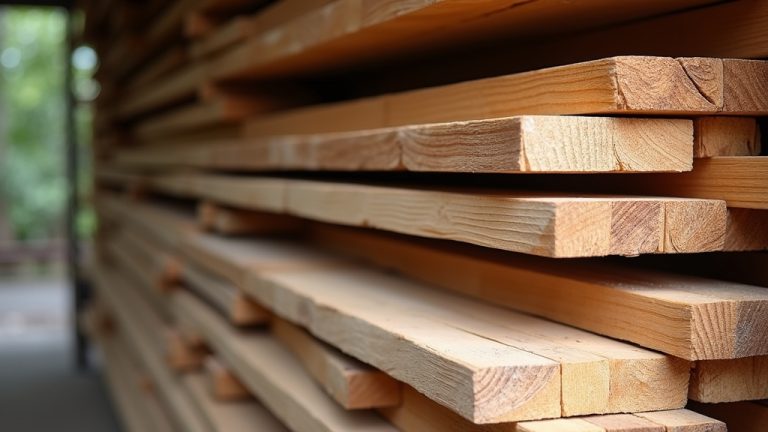
Wood baseboards, especially hardwoods like oak or pine, offer superior impact resistance and longevity.
They tolerate small amounts of moisture better and hold fasteners securely, making them suitable for high-traffic or damp environments.
Choose wood if you want natural grain patterns and durability, but prepare for more careful cutting and finishing.
For enhanced moisture resistance in certain environments, you might consider moisture-resistant MDF as an alternative to standard MDF.
Cost Comparison: MDF vs Wood Baseboards
Understanding the cost differences between MDF and wood baseboards can help you make a budget-conscious choice for your project.
MDF baseboards typically cost less than wood, especially hardwood, due to their engineered composition and lower material expenses.
MDF baseboards are more affordable than wood, particularly hardwood, thanks to their engineered materials and lower costs.
This price gap becomes more significant in large-scale renovations, where MDF can reduce overall costs substantially.
While wood baseboards, particularly those made from oak or maple, command higher prices, they offer natural grain and long-term value.
MDF serves as an affordable alternative that mimics wood’s appearance when painted but at a fraction of the price.
If your project prioritizes upfront budget savings and consistent finish, MDF is practical.
Conversely, if cost isn’t the primary concern and you want a premium, natural look, investing in wood baseboards is advisable.
Regular maintenance and proper care are essential to preserve the appearance and durability of both materials, much like the upkeep required for woodworking tools.
Durability and Maintenance for MDF vs Wood
When you’re deciding between MDF and wood baseboards, it’s important to think about where you’ll be using them. Wood really shines in terms of strength and impact resistance, which makes it a great choice for high-traffic areas. On the flip side, MDF can be a bit more delicate.
It’s more prone to dents and can suffer from moisture damage, so you’ll want to be mindful of where you place it—definitely stick to dry environments!
Now, let’s talk maintenance. Wood requires a bit of TLC to keep it looking good and to prevent warping over time. You’ll need to put in some effort to care for it.
MDF, however, has its own quirks. You need to protect it from water exposure, or else it might swell and lose its shape. So, weigh your options carefully based on your space and how much upkeep you’re willing to do!
For enhanced durability in moist or high-traffic areas, choosing materials with waterproof adhesives or proper sealing can significantly improve longevity.
Strength and Impact Resistance
Although MDF offers a cost-effective solution, it doesn’t match wood’s strength and impact resistance.
When you install baseboards in high-traffic areas, wood, especially hardwoods like oak, provides superior durability against dents and knocks.
MDF, composed of compressed fibers, tends to dent or chip under impact, making it less suitable where frequent contact occurs.
Wood’s dense grain structure absorbs shocks better, maintaining its integrity over time.
If you expect heavy use, wood’s resilience saves you from frequent repairs or replacements.
However, if you prioritize budget and plan for gentle use in dry, low-traffic spaces, MDF can suffice.
Keep in mind, wood also holds fasteners more securely, ensuring a stable, long-lasting installation compared to MDF, which can be more fragile under stress.
For long-lasting furniture and installations, using materials treated or coated with impact-resistant epoxy can further enhance durability and protect surfaces from damage.
Moisture Effects and Care
Since MDF absorbs moisture readily, it swells and softens upon exposure to water, compromising its structural integrity.
You should avoid installing MDF baseboards in areas prone to humidity or water exposure, such as bathrooms or basements.
When cleaning, use a dry or slightly damp cloth, never saturating the surface.
Wood baseboards tolerate small moisture amounts better and maintain durability with proper sealing and maintenance.
You can use wood in damp areas if you apply protective finishes and regularly inspect for damage.
To preserve MDF, control indoor humidity and promptly address leaks.
Wood’s natural resistance reduces maintenance frequency but still requires occasional refinishing or sealing.
Proper sealing and maintenance, including applying a water-based exterior primer, are essential to protect wood from moisture damage and prolong its lifespan.
Moisture Resistance: Which Baseboard Handles It Better?
Maneuvering moisture resistance is crucial when choosing between MDF and wood baseboards, especially for spaces prone to humidity or occasional water exposure.
MDF is highly susceptible to swelling and softening when wet, making it unsuitable for damp environments. In contrast, wood tolerates minor moisture better and requires less reinforcement in moist conditions.
Here’s what you should consider:
MDF is best limited to dry interior rooms like living spaces due to its low moisture resistance.
Wood baseboards, especially hardwoods, handle humidity and small water exposures more effectively.
For bathrooms or humid areas, wood is the practical choice to prevent warping and maintain structural integrity.
Choosing wood enhances durability where moisture is a factor, while MDF suits dry, controlled environments.
When working with MDF, using a carbide-tipped blade ensures cleaner cuts and reduces damage during installation.
MDF vs Wood Baseboards: Installation Ease
When you install baseboards, the material choice markedly affects the process.
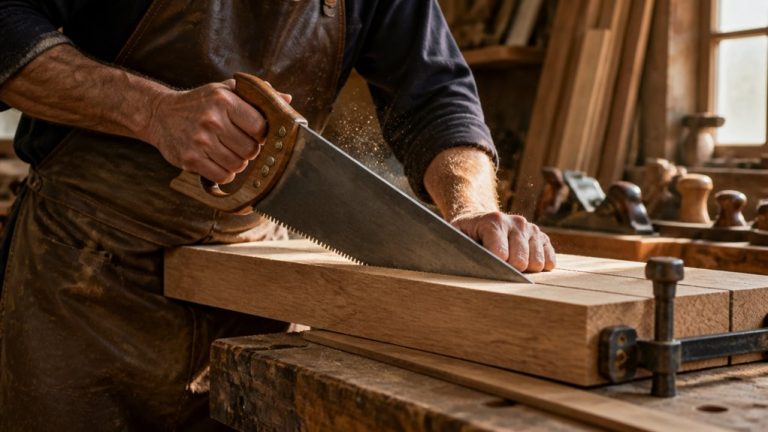
MDF is easier to cut cleanly and shape without splintering, letting you work faster and achieve precise edges with standard tools. Its flexibility allows you to create curves and custom shapes smoothly.
Wood, however, requires sharper blades and more careful handling to avoid chipping, especially on hardwoods. Although wood is rigid and less forgiving on uneven surfaces, it holds fasteners securely, providing strong attachment points.
MDF demands caution to minimize dust inhalation and breakage during handling. Ultimately, MDF simplifies cutting and shaping, ideal for intricate designs.
Wood’s rigidity benefits straightforward, straight wall installations where durability and fastening strength are priorities. Your choice should reflect your skill level and the project’s complexity.
Using the right tools and techniques, such as a miter saw setup for precise cutting, can greatly improve the installation process for both materials.
Weight and Handling Differences Between MDF and Wood
When you’re deciding between MDF and wood baseboards, one thing to think about is the weight. You know, MDF is pretty lightweight, which makes it a breeze to carry and cut, especially when you’re working with detailed shapes. It’s definitely a plus if you’re tackling a DIY project on your own!
On the flip side, wood is heavier. This added weight gives it some stability and helps it hold fasteners better. But, let’s be real—it also means you might’ve to put in a bit more effort during installation. So, depending on your project and comfort level, that weight difference can really make a difference! Wood’s density and hardness vary widely between species, affecting both handling and durability.
Weight Comparison Insights
Although wood generally weighs more than MDF, this difference markedly impacts handling and installation.
You’ll notice MDF’s lighter weight makes it easier to maneuver, especially during cutting and shaping. Wood, being denser, demands more effort but offers superior structural strength.
When comparing weight-related factors, consider:
- Transport and storage: MDF’s lighter mass reduces strain and shipping costs.
- Support requirements: Heavier wood may need additional bracing during installation.
- Tool wear: Cutting dense wood dulls blades faster than working with MDF.
For fastening MDF and particle board, using coarse-thread screws ensures reliable grip without damaging the material.
Handling and Installation
Since MDF is noticeably lighter than wood, you’ll find it easier to handle during installation, especially when cutting and shaping intricate profiles.
MDF’s reduced weight minimizes fatigue, allowing more precise cuts and smoother shaping without excessive strain. Its uniform density also lets you cut cleanly without splintering, making it ideal for detailed work.
In contrast, wood is heavier and requires sharper blades and steadier handling to avoid splintering.
While wood offers superior rigidity for straight runs and better fastener holding, its weight demands more effort during positioning.
MDF’s flexibility suits curves and custom shapes but requires careful dust management and gentle handling to prevent breakage.
Ultimately, your choice hinges on balancing ease of handling with the installation demands of your project’s complexity and structural needs.
For projects requiring precision cutting and stability, using a miter saw stand with adjustable support arms can greatly enhance handling and accuracy.
Aesthetic Differences: Natural Wood vs MDF Finish
You’ll notice a clear difference in appearance between natural wood and MDF finishes.
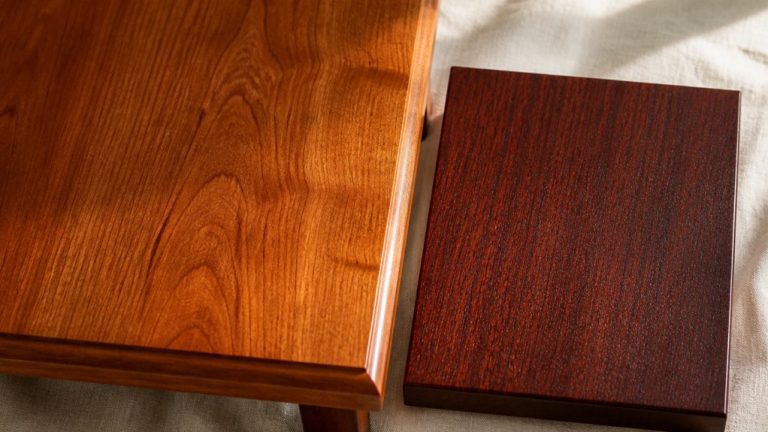
Natural wood showcases authentic grain patterns and color variations. It can be stained or left with a natural finish to highlight its unique beauty.
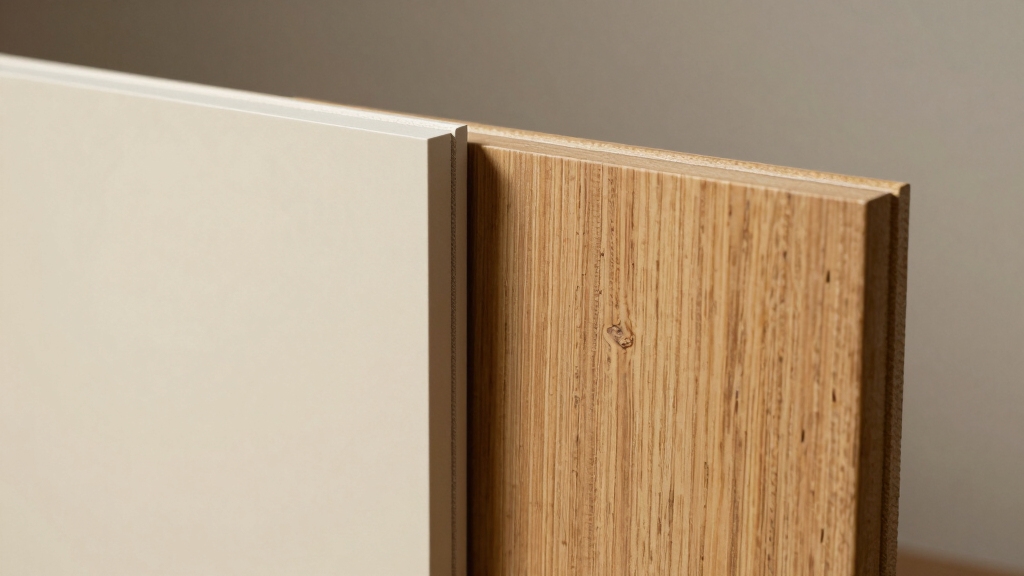
MDF, on the other hand, offers a smooth, uniform surface ideal for painting. It’s usually pre-primed, providing a consistent look without grain inconsistencies.
Consider these aesthetic factors when choosing:
- Wood: Offers rich, natural texture and accepts stains or paints for versatile finishes.
- MDF: Delivers flawless, paint-ready surfaces with no knots or grain, ensuring uniformity.
- Durability in Finish: Wood may crack or split less during shaping. MDF resists splitting but lacks natural texture.
This clarity helps you select the finish best suited to your design intent.
Best Uses for MDF and Wood Baseboards
When deciding between MDF and wood baseboards, focus on the specific demands of your space and project.
MDF suits dry interior areas like living rooms or bedrooms where painted trim is preferred. Its uniform surface and ease of cutting make it ideal for rental properties or temporary installations.
However, avoid using MDF in moisture-prone spaces since it swells on exposure.
Wood baseboards excel in high-traffic locations, entryways, or bathrooms due to superior durability and moisture resistance.
You’ll benefit from wood’s natural grain and ability to be stained or finished for aesthetic versatility.
Additionally, wood supports custom profiles and holds fasteners securely, making it the practical choice for long-lasting installations requiring strength and resilience.
Match your baseboard material to environmental conditions and functional needs for best results.
When to Choose Wood Baseboards for Longevity
Choosing wood baseboards makes the most sense for projects demanding longevity and resilience.
Wood’s superior strength and moisture tolerance guarantee your baseboards withstand heavy use and damp environments better than MDF.
You’ll benefit from wood’s natural durability, especially in high-traffic or humid areas.
Consider wood baseboards when you need high impact resistance to prevent dents and warping over time.
They offer reliable performance in moisture-prone spaces like bathrooms or kitchens.
Additionally, wood provides long-term value in custom or decorative profiles that maintain structural integrity.
Wood also holds fasteners securely, reducing maintenance needs.
If you want baseboards that last decades with proper care, wood is the practical choice over MDF, which is more susceptible to swelling and damage in demanding conditions.
Frequently Asked Questions
Can MDF Baseboards Be Recycled or Are They Environmentally Friendly?
You can’t easily recycle MDF baseboards because they contain resin binders and adhesives that complicate processing.
MDF isn’t biodegradable and may release formaldehyde when broken down, so it’s less environmentally friendly than solid wood.
If you’re concerned about sustainability, you should consider wood baseboards, which are renewable, recyclable, and biodegradable.
To minimize environmental impact, reuse MDF when possible or dispose of it according to local hazardous waste guidelines.
How Do MDF and Wood Baseboards Affect Indoor Air Quality?
When it comes to indoor air quality, you should know MDF can off-gas formaldehyde, potentially impacting air quality negatively, especially if not sealed properly.
Wood baseboards, being natural, generally emit fewer volatile organic compounds, making them better for breathing easy indoors.
To keep your air fresh, make certain MDF is well-primed and ventilate rooms well.
Are There Specific Tools Recommended for Painting MDF Baseboards?
You should use a high-quality synthetic bristle brush or a foam brush for painting MDF baseboards to achieve a smooth finish without brush marks.
A fine-grit sanding sponge helps prep the surface between coats to guarantee good adhesion.
Also, use a high-density foam roller for larger areas to avoid texture.
Always apply a primer designed for MDF before painting to seal the surface and prevent swelling from moisture in the paint.
Do MDF Baseboards Emit Any Odors During Installation or Finishing?
Yes, MDF baseboards can emit a mild odor during installation and finishing. This smell mainly comes from the formaldehyde resin used in the manufacturing process.
You might notice it more when cutting or sanding MDF, as dust particles release these compounds. To minimize exposure, work in a well-ventilated area and wear a dust mask.
Once sealed with paint or primer, the odor markedly reduces or disappears.
How Do MDF and Wood Baseboards Impact Home Resale Value?
When weighing wood’s worth versus MDF’s modest means, wood baseboards boost your home’s resale value more noticeably.
You’ll attract buyers appreciating authentic aesthetics and enduring durability, especially in high-end markets.
MDF, while more affordable, might signal budget choices, possibly diminishing perceived quality.
If you want lasting luxury and leverage in listings, choose wood.
However, for cost-conscious upgrades, MDF still offers a practical, paint-ready, presentable option.
MDF or Wood Baseboards? Understanding the Pros and Cons of Each
When choosing between MDF and wood baseboards, you’ll want to weigh cost, durability, and moisture resistance carefully.
MDF offers ease of installation and a smooth finish but lacks the natural character and longevity of wood.
Wood baseboards, though pricier and heavier, stand up better over time and handle moisture more effectively.
In the end, don’t put all your eggs in one basket; select the material that aligns best with your specific project needs and environment.