How to Cut Composite Decking: Finding Your Way Out
To cut composite decking cleanly, use a circular or miter saw fitted with a sharp, fine-toothed carbide blade (40–60 teeth) designed for laminate or composite materials.
Secure the board firmly on sawhorses with clamps near the cut and apply masking tape along the cut line to prevent splintering. Measure and mark twice, then cut slowly, guiding the saw along the waste side of the line for precision.
For angled or curved cuts, switch to a miter saw or jigsaw with fine blades. Learn how to refine these steps for flawless results and safety.
Key Takeaways
- Use a circular saw with a fine-toothed carbide blade (40–60 teeth) designed for composite or laminate materials to minimize chipping.
- Measure and mark cut lines clearly, verifying angles with a protractor or speed square before cutting.
- Clamp the decking firmly to a stable surface and support fully to prevent movement and vibration during cutting.
- Adjust blade depth slightly beyond board thickness and cut slowly with steady pressure to avoid splintering.
- Apply masking tape over cut lines and wear appropriate PPE, including eye and ear protection, for safety.
How to Choose the Right Tools and Blades for Composite Decking?
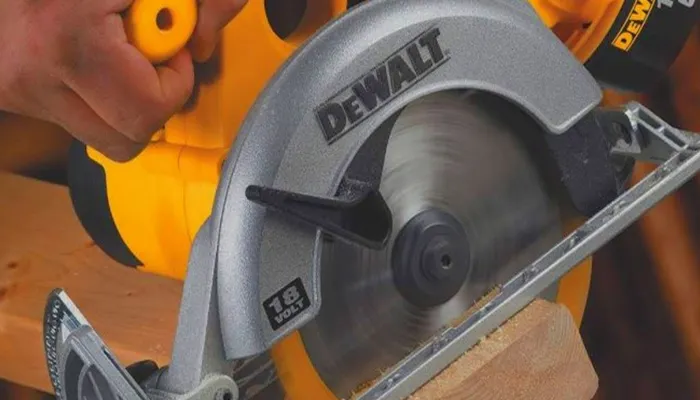
When cutting composite decking, selecting the right tools and blades is essential to achieve clean, accurate cuts without splintering. You’ll want a circular saw fitted with a fine-toothed carbide blade, ideally with 40-60 teeth, to minimize chipping.
For precise crosscuts, bevels, and angled cuts, a miter saw with a similar blade is your best bet. If you need curved or irregular cuts around posts or pipes, use a jigsaw with a fine-toothed blade.
For long, straight cuts, a table saw provides stable support and consistent results. Always make sure blades are sharp and carbide-tipped to prevent splintering and chipping. Using the right combination of tools and blades lets you work efficiently and produce professional-quality cuts every time.
Additionally, choosing blades with an anti-kickback design enhances safety by minimizing the risk of sudden blade movement during cutting.
How to Prepare Composite Boards for Cutting?
First things first, grab your tape measure and speed square. You’ll want to measure your composite boards carefully and mark those cut lines precisely. It’s all about getting it right from the start!
Next, let’s talk about securing those boards. Make sure you use clamps to hold them firmly in place on a stable surface, like sawhorses. This step is crucial because it will prevent any movement while you’re cutting.
Plus, it helps ensure that you get the most accurate cuts possible. For the best results, consider using a blade designed for laminate or melamine to minimize chipping and achieve smooth edges.
Accurate Measurement Techniques
Achieve precise cuts by measuring your composite boards carefully using a tape measure, speed square, and protractor.
Start by measuring the board length twice to confirm accuracy. Use the speed square to mark straight lines perpendicular to the edges, ensuring the cut will be square.
For angled cuts, employ a protractor to set and verify the exact angle before marking. Always mark your cut lines clearly across the full board width with a pencil or chalk.
Double-check measurements to avoid costly mistakes. When trimming ends for a clean starting edge, subtract 1/8 to 3/16 inch and mark accordingly.
This systematic approach to measurement guarantees your cuts align perfectly with your design, minimizing waste and ensuring a professional finish on your composite decking project. Using the appropriate blade for your composite material is essential to achieve clean, precise cuts and prolong blade life.
Securing Boards Properly
Clamp your composite boards firmly to a stable surface like sawhorses or joists before cutting. This prevents movement that could cause inaccurate cuts or blade binding.
Use sturdy clamps positioned near the cut line but clear of the blade’s path. Make sure the board is fully supported along its length to avoid vibrations or sagging, which can lead to uneven edges.
If working with longer boards, add additional supports to maintain stability. Apply masking tape along the cut line to reduce splintering.
Double-check that clamps hold the board securely without causing deformation. Properly securing your boards enhances safety and cutting precision, allowing the blade to follow the marked line smoothly.
Taking these steps minimizes material waste and ensures clean, professional results every time. For best cutting performance, use a fine-toothed blade designed to minimize chipping and provide a smooth finish.
How to Prevent Splintering and Chipping When Cutting Composite Decking?
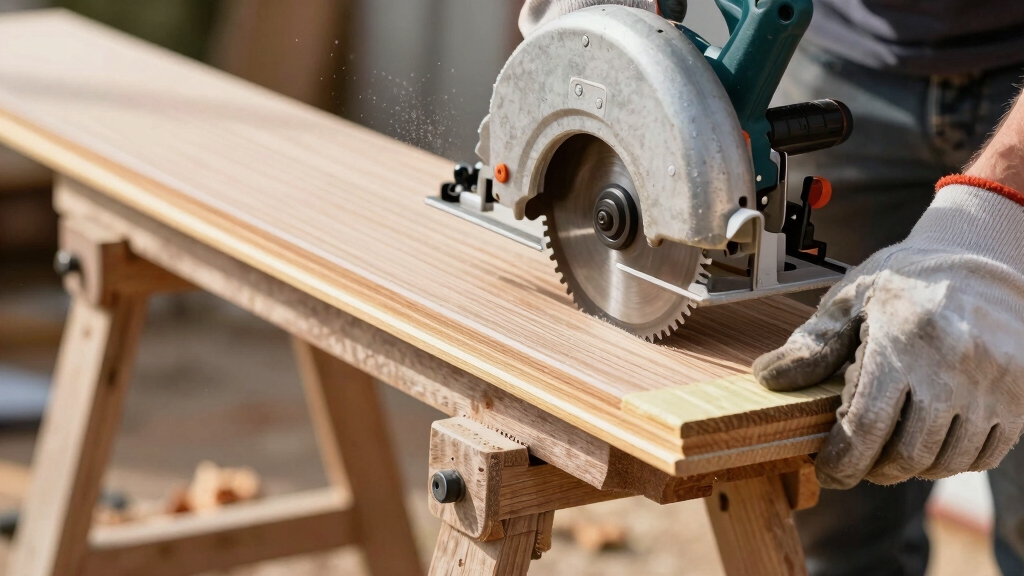
Consistently using a sharp, fine-toothed carbide blade is essential to prevent splintering and chipping when cutting composite decking.
Choose blades with 40-60 teeth for circular saws or miter saws, ensuring clean, smooth cuts.
Before cutting, apply masking tape over the cut line to minimize surface damage.
Secure the board firmly with clamps on a stable work surface to prevent movement during the cut.
Adjust the blade depth so it extends slightly beyond the board thickness to reduce tear-out.
Cut slowly and steadily, avoiding excessive speed that can cause chipping.
Finally, measure and mark your cut line precisely, and always align the blade on the waste side to preserve the visible edge.
Applying a thin coat of paste wax on the saw surface can reduce friction and enhance smoother cuts.
How to Make Straight Cuts on Composite Decking?
Sure! Let’s break it down a bit more conversationally. First things first, you’ll want to measure and mark your composite board accurately. Take your time with this step because it really sets the stage for a great cut.
Once you’ve got your measurements down, make sure to secure the board on a stable surface. This is super important to prevent any movement while you’re cutting.
Now, let’s talk about your circular saw. You’ll need to set it up with a fine-toothed carbide blade, and make sure it’s set slightly deeper than the thickness of the board.
This will help you achieve a nice, clean cut. When you’re ready to cut, guide the saw slowly along the waste side of the line. Keep a steady pressure, and you’ll end up with a precise, straight edge.
It’s all about taking it slow and steady! Also, working in a well-ventilated area is important to ensure safety and comfort during cutting.
Preparing The Board
Measure the board carefully using a tape measure and speed square to guarantee accurate length and angle before making any cuts.
Double-check your measurements to avoid costly mistakes. Mark the cut line clearly with pencil or chalk across the entire board width, ensuring visibility.
Apply masking tape directly over the cut line to reduce splintering during cutting. Trim 1/8 to 3/16 inch off one end to create a clean, square starting edge for precise cuts.
Secure the board firmly with clamps on a stable surface like sawhorses or joists to prevent movement. Proper preparation makes certain straight, clean cuts and improves safety.
Taking these steps before cutting will save time and material while enhancing the quality of your composite decking installation.
When using power tools for cutting, always ensure that you have the right blade installed for the material to achieve the best results and maintain safety.
Using Circular Saw
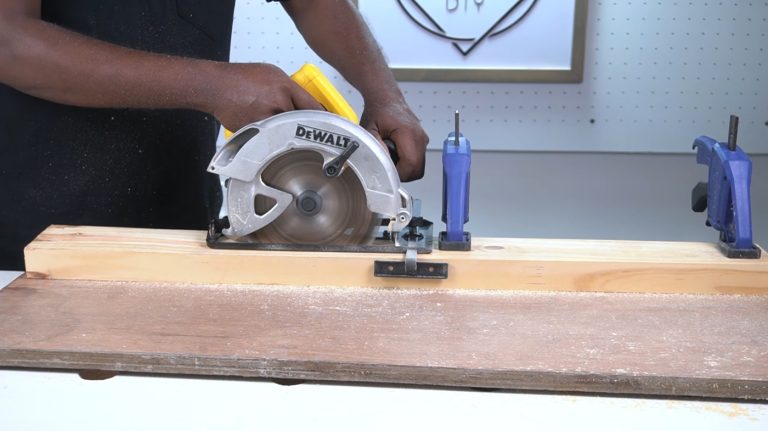
Set your circular saw with a fine-toothed carbide blade (40-60 teeth) and adjust the depth slightly deeper than the board thickness to guarantee clean, accurate cuts through composite decking.
Secure the board firmly on a stable surface using clamps to prevent movement. Mark your cut line clearly with pencil or chalk, and apply masking tape over it to reduce splintering.
Position the blade on the waste side of the mark, then guide the saw slowly and steadily along the line, maintaining consistent pressure. Support the decking fully throughout the cut to avoid uneven edges or binding.
Work in moderate temperatures to minimize brittleness and cracking. Always wear appropriate PPE and follow safety protocols to make certain precise, clean straight cuts every time. When cutting materials like aluminum with saws, using the correct blade designed for non-ferrous metals is essential for safety and quality.
How to Cut Angled and Curved Composite Decking Shapes?
When cutting angled or curved composite decking shapes, you’ll rely heavily on tools like the miter saw and jigsaw to achieve clean, precise results.
First, measure and mark angles with a protractor or speed square, then secure the board firmly.
Use a fine-toothed carbide blade in your miter saw for accurate angled cuts, pulling the blade down steadily or pushing the sliding miter saw forward.
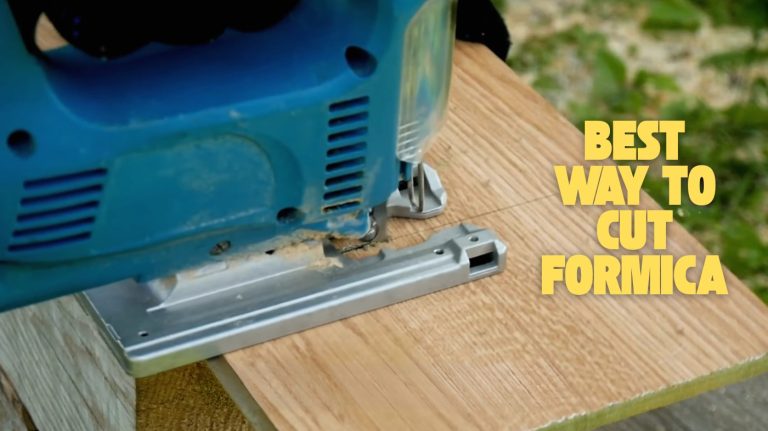
For curves or irregular shapes around posts or pipes, switch to a jigsaw equipped with a fine-toothed blade.
Cut slowly to prevent splintering and make perpendicular relief cuts before finishing notches or tight curves.
Always align the blade on the waste side of your markings, and support the decking fully to maintain stability throughout each cut.
Using a circular saw guide can further improve accuracy and reduce splintering when making straight cuts on composite decking.
Safety Tips for Cutting Composite Decking
Although composite decking is durable, you need to take safety seriously when cutting it to prevent injury.
Always wear eye and ear protection to guard against flying debris and loud noise.
Use a stable work surface, like sawhorses or joists, and firmly clamp the board to prevent movement.
Keep your hands clear of the blade’s path and never force the saw.
Choose the right blade: fine-toothed carbide-tipped for clean cuts and reduced splintering.
Cut slowly to avoid kickback and binding.
Measure twice and mark cut lines clearly to minimize errors.
Read and follow the manufacturer’s instructions for your tools.
After cutting, sand exposed edges to smooth roughness.
Using cutting fluid during the process can reduce friction and help achieve cleaner cuts.
Frequently Asked Questions
Can Composite Decking Be Cut With a Standard Handsaw?
You can cut composite decking with a standard handsaw, but it’s not ideal.
Handsaws lack the sharp, fine-toothed blades needed to make clean, precise cuts, so you risk splintering or uneven edges.
Instead, use a fine-toothed carbide blade on a circular saw or decking cutter for better accuracy and smoother results.
If you must use a handsaw, cut slowly and steady, and be prepared to sand rough edges afterward.
How Do Weather Conditions Affect Cutting Composite Decking?
Weather conditions directly impact your composite decking cuts.
Cutting in moderate temperatures is best, as extreme cold makes the material brittle and prone to cracking. Heat can cause expansion, leading to inaccurate measurements and cuts.
Avoid cutting in wet conditions since moisture can affect blade performance and safety.
Always check the temperature and humidity before you start to guarantee clean, precise cuts and prevent board damage or tool issues.
What Is the Best Way to Dispose of Composite Decking Scraps?
The best way to give your composite decking scraps a graceful send-off is by recycling them whenever possible.
Check with local recycling centers for composite material acceptance. If recycling isn’t available, responsibly dispose of scraps in your construction waste bin or landfill following local regulations.
Avoid burning, as it releases harmful chemicals. Always aim to minimize waste by planning cuts efficiently, turning leftovers into small projects or garden edging to extend their usefulness.
Can I Cut Composite Decking Indoors Safely?
You can cut composite decking indoors safely if you take proper precautions.
Make sure you have adequate ventilation to avoid inhaling dust.
Wear eye and ear protection, and use a dust collection system or vacuum to minimize airborne particles.
Secure the board firmly on a stable surface.
Use sharp, fine-toothed carbide blades to reduce splintering.
Keep children and pets away, and follow manufacturer safety guidelines to prevent accidents and maintain air quality indoors.
How Do I Maintain Tools After Cutting Composite Decking?
Think of your tools as a sharp sword. After each use, clean off dust and debris with a brush to keep edges keen.
Inspect blades for dullness or damage; replace or sharpen as needed to maintain precision. Lubricate moving parts to prevent rust and secure smooth operation.
Store tools in a dry, secure place away from moisture. Regular maintenance extends tool life and guarantees clean, safe cuts every time you work.
Cut with Confidence: Finish Your Composite Deck Like a Pro
Cutting composite decking doesn’t have to feel like negotiating the labyrinth. Choose the right tools, prepare your boards carefully, and make precise, clean cuts. Remember, preventing splintering is your Ariadne’s thread to a flawless finish.
Whether you’re tackling straight lines or curves, stay sharp and follow safety protocols. With these steps, you’ll master your deck project efficiently, turning complex cuts into straightforward tasks every time.