How Long Does Pva Glue Take to Dry: Factors That Affect Time
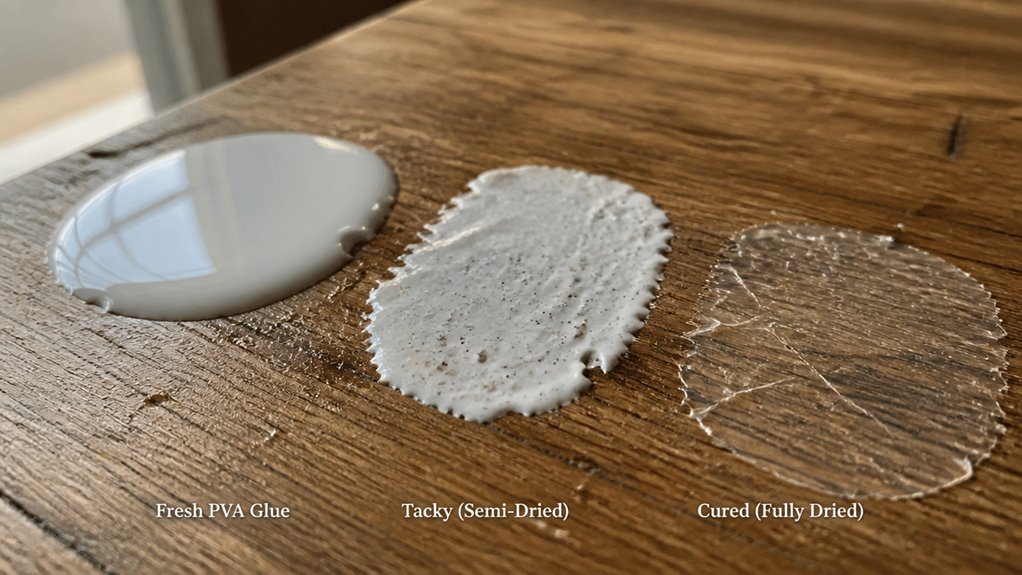
You can expect PVA glue to become tacky within 20–30 minutes, allowing light handling on paper or card. Wood surfaces typically touch-dry between 30–60 minutes.
Full curing for maximum strength takes about 24 hours under ideal conditions. Thicker materials or high humidity can extend this time.
Clamps should remain for at least 30 minutes to 2 hours to guarantee initial set. Keep the environment controlled to optimize drying.
Understanding these nuances will help you achieve the best bond.
Key Takeaways
- PVA glue typically becomes touch-dry within 30–60 minutes, allowing light handling but not full stress.
- Functional bond strength develops in 2–4 hours, but full curing takes about 24 hours for maximum strength.
- Paper and card substrates dry faster, often fully curing in 12 hours under ideal conditions.
- Thicker glue layers and high humidity can significantly extend drying and curing times beyond 24 hours.
- Clamps can usually be removed after 30 minutes to 2 hours, but full bond strength continues developing afterward.
What Are the Drying Stages of PVA Glue?

Although PVA glue may feel dry to the touch within 30 to 60 minutes, its drying process involves several distinct stages that you need to understand for ideal bonding.
PVA glue feels dry within an hour, but its full drying process unfolds in multiple essential stages.
First, the open time lasts about 5 to 15 minutes, during which the glue remains workable before it begins to skin over.
Next, the set or tack time occurs, generally within 30 to 60 minutes, allowing light handling without risking joint disturbance.
Functional bond strength develops between 2 to 4 hours, enabling moderate stress on the bond.
Finally, full curing takes around 24 hours, achieving maximum strength.
Factors like temperature, humidity, and glue layer thickness influence the duration of each stage. Monitoring these parameters guarantees peak adhesive performance and durable joints.
For safe handling during application and drying, it is important to wear personal protective equipment such as gloves and eye protection.
How Long Does PVA Glue Take to Dry on Wood?
When you’re working with PVA glue on wood, you can typically expect it to be touch-dry in about 30 to 60 minutes. That means you can handle it a little, but don’t get too eager just yet!
For the best results, you’ll want to wait around 24 hours for it to fully cure. That’s when you’ll get the maximum bond strength.
Keep in mind, though, that things like temperature, humidity, how thick you apply the glue, and how well the joints fit together can really affect those drying times.
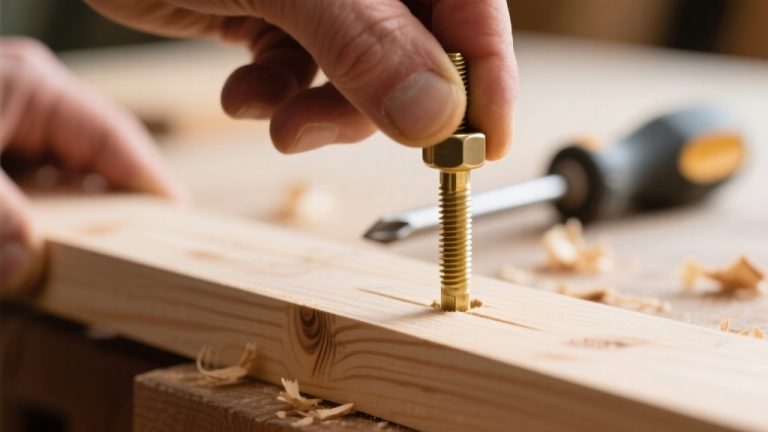
Using PVA glue mixed with sawdust is a popular method to create a color-matched repair for filling small screw holes in wood.
Typical Drying Timeline
When applying PVA glue to wood, the drying process follows a specific timeline that reflects both the adhesive’s chemistry and environmental conditions.
Initially, you have an open time of 5–15 minutes to position the wood pieces before the glue begins to skin over.
The glue typically becomes tacky or set within 30–60 minutes, allowing you to handle the joint lightly without risking bond failure.
Functional bond strength develops over the next 2–4 hours, permitting limited stress on the joint.
However, you should wait approximately 24 hours for the glue to fully cure, ensuring maximum strength and durability.
During this period, the adhesive undergoes polymerization and water evaporation, solidifying the bond.
For wood, this 24-hour cure time is essential before sanding, painting, or applying load.
To protect and maintain the wood surface after curing, it is recommended to apply food-grade mineral oil and finish treatments regularly.
Factors Affecting Drying
Because environmental and application factors directly influence the drying rate of PVA glue on wood, understanding these variables is essential for achieving peak bond strength.
Higher humidity slows water evaporation, prolonging set and cure times beyond the typical 30–60 minutes and 24 hours, respectively.
Lower temperatures reduce molecular activity, doubling drying duration in cooler environments.
Thin glue layers dry faster due to increased surface area-to-volume ratio, while thick applications retain moisture longer.
Proper ventilation accelerates drying by enhancing moisture removal.
Additionally, poorly fitted or stressed joints impair adhesive penetration, requiring extended curing periods to reach full strength.
To guarantee optimal bonding, control temperature and humidity, apply glue evenly, and maintain adequate airflow.
Ignoring these factors risks premature handling, compromising the structural integrity of the wood joint.
When preparing wood surfaces, it is important to ensure they are completely dry and free of dust or debris to avoid adhesion problems during drying and curing of adhesives, as noted in surface preparation guidelines.
PVA Glue Drying Times for Paper and Card
Paper and card substrates typically allow PVA glue to dry more quickly than wood, often reaching full cure within approximately 12 hours under ideal conditions.
When applying PVA to paper or card, the thinner, more porous nature of these materials facilitates faster moisture evaporation and polymerization, accelerating the curing process.
You’ll notice the glue becomes tacky within 20–30 minutes, allowing light handling, but full bond strength develops over several hours.
For card, especially thicker variants, curing times may extend closer to 24 hours to guarantee peak adhesion.
To achieve a reliable bond, apply a thin, even layer of PVA and maintain flat pressure during drying.
Avoid stressing the joint before the full cure, as premature handling can weaken the adhesive interface and compromise the bond integrity.
Proper drying also requires avoiding excess moisture to prevent damage to the substrate and ensure a strong bond, as emphasized in moisture control techniques.
Key Factors That Affect PVA Glue Drying Time
Understanding the variables that influence PVA glue drying time helps you optimize your bonding process for different materials and conditions.
The thickness of the glue layer markedly impacts drying; thinner layers dry faster due to quicker water evaporation.
Joint fit is critical. Poorly aligned or stressed joints require extended curing to develop full strength.
Ventilation also plays a key role by facilitating moisture removal and accelerating the drying process.
Material type influences timing. Wood typically needs about 24 hours for full cure, while paper and card dry faster.
Avoid early handling or unclamping before the set time, usually 30–60 minutes, to prevent joint failure.
Keep in mind that touch-dry status doesn’t indicate full bond strength. You must allow sufficient cure time for reliable adhesion.
Environmental conditions such as consistent humidity and temperature significantly affect drying time and help maintain bond stability.
How Temperature and Humidity Affect PVA Glue Drying?
Although PVA glue dries through water evaporation, the rate at which this occurs depends heavily on temperature and humidity levels.
Higher temperatures accelerate evaporation, reducing set time and enabling the glue to reach handling strength faster.
Conversely, lower temperatures slow molecular activity, doubling or more the drying duration.
Humidity plays an inverse role: elevated moisture in the air reduces evaporation rates, prolonging both tack and full cure times.
If humidity rises above 60%, expect significant delays, especially in thicker glue layers.
For ideal drying, maintain ambient temperatures between 20–25°C (68–77°F) and relative humidity near 40–50%.
Deviations from these conditions require extended curing periods to guarantee the adhesive attains its full mechanical strength.
This is particularly important in load-bearing or stressed joints.
Using a primer application can also improve adhesion in challenging conditions by promoting stronger bonding interfaces.
How Glue Thickness Changes Drying Speed?
When you apply a thicker layer of PVA glue, the drying process slows considerably because more water must evaporate before the adhesive sets.
Applying a thicker PVA glue layer slows drying as more water needs to evaporate before setting.
Thicker glue layers retain moisture longer, extending the open and set times due to slower evaporation rates. This delays the tack and handling stages, requiring additional drying time before the bond gains strength.
You’ll notice that a thin, even coat dries faster because it allows water to escape quickly through the adhesive film’s surface.
Conversely, thick applications trap moisture beneath, creating a longer diffusion path for evaporation.
Consequently, full cure times can extend beyond the typical 24 hours, especially under less ideal temperature and humidity.
For consistent drying, apply glue in thin, uniform layers to optimize evaporation and bonding efficiency.
Additionally, ensuring a well-ventilated area during drying helps improve evaporation and prevents issues related to trapped moisture.
When Can You Safely Remove Clamps From PVA Glue Joints?
Since thicker glue layers extend drying times due to slower moisture evaporation, you need to be cautious about when you remove clamps from PVA glue joints.
Typically, you can remove clamps after the glue has set or reached its tack stage, usually between 30 minutes and 2 hours under standard conditions.
However, this doesn’t mean the bond has full strength. Removing clamps too early risks joint failure or misalignment because functional strength continues developing for several hours, with maximum cure around 24 hours.
Consider factors like temperature, humidity, and joint fit; cooler or more humid environments extend clamp time.
Always make certain the joint holds without stress before unclamping. For critical or load-bearing joins, err on the side of longer clamp times to maintain structural integrity during the full cure period.
Properly reinforcing joints with dowels, splines, or screws can also help maintain strength even if clamps are removed prematurely.
How to Speed Up PVA Glue Drying Without Losing Strength?
Optimize drying conditions to accelerate PVA glue curing without compromising bond strength by controlling temperature, humidity, ventilation, and application thickness.
Control temperature, humidity, ventilation, and application thickness to speed PVA glue drying without losing bond strength.
You can speed drying efficiently by balancing these factors rather than rushing the process. For best results:
Maintain ambient temperature between 20–25°C to promote evaporation without weakening the adhesive.
Keep relative humidity below 50% to prevent moisture retention that slows curing.
Provide good air circulation to facilitate water vapor dissipation from the glue layer.
Apply glue in thin, even coats to reduce drying time while preserving adhesive integrity.
Avoid direct heat or forced drying methods that risk cracking or weakening the bond.
Using materials with corrosion resistance properties can help ensure long-term durability in humid environments where glue is applied.
How to Get a Strong Bond While Your PVA Glue Cures?
Make certain your workpieces remain immobile and properly aligned during the curing process to develop a strong PVA glue bond.
Use clamps or weights to maintain consistent pressure across the joint, ensuring intimate contact without squeezing out excess adhesive.
Avoid disturbing the assembly for at least 30–60 minutes to allow initial set.
Keep the environment stable; moderate temperature and low humidity optimize water evaporation and polymerization rates.
Ventilate the workspace to hasten curing but prevent drafts that could misalign parts.
Apply glue in thin, even layers to reduce drying time and prevent weak spots caused by trapped moisture.
Resist the urge to handle or stress the joint before 24 hours, as PVA reaches maximum strength only after full cure.
This disciplined approach guarantees a durable, long-lasting bond.
Frequently Asked Questions
Can PVA Glue Be Used on Non-Porous Surfaces?
You can use PVA glue on non-porous surfaces, but it’s not ideal.
Since PVA relies on absorption to bond, non-porous materials like glass or metal won’t allow proper adhesion. This results in weak or temporary bonds.
For these surfaces, you’d be better off with specialized adhesives like epoxy or super glue.
If you insist on PVA, roughening the surface to increase mechanical grip might help.
However, expect limited bond strength and durability.
Is PVA Glue Waterproof Once Fully Dried?
Think of PVA glue as a paper umbrella. It shields briefly but isn’t built to withstand heavy rain.
Once fully dried, standard PVA glue isn’t waterproof. It resists light moisture but breaks down with prolonged water exposure.
If you need a water-resistant bond, you’ll want to use a waterproof PVA variant or seal the joint with a water-resistant finish.
Otherwise, expect the bond to weaken when wet.
How Should PVA Glue Be Stored for Best Shelf Life?
You should store PVA glue in a cool, dry place, ideally between 40°F and 77°F (5°C to 25°C), away from direct sunlight.
Keep the container tightly sealed to prevent moisture loss and contamination.
Avoid freezing temperatures, as they can degrade the adhesive properties.
If you follow these guidelines, your PVA glue will maintain its shelf life and performance for up to 12 months or longer, depending on the manufacturer’s recommendations.
Can PVA Glue Be Painted Over Immediately After Drying?
You might be keen to paint right after PVA glue dries, but hold on. Although the glue feels dry to touch within an hour, it won’t have reached full strength yet.
Painting immediately risks peeling or uneven coverage. To guarantee a smooth, durable finish, wait the full 24 hours for the glue to cure completely.
This guarantees proper adhesion and prevents problems, especially on wood or stressed joints. Patience pays off.
What Are Common Mistakes to Avoid When Using PVA Glue?
Don’t apply PVA glue too thickly, as it prolongs drying and weakens the bond. Avoid positioning pieces after the open time (5–15 minutes) lapses, or you’ll get poor alignment.
Never remove clamps prematurely; wait at least 30–60 minutes for handling strength and 24 hours for full cure. Also, steer clear of using glue in high humidity or low temperatures without adjustments, since these conditions drastically slow drying and compromise adhesion.
PVA Glue Drying Time for Strong, Reliable Joints
Understanding PVA glue drying is like mastering a delicate dance. You need the right timing and conditions for a flawless finish.
By controlling temperature, humidity, and glue thickness, you guarantee peak curing without compromising strength. Remember, clamps stay on until the bond feels firm, usually within 30 minutes to an hour.
Speeding up drying is possible, but balance is key to maintain durability. Follow these steps precisely to achieve strong, reliable joints every time.