Is Tung Oil Safe for Cutting Boards: Food Safety Guide
You can safely use tung oil on cutting boards only if it’s 100% pure and fully cured. This curing process takes 15–30 days.
Uncured or impure products can leach toxic substances and cause allergic reactions. They remain unsafe for food contact.
Avoid blends with solvents or synthetic resins, as they never become truly food-safe. Proper application and curing guarantee a hard, durable finish.
Keep in mind that understanding the application process and risks is essential for safe use.
Key Takeaways
- Pure 100% tung oil is safe for cutting boards only after fully curing for 15–30 days to form a hard, food-safe surface.
- Many commercial tung oil products contain additives or solvents that prevent curing and are unsafe for food contact.
- Uncured or raw tung oil is toxic, chemically unstable, and can cause nausea or allergic reactions if ingested.
- Applying multiple thin coats with proper drying and curing conditions ensures a durable, non-toxic finish on cutting boards.
- Tung oil finishes are less suitable for heavy chopping as cured film particles may flake off, posing minor ingestion risks.
What Is Pure Tung Oil and How Is It Different From Finishes?
Although many products carry the name “tung oil,” you need to know that pure tung oil and tung oil finishes are vastly different.
Pure tung oil contains 100% real oil, which cures into a hard, non-toxic, food-safe surface when fully dried.
Pure tung oil cures into a hard, non-toxic, and food-safe finish when fully dried.
In contrast, tung oil finishes usually mix only 10–30% tung oil with solvents, varnishes, or synthetic resins.
These additives prevent the finish from becoming safe for food contact, potentially releasing harmful chemicals.
You must check labels carefully to make certain the product states “100% pure tung oil” to avoid unsafe blends.
Also, pure tung oil differs from raw tung seed oil, which is toxic until cured.
Knowing these distinctions helps you choose the right product for a safe, durable finish on your cutting boards.
Proper application and curing over 30 days are essential to form a chemically inert, waterproof film that ensures safety and durability.
Why Does Pure Tung Oil Become Food-Safe Only After Curing?
Because pure tung oil undergoes a chemical transformation during curing, it only becomes food-safe once fully hardened.
The curing process involves oxidation and polymerization, turning the liquid oil into a stable, hard film that no longer leaches chemicals.
Until this transformation completes, the oil remains toxic and can cause nausea if ingested or contacted with food.
You must make certain the oil cures fully to avoid health risks and achieve a durable, non-toxic surface.
Uncured tung oil is chemically unstable and potentially harmful.
Curing locks tung oil molecules into a solid, inert form.
FDA certifies only fully cured pure tung oil as food-safe.
Partial curing allows leaching of raw oil substances.
Proper curing prevents rancidity and chemical migration into food.
This process results in a durable wood finish that is resistant to moisture and everyday wear, making it ideal for cutting boards.
How Long Does Tung Oil Take to Fully Cure on Cutting Boards?
So, when it comes to tung oil on your cutting board, you’ll want to give it about 15 to 30 days to fully cure.
This waiting period is crucial for achieving that hard, food-safe finish we all want.
Now, keep in mind that a few factors can influence how quickly the oil hardens.
Things like moisture levels, temperature, and even sunlight can play a role.
So, making sure you have the right drying and curing conditions is really important.
And just a heads up: it’s best to avoid using your cutting board for direct food contact until the oil is completely cured.
This way, you can steer clear of any health risks.
Patience really pays off!
Fully cured tung oil penetrates deeply and forms a flexible, water-resistant film, making it essential to confirm complete curing before use.
Curing Timeframe Explained
When applying pure tung oil to your cutting board, you need to allow sufficient time for it to fully cure before using the surface for food preparation. Tung oil doesn’t just dry; it hardens through oxidation, becoming safe only after this complete process.
You can lightly use the board after about a week, but full food contact should wait until the finish is fully cured.
Remember:
Full curing takes 15–30 days for a stable, non-toxic surface.
Using the board too soon risks chemical leaching and nausea.
Moisture and sunlight can delay or unevenly cure the oil.
The board must be dry before applying tung oil.
Patience guarantees a durable, safe finish suitable for food contact.
Following these steps protects your health and preserves your cutting board.
Tung oil is considered food-safe due to its natural origin and curing properties, making it ideal for kitchen items like cutting boards.
Factors Affecting Cure
Several key factors influence how long pure tung oil takes to fully cure on your cutting board. Temperature, humidity, and airflow play major roles; warmer, drier conditions with good ventilation speed up curing, while moisture slows it down.
Make sure the board is completely dry before application, as residual dampness prevents proper hardening. Avoid direct sunlight during curing, which can cause uneven drying.
Typically, pure tung oil needs 15–30 days to cure fully, reaching a hard, non-toxic finish safe for food contact. Light use is possible after about a week, but you must wait the full period before cutting directly on the surface.
Rushing this process risks uncured oil leaching into food, which can cause nausea and compromise safety.
Applying multiple coats with 24–48 hours drying between coats helps build a durable, food-safe finish with optimal moisture resistance.
What Are the Health Risks of Using Uncured or Impure Tung Oil on Cutting Boards?
Although pure tung oil becomes safe only after fully curing, using uncured or impure tung oil on cutting boards poses significant health risks.
When the oil hasn’t hardened completely, it can leach toxic substances into your food, causing nausea or allergic reactions.
Impure tung oil products may contain harmful solvents or resins that never become food-safe.
Using such oils increases the chance of ingesting dangerous chemicals or microscopic particles dislodged during cutting.
Uncured oil remains toxic and can contaminate food.
Impure tung oil often includes unsafe solvents or varnishes.
Allergic reactions may occur, especially in sensitive individuals.
Microscopic finish particles can flake off into food.
Ingesting uncured or impure oil poses nausea and poisoning risks.
Always make certain the tung oil is 100% pure and fully cured before use.
For safer alternatives, consider water-based clear coats that prioritize indoor air quality and nontoxic formulations.
Can Tung Oil Finish Products Be Safely Used on Cutting Boards?
Choosing tung oil finish products for cutting boards requires careful scrutiny, as many commercial finishes labeled “tung oil” aren’t truly pure and often contain solvents or synthetic resins.
These additives prevent the finish from fully curing into a safe, stable surface, making them unsuitable for direct food contact.
You must look for products explicitly marked as 100% pure tung oil to guarantee safety.
Even then, pure tung oil only becomes food-safe after curing completely—typically 15 to 30 days—so premature use risks chemical leaching.
Additionally, synthetic tung oil finishes may never reach a truly safe state, posing health concerns.
For cutting boards, it’s best to avoid “tung oil finish” products unless you verify purity and commit to proper curing to minimize health risks.
Maintaining proper environmental conditions such as temperature and humidity during curing is critical to ensure the tung oil fully polymerizes and achieves food-safe status.
Why Choose Mineral Oil Over Tung Oil for Cutting Boards?
After understanding the risks associated with synthetic tung oil finishes and the lengthy curing times required for pure tung oil, you might wonder why mineral oil is often recommended as the safer and more practical choice for cutting boards.
Mineral oil provides a food-safe, easy-to-apply finish without the long wait or risk of uncured oil exposure. It keeps your board hydrated and protected, and you can reapply it frequently without worry.
Consider these reasons to choose mineral oil over tung oil:
Immediate usability after application, no curing wait.
No risk of toxic leaching or allergies.
Easy maintenance with simple reapplication.
Does not harden, preventing surface cracking.
Widely recognized as food-safe for direct cutting contact.
Mineral oil offers a reliable, safe option for everyday cutting board care. Additionally, unlike some finishes that require complex application, mineral oil does not need curing time, making it convenient for frequent use.
How Suitable Is Tung Oil for Butcher Blocks and Wooden Bowls?
When you think about using tung oil for your butcher blocks or wooden bowls, you’re in for a treat! It offers a durable, hard finish that actually lasts longer than mineral oil. Pretty impressive, right? Just keep in mind that you need to make sure the oil is 100% pure and fully cured before letting any food make contact with it. This step is super important for safety.
Now, while tung oil does a great job on bowls and those light cutting surfaces, it’s not the best choice for heavy chopping. The reason? There’s a chance that some finish particles might be released. So, if you’re planning on doing some serious slicing and dicing, you might want to consider other options. But for general use, tung oil can be a fantastic choice!
Additionally, tung oil is food-safe and ideal for surfaces needing a natural, non-toxic finish, making it a popular choice for kitchenware.
Durability Compared To Mineral Oil
Although mineral oil remains the preferred choice for cutting boards due to its ease of use and lack of curing time, tung oil offers a more durable and water-resistant finish that appeals to those seeking a harder seal.
Tung oil forms a tough, protective layer that resists moisture better than mineral oil but requires a long curing period. This makes it less convenient for immediate use but potentially more resilient over time.
Tung oil cures into a harder, more water-resistant surface than mineral oil.
Mineral oil penetrates wood without curing, needing frequent reapplication.
Tung oil’s curing process takes 15–30 days, delaying food contact.
Mineral oil is less likely to flake or chip compared to tung oil’s finish.
Tung oil suits items with less direct cutting, like bowls and butcher blocks, better than boards.
Its natural, biodegradable nature and ability to form a durable, elastic, waterproof barrier make tung oil a long-lasting finish ideal for kitchenware and high-moisture areas.
Food Safety Considerations
Since tung oil requires a lengthy curing period to become fully food-safe, you need to weigh its suitability carefully before applying it to butcher blocks or wooden bowls.
Pure tung oil becomes non-toxic only after curing for 15–30 days, so you must avoid food contact until then to prevent ingestion of harmful uncured oil.
Also, be sure to use 100% pure tung oil, not blends labeled as “tung oil finish,” which often contain unsafe solvents.
While cured tung oil is FDA-approved for food contact and won’t leach chemicals or go rancid, microscopic particles may dislodge during heavy use, posing a risk on cutting boards.
For wooden bowls or light-use surfaces, tung oil is safer, but on butcher blocks, consider this trade-off carefully before application.
Ideal Applications And Limitations
Because pure tung oil forms a hard, durable finish once fully cured, it can provide excellent protection for wooden bowls and salad bowls where cutting is minimal or nonexistent.
However, its suitability for butcher blocks and cutting boards is limited due to the risk of microscopic finish particles dislodging during heavy use. You should consider these points carefully:
Ideal for wooden bowls, salad bowls, and countertops with little to no direct cutting.
Less suitable for cutting boards where frequent chopping occurs.
Provides a tougher, more water-resistant seal than mineral oil.
Requires a full 15–30 day cure before safe food contact.
Not recommended if you prefer a softer, easily renewable finish for heavy food prep.
Use tung oil where durability outweighs particle risk and minimal cutting happens.
How to Apply Pure Tung Oil on Cutting Boards Step-by-Step?
Start by thoroughly cleaning your cutting board with mild soap and water. Let it dry completely for at least one to two days to guarantee no moisture remains.
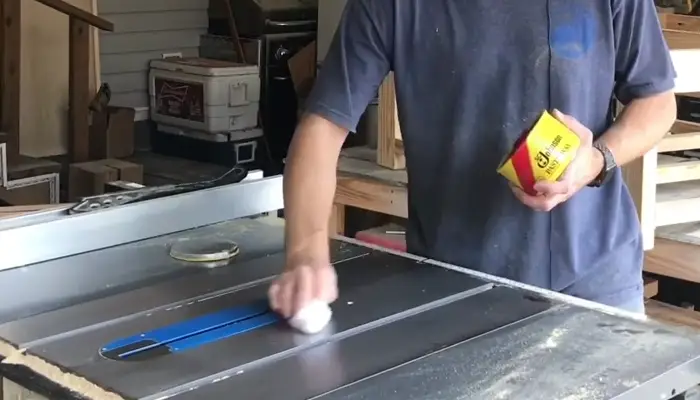
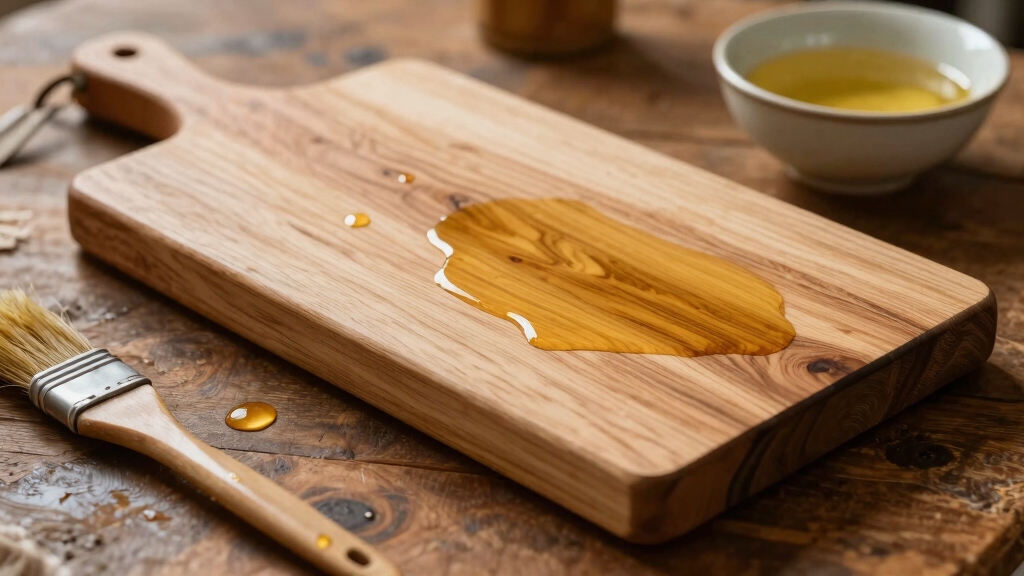
Next, apply a thin, even coat of 100% pure tung oil using a clean, lint-free cloth or brush. Work the oil into the wood grain carefully, avoiding puddles or shiny spots.
After 20–30 minutes, wipe off any excess oil to prevent stickiness. Repeat this process for 3–4 coats, letting each dry thoroughly before applying the next.
Place your board in a well-ventilated area away from direct sunlight to cure. Remember, full curing takes 15–30 days; only then is the finish food-safe and non-toxic for cutting board use.
How to Maintain and Reapply Tung Oil for Safe Food Contact?
To keep your tung oil finish safe for food contact, it’s important to start with a clean slate. So, give your cutting board a good wash and make sure it’s completely dry before you reapply the oil.
When you’re ready to apply, go for multiple thin coats. It’s better to do several light layers rather than slathering on a thick one. And don’t forget to wipe away any excess oil—this helps avoid those annoying sticky spots as the oil cures.
Also, try to stick to a regular schedule for reapplication. This way, you’ll ensure your surface stays sealed and food-safe over time. Keeping up with it doesn’t just help the finish; it also keeps your cutting board looking great!
Preparing Surface Properly
When maintaining or reapplying tung oil to your cutting board, you should guarantee the surface is thoroughly cleaned and completely dry before treatment. Any moisture or residue can interfere with the oil’s curing process, leading to an unsafe finish.
Follow these steps to prepare properly:
Wash the board with mild soap and warm water, avoiding harsh detergents. Rinse thoroughly to remove all soap traces.
Let the board dry completely for at least 1–2 days in a well-ventilated area. Inspect the surface for any sticky or shiny spots; wipe off excess oil if present.
Avoid sanding between applications unless the surface is rough or damaged. Taking these precautions assures the tung oil cures fully, creating a safe, durable barrier for food contact.
Applying Multiple Thin Coats
Apply multiple thin coats of pure tung oil to your cutting board, assuring each layer is evenly spread and free of puddles or shiny spots. Thin coats allow the oil to cure properly, preventing tackiness or uneven finishes.
Avoid rushing; let each coat dry fully in a well-ventilated, dry area. Never apply thick layers, as they trap moisture and delay curing, which risks unsafe surfaces.
| Feeling | Reason |
|---|---|
| Confidence | Even coats assure full curing |
| Caution | Thick coats cause sticky spots |
| Satisfaction | Smooth finish protects wood |
Regular Reapplication Schedule
Regularly maintaining your cutting board with pure tung oil guarantees it stays protected and safe for food contact.
To keep the finish durable and non-toxic, reapply tung oil as needed, especially when the surface looks dry or dull. Proper maintenance involves cleaning, drying, and applying thin, even coats without leaving excess oil.
Clean the board with mild soap and dry thoroughly before oiling. Apply multiple thin coats, wiping off any excess after each. Allow 15–30 days for full curing before heavy food contact. Reapply oil annually or when the surface shows signs of wear. Avoid using oils that can go rancid, like olive or sunflower oil.
Following this schedule helps maintain a safe, effective tung oil finish.
Allergies and Sensitivities to Know Before Using Tung Oil
Because tung oil comes from a nut tree, you should be cautious if you have allergies or sensitivities.
Exercise caution with tung oil if you have nut allergies or sensitivities.
While most people with tree nut allergies tolerate tung oil safely, severe sensitivities can cause allergic reactions.
Before applying tung oil to your cutting board, perform a patch test on a small skin area to check for any irritation.
Remember, raw tung seed oil is toxic and uncured tung oil can cause nausea if ingested, so only use fully cured oil.
Also, be aware that heavy chopping may dislodge tiny particles of the cured finish, posing a minor ingestion risk.
If you have known allergies or concerns, consult a healthcare professional before use.
Taking these precautions helps make certain your safety while enjoying the benefits of tung oil.
Frequently Asked Questions
Can Tung Oil Be Mixed With Other Oils for Better Cutting Board Protection?
You can mix tung oil with other oils like mineral oil or beeswax for better cutting board protection, but you have to be cautious.
Pure tung oil needs proper curing to be safe, and mixing it with oils that don’t harden could affect that.
Mineral oil stays soft and food-safe but doesn’t cure.
Blending them might improve durability and moisture resistance, but always test the finish and make sure it’s fully cured before food contact.
What Is the Best Storage Method for Pure Tung Oil to Maintain Quality?
To keep pure tung oil fresh and effective, store it in a tightly sealed container away from heat, light, and moisture.
You’ll want to keep it in a cool, dark place like a cupboard or basement to prevent premature oxidation.
Avoid direct sunlight and temperature fluctuations, as these can degrade the oil.
Proper storage helps maintain its quality and guarantees it cures properly when you apply it to your wood projects.
How Does Humidity Affect the Curing Process of Tung Oil on Wood?
Think of curing tung oil like baking a perfect loaf. You need the right environment.
High humidity slows down the curing process because moisture competes with the oil’s oxidation.
This prevents it from hardening properly.
If the wood stays damp, the oil won’t fully cure, leaving a sticky, unsafe finish.
So, you’ve got to make certain your wood is dry and the humidity low.
Otherwise, your tung oil won’t reach that durable, non-toxic state.
Are There Eco-Friendly Alternatives to Tung Oil for Cutting Boards?
Yes, you can choose eco-friendly alternatives like food-grade mineral oil or beeswax for your cutting boards.
These options are safe, non-toxic, and don’t require long curing times like tung oil.
Mineral oil is easy to apply and replenishes wood moisture effectively.
Beeswax adds a natural protective layer.
Both avoid the risk of harmful chemicals or rancidity, making them reliable, sustainable choices for maintaining your cutting boards safely.
What Tools Are Recommended for Applying Tung Oil Evenly on Cutting Boards?
You might imagine slapping tung oil on with a paint roller, but don’t. Use a clean, lint-free cloth or a natural bristle brush instead.
These tools help you spread the oil evenly without puddles or streaks, ensuring proper curing. Avoid foam brushes; they trap moisture.
Apply thin coats, wiping off excess to prevent sticky spots. Patience and gentle strokes will give your cutting board a smooth, durable finish without the mess or uneven patches.
Pure Tung Oil vs Other Finishes for Cutting Board Safety
When you use pure tung oil and let it fully cure, usually about 30 days, you make your cutting board safe for food contact.
Imagine you’ve just finished oiling your butcher block; after waiting, you can confidently chop veggies without worrying about toxins.
Just remember, uncured or impure tung oil can be risky, so always choose quality products and maintain your board regularly to keep it safe and durable for everyday use.