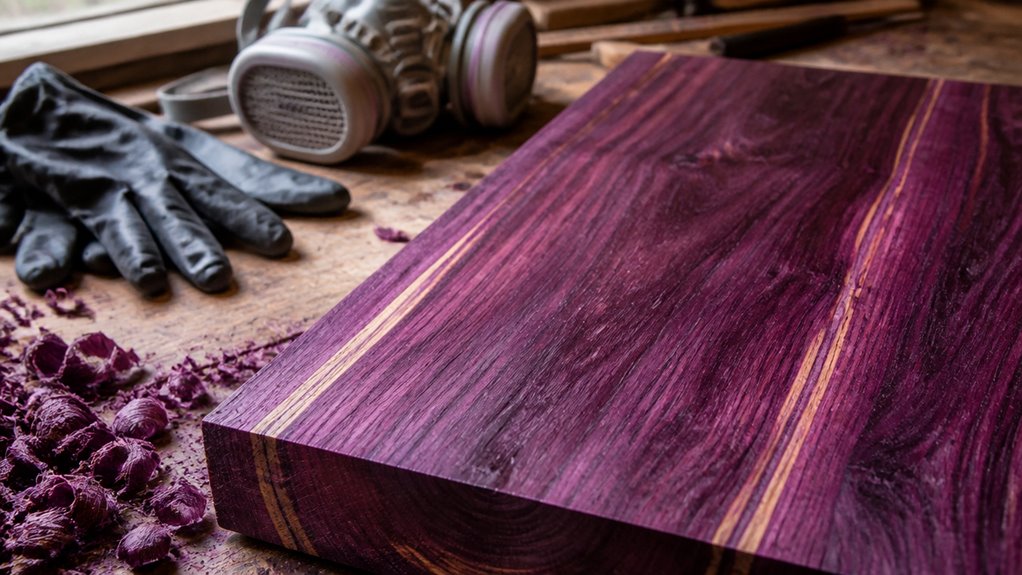
Is Purple Heart Wood Toxic: What Woodworkers Should Know
You’re safe handling finished Purpleheart wood, as it isn’t inherently toxic.
However, raw Purpleheart and its sawdust release dalbergione, a sensitizing compound that can irritate your skin, eyes, and respiratory tract.
Direct contact or inhalation, especially during cutting or sanding, may cause dermatitis or respiratory issues in sensitive individuals.
Proper protective gear and ventilation are essential when working with raw wood.
Understanding these precautions will help you manage the risks effectively and use Purpleheart safely.
Key Takeaways
- Purpleheart wood contains dalbergione, a sensitizing compound causing skin, eye, and respiratory irritation mainly from raw wood and sawdust.
- Finished Purpleheart wood is not inherently toxic and poses minimal risk when handled as a completed object.
- Sawdust from cutting or sanding Purpleheart wood can trigger allergic reactions and respiratory issues in sensitive individuals.
- Proper protective measures like respirators, gloves, and goggles are essential during woodworking to prevent irritation.
- Finished Purpleheart wood is generally considered safe for food use, but avoid splinters and prolonged skin contact.
Is Purpleheart Wood Safe to Handle? What You Should Know?
Frequently, people wonder if Purpleheart wood is safe to handle given its unique properties.
Scientifically, Purpleheart is classified as a sensitizer due to dalbergione, a neoflavonoid compound responsible for irritation.
Purpleheart contains dalbergione, a neoflavonoid that classifies it as a sensitizer causing irritation.
However, it isn’t inherently toxic or poisonous when handled as a finished object.
You should know that the primary health risks arise during cutting or sanding, when sawdust is generated.
Direct contact with raw wood or dust can cause skin irritation or dermatitis, although severe allergic reactions are uncommon.
Eye irritation may occur if dust contacts your eyes, but systemic toxicity isn’t reported.
Handling the finished timber poses minimal risk.
Still, you should exercise caution by minimizing exposure to raw material and sawdust to reduce potential sensitization and irritation.
How Purpleheart Sawdust Affects Your Skin, Eyes, and Lungs?
When you cut or sand Purpleheart wood, the sawdust releases dalbergione, a neoflavonoid compound that can irritate your skin, eyes, and respiratory system.
Direct contact with the dust often causes skin irritation and dermatitis, manifesting as an itchy rash. If the dust contacts your eyes, it can lead to frequent irritation and discomfort.
Inhalation poses a more significant risk, as repeated exposure to airborne sawdust can inflame your respiratory tract and potentially trigger asthmatic reactions, especially if you have pre-existing sensitivities.
Though severe allergic responses are uncommon, the irritation is primarily a result of dalbergione’s sensitizing effects.
When and How to Protect Yourself From Purpleheart Dust?
Although Purpleheart wood isn’t highly toxic, you should take protective measures whenever cutting or sanding it to minimize exposure to dalbergione-containing dust.
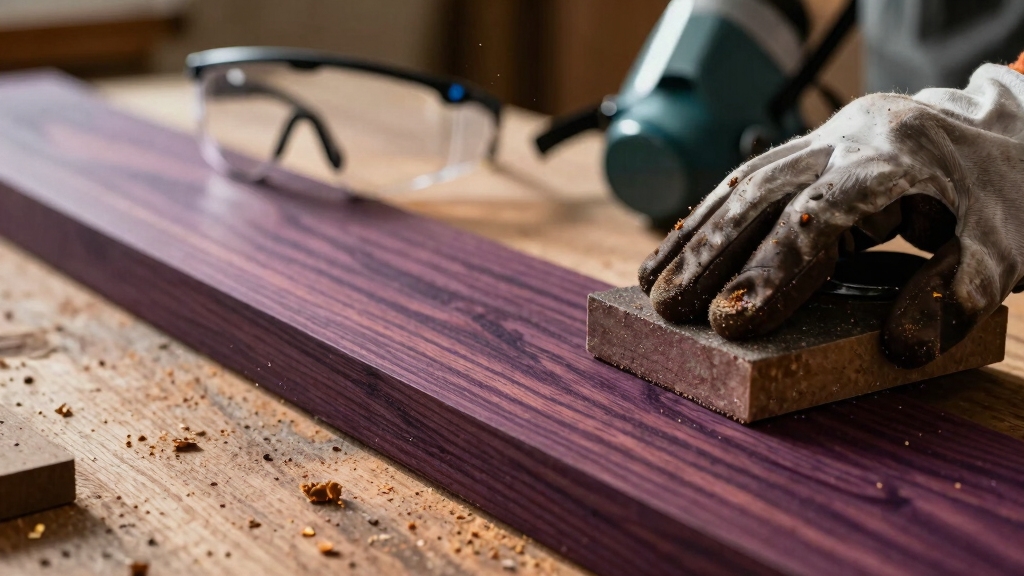
Always wear a properly fitting respirator or dust mask to prevent inhalation of airborne particles, which can cause respiratory irritation or asthmatic reactions.
Use safety goggles to shield your eyes from dust contact, reducing the risk of irritation.
Gloves are essential to avoid direct skin contact with raw wood and dust, preventing dermatitis or allergic reactions.
Work in a well-ventilated area or use dust extraction systems to control airborne dust concentration effectively.
Limiting exposure time and cleaning your workspace regularly further reduces risk.
These precautions assure you handle Purpleheart wood safely while mitigating sensitization hazards linked to its dust.
Additionally, maintain a clutter-free workspace to enhance safety and focus during woodworking tasks.
Using Purpleheart Wood for Cutting Boards: Safety and Risks
After taking protective measures against Purpleheart dust during woodworking, you might consider its suitability for cutting boards.
Finished Purpleheart wood is generally regarded as food safe since the primary irritant, dalbergione, is released mainly during cutting or sanding.
However, its extreme hardness (Janka 2,520 lb) risks dulling or damaging kitchen knives.
While prolonged use has shown minimal adverse effects, sensitization remains a concern, especially for those with wood allergies.
Direct ingestion of wood chips poses the highest allergic risk, so you should avoid chipping or splintering.
Experts advise caution with daily food preparation due to potential skin sensitization from prolonged contact.
Consequently, while Purpleheart cutting boards can be safe if properly finished and maintained, they carry inherent risks that warrant careful consideration before regular kitchen use.
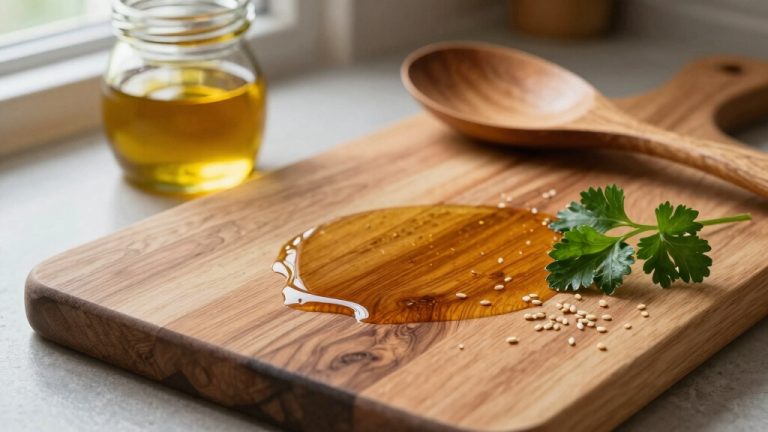
To ensure longevity and maintain safety, applying food-grade mineral oil regularly can help protect and preserve the wood surface.
Essential Safety Tips for Handling Purpleheart Wood at Home and Work
Because Purpleheart wood releases dalbergione primarily through dust generated during cutting or sanding, you must implement strict safety measures to minimize exposure. This neoflavonoid compound causes irritation, so controlling dust is critical.
Purpleheart wood dust releases irritating dalbergione, making strict safety measures essential during cutting and sanding.
Follow these essential safety tips to protect yourself:
- Wear appropriate personal protective equipment. Use a well-fitting mask, safety goggles, and gloves to shield your respiratory system, eyes, and skin from dust and direct contact.
- Guarantee proper ventilation in your workspace to disperse airborne particles and reduce inhalation risk.
- Utilize dust extraction systems or vacuum attachments on power tools to capture sawdust at the source. This minimizes airborne concentrations.
Additionally, applying a suitable lubricant on cutting blades can reduce dust generation and improve cutting efficiency.
Frequently Asked Questions
Can Purpleheart Wood Cause Long-Term Health Effects?
Purpleheart wood itself doesn’t cause long-term health effects when handled properly.
However, prolonged exposure to its sawdust, which contains dalbergione, may lead to chronic respiratory irritation or sensitization. This is especially true if you don’t use adequate protection like masks and ventilation.
Repeated skin contact can cause dermatitis over time. To minimize risks, always wear protective gear and control dust during woodworking.
Finished purpleheart wood poses minimal health risks since irritants are primarily released during cutting or sanding.
Is Purpleheart Wood Safe for Children’s Toys?
Think of purpleheart wood like a double-edged sword for children’s toys.
It’s generally safe once finished, as the toxic dalbergione compound only releases during cutting or sanding.
However, raw or unfinished wood dust can cause skin and respiratory irritation.
Since kids often put toys in their mouths, you should avoid using purpleheart for their playthings to prevent potential allergic reactions or sensitization.
Choose safer woods designed for children instead.
How Does Purpleheart Wood Compare Toxicity-Wise to Other Hardwoods?
Purpleheart wood poses a moderate sensitization risk compared to other hardwoods, mainly due to dalbergione, which causes irritation during cutting or sanding.
While it’s not highly toxic or poisonous like some exotic woods, its sawdust can trigger skin, eye, and respiratory irritation, especially without protection.
You should treat it cautiously, similar to woods like teak or cocobolo, by using masks, gloves, and ventilation to minimize exposure to its irritants.
Can Finished Purpleheart Wood Release Allergens Over Time?
Like a locked treasure chest, finished purpleheart wood rarely releases allergens over time.
Once sealed and cured, the dalbergione compounds responsible for irritation remain largely immobilized, minimizing allergen emission.
You won’t typically experience skin or respiratory reactions from finished surfaces.
However, if the finish wears down or the wood is sanded later, allergen release can resume.
Regular maintenance and protective coatings help keep your environment safe and stable.
Are There Any Environmental Concerns With Purpleheart Wood Harvesting?
Yes, you should consider environmental concerns when harvesting Purpleheart wood.
Overharvesting can lead to deforestation and habitat loss, impacting local biodiversity.
Since it grows in tropical rainforests, unsustainable logging disrupts ecosystems and carbon sequestration.
You must guarantee the wood is sourced from responsibly managed forests or certified suppliers to minimize ecological damage and support conservation efforts.
Sustainable practices help preserve the environment while meeting demand.
Protect Yourself While Working With Purpleheart
When working with purpleheart wood, it’s wise to exercise a bit of caution. While the wood itself isn’t inherently harmful, its dust can be a bit of a troublemaker for your skin, eyes, and lungs.
Wearing protective gear like masks and goggles keeps you comfortably shielded. By taking these simple, thoughtful steps, you make sure your projects stay enjoyable and safe.
This lets purpleheart’s vibrant beauty shine without any unwanted surprises.