How to Sharpen Circular Saw Blades: Step-by-Step Guide
You can sharpen steel-toothed circular saw blades at home using a flat file matched to the tooth bevel angle, filing every other tooth with light, controlled strokes.
First, wear gloves and goggles, soak and clean the blade, then secure it in a vice with protective pads. Carbide-tipped blades, however, need professional diamond grinding.
After sharpening, check blade balance and deburr teeth for smooth cuts. Keep going to discover precise measuring, safety tips, and when to seek expert help.
Key Takeaways
- Identify blade tooth material; steel teeth can be sharpened at home, carbide tips require professional diamond grinding.
- Always wear safety gloves and goggles, disconnect the saw, and clean the blade before sharpening.
- Measure and mark the tooth bevel angle accurately to maintain consistent sharpening.
- Use a flat file matched to the angle, filing each tooth with light strokes toward the tooth point.
- Deburr teeth gently after sharpening and check blade balance, filing heavy side teeth if needed.
How to Tell If Your Circular Saw Blade Can Be Sharpened at Home
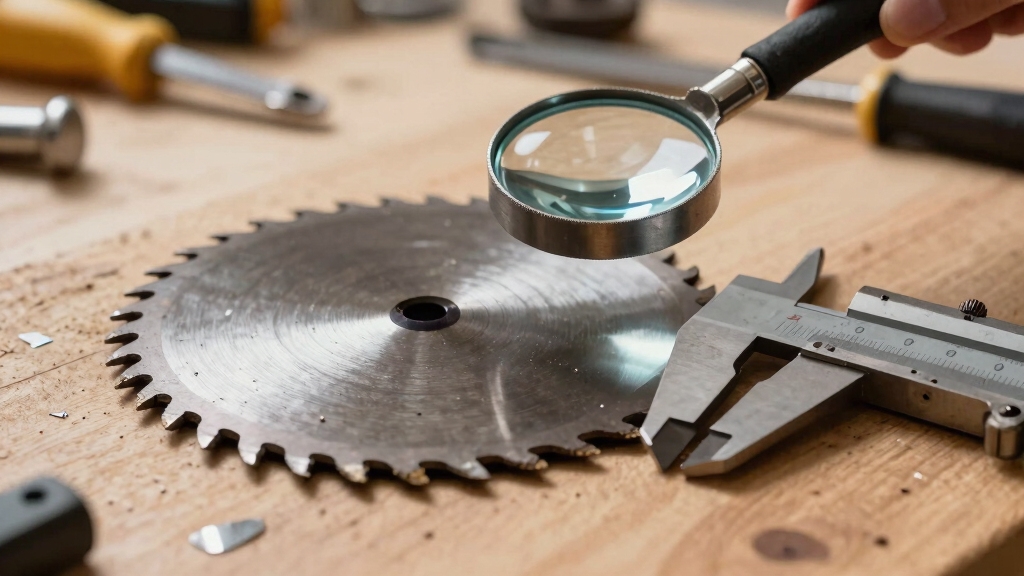
Check your circular saw blade’s tooth material to determine if you can sharpen it at home. Steel-toothed blades are straightforward; you can sharpen them yourself using a hand file, crank sharpener, or automatic sharpener.
Determine your blade’s tooth material to see if home sharpening with basic tools is possible.
These tools effectively restore the cutting edge without specialized equipment. However, if your blade has carbide-tipped teeth, sharpening at home is impractical.
Carbide’s extreme hardness demands diamond grinding wheels and professional equipment to maintain proper edge geometry. Attempting to file carbide tips with standard steel files won’t sharpen them and may damage the blade.
To identify the tooth type, inspect the blade closely or refer to the manufacturer’s specifications. Knowing your blade’s material upfront prevents ineffective sharpening attempts and guarantees you maintain peak cutting performance.
For blades with carbide tips, professional sharpening services are recommended to ensure longevity and cutting precision.
Essential Safety Gear and Prep Before Sharpening Your Blade
Before you begin sharpening your circular saw blade, make sure you disconnect the saw from the power source to prevent accidental activation.
Remove the blade carefully and wear protective gloves to avoid cuts. Put on safety goggles to shield your eyes from metal filings and debris.
Clean the blade by soaking it in acetone or a blade cleaner for five minutes to loosen pitch and resin buildup. Use a wire brush to scrub the teeth until they shine, guaranteeing debris won’t interfere with sharpening.
Secure the blade firmly in a bench vice, using rubber or wooden jaw pads to prevent damage. Proper preparation and safety gear protect you and ensure an effective sharpening process without risking injury or blade harm.
Regular inspections for dullness can prevent compromised cutting quality and signal the right time for sharpening.
How to Measure and Mark the Sharpening Angle Accurately
Since each circular saw blade has a specific bevel angle, you’ll need to measure it precisely to guarantee effective sharpening.
Start by checking the manufacturer’s specs. If unavailable, use an affordable angle finder. Place it on the tooth’s bevel and note the reading.
Mark the first tooth with a grease pencil to track your progress and maintain consistency.
| Tool | Purpose |
|---|---|
| Angle finder | Measures bevel angle |
| Grease pencil | Marks first tooth |
| Manufacturer specs | Provides exact angles |
| Caliper (optional) | Checks tooth thickness |
Accurate measurement assures your file matches the tooth’s slant, preventing over- or under-sharpening.
Consistent marking helps you sharpen every tooth evenly.
For optimal results, always wear proper protective gear during the sharpening process to ensure safety.
Step-by-Step: Sharpening Your Steel-Toothed Circular Saw Blade
Having measured and marked the bevel angle on your steel-toothed circular saw blade, you’re ready to start sharpening.
Secure the blade firmly in a vice with protective pads. Use a flat file matched to the marked angle and sharpen each tooth with controlled, light strokes.
Remember, filing is done in the cutting direction toward the tooth’s point.
Follow these steps:
- File every other tooth with 3 to 5 strokes, maintaining consistent angle and pressure.
- After sharpening sides, file the tooth tops lightly with 2 to 3 strokes.
- Skip one tooth after every four strokes on blades with uniform angles.
- Repeat until all teeth have a sharp, even edge, ensuring smooth cuts.
This technique preserves blade life and restores cutting efficiency. Additionally, regular maintenance and the use of appropriate blade types ensure optimal performance and safety during cutting.
When to Get Carbide-Tipped Blades Professionally Sharpened
When you notice a decline in cutting performance or visible damage to the carbide tips, it’s time to seek professional sharpening services.
A drop in cutting efficiency or visible carbide damage signals it’s time for professional sharpening.
Carbide-tipped blades require specialized diamond grinding wheels and precise angle control beyond typical home tools. Attempting to sharpen these at home with steel files won’t restore sharpness and risks damaging the blade.
Professionals also check for chipping and uneven wear, ensuring the carbide tips retain their original geometry. If your blade has chipped teeth, excessive dullness, or produces rough cuts despite your efforts, send it to a certified sharpening service.
Regular professional maintenance extends blade life and improves cut quality. Always remove and clean the blade before shipping, and confirm the service uses diamond wheel grinding to maintain proper tooth angles and edge integrity.
Using blades with advanced coatings like Perma-Shield can also help reduce resin buildup and heat damage, further extending the intervals between necessary sharpenings.
How to Balance and Finish Your Circular Saw Blade for Smooth Cuts
After sending your carbide-tipped blade for professional sharpening or finishing the filing on a steel-toothed blade, the next step is to confirm the blade is properly balanced and finished. An unbalanced blade causes wobbling and uneven cuts, so check this carefully.
- Hang the blade on a nail through the center hole; observe if it tilts.
- If it tilts, lightly file two teeth on the heavy side.
- Repeat hanging and filing until the blade hangs perfectly horizontal.
- Deburr each tooth with 2-3 gentle strokes of an oil stone or 600-grit sandpaper, matching the original tooth angle to remove sharp edges.
Balancing and finishing guarantee smooth cuts and extend blade life. Always handle the blade carefully during this final step. Proper blade maintenance, including sharpening and balancing, is essential for cutting efficiency and safety.
Frequently Asked Questions
How Often Should I Sharpen My Circular Saw Blade for Optimal Performance?
You should sharpen your circular saw blade whenever you notice reduced cutting efficiency, burning wood, or increased feed pressure.
For frequent users, sharpen every 10–15 hours of cutting. Occasional users can wait until performance drops.
Regular inspection helps you catch dullness early. Keeping the blade clean and balanced also extends sharpness.
Don’t wait too long; dull blades strain your saw and produce poor cuts, so sharpen proactively.
Can Dull Blades Damage My Saw Motor or Other Components?
Yes, dull blades can strain your saw motor by forcing it to work harder to cut through material. This leads to overheating and premature wear.
This extra load stresses bearings and other components, reducing the saw’s lifespan. To protect your tool, sharpen or replace blades regularly.
Keeping blades sharp guarantees smoother cuts, reduces motor load, and helps maintain overall saw performance and safety.
What Types of Files Are Best for Sharpening Steel-Toothed Blades?
Picture the steel teeth as tiny mountains needing precise sculpting.
For sharpening, you’ll want hand files, crank sharpeners, or automatic sharpeners specifically designed for steel-toothed blades.
These tools glide smoothly over the metal, restoring sharpness without tearing. Avoid anything too coarse or designed for carbide, as they’ll dull your edges instead.
Stick to fine-toothed files that match your blade’s angle to keep cuts clean and efficient.
How Do Different Wood Types Affect Blade Sharpening Frequency?
Hardwoods like oak or maple dull your blade faster because their density wears down teeth quickly. You’ll need to sharpen more often.
Softer woods such as pine cause less wear, allowing longer intervals between sharpenings.
Resinous or knotty woods can gum up the blade, reducing sharpness prematurely.
Adjust your sharpening frequency based on the wood’s hardness and resin content to maintain efficient cutting and prolong blade life.
Can Sharpening Improve Cutting Speed and Accuracy Significantly?
Oh sure, you can just keep a dull blade and enjoy slow, inaccurate cuts. Said no one ever.
Sharpening your circular saw blade definitely boosts cutting speed and accuracy. A sharp edge slices cleanly through wood with less resistance, reducing tear-out and wobble.
Keep Your Circular Saw Blade Sharp for Better Cuts
Sharpening your circular saw blade sharpens your skills and saves money. By spotting signs showing wear, suiting safety standards, and setting sharp angles, you guarantee efficient edge enhancement.
Step-by-step sharpening strengthens steel teeth. Skilled service suits carbide tips. Finally, balancing blades brings better, balanced, and beautiful cuts.
Staying sharp with sound safety and solid steps secures smooth, satisfying saw performance every time you slice.