Is Hackberry Wood Good for Anything: Woodworking Guide
You’ll find hackberry wood excellent for indoor projects needing steam bending and fine finishing, like furniture frames, tool handles, and cabinets.
It machines well and takes polish smoothly, but its moderate density means it’s softer and weaker than many hardwoods.
Hackberry wood rots quickly if exposed to moisture, making it unsuitable for outdoor use or heavy structural loads.
If you want to understand its best applications, workability, and cost benefits, there’s more to explore.
Key Takeaways
- Hackberry wood is excellent for steam bending, making it ideal for curved furniture parts and tool handles.
- It machines well and finishes smoothly, suitable for indoor furniture, cabinets, and detailed millwork.
- The wood has moderate density and reasonable stability but is softer and weaker than many hardwoods.
- Hackberry is not decay-resistant and quickly rots with moisture, making it unsuitable for outdoor use.
- It is a budget-friendly option for projects prioritizing bendability and finishing quality over strength and durability.
What Is Hackberry Wood? An Overview
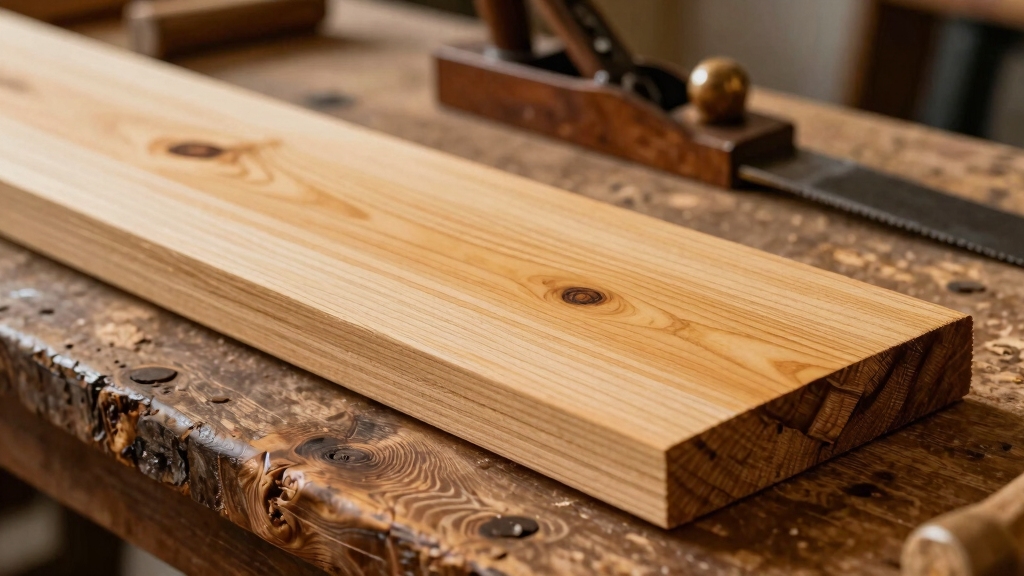
Hackberry wood comes from the hackberry tree, a hardwood species native to North America known for its distinctive grain and moderate density.
Hackberry wood, native to North America, is prized for its unique grain and balanced density.
When you work with hackberry, you’ll notice it has a straight grain that offers a uniform appearance. However, interlocked grain and knots can complicate machining.
It responds exceptionally well to steam bending, ranking among the best hardwoods for this process in the U.S. and Canada. You’ll find it planes, bores, glues, and finishes effectively, with a very good polish achievable.
Its moderate density and intermediate shrinkage make it stable enough for various applications. However, it’s softer and weaker compared to other hardwoods. Understanding these characteristics helps you determine where hackberry’s physical properties fit practical uses in woodworking and manufacturing.
To preserve hackberry wood slices effectively, it is advisable to harvest during dormancy to maximize bark adhesion and reduce separation forces.
Why Hackberry Wood Is a Woodworker’s Favorite?
When selecting wood for projects requiring flexibility and ease of shaping, you’ll find this species stands out due to its exceptional response to steam bending.
Hackberry ranks among the best hardwoods in the U.S. and Canada for this process, allowing you to create smoothly curved components with minimal risk of cracking.
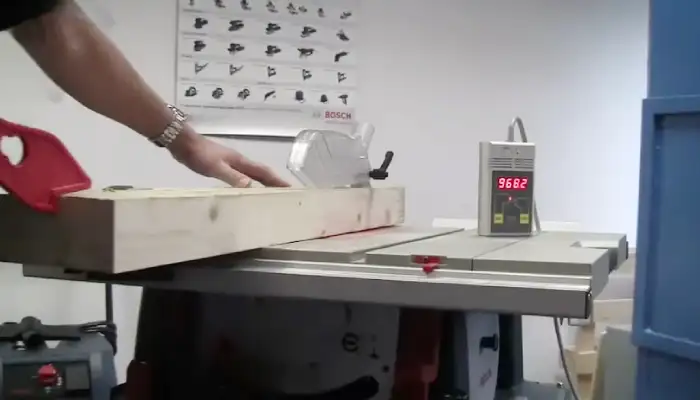
It machines well with hand and power tools, though you’ll need care around interlocked grain or knots to avoid tear-out.
You can plane, bore, glue, and stain hackberry effectively, and it takes a high polish for a refined finish.
Its straight grain delivers a uniform surface, making it ideal for small, detailed work.
These characteristics combine to make hackberry a dependable, versatile choice when your project demands both flexibility and fine workmanship.
For best results, using a sharp blade and proper planing technique will help achieve smooth, fine shavings and avoid damaging the wood.
Using Hackberry Wood for Furniture, Cabinets, and More
Consider incorporating hackberry wood into your furniture and cabinetry projects if you need a material that balances affordability with workable qualities.
This wood responds well to hand and machine tools, although interlocked grain and knots can complicate machining.
You’ll find it planes, bores, and glues effectively, taking stains and finishes with ease, allowing for a smooth, polished surface.
Its uniform, straight grain produces a consistent appearance, ideal for kitchen cabinets, millwork, and upholstered furniture frames.
While hackberry lacks the strength for heavy structural use, its moderate density offers enough durability for indoor applications.
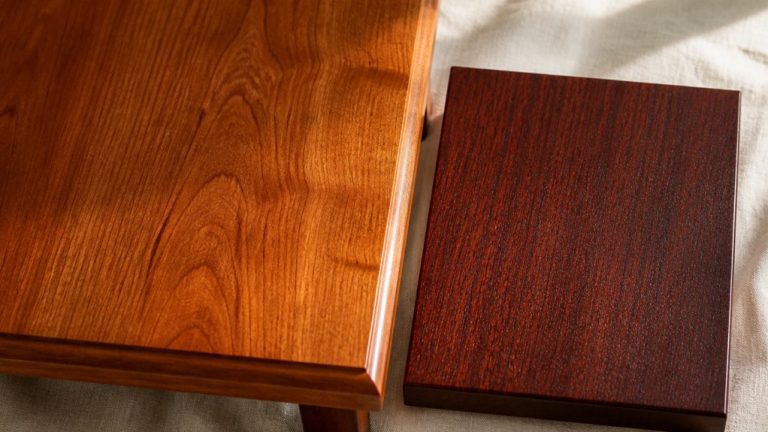
You can stain it to mimic ash or oak, making it versatile for paint-grade projects.
For projects requiring greater load-bearing capacity and resistance to warping, consider plywood options with dimensional stability and multi-ply construction.
Steam Bending, Strength, and Outdoor Limitations
Beyond its suitability for interior woodworking, this wood excels in steam bending applications, ranking among the top hardwoods in North America for this process.
You’ll find that its toughness and flexibility allow you to create curved components like bent parts, tool handles, and furniture frames with minimal risk of cracking.
However, don’t expect outstanding structural strength; its modulus of rupture (11,500 psi) and stiffness (1.19 million psi) classify it as heavy but relatively weak compared to other hardwoods.
You should avoid using it outdoors since it has zero decay resistance and rots quickly under moisture exposure.
While it works well for indoor bent parts and moderate-stress applications, prolonged weather contact will severely compromise its durability.
This limits its use to protected or interior environments only.
Comparing Hackberry Wood’s Cost and Value to Other Hardwoods
Although hackberry wood lacks the strength and decay resistance of premium hardwoods, it offers significant cost advantages that make it an attractive option for many woodworking projects.
When comparing cost and value, you’ll find that hackberry serves well as a budget-friendly alternative, especially when finish quality and steam bending capabilities are priorities.
| Hardwood | Cost (per board foot) | Value Proposition |
|---|---|---|
| Hackberry | $2.50 – $3.50 | Affordable, excellent steam bending |
| Red Oak | $4.00 – $6.00 | Strong, durable, widely used |
| Ash | $5.00 – $7.00 | High strength, smooth finish |
You can leverage hackberry’s affordability and workable nature for furniture frames or millwork without overspending on premium species.
Frequently Asked Questions
Can Hackberry Wood Be Used for Medicinal Purposes?
Yes, you can use hackberry wood medicinally, but it’s primarily the bark and fruit that hold value, not the wood itself.
The bark has traditional applications for treating menstrual issues, colds, and sore throats.
The fruit is edible and used in jellies or preserves.
Is Hackberry Fruit Edible and How Is It Used?
Yes, hackberry fruit is edible and sweet. You can eat it raw or process it into jellies and preserves, benefiting from its natural sweetness.
Its use extends to traditional food preparations, making it a practical option for homemade preserves. When harvesting, guarantee the fruit is ripe for prime flavor and safety.
Proper processing prevents spoilage, allowing you to enjoy hackberry fruit as a nutritious, versatile ingredient.
What Traditional Items Were Made From Hackberry Wood?
You’ll find that traditionally, hackberry wood was crafted into church pews in the southern United States, valued for its toughness and flexibility.
Native Americans used it for candy and cheese containers, lard and butter tubs, and fruit baskets, benefiting from its odorless nature.
Its flexibility also made it ideal for barrel hoops.
These practical uses highlight hackberry’s historical significance in utilitarian and ceremonial contexts, emphasizing its durability and unique working characteristics.
Does Hackberry Wood Have Any Historical Cultural Significance?
You’ll find hackberry wood holds notable historical cultural significance, especially among Native Americans. They used its bark medicinally to treat menstrual cycles, colds, and sore throats, showcasing its practical value.
The fruit was also edible and used in preserves.
Additionally, its toughness made it ideal for crafting candy containers, butter tubs, and church pews.
This blend of medicinal, food, and utilitarian uses highlights hackberry’s rich cultural importance.
Is Hackberry Wood Environmentally Sustainable to Harvest?
You can consider hackberry wood environmentally sustainable to harvest since it’s regularly harvested as utility lumber within its natural range without causing significant ecological harm.
It’s not listed in CITES Appendices or the IUCN Red List, indicating no current threat status.
Its affordability and availability make it a practical alternative to more endangered species.
This supports sustainable forestry practices while meeting commercial demands effectively.
Why Hackberry Wood Is a Practical Choice for Projects
If you’re seeking sturdy, stylish, and sustainable wood, hackberry holds hefty hidden hues.
Its strength supports steam bending and solid structures, though outdoor use demands caution due to durability limits.
Whether crafting cabinets, furniture, or fine finishes, hackberry offers a harmonious balance of cost and quality.
By choosing this versatile hardwood, you’re investing in a practical, pleasing product that performs well, proving hackberry wood’s worth in woodworking wonders.