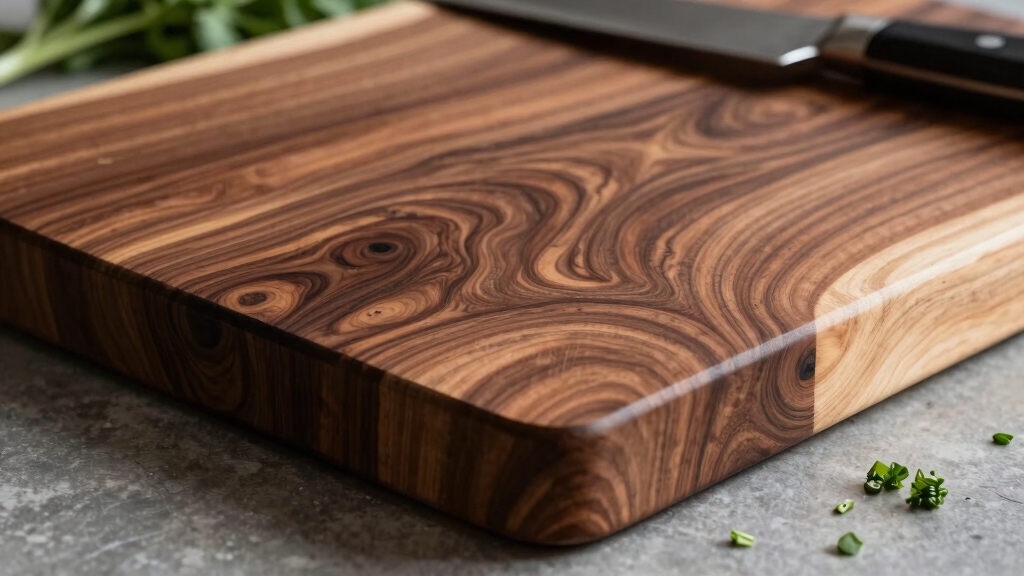
Is Black Walnut Good for Cutting Boards? Key Benefits
You’ll find black walnut ideal for cutting boards due to its balanced hardness. It is hard enough to resist warping yet gentle on knives.
Its dense, tight grain offers durability and natural antimicrobial properties, keeping your surface hygienic. Walnut boards’ rich color and complex grain patterns add lasting visual appeal.
Proper maintenance with mineral oil guarantees longevity. Different constructions, like end-grain or edge-grain, affect performance and cost. Discover how these factors make walnut a smart kitchen choice.
Key Takeaways
- Black walnut has ideal hardness (Janka 1,010 lbf) balancing durability with knife protection, reducing blade dulling over time.
- Its tight, uniform grain and density provide structural stability, resisting warping, cracking, and heavy daily use.
- Natural antimicrobial properties and tannins inhibit bacterial growth, making walnut boards hygienic when properly finished and maintained.
- Both end-grain and edge-grain walnut boards offer excellent durability, with end-grain better absorbing knife impacts and self-healing cuts.
- Proper cleaning, drying, and regular oiling with food-safe mineral oil preserve walnut boards’ appearance and function long-term.
Hardness and Durability of Black Walnut Cutting Boards
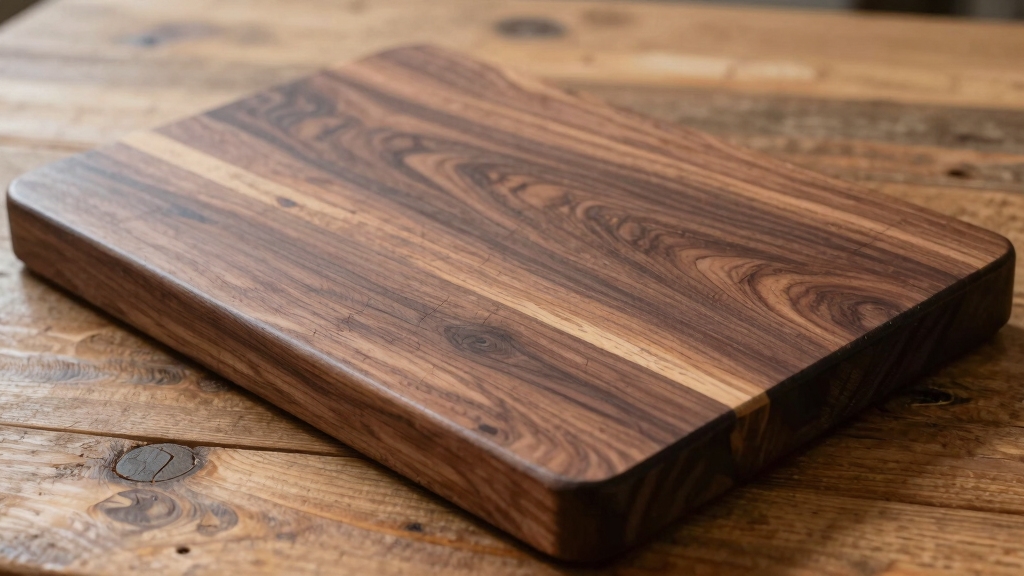
When selecting a cutting board, you want a wood that balances hardness with blade preservation, and black walnut fits this requirement well.
With a Janka hardness rating of 1,010 lbf, it lies comfortably within the ideal 900-1,500 lbf range, ensuring durability without causing excessive knife dulling.
A Janka hardness of 1,010 lbf offers durability while preserving your knife’s sharpness.
Its density at 630 kg/m³ provides structural integrity, resisting warping and cracking under regular knife pressure. Proper surface preparation and finishing can further enhance its longevity and appearance.
Additionally, black walnut is naturally resistant to rot and fungal decay, which contributes to its durability and hygiene.
Compared to other woods, it’s about 5% harder than cherry but 20% softer than red oak, offering a medium texture that supports grip without slipping.
Black walnut’s uniform tight grain and sturdy composition allow it to withstand years of daily use, especially when maintained properly.
This combination of hardness and durability makes it a reliable choice for cutting boards. Applying a food-safe finish can protect the wood while highlighting its natural beauty.
Food Safety and Antimicrobial Qualities of Walnut
Beyond its mechanical strength, black walnut offers remarkable properties that impact food safety on cutting board surfaces.
Walnut contains tannins and natural phenolic compounds that exhibit contact inhibition, reducing microbial survival where they touch the wood. Its natural antimicrobial qualities are a key reason walnut is favored for cutting boards and kitchenware. Additionally, walnut’s balance of medium to chocolate brown undertones contributes to its aesthetic appeal in kitchen environments.
Although detailed antimicrobial compound profiles are limited, studies show walnut surfaces support lower bacterial persistence compared to plastics.
To optimize hygiene, you should:
- Regularly wash boards with mild soap and air dry immediately to prevent bacterial growth.
- Avoid dishwashers and soaking, which can damage finishes and create microbial niches.
- Periodically condition with food-grade mineral oil or beeswax to seal the surface and repel moisture.
These practices leverage walnut’s inherent antimicrobial qualities while maintaining board integrity and safety during food preparation.
Visual Appeal and Aesthetic Characteristics
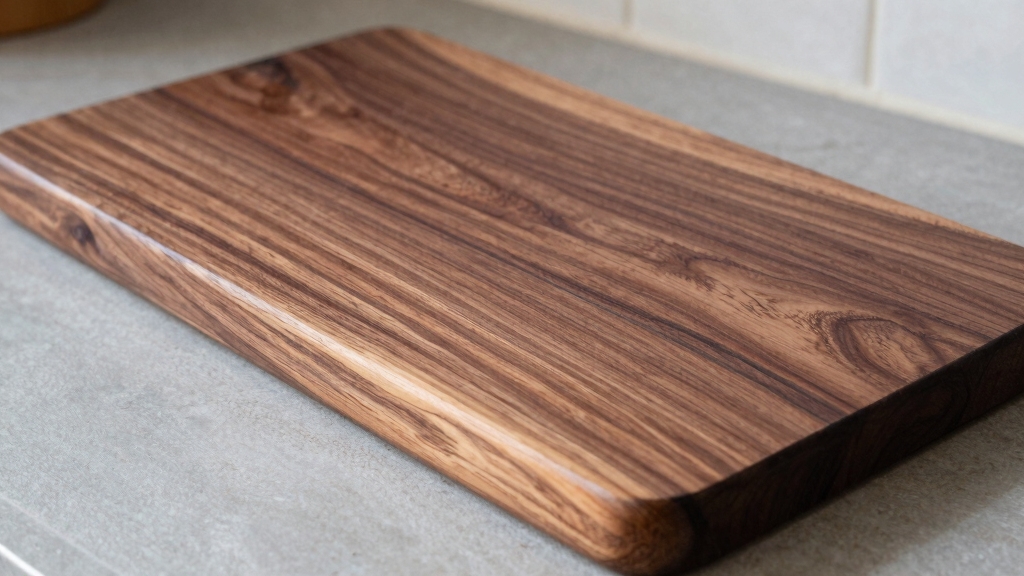
Although black walnut is valued for its durability, its visual appeal greatly enhances its desirability for cutting boards.
You’ll notice rich, dark hues ranging from light brown to deep chocolate, often accented by lighter or golden streaks. The wood’s natural hardness also provides a sturdy surface that resists dents and scratches from carving tools, making it ideal for frequent use.
The wood’s intricate grain patterns, swirls, waves, and tight lines create a stunning visual and help mask knife marks, maintaining a pristine look over time. Its natural grain patterns also help conceal minor cuts better than many other woods.
Each board you select is unique, with no two pieces alike, thanks to natural variations in grain and color.
This distinctiveness adds a sophisticated touch, allowing the board to seamlessly complement various kitchen decors, from modern to traditional.
Ultimately, black walnut cutting boards combine luxurious aesthetics with functional artistry, elevating both kitchen utility and style. Choosing wood with ergonomic handle designs in carving tools ensures comfort if you plan to customize or maintain your board with carving techniques.
Maintenance and Care Requirements
To keep your black walnut board in great shape, start by scraping off any debris and washing it with some warm water and mild soap. It’s best to avoid soaking the board or using harsh chemicals to preserve its finish.
Make sure to dry it thoroughly afterward; this helps to prevent any warping. Proper drying is essential to maintain the board’s surface integrity and prevent damage.
Now, it’s a good idea to regularly apply food-grade mineral oil to all surfaces. Using FDA-compliant mineral oil ensures the product is safe for direct food contact and effectively nourishes the wood.
This not only helps maintain moisture but also prevents cracking.
For a little extra protection and shine, you might want to consider waxing after oiling. Just be sure to apply it evenly and let it absorb properly.
Cleaning and Drying
When maintaining your black walnut cutting board, cleaning and drying play essential roles in preserving its durability and hygiene.
Use a soft sponge or nylon brush with warm water and mild soap to scrub all surfaces, including edges and bottom, removing food particles and microbes.
Rinse thoroughly with warm water to prevent residue buildup and uneven wood expansion.
After rinsing, dry immediately with a lint-free towel and stand the board on its edge to air dry for at least an hour, ideally overnight. This method helps avoid moisture retention that can compromise the wood’s finish.
Avoid flat placement that promotes mold.
It is important to wash the front, back, and edges to ensure even cleaning and prevent uneven expansion.
- Scrub gently using circular motions with mild soap.
- Rinse evenly across all sides with warm water.
- Dry upright, ensuring complete moisture evaporation to prevent warping and bacterial growth. Applying a protective finish, such as wipe-on polyurethane, can further enhance the board’s resistance to moisture and wear.
Oiling and Conditioning
For maintaining your black walnut cutting board’s integrity and appearance, regular oiling and conditioning are essential. Use mineral oil or Boos Block Mystery Oil monthly or when the board looks dry to prevent brittleness and cracking.
Avoid cooking oils, as they can turn rancid and cause odors. Apply oil every two weeks for routine maintenance, increasing frequency based on cleaning intensity and household conditions.
Always oil after the board is fully dry to guarantee peak absorption. Before oiling, clean and dry both sides thoroughly to prevent warping.
For added protection, apply a beeswax blend containing carnauba and citrus oils, allowing it to harden before buffing.
Avoid varnish, shellac, and harsh chemicals, as they damage the wood or leave toxic residues.
Using a food-safe sealer that meets FDA standards ensures safe contact with food and helps maintain the wood’s natural beauty over time.
Construction Types and Their Impact
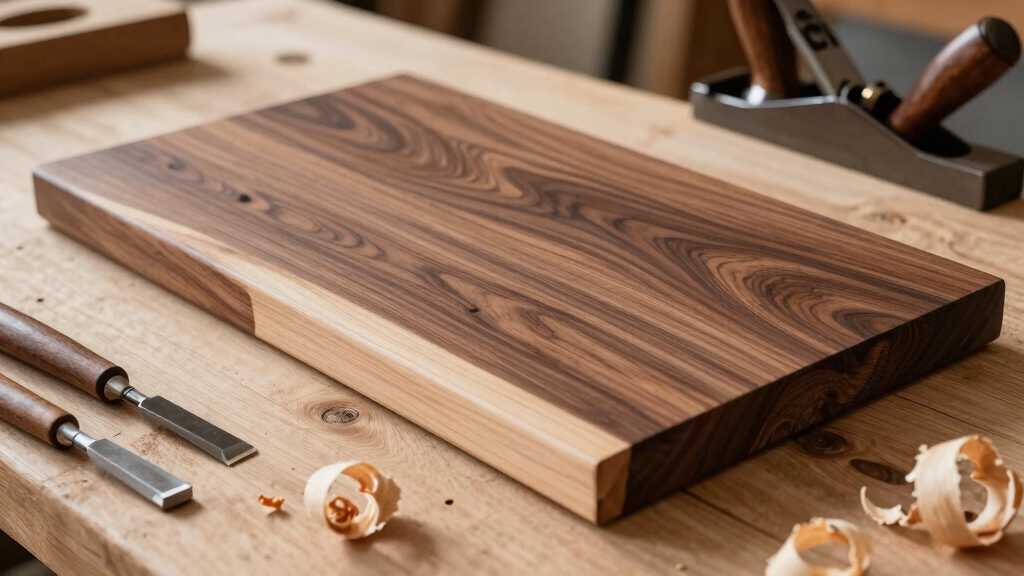
When you’re deciding between end-grain and edge-grain black walnut boards, you’ll see some notable differences in durability and how friendly they’re to your knives.
End-grain boards, for instance, have this amazing self-healing quality that helps keep your blades sharp and protected.
On the other hand, edge-grain boards offer a sturdy cutting surface that holds up well over time, so you won’t see as much wear and tear. Our custom walnut cutting boards use edge grain construction from clear strips of American black walnut, emphasizing durability. Choosing the right finish is also essential to protect the wood and maintain its beauty over time, especially with durability requirements in mind.
Now, if you’re feeling adventurous, think about mixing wood types! Incorporating mixed-wood designs can really boost functionality.
End-Grain vs Edge-Grain
Although both end-grain and edge-grain constructions utilize black walnut, they differ markedly in how they respond to cutting impacts and wear.
End-grain boards, with fibers oriented vertically, absorb knife blows by separating and closing. This reduces visible wear and distributes impact across thick blocks. When selecting wood for end-grain boards, it’s important to purchase from a hardwood dealer who can mill rough stock into square, straight boards with at least two flat, square sides for proper construction. Proper maintenance and periodic sharpening also help to maintain the cutting surface’s effectiveness and durability.
Edge-grain boards, composed of laminated long-grain strips, offer greater dimensional stability and resistance to warping. However, they show more knife marks due to fiber orientation. Choosing the right construction type can influence how frequently a board needs sharpening and maintenance.
Key distinctions include:
- End-grain walnut is more durable under heavy use, minimizing long scratches. It requires thicker boards and careful glue application.
- Edge-grain walnut is easier to maintain and resurface, with better flatness retention and less warping tendency.
- Both constructions perform similarly in hygiene when properly finished, though surface porosity differs. Using waterproof, food-safe glue such as Titebond III ensures a strong and safe bond for cutting board assembly.
Mixed-Wood Board Benefits
Several mixed-wood board constructions combine the strengths of different hardwoods, enhancing both durability and visual appeal. By alternating dense maple with thin walnut strips, you get strong surfaces with striking visual contrast.
Matching grain direction during glue-up prevents splitting, while parallel clamps guarantee even adhesion. Incorporating teak adds natural moisture and bacterial resistance thanks to its oils, which also help in preserving wood integrity.
Boards thicker than 1.5 inches offer greater stability and withstand heavy use. Reversible designs let you separate meat and vegetable prep, extending board life.
Finishes like oil-wax blends highlight wood tones and provide low-maintenance protection. The natural self-healing fibers in mixed woods reduce cut marks over time, and juice grooves contain liquids effectively. Additionally, woods like walnut and maple typically inhibit harmful bacteria such as Salmonella and E. coli, enhancing the board’s antibacterial properties.
This combination delivers functional, durable, and aesthetically rich cutting boards tailored to your kitchen needs.
Cost and Market Availability
Numerous retail and wholesale channels offer black walnut cutting boards, catering to various consumer needs and price points. You’ll find major kitchen brands offering edge-grain and end-grain boards from $160 to $475. Many of these boards feature solid American Black Walnut construction, prized for its durability and aesthetic appeal.
Artisan sellers present handcrafted options ranging from $50 to over $500. Online marketplaces provide broad accessibility, with wholesale suppliers supporting bulk purchases and DIY projects through raw walnut blanks priced modestly.
Key cost factors include:
- Wood grade and drying quality; premium, kiln-dried walnut demands higher prices.
- Construction type; end-grain boards cost more due to labor and material.
- Dimensions and thickness; larger, thicker boards increase material costs substantially.
Market trends show sustained demand driven by durability preferences, supply variability, and growth in direct-to-consumer sales expanding design diversity.
Suitability for Professional and Home Kitchens
When selecting cutting boards for professional or home kitchens, black walnut excels due to its exceptional durability and knife-friendly properties.
You’ll appreciate its dense, tight grain that resists moisture, bacteria, and warping, maintaining hygiene and safety. Its natural oils provide a moisture-resistant barrier that helps protect the wood from damage.
Its balanced hardness protects your knives while absorbing shock, prolonging blade sharpness.
Black walnut boards also offer a luxurious appearance that complements modern and traditional kitchen aesthetics.
The rich aesthetics complement any kitchen, professional or domestic, offering both elegance and practicality.
| Feature | Professional Kitchens | Home Kitchens |
|---|---|---|
| Durability | Withstands heavy daily use | Durable for regular use |
| Knife Friendliness | Protects high-quality knives | Maintains home knives longer |
| Hygiene & Safety | Resists bacteria, easy cleaning | Naturally food-safe surface |
| Versatility | Handles diverse, large tasks | Suitable for varied food prep |
Frequently Asked Questions
Can Black Walnut Cutting Boards Be Customized With Engravings or Logos?
Imagine a black walnut cutting board as a canvas where your brand’s story is etched precisely. Yes, you can customize it with laser engraving for crisp logos or CNC carving for deeper, tactile designs.
Just remember to position artwork away from variegated grain for clarity. Use high-resolution vector files, account for engraving depth limits, and finish with food-safe oil to guarantee durability and contrast.
This method balances artistry with the wood’s natural beauty efficiently.
How Does Black Walnut Compare Environmentally to Bamboo Cutting Boards?
You’ll find black walnut has a higher environmental impact than bamboo due to slower growth, greater land use, and longer carbon replacement cycles.
Bamboo regenerates quickly, sequesters more carbon annually, and yields more biomass per hectare.
However, sustainably sourced walnut from managed forests reduces emissions and supports biodiversity better than bamboo monocultures.
Also, walnut’s processing emits fewer chemicals, while bamboo often involves adhesives that can complicate recycling and increase VOC emissions.
Are Black Walnut Cutting Boards Safe for Use With Acidic Foods Like Lemons?
Yes, black walnut cutting boards are safe for use with acidic foods like lemons if properly finished and sealed.
Acids can increase extraction of soluble compounds, but sealed boards resist leaching and staining better than unfinished wood.
Avoid prolonged contact with acidic foods on bare walnut to prevent flavor transfer and surface damage.
Use food-safe finishes and maintain your board regularly to minimize any risk of compound transfer or discoloration.
What Is the Typical Weight Range for a Standard Black Walnut Cutting Board?
You can expect a standard black walnut cutting board to weigh between 8 and 23 pounds, depending on size and construction.
Small prep boards typically weigh 1–4 pounds, medium ones around 8–12 pounds, and large end-grain boards can reach 17–23 pounds.
Thickness and grain orientation affect weight markedly. Use the board-foot calculation, multiplying board-feet by 3.33 pounds, to estimate weight for kiln-dried walnut precisely.
Can Black Walnut Cutting Boards Be Used for Both Cutting and Serving?
Yes, you can use black walnut cutting boards for both cutting and serving. Their dense, closed-grain structure resists deep gouging, making them durable for chopping while preserving knife edges.
The rich, dark heartwood hides stains and knife marks, maintaining visual appeal during use. With regular oiling and cleaning, these boards provide a hygienic, elegant surface suitable for direct table presentation and food prep, ensuring practical dual functionality.
Balance Style and Function With Black Walnut Cutting Boards
Choosing black walnut for your cutting board is like opting for a trusted craftsman’s tool. Durable, food-safe, and visually striking, its hardness stands up to daily use.
Natural antimicrobial properties help keep your kitchen hygienic. Just as a well-forged blade demands care, black walnut requires proper maintenance to retain its beauty and function.
Whether in a professional or home kitchen, it’s a reliable, elegant choice that balances performance with timeless appeal.