How to Thin Polyurethane: A Step-by-Step Guide
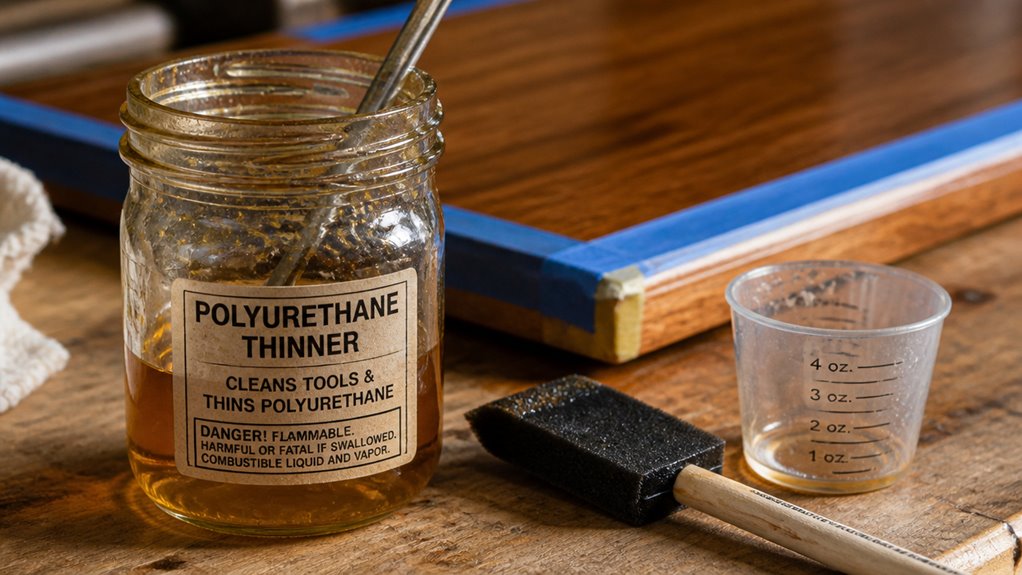
You thin polyurethane to improve flow, prevent brush marks, and adjust drying time.
First, identify if your polyurethane is oil- or water-based by label, tint, or solvent test.
Use mineral spirits or paint thinner for oil-based, and water or denatured alcohol for water-based.
Add thinner gradually—5% to 20%, depending on application. Stir gently, and test on scrap wood.
Proper thinning guarantees smooth application without compromising the finish.
Keep going to master exact ratios and safety tips.
Key Takeaways
- Thin oil-based polyurethane with mineral spirits, starting at a 3:1 ratio or 5%-10% thinner for better flow or spraying.
- Use clean water to thin water-based polyurethane conservatively, typically 5%-10%, avoiding more than 2% for strict formulations.
- Add thinner slowly to polyurethane in a clean container, stir gently to avoid bubbles, and let the mix sit before testing.
- Test thinned polyurethane on a scrap surface to check flow, leveling, drying time, and adjust thinning as needed.
- Avoid over-thinning to maintain protective film quality and always work in a ventilated area with proper safety gear.
Why and When to Thin Polyurethane?

Although polyurethane is designed for direct application, you’ll need to thin it in specific situations to improve flow, leveling, or sprayability.
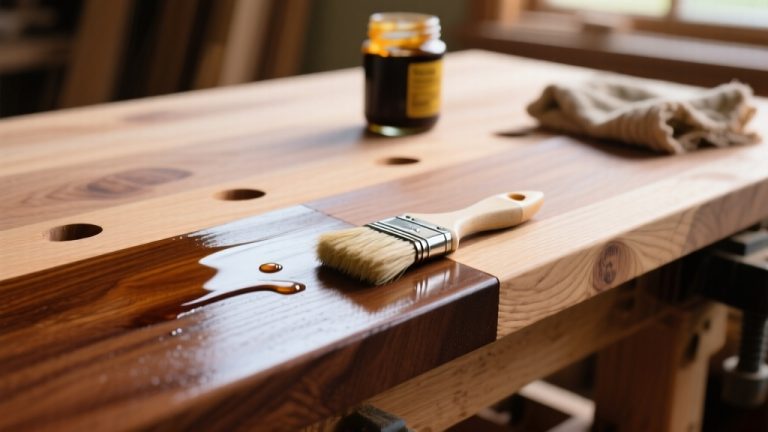
Thinning reduces viscosity, enabling smoother brush strokes and preventing brush marks.
When spraying, thinning guarantees the finish atomizes evenly, avoids clogging, and produces a uniform coat.
You also thin to adjust drying time; thinner mixtures dry faster, which can help in humid conditions.
However, over-thinning compromises film build and protective qualities, so precise ratios matter.
Use thinner only when you notice poor flow, streaks, or difficulty in application, especially with oil-based formulas where mineral spirits or similar solvents are appropriate.
Water-based polyurethanes require water or compatible solvents.
Always test a small batch to confirm flow and drying behavior before full application.
Keep in mind that applying polyurethane over lacquer requires careful surface preparation to avoid bubbling and peeling due to chemical incompatibility.
How to Identify Oil-Based vs Water-Based Polyurethane?
How can you quickly determine whether a polyurethane finish is oil-based or water-based? First, check the product label. Manufacturers clearly indicate the type.
If labels are missing, observe the finish’s color and drying time. Oil-based polyurethane tends to have an amber tint and dries slower. Water-based is clearer and dries faster.
Another method is to test the solvent compatibility. Apply a small amount of mineral spirits on a surface coated with the finish. Oil-based polyurethane will soften, whereas water-based won’t react.
Conversely, water-based finishes dissolve in water but resist petroleum solvents. Avoid mixing up the two, as they require different thinning agents and application techniques.
Identifying the type correctly guarantees proper thinning and preserves the finish’s durability and appearance. Always ensure the surface is completely dry and free of any residue before applying or testing finishes to avoid inaccurate results and adhesion issues with oil-based polyurethane.
Which Thinner to Use for Oil-Based and Water-Based Polyurethane?
When thinning polyurethane, you need to pick the right solvent based on the finish type to guarantee peak performance. For oil-based polyurethane, mineral spirits is the standard thinner, with paint thinner and naphtha as alternatives.
Water-based polyurethane uses clean water, with denatured alcohol occasionally suitable for specific products. Avoid mixing solvents across types, as this compromises curing and finish quality. Always check product labels for exceptions.
The choice of thinner can also affect drying time and finish durability, especially in products like waterborne polyurethane used for floors and marine applications.
| Polyurethane Type | Recommended Thinner | Notes |
|---|---|---|
| Oil-Based | Mineral Spirits | Most common, safest option |
| Oil-Based | Paint Thinner | Practical equivalent to mineral spirits |
| Oil-Based | Naphtha | Faster evaporation, use cautiously |
| Water-Based | Clean Water | Standard thinner |
| Water-Based | Denatured Alcohol | Used selectively, product-dependent |
How to Mix the Right Thinning Ratio for Your Application?
Since the thinning ratio directly impacts application quality and drying time, you should tailor it to your chosen method and polyurethane type.
For oil-based polyurethane, start with about 3 parts polyurethane to 1 part mineral spirits for brushing. Adjust between 5% and 10% thinner by volume depending on flow and leveling needs.
For wiping applications, a 1:1 ratio often works best. Spraying typically requires heavier thinning, around 20% solvent, to guarantee atomization.
Water-based polyurethane demands more conservative thinning, usually 5% to 10% water, rarely exceeding 2% for strict formulations.
Always measure thinner precisely and add incrementally to maintain film integrity. Avoid over-thinning, which compromises durability and coverage.
Matching your thinning ratio carefully to both product and application method guarantees peak finish smoothness, drying time, and protective performance.
For exterior applications, consider the polymer-based finish properties that influence penetration and UV resistance when adjusting thinning ratios.
How to Mix Safely and Test Thinned Polyurethane Before Use?
After determining the correct thinning ratio for your polyurethane and application method, you need to focus on mixing safely and testing the mixture before applying it to your project.
Pour the polyurethane into a clean container. Then add the thinner slowly and measure precisely to avoid over-thinning.
Stir gently to minimize air bubbles; avoid shaking. Let the mixture sit briefly to allow trapped air to escape.
Next, apply a small amount to a test panel or scrap wood. Evaluate flow, leveling, and drying time.
For spraying, strain the mixture through a fine mesh to prevent clogging. Use clean brushes or lint-free applicators for brushing.
Always work in a well-ventilated area and wear protective gear. Adjust the mix as needed based on test results before proceeding.
Proper stirring technique helps prevent bubbles that can mar the finish and ensures a smooth application.
Frequently Asked Questions
How Should I Dispose of Solvent-Soaked Rags Safely?
You should dispose of solvent-soaked rags by first spreading them out outdoors to air dry completely in a safe, non-combustible area.
Avoid piling them up, as they can spontaneously combust.
Once dry, place the rags in a metal container with a tight-fitting lid or wrap them in foil before discarding them in the trash, following local hazardous waste regulations.
Never throw wet rags directly into regular garbage or dumpsters to prevent fire risks.
What Protective Gear Is Recommended When Thinning Polyurethane?
You should wear chemical-resistant gloves to protect your skin from solvents and fumes while thinning polyurethane.
Use safety goggles or glasses to shield your eyes from splashes. A respirator with organic vapor cartridges is essential to avoid inhaling toxic fumes, especially in poorly ventilated areas.
Additionally, wear long sleeves and work in a well-ventilated space to minimize exposure.
These precautions help guarantee your safety during the thinning process.
Can Thinning Polyurethane Affect Drying Time Between Coats?
Absolutely, thinning polyurethane can dramatically speed up drying times between coats. Sometimes it feels like you blink and it’s ready!
But don’t get carried away; over-thinning reduces film thickness, weakening protection and coverage. Typically, adding about 10-20% thinner speeds drying without sacrificing quality.
Always test your mix on scrap wood to balance flow and drying. Remember, patience guarantees durability, so don’t rush recoating despite faster drying.
How Do I Avoid Bubbles When Applying Thinned Polyurethane?
To avoid bubbles when applying thinned polyurethane, pour the finish into a clean container and add thinner slowly. Stir gently instead of shaking to minimize air entrapment.
Use a natural-bristle brush or a lint-free foam applicator to reduce bubbles. Let the mixture sit briefly after stirring to allow trapped air to escape.
Apply thin, even coats and avoid over-brushing. Working in a dust-free, well-ventilated area also helps prevent bubbles and surface imperfections.
Is It Necessary to Strain Polyurethane Before Spraying?
You’ll want to give polyurethane a gentle “quality check” by straining it before spraying. This step isn’t just a suggestion; it helps catch tiny impurities or clumps that could sabotage your finish by clogging the spray nozzle.
Use a fine-mesh filter to guarantee smooth flow and consistent application. Taking this precaution saves you from uneven surfaces and frustrating interruptions. This ensures your spray job stays clean, precise, and professional every time.
Final Thoughts on How to Thin Polyurethane for a Smooth Finish
Thinning polyurethane isn’t just a helpful trick; it’s your secret weapon for flawless finishes that look like they belong in a museum!
Mastering the right thinner and mixing ratio transforms your project from “meh” to masterpiece. Skip this step, and you might as well be painting with glue.
So, don’t wing it—measure, mix, test, and apply with precision to achieve that unbeatable, smooth, professional coat every time.