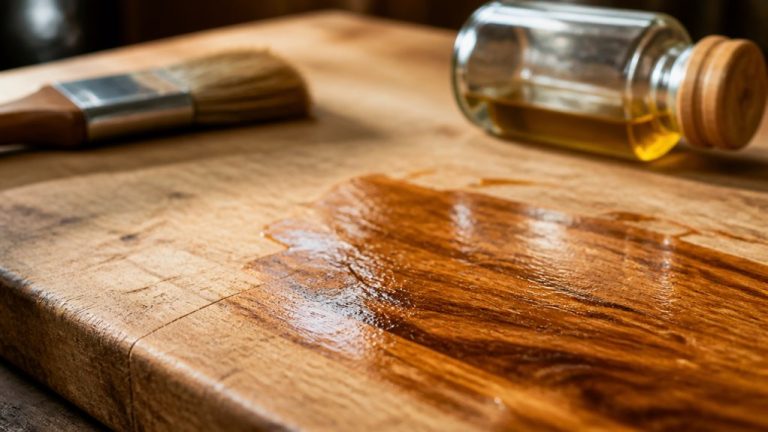
Wax vs Polyurethane: Durability & Protection Compared
When you want a natural, matte finish that emphasizes wood grain and texture, wax is your choice.
However, it requires regular reapplication and offers limited protection.
Polyurethane forms a hard, durable film that resists scratches, water, and heat.
It comes with various sheen options and long-lasting wear, making it ideal for high-traffic surfaces.
You’ll find waxing easier for vintage or decorative pieces, while polyurethane suits functional, heavy-use woodwork.
Exploring these differences further will help you pick the right finish for your project.
Key Takeaways
- Polyurethane creates a hard, durable film offering strong protection against scratches, moisture, and heat, ideal for high-traffic or spill-prone surfaces.
- Wax provides a softer, natural matte finish that enhances wood grain and texture but offers minimal water and stain resistance.
- Polyurethane finishes last years with low maintenance, while wax requires regular reapplication every few months to maintain protection.
- Wax can be applied over cured polyurethane to add luster, but polyurethane will not adhere properly over wax without complete removal.
- Polyurethane offers adjustable sheen options from matte to high gloss, whereas wax prioritizes a subdued, hand-rubbed, tactile surface appearance.
Wax vs. Polyurethane: Feature-by-Feature Comparison
| Feature | Wax | Polyurethane |
|---|---|---|
| Primary Purpose | Enhances wood’s natural appearance with gentle protection | Provides strong, long-term surface protection |
| Finish Type | Soft, matte or low-luster | Hard, continuous protective film |
| Appearance | Natural, warm, hand-rubbed | Smooth, uniform, more synthetic or plastic-like |
| Wood Grain | Emphasizes grain and texture | Can slightly obscure grain depth |
| Sheen Options | Mainly matte or low-luster | Matte, satin, semi-gloss, and gloss |
| Durability | Lower; wears off more quickly | High; designed for long-lasting wear |
| Scratch Resistance | Limited | Strong |
| Water Resistance | Minimal | Strong |
| Stain Resistance | Minimal | Strong |
| Heat Resistance | Limited | Better resistance to heat marks |
| Maintenance | Requires regular reapplication | Generally requires less frequent maintenance |
| Reapplication | Typically every few months; can vary with use | Not normally needed as frequently |
| Minor Scratch Repair | Can often be buffed locally | Usually requires sanding and recoating |
| Application Method | Rub thin coats with a soft cloth, then buff | Brush or foam applicator in smooth, thin coats |
| Drying Time | About 20–30 minutes per coat | About 4–6 hours between coats |
| Best Use | Decorative, vintage, or lightly used furniture | High-traffic and spill-prone surfaces |
| Outdoor Suitability | Not recommended | Exterior-grade polyurethane can be used |
| Layering | Can be applied over fully cured polyurethane | Should not be applied over wax unless the wax is completely removed |
| Main Advantage | Natural, tactile aesthetic and easy touch-ups | Maximum protection, durability, and longevity |
| Main Limitation | Limited protection and frequent upkeep | More involved repairs and a more synthetic appearance |
Main Differences Between Wax and Polyurethane Wood Finishes

While both wax and polyurethane serve as protective finishes for wood, they differ fundamentally in composition and function.
Polyurethane forms a hard, durable film on the surface, whereas wax primarily enhances luster and provides a softer, more natural feel without creating a substantial protective barrier.
When you apply polyurethane, you create a solid, resilient layer that shields wood from external factors.
Wax, in contrast, sits mostly on the wood’s surface, offering a matte or low-sheen finish that highlights grain and texture.
You’ll notice that wax preserves a tactile, hand-rubbed look, while polyurethane can appear more synthetic or plastic-like.
Additionally, polyurethane suits applications demanding long-term protection, whereas wax suits decorative pieces where you want a gentle, natural aesthetic.
Understanding these core differences helps you choose the finish that best suits your wood project’s needs.
Certain waxes, such as those containing a blend of beeswax and carnauba wax with UV inhibitors, can also provide durable surface protection and help preserve finish color over time, even when applied over polyurethane. durable surface protection
Wax vs. Polyurethane: Durability and Protection
Because durability is a key factor in wood finishing, understanding how wax and polyurethane protect surfaces is essential.
Polyurethane forms a hard, resilient film that resists scratches, water damage, stains, heat marks, and general wear far better than wax.
Polyurethane creates a tough, durable layer that outperforms wax in protecting against scratches, water, stains, and heat.
It’s ideal for high-traffic areas or surfaces exposed to spills, lasting years without needing reapplication.
Wax, by contrast, sits mainly on the surface and offers minimal water and stain protection.
It wears off more quickly and typically requires reapplication every few months to maintain any protective benefit.
While wax provides a softer, natural feel, it doesn’t match polyurethane’s long-term durability or resistance.
If your priority is maximum protection and longevity, polyurethane is the superior choice.
Wax suits lighter use where gentle protection and aesthetic softness matter more.
For outdoor use, selecting a polyurethane with UV resistance can further enhance durability and prevent finish degradation.
Comparing Appearance: Natural Wax vs. Polyurethane Finish
When you look at wax finishes, you’ll see they create a lovely matte, natural texture. It has this soft, hand-rubbed appearance that really brings out the wood’s character.
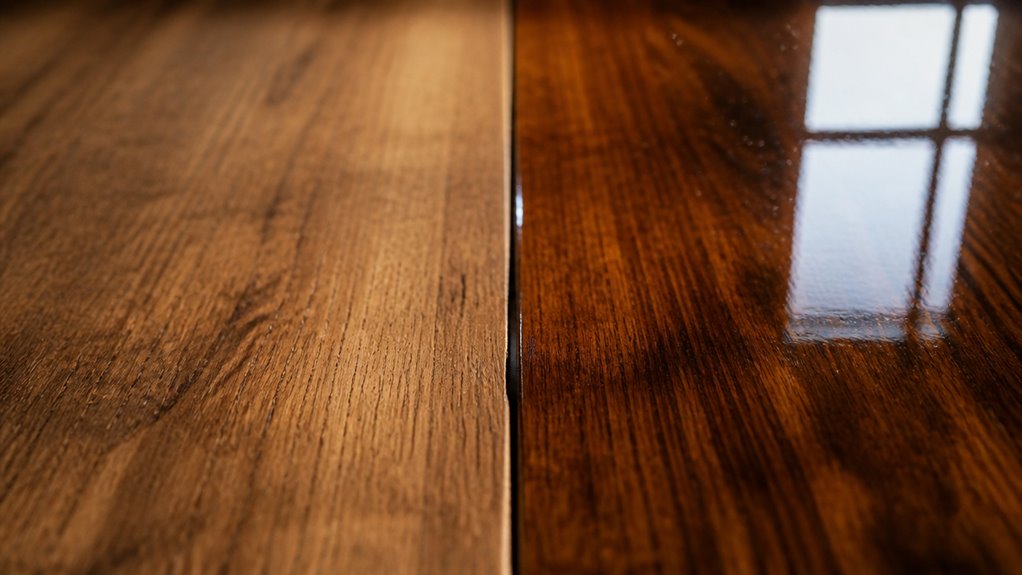
On the other hand, polyurethane is quite versatile, offering a range of sheen options from matte all the way to high gloss.
Now, if you’re drawn to that organic, tactile look, wax is definitely the way to go. It emphasizes the natural beauty of the wood grain. But if you prefer something that looks a bit more polished, polyurethane gives you that synthetic, plastic-like film on the surface.
Unlike wax, polyurethane finishes may contain synthetic resins that can affect food safety on cutting boards.
Visual Texture Differences
When comparing natural wax and polyurethane finishes, their visual textures reveal distinct characteristics that influence aesthetic choices.
Wax creates a softer, more tactile surface with a subtle, natural grain enhancement. It doesn’t form a film but rather sits on the wood’s surface, preserving the wood’s inherent texture and offering a hand-rubbed, intimate feel.
In contrast, polyurethane develops a continuous, hard film that can slightly obscure wood grain depth. This film often produces a smoother, more uniform texture, which may appear synthetic or plastic-like.
You’ll notice wax finishes emphasize organic imperfections, while polyurethane masks them with its consistent coating.
Consequently, your choice depends on whether you want a natural, textured look with wax or a smoother, film-based surface with polyurethane. Each serves different aesthetic and protective roles.
Additionally, finishes like Danish Oil can provide a middle ground by penetrating wood to enhance grain without forming a thick surface film.
Sheen and Gloss Levels
Frequently, the choice between natural wax and polyurethane finishes hinges on their differing sheen and gloss characteristics.
When you apply wax, expect a matte or low-luster finish that enhances wood’s natural texture without adding significant shine. It creates a soft, subtle glow that complements traditional aesthetics.
Polyurethane, however, offers a broader range of sheen options: matte, satin, semi-gloss, and gloss. This allows you to tailor the surface brightness precisely.
Because polyurethane forms a hard film, its gloss levels appear more uniform and reflective, sometimes with a plastic-like quality. If you need a finish with adjustable gloss for modern or high-use furniture, polyurethane provides versatility.
Wax suits you better if you prefer a subdued, tactile surface with minimal sheen. It prioritizes natural-looking softness over high gloss.
For example, products like Varathane Premium Triple Thick Polyurethane offer a high-gloss finish that enhances wood’s natural appearance with strong protection.
Natural Versus Synthetic Look
Although both wax and polyurethane protect wood surfaces, their visual and tactile characteristics differ markedly.
Wax enhances wood’s natural texture, yielding a matte, low-luster finish that feels soft and hand-rubbed. This maintains an organic, authentic appearance, ideal if you want a traditional or vintage look.
In contrast, polyurethane forms a hard, synthetic film on the surface, which can appear more plastic-like. It offers multiple sheen options, from matte to high gloss, allowing you to tailor the finish’s reflectivity.
However, this durability often comes at the expense of the wood’s natural tactile quality. If you prioritize a finish that looks and feels natural, wax is your choice.
For a more uniform, long-lasting, and synthetic appearance, polyurethane is better suited to protect high-use surfaces.
Some wax finishes, like Briwax Golden Oak Furniture Wax Polish, also provide antimicrobial properties while enhancing the wood’s grain and character.
How to Apply Wax and Polyurethane Wood Finishes?
Because each finish requires specific preparation and application techniques, you must start with a clean, dry surface to guarantee proper adhesion and peak results. When applying wax, use a soft cloth to rub it in thin, even layers. Allow each coat to dry before buffing to a matte finish. For polyurethane, apply with a high-quality brush or foam applicator in long, smooth strokes. Avoid bubbles and allow full curing between coats. Ensuring the polyurethane fully cures, typically for at least 24 hours, is crucial before buffing to achieve optimal hardness and durability of the finish curing time.
| Step | Wax Application | Polyurethane Application |
|---|---|---|
| Surface Prep | Clean, dry, lightly sanded | Clean, dry, sanded smooth |
| Application | Rub on thin coats with cloth | Brush on smooth coats, avoid bubbles |
| Drying Time | 20-30 minutes per coat | 4-6 hours between coats |
Maintaining and Repairing Wax and Polyurethane Finishes
You’ll want to reapply wax regularly if you want to keep its protective and aesthetic qualities intact. It tends to wear off with use, so staying on top of it’s key.
If you notice any minor scratches, don’t sweat it! A little buffing can work wonders on wax finishes and restore their look without needing a full refinishing.
Now, when it comes to polyurethane, it’s a bit different. Repairs are usually more involved—think sanding and recoating to fix any damage.
But the upside? Polyurethane generally needs less frequent maintenance overall. So, while it might take a bit more effort to repair, you won’t have to fuss over it as often.
For wood countertops with sinks, choosing a finish with moisture resistance is essential to ensure durability and protect against water damage.
Wax Maintenance Tips
Maintaining a wax finish requires regular reapplication to preserve its protective and aesthetic qualities. Wax tends to wear off over time. To keep your waxed surfaces in prime condition, follow these essential maintenance tips:
- Clean Gently. Use a soft cloth or brush to remove dust and dirt without stripping the wax layer. Avoid harsh chemicals or water-based cleaners that can degrade the finish.
- Reapply Wax Periodically. Depending on usage, apply a thin, even coat of paste wax every 3–12 months. Allow it to cure fully, then buff to restore luster and protection.
- Address Scratches Locally. For minor scuffs, lightly buff the affected area and touch up with wax rather than refinishing the entire surface.
Because wax finishes fill tiny cracks and scratches, they can help restore dry or aged wood while delivering a lustrous finish.
Polyurethane Repair Methods
When polyurethane finishes sustain scratches or wear, repairing them often requires sanding the damaged area before applying a new coat to restore the protective film.
Begin by lightly sanding with fine-grit sandpaper (220–320 grit) to smooth the surface and feather the edges of the damaged spot.
Clean off all dust with a tack cloth or vacuum to ensure proper adhesion.
Next, apply a thin, even layer of polyurethane using a high-quality brush or foam applicator, matching the sheen of the existing finish.
Allow adequate drying time per manufacturer instructions, then lightly sand between coats if multiple layers are needed.
Avoid heavy sanding that exposes bare wood.
For minor surface imperfections, a rubbing compound or polishing pad can sometimes restore luster without full refinishing.
Proper repair maintains durability and extends the life of your polyurethane finish.
For best results, ensure you allow sufficient drying and curing time to achieve a durable and smooth finish.
When to Choose Wax or Polyurethane for Your Wood Furniture?
Although both wax and polyurethane serve to protect wood furniture, choosing the right finish depends on your priorities for durability, appearance, and maintenance.
If you want maximum protection against scratches, moisture, and heat, polyurethane is your best choice.
Conversely, wax offers a softer, natural look but requires frequent upkeep.
Consider these scenarios:
- High-Traffic Surfaces: Use polyurethane for dining tables, floors, or bathroom vanities needing long-lasting resistance.
- Decorative or Vintage Pieces: Opt for wax to preserve a matte, hand-rubbed finish with easier touch-ups.
- Maintenance Preferences: Choose polyurethane if you prefer low maintenance. Select wax if you don’t mind regular reapplication for a natural sheen.
Effects of Layering Wax and Polyurethane on Wood Finishes
Because wax and polyurethane interact differently with wood surfaces, understanding their layering effects is essential for achieving the desired finish and durability.
You can apply wax over cured polyurethane without compromising adhesion, enhancing luster and providing a softer, more natural feel. However, applying polyurethane over wax is problematic; wax residues prevent proper polyurethane bonding, leading to peeling or uneven finishes.
Applying wax over polyurethane enhances luster, but polyurethane won’t adhere properly over wax, causing finish issues.
If you want to use polyurethane over waxed surfaces, you must completely remove the wax first. Layering wax over polyurethane requires regular reapplication since wax wears off faster, while polyurethane underneath ensures long-term protection.
Keep in mind, the order of application affects maintenance: waxing over polyurethane favors easier touch-ups, whereas polyurethane over wax complicates repairs and reduces finish lifespan. Choose layering methods based on desired aesthetics and durability.
Frequently Asked Questions
Can Wax or Polyurethane Be Used on Outdoor Wooden Furniture?
You can use polyurethane on outdoor wooden furniture, but you’ll need an exterior-grade formula designed to withstand moisture and UV exposure.
Regular indoor polyurethane won’t hold up well outside.
Wax isn’t recommended for outdoor use since it offers minimal protection against water and weathering.
If you want to preserve outdoor wood, opt for a durable exterior polyurethane or specialized outdoor sealants.
Ensure you apply and maintain them properly for long-lasting protection.
Are There Any Health or Safety Concerns During Application?
Beware breathing bothersome byproducts! When you apply polyurethane, you’ll want proper protection: gloves, goggles, and a respirator mask, as it releases strong fumes and volatile organic compounds (VOCs) harmful if inhaled.
Wax is safer, but still requires good ventilation to avoid skin irritation or allergic reactions. Always work in well-ventilated areas, follow product instructions carefully, and store materials securely to minimize health risks during application.
How Do Temperature and Humidity Affect Drying Times?
Temperature and humidity markedly influence drying times. Higher temperatures speed up drying by accelerating solvent evaporation, while lower temperatures slow it down.
Elevated humidity levels delay drying because moisture in the air reduces solvent evaporation rates. For polyurethane, make sure temperatures stay between 65–75°F and humidity below 50% for peak curing.
Wax dries faster in warm, dry conditions but can remain tacky longer in cool, humid environments. Always adjust drying time accordingly.
Can Wax or Polyurethane Be Used on Painted Wood Surfaces?
Wondering if you can coat painted wood? Yes, you can use both wax and polyurethane on painted surfaces, but you’ll want to take into account their properties carefully.
Wax adds a soft sheen and protects gently but needs regular upkeep. Polyurethane forms a tough, durable layer ideal for high-traffic areas.
Make sure the paint is fully cured and clean before applying. Avoid polyurethane over wax, as adhesion problems will surface. Prep is key for lasting results.
What Tools Are Best for Applying Wax Versus Polyurethane?
For applying wax, use a soft, lint-free cloth or a natural-bristle brush to spread it evenly.
Then buff with a clean cloth for a smooth finish.
When applying polyurethane, choose a high-quality synthetic bristle brush or a foam brush to avoid streaks and bubbles.
You can also use a spray gun for large surfaces.
Always apply thin, even coats and sand lightly between coats for the best results.
When Should You Use Wax Instead of Polyurethane?
Choosing between wax and polyurethane is like picking between Da Vinci’s subtle brushstrokes and a modern protective varnish.
Wax offers a warm, natural glow but needs regular upkeep.
Polyurethane provides durable, long-lasting protection with a more synthetic feel.
Understanding their differences lets you tailor your finish to your project’s needs.
Whether you prioritize timeless elegance or robust defense, your wood’s final look and lifespan depend on this vital choice.