How to Store Wood Outside: Keep Wood Dry All Year
To store wood outside effectively, choose a dry, sunny spot with good airflow. Elevate your stack at least 5 cm off the ground using pallets or a sturdy base on gravel or concrete.
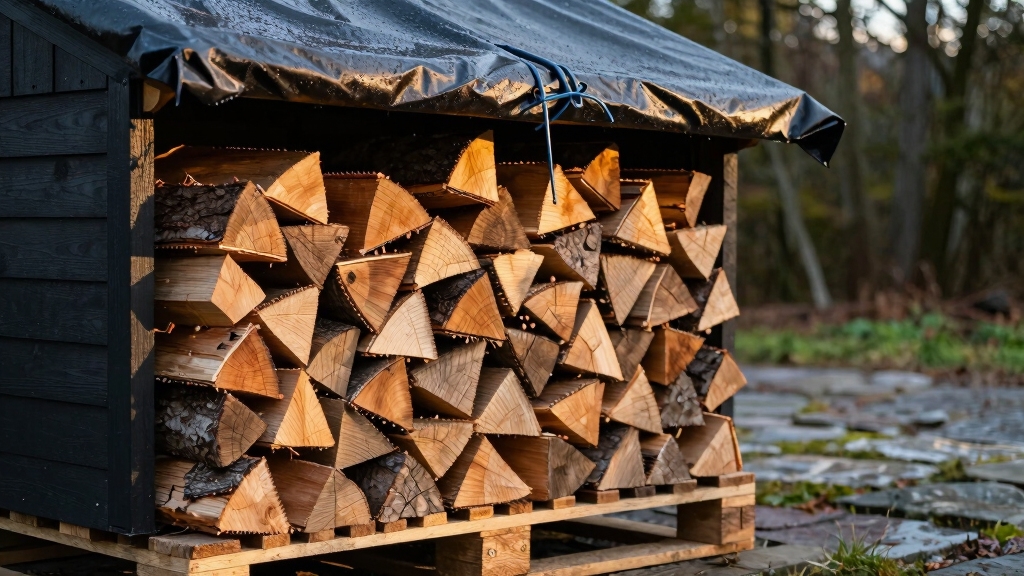
Stack logs with small gaps and use cross-stacking for stability and ventilation. Cover only the top with a breathable tarp or partial shelter to prevent rain exposure while allowing air circulation.
Regularly check moisture levels below 20% with a meter to guarantee proper drying. You’ll also find insights on pest prevention and rotation strategies ahead.
Key Takeaways
- Store wood in a dry, well-ventilated area with partial shelter to prevent rain saturation and promote airflow.
- Elevate firewood at least 5 cm off the ground using pallets or platforms to reduce moisture and pest access.
- Stack logs with small gaps and cross-stacking techniques to enhance airflow and stability.
- Cover only the top of the woodpile with a breathable tarp or roofing to protect from precipitation while allowing side ventilation.
- Regularly monitor wood moisture aiming for below 20% to ensure proper seasoning and efficient burning.
How to Choose the Best Location for Storing Firewood Outside?
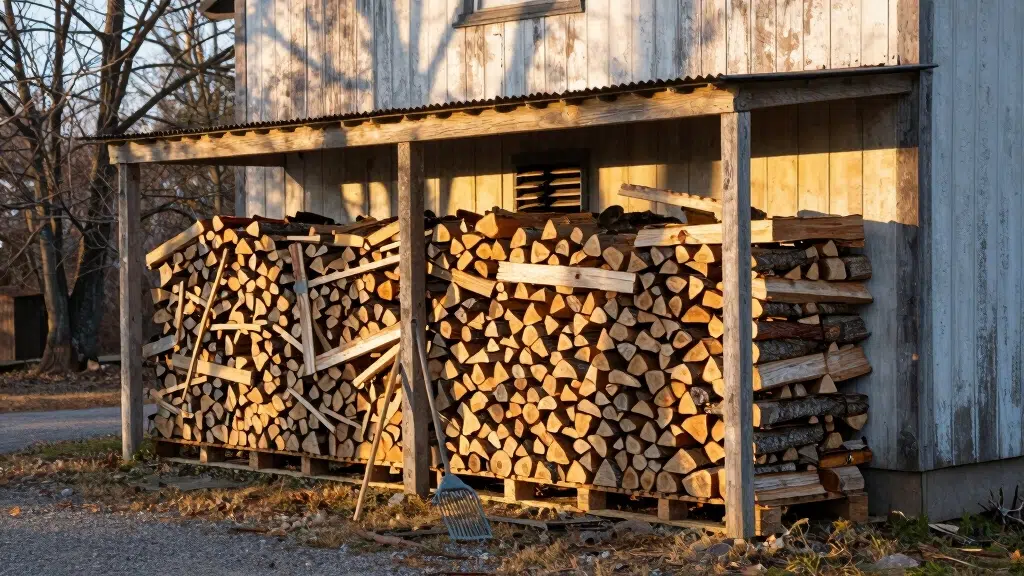
When choosing the best location for storing firewood outside, you should prioritize a dry area with ample airflow to facilitate proper drying and prevent moisture buildup.
Select a dry, well-ventilated spot outdoors to ensure firewood dries thoroughly and stays moisture-free.
Position your woodpile to catch morning sunlight, which accelerates evaporation and reduces dampness.
Maintain at least a 4-inch gap from walls or other structures to ensure sufficient ventilation and minimize mold risk.
Avoid storing firewood directly on soil to prevent moisture absorption; instead, select a site with a concrete or gravel base for peak drainage.
Ideally, place the stack under an overhang or partial shelter to shield it from direct rain while allowing air circulation.
Storing firewood outdoors prevents indoor humidity problems and supports efficient seasoning, guaranteeing your wood remains dry and ready for use.
For long-term preservation, ensure the storage area is well-ventilated and dry to prevent moisture buildup and degradation.
Choosing the Best Wood Storage Solution Outdoors
Although selecting the right location is essential, choosing the best wood storage solution outdoors directly impacts your firewood’s longevity and usability.
You want a system that promotes airflow, prevents moisture buildup, and offers stability. Consider the following options to optimize your firewood storage:
Traditional racks provide open airflow and elevation, ideal for drying and pest prevention.
DIY bases made from landscape timbers or cinder blocks offer customizable, sturdy platforms.
Resin sheds deliver full weather protection and deter pests, suitable for long-term storage.
Pallet systems with braces accommodate larger wood quantities while maintaining structural integrity.
Select a solution that balances protection and ventilation, ensuring your wood stays dry, stable, and ready for use.
Proper design minimizes decay and maximizes burning efficiency. Proper maintenance and regular inspection are also key to preventing damage and ensuring long-term usability.
Why You Should Elevate Your Firewood Off the Ground?
Lifting your firewood off the ground prevents direct contact with soil moisture, which can accelerate decay and reduce burn efficiency.
Elevating logs improves airflow, aiding in drying and deterring pests. You should elevate wood at least 5 cm using pallets, wooden platforms, or specialized log racks.
This reduces moisture absorption, limits fungal growth, and maintains wood quality.
Proper installation of a moisture barrier beneath storage platforms can further protect wood from ground dampness and extend its usability.
| Benefit | Elevation Method | Result |
|---|---|---|
| Moisture control | Pallets or platforms | Reduces soil moisture contact |
| Air circulation | Elevated stacking | Enhances drying efficiency |
| Pest prevention | Log racks | Limits insect infestation |
| Structural stability | Proper elevation height | Prevents wood deformation |
Building a Stable Base for Your Outdoor Woodpile
For ideal firewood storage, establishing a stable base is essential to maintain elevation and promote airflow. A solid foundation prevents wood from absorbing ground moisture and deters pests, ensuring longevity.
When building your base, focus on durability, drainage, and support.
Consider these options:
Use pallets elevated on bricks or pavers to lift wood at least 5 cm above ground.
Construct wooden platforms with treated lumber to provide uniform support and airflow.
Place the base on gravel or concrete slabs to enhance drainage and stability.
Choose specialized metal or resin log racks for long-term durability and structural integrity.
Incorporating features like dust ports can help manage debris around your outdoor woodpile and maintain cleanliness.
Effective Stacking Techniques for Better Airflow and Stability
To get the best airflow when stacking logs, make sure to leave some small gaps between them. This little trick really helps reduce moisture buildup, which is super important for drying.
Also, consider cross-stacking your logs. It’s a great way to enhance stability since the wood pieces interlock, making it less likely for the pile to collapse. Plus, it promotes better drying, so it’s a win-win!
Using diagonal braces in wood stacking structures can further improve stability and prevent collapse.
Proper Log Spacing
Although stacking firewood might seem straightforward, maintaining proper log spacing is crucial to guarantee adequate airflow and structural stability.
When you stack logs too tightly, moisture gets trapped, slowing drying and inviting rot. Conversely, spacing them too far apart reduces stack strength, risking collapse. Aim for consistent, small gaps between logs to maximize ventilation while keeping the pile solid.
To achieve proper log spacing, you should:
- Leave small air gaps (about 1–2 cm) between each log for airflow.
- Align logs uniformly to distribute weight evenly and prevent shifting.
- Avoid stacking logs directly touching each other’s ends to reduce moisture buildup.
- Maintain a slight inward lean to enhance stack stability without compressing gaps.
These precise spacing techniques are essential to guarantee your wood dries efficiently and stacks securely.
Cross-Stacking Benefits
Cross-stacking firewood locks the logs together, creating a stronger and more stable pile that resists shifting or toppling.
By alternating the direction of each layer, you enhance structural integrity, allowing the stack to bear weight evenly while preventing collapse.
This technique also promotes better airflow by creating natural gaps between logs, accelerating drying and reducing moisture retention that leads to mold or rot.
When cross-stacking, maintain slight inward leaning and avoid overly tight packing to maximize ventilation without sacrificing stability.
Use a flat, elevated base like pallets or wooden platforms to further improve airflow beneath the stack.
Employing cross-stacking supports efficient seasoning, prolongs wood lifespan, and minimizes pest infestation risks, making it an essential method for effective outdoor firewood storage.
Incorporating ergonomic design principles, such as ensuring proper handling and stacking posture, can reduce fatigue and improve safety during wood stacking.
Covering Methods That Protect Firewood Without Trapping Moisture
When protecting firewood from rain and snow, covering only the top with a tarp, metal roofing, or plywood prevents moisture buildup while allowing airflow. This method avoids trapping humidity, which can lead to mold and decay.
You should slope the cover with an overhang to direct rainwater away from the woodpile. Keep the sides exposed to maximize ventilation and promote drying.
Consider these key covering practices:
Use breathable materials that shield from precipitation but don’t seal in moisture.
Avoid full enclosure or plastic tarps that trap condensation.
Employ ventilated roofs or sheds designed for firewood storage.
Make sure covers are securely fastened to withstand wind while maintaining airflow.
This approach balances protection from the elements with adequate ventilation to maintain wood quality. Additionally, using materials with low kickback chain technology in cutting firewood can improve safety and efficiency during preparation.
Monitoring and Maintaining Proper Wood Moisture Levels
To keep your firewood in top shape, it’s a good idea to use a wood moisture meter regularly. You want to make sure that the moisture content stays below 20%. Trust me, it makes a big difference!
Typically, proper seasoning needs at least six months of drying outdoors under the best conditions.
And don’t forget, keeping an eye on those moisture levels is super important. It helps you avoid inefficient burning and also cuts down on the chances of mold or pests taking hold. So, check in on your firewood often—you’ll be glad you did!
For best results, ensure proper stacking and airflow to promote even drying and minimize cracking.
Moisture Meter Usage
Use a wood moisture meter regularly to guarantee your firewood maintains peak dryness for burning. This tool provides precise readings of moisture content, helping you decide when wood is ready or needs more drying.
Aim for moisture levels below 20% for ideal combustion efficiency and reduced smoke.
When using a moisture meter:
Insert probes into several spots on different logs to get representative readings. Avoid measuring only surface moisture; test deeper sections for accuracy.
Calibrate the meter according to the manufacturer’s instructions before use. Monitor moisture periodically during storage to track drying progress.
Consistent moisture monitoring prevents burning inefficient, wet wood and ensures your firewood is always at peak performance.
For workshops storing wood, consider using an air filtration system with HEPA filters to maintain cleaner air quality and reduce dust from drying wood.
Ideal Drying Duration
Consistently monitoring moisture levels with a wood moisture meter guides you in determining the ideal drying duration for your firewood.
Typically, properly seasoned wood requires at least six months of outdoor drying to reach moisture content below 20%.
Factors like wood species, log diameter, and local climate affect drying times.
Hardwoods generally take longer than softwoods.
Make sure logs are elevated at least 5 cm off the ground and stacked with gaps to promote airflow.
Position your stack in a sunny, well-ventilated area with partial shelter overhead to prevent rain saturation while allowing moisture evaporation.
Regularly check moisture readings and rotate stock to use older, drier logs first.
Avoid covering sides completely, as trapped moisture prolongs drying and increases decay risk.
Proper drying optimizes combustion efficiency and reduces creosote buildup.
Always ensure good ventilation during drying to minimize silica dust hazards and maintain air quality.
Tips to Prevent Pests in Outdoor Firewood Storage
Although storing firewood outdoors helps reduce indoor moisture issues, it can attract pests if not managed correctly.
To prevent infestations, you need to create an environment that deters insects and rodents while maintaining proper wood condition.
Implement these key strategies:
Elevate firewood at least 5 cm off the ground using pallets or platforms to reduce soil moisture and pest access.
Store wood in a dry, well-ventilated area with good airflow, avoiding contact with surrounding structures.
Cover only the top of the stack with a tarp or roofing material that allows side ventilation to prevent moisture buildup.
Use weather-resistant sheds or racks designed to block pests while promoting drying.
Following these tips minimizes pest attraction and maintains wood quality effectively.
How to Rotate and Manage Your Firewood Stock Efficiently?
When managing your firewood stock, rotating older logs to the front guarantees you use seasoned wood first. This maintains peak burning efficiency.
Implement a first-in, first-out system by stacking new wood behind older stock. This prevents waste and secures consistent moisture levels.
Monitor your stock regularly, removing logs that show signs of decay or pests. Keep the stack stable through proper cross-stacking and slight inward lean. This facilitates airflow and reduces moisture buildup.
| Task | Key Action |
|---|---|
| Rotate Logs | Move older wood forward |
| Stock Monitoring | Check for decay/pests |
| Stacking Technique | Cross-stack with gaps |
| Moisture Control | Use wood moisture meter |
| Stability | Maintain inward lean |
Consistent rotation and management optimize wood quality and prolong storage life.
Frequently Asked Questions
Can I Store Firewood Near My Vegetable Garden Safely?
You can store firewood near your vegetable garden safely if you maintain a 4-inch gap from plants and structures to prevent moisture buildup and pest transfer.
Elevate the wood at least 5 cm off the ground using pallets or racks to guarantee airflow and drainage.
Cover only the top with a sloped tarp or roof for rain runoff.
Regularly monitor moisture levels and avoid stacking wood too tightly to minimize pest attraction near your garden.
How Long Can Firewood Be Stored Before It Loses Quality?
You can store firewood for several years without significant quality loss if you keep it properly seasoned and protected.
Season wood outdoors for at least six months to reach under 20% moisture content, which guarantees efficient burning.
Beyond that, well-stored wood on elevated racks with good airflow and partial shelter can last 2-3 years or more.
Rotate your stock regularly to use older logs first and prevent decay or pest infestation.
Is It Okay to Burn Wood That’s Been Stored Outdoors in Winter?
Yes, you can burn wood stored outdoors in winter, provided it’s properly seasoned and kept dry.
Make sure the wood’s moisture content is under 20% using a moisture meter before burning.
Store it elevated and covered only on top to prevent moisture absorption and decay.
Avoid burning wood that’s damp or frozen, as it produces less heat and more creosote buildup, increasing chimney fire risk.
Rotate stock to use older, well-seasoned logs first.
Can I Use Treated Wood for Building My Firewood Rack?
Yes, you can use treated wood for building your firewood rack because it offers durability and resistance to rot and insects.
Just make sure the treated wood is weather-resistant and safe for outdoor use.
Avoid any treated wood with harmful chemicals that might contaminate your firewood.
Always elevate the rack at least 5 cm off the ground to prevent moisture absorption and maintain airflow.
This helps keep your firewood dry and well-seasoned.
What’s the Best Way to Dry Freshly Cut Green Wood?
Of course, you could just toss green wood in a dark, damp corner and hope for the best.
But if you want it properly dried, stack logs with small gaps for airflow, elevated at least 5 cm off the ground on pallets or racks.
Choose a sunny, breezy spot with partial shelter. Cover only the top to shed rain, and season wood outdoors for at least six months until moisture drops below 20%.
Final Thoughts: Keep Your Firewood Dry, Ready, and Reliable
Storing wood outside is like nurturing a living archive of warmth. By choosing the right location, elevating your wood, and stacking it for airflow, you create a fortress that guards against moisture and pests.
Covering it properly and monitoring moisture guarantees your firewood stays ready, like a well-oiled machine. With careful rotation and maintenance, you keep the cycle alive, turning raw timber into reliable fuel. This symbolizes preparedness and comfort through every season.