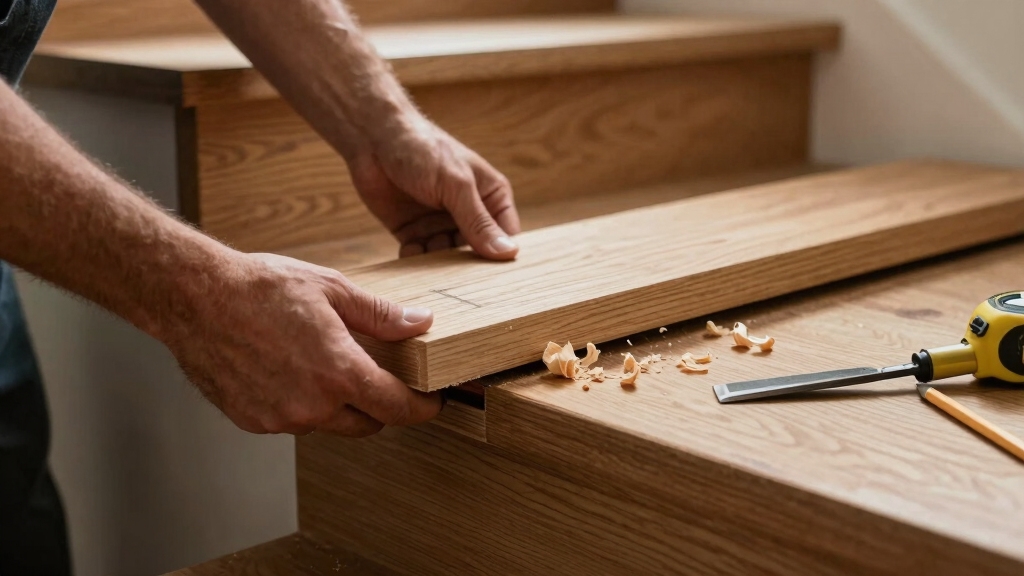
How to Make Stair Treads: Durable Treads Done Right
To make stair treads, start by selecting durable materials like wood, metal, or composite suited for your environment. Measure your stair openings accurately, marking dimensions twice to warrant precision.
Cut the treads using appropriate saws and shape edges with routers or files for safety and style. Prepare and clean stair surfaces before fastening treads securely with screws or adhesives.
Finish with non-slip coatings and decorative touches for traction and aesthetics. Understanding these steps helps warrant a long-lasting, safe installation.
Key Takeaways
- Measure stair opening precisely using tape measure, carpenter’s square, and digital angle finder to ensure proper tread fit and safety dimensions.
- Select appropriate material considering durability and environment: wood for warmth, metal for corrosion resistance, stone for outdoor elegance, or composite for moisture resistance.
- Mark tread material clearly with cut lines and overhang allowances, then cut using suitable saws and shape edges with routers or files for smooth finishes.
- Prepare stair surface by cleaning and repairing, then fasten treads securely with screws, bolts, or adhesive based on material type and stair structure.
- Apply protective coatings and non-slip treatments like polyurethane with anti-slip additives or textured paint to enhance safety and longevity of stair treads.
Explore Stair Tread Materials: Pros and Cons
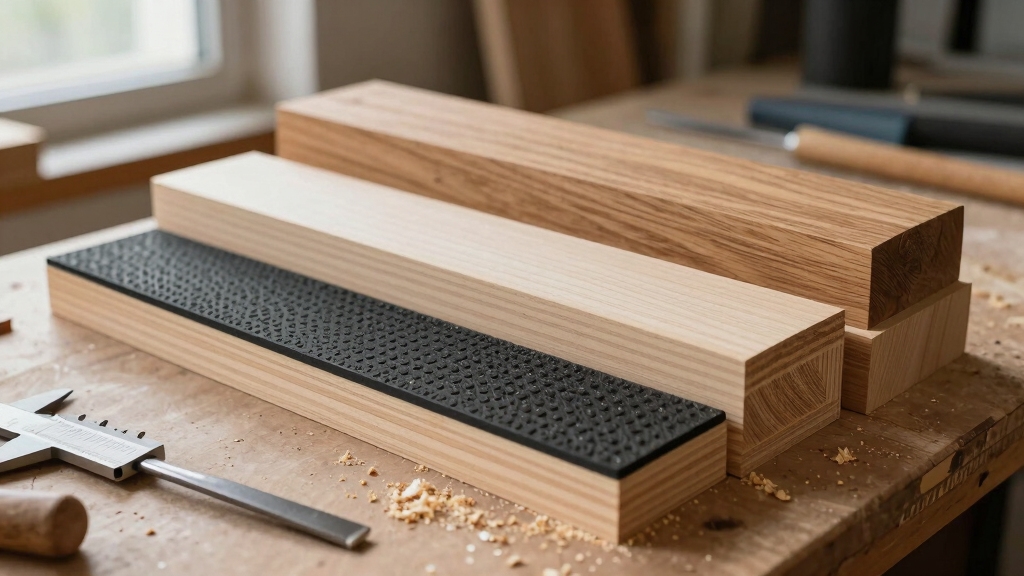
When choosing stair treads, you’ll want to weigh the pros and cons of each material to match your specific needs.
Metal treads like aluminum offer corrosion resistance and slip traction, ideal for outdoor or industrial use.
Wood options such as red oak or maple provide durability and warmth but require maintenance in humid environments.
Stone treads, including bluestone and limestone, deliver long-lasting outdoor elegance yet need sealing against stains.
Composite treads resist moisture, fading, and insect damage, making them practical for exterior applications.
Concrete-filled metal pans handle heavy traffic with toughness but add significant weight.
Other materials like laminate or vinyl offer cost-effective aesthetics but lack the durability of natural options.
Your choice hinges on balancing strength, maintenance, environment, and budget constraints for peak performance.
For applications requiring wood, selecting materials with moisture-resistant adhesives can significantly enhance durability in humid conditions.
Measure and Mark Stair Tread Openings Precisely
To measure and mark stair tread openings accurately, you’ll want to have some reliable measuring tools on hand, like a tape measure and a carpenter’s square.
It’s really important to get these measurements right, so don’t skip this step!
When you’re ready to mark your cuts, stick with clear and consistent techniques.
You can use pencil lines or chalk to outline each cut—whatever works best for you.
Just make sure it’s visible enough.
And here’s a quick tip: always double-check your dimensions before you make any cuts.
It’s a simple step, but it can save you a lot of hassle later on.
A perfect fit is worth the extra effort!
Using the right saw, such as a scroll saw for intricate cuts or a bandsaw for larger pieces, can help ensure precision in your stair tread projects.
Accurate Measuring Tools
Although stair tread installation demands exact fitment, accurate measuring tools guarantee you capture every dimension precisely.
You’ll need reliable devices to measure depth, width, and angles of stair tread openings without error.
Start with:
- Tape Measure: Choose a high-quality, rigid tape for consistent, straight measurements of opening width and depth.
- Combination Square: Use it to verify and mark precise right angles on tread edges and stringers.
- Digital Angle Finder: Measure and confirm the stair angle, ensuring tread thickness matches rise and run.
- Calipers: For detailed checks on material thickness and edge profiles, especially with metal or composite treads.
Using these tools carefully guarantees each tread fits snugly, preventing gaps or overhangs that compromise safety and aesthetics.
Adjusting your workspace to maintain ergonomics and user comfort during measurement can reduce fatigue and improve accuracy over time.
Marking Techniques Explained
Start by transferring your measurements accurately onto the stair tread material using sharp pencils or fine-tip markers.
Make sure your marking tools produce fine, visible lines that won’t obscure cutting guides. Use a combination square or carpenter’s square to draw perpendicular and parallel lines, aligning precisely with the measured dimensions.
When marking irregular or curved openings, employ a contour gauge to replicate the profile exactly. Mark all cut lines clearly, including overhang allowances and nosing details if applicable.
Double-check that each line corresponds with your recorded measurements before proceeding. For materials like wood or metal, avoid heavy pressure that might damage or deform the surface.
Proper and precise marking at this stage sets the foundation for accurate cutting. This ensures the stair treads fit snugly within their openings without gaps or misalignment.
To achieve the best fit, it is also important to prepare for accurate cutting techniques following your markings.
Verifying Dimensions Twice
After accurately marking your stair tread material, confirming the exact dimensions of the stair openings becomes the next critical step.
Precise measurement guarantees a secure fit and prevents costly errors. Follow these steps:
- Use a reliable tape measure or caliper to measure each opening’s width and depth twice, front to back and side to side.
- Mark the dimensions clearly on both the tread material and the stair frame using a fine pencil or chalk.
- Cross-check measurements by comparing them against the previously marked material dimensions.
- Verify the squareness of corners with a carpenter’s square to guarantee proper alignment.
Additionally, ensuring your work surface is level before measuring can significantly enhance accuracy and ease of installation.
Cut Stair Treads to the Right Size
When cutting stair treads to the right size, you must first measure the stair width and depth accurately to guarantee a proper fit.
Accurate measurement of stair width and depth is essential for perfectly fitting stair treads.
Use a tape measure to record the exact width between stringers and the tread depth, assuring a minimum of 9.5 inches for safety.
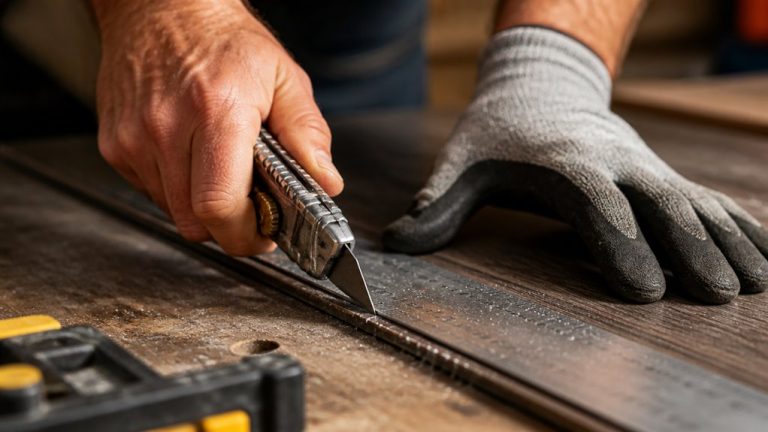
Transfer these dimensions to your material, marking cut lines clearly with a pencil or marking knife.
For wood treads, use a fine-toothed saw for clean edges; for metal, employ a metal-cutting saw or angle grinder with the appropriate blade.
Make straight, precise cuts following your marks, maintaining square angles to avoid gaps.
Double-check measurements before cutting to prevent material waste.
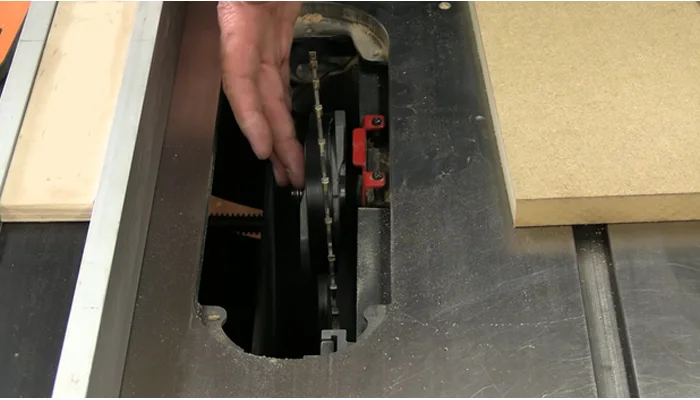
Set the blade height to approximately 1/8 inch above the surface for optimal cutting results using a fine-toothed blade.
Shape and Finish Wood and Metal Tread Edges

First things first, let’s talk about choosing the right edge profile for your project. You might want to go for a bullnose or commode front for wood, depending on the look you’re after.
Once you’ve made your selection, it’s all about making those wood edges smooth and sealing them up. This not only enhances their durability but also helps prevent any nasty splintering.
Now, when it comes to metal treads, there are a few extra steps. You definitely want to deburr any sharp edges to keep things safe.
And don’t forget to apply a protective coating! This will help resist corrosion and wear, ensuring your metal treads stay in great shape for a long time.
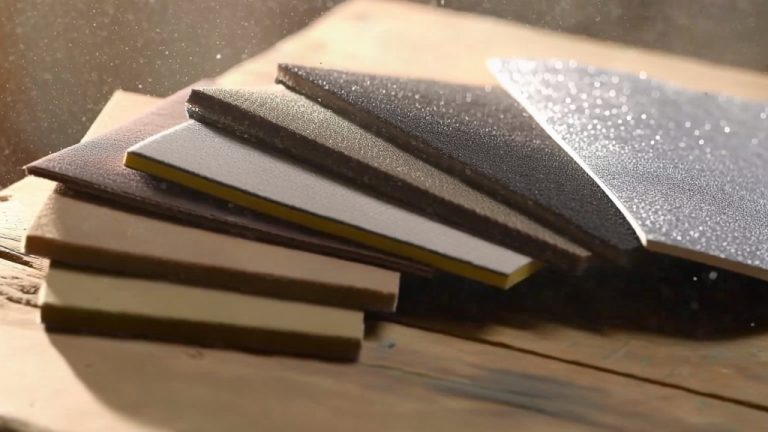
For wood edges, starting with hand tools like a block plane and then using sanding blocks and sponges will help you achieve a smooth, rounded finish that’s both durable and attractive.
Edge Profile Options
Although edge profiles might seem like a minor detail, they markedly influence both the safety and aesthetics of stair treads.
When shaping wood or metal edges, you need to balance durability, grip, and visual appeal.
Here are four common edge profile options to contemplate:
- Bullnose: Rounded edges reduce sharpness, improve safety, and create a smooth passage.
- Chamfer: A beveled cut that adds subtle detail while reducing edge wear.
- Square: Clean, modern look but requires careful finishing to avoid splinters or sharp metal corners.
- Ogee: Decorative S-shaped profiles suited for traditional wood stairs, demanding precise routing.
Choose profiles based on tread material and usage frequency.
Ensure you maintain grip and prevent injury without compromising design integrity.
Selecting the right edge profile also involves considering the durability and material quality to ensure long-lasting performance and safety.
Wood Edge Finishing
Shape wood edges with care to guarantee both safety and durability in your stair treads.
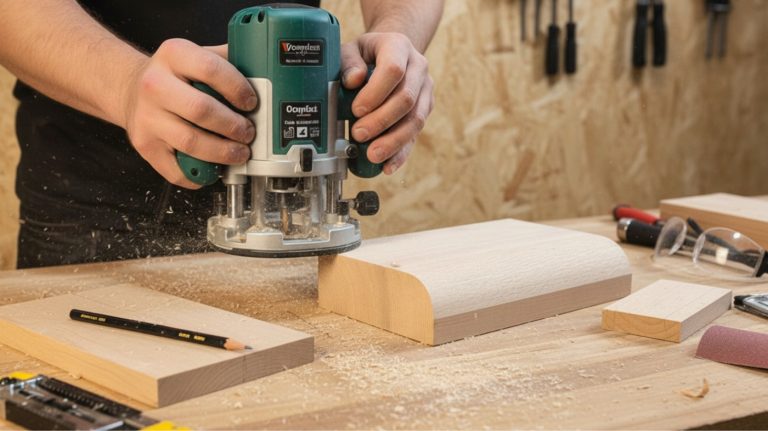
Begin by selecting an appropriate edge profile; bullnose is common for smooth, rounded edges that reduce wear and injury risk.
Use a router with a suitable bit to achieve consistent shaping.
Sand edges progressively from coarse to fine grit to eliminate splinters and prepare for finishing.
Make sure edges are symmetrical and smooth to maintain tread balance.
Apply a durable finish like polyurethane or oil-based varnish to protect against moisture and abrasion, especially on hardwoods like red oak or maple.
Avoid sharp corners, as they compromise safety and are prone to damage.
Proper edge finishing extends tread lifespan and enhances stair aesthetics, meeting both functional and code requirements effectively.
Using tools like a featherboard can help maintain steady pressure and accuracy when shaping edges, enhancing safety during the process.
Metal Edge Treatment
When working with metal stair treads, treating the edges properly is essential to guarantee safety and durability.
Sharp or unfinished edges can cause injury or degrade over time.
You’ll want to shape and finish these edges carefully to make certain a secure, long-lasting installation.
Follow these steps for effective metal edge treatment:
- Deburr edges using a grinder or file to remove sharpness.
- Round corners with a metal file or power tool for smooth transitions.
- Apply a protective finish, such as powder coating, anodizing, or paint, to prevent corrosion.
- Add non-slip strips or abrasive grit to enhance traction on the edge.
Regular maintenance and inspection can help ensure the longevity and efficiency of your metal tread edges.
Clean and Prepare Stair Surfaces for Installation
Start by thoroughly cleaning the stair surfaces to remove all dirt, dust, grease, and old adhesive residues.
Begin with a thorough cleaning to eliminate dirt, dust, grease, and any old adhesive residues from stair surfaces.
Use a stiff brush or vacuum to clear loose debris, then apply a suitable solvent or degreaser for stubborn grime.
Make certain the surface is completely dry before proceeding.
Inspect each tread for damage, such as cracks or warping, and repair or replace as necessary to establish a stable base.
For wooden stairs, sand surfaces smooth to enhance adhesion; for metal or concrete, check for rust or loose particles and treat accordingly.
Confirm the stair dimensions are accurate and consistent, addressing any unevenness with a leveling compound if needed.
Proper preparation guarantees a secure, long-lasting installation of your stair treads.
Secure Stair Treads With Proper Fastening Methods
Choose the appropriate fastening method based on your stair tread material and installation environment to guarantee a secure and durable fit.
For wood treads like red oak or maple, use corrosion-resistant screws countersunk and plugged to maintain aesthetics.
Metal treads such as aluminum or galvanized steel typically require self-tapping screws or rivets for a firm hold.
Stone or concrete treads need anchoring with embedded bolts or construction adhesive combined with mechanical fasteners.
Composite materials favor stainless steel screws with pre-drilled holes to prevent splitting.
- Wood: corrosion-resistant screws, countersinking, plugs
- Metal: self-tapping screws, rivets, pre-drilled holes
- Stone/Concrete: embedded bolts, construction adhesive, mechanical fasteners
- Composite: stainless steel screws, pre-drilling to avoid splitting
Always use fasteners compatible with tread materials to guarantee safety.
Apply Non-Slip Coatings and Protective Finishes
Securing stair treads properly sets the foundation for applying non-slip coatings and protective finishes that enhance safety and durability.
Begin by thoroughly cleaning the tread surfaces to remove dust, grease, or residues that could impede adhesion.
For wood treads, use a clear polyurethane or varnish with added anti-slip additives to protect against wear while improving traction.
Metal treads benefit from epoxy-based coatings with embedded grit or textured paint to prevent slips and corrosion.
Stone and concrete treads require penetrating sealers combined with non-slip treatments to maintain weather resistance and surface grip.
Apply coatings evenly using brushes or rollers, following manufacturer drying times between coats.
Always test a small area first to guarantee compatibility and performance.
This approach guarantees your stair treads remain safe, durable, and maintenance-efficient.
Add Decorative Features to Customize Stair Treads
To enhance both aesthetics and functionality, you can incorporate various decorative features into your stair treads that reflect your design vision while maintaining safety and durability.
Incorporate decorative stair tread features that blend design vision with safety and lasting durability.
Choose features that complement your tread material and intended use without compromising traction or structural integrity.
Consider these practical options:
- Inlay Strips: Embed contrasting wood or metal strips to create visual interest and define tread edges.
- Textured Surfaces: Add abrasive grit or carved patterns on wood or metal to improve slip resistance.
- Custom Shapes: Opt for bullnose, curtail, or commode front profiles for refined, elegant contours.
- Decorative Finishes: Apply stains, paints, or powder coatings that enhance appearance and protect against wear.
Maintain and Repair Stair Treads for Longevity
Adding decorative features can enhance the look and safety of your stair treads, but keeping them in good condition requires regular maintenance and timely repairs.
Inspect wooden treads for cracks or splinters; sand and refinish surfaces annually to prevent wear and moisture damage.
For metal treads, check for corrosion or loose fasteners; tighten screws and apply rust inhibitors as needed.
Stone and concrete treads demand sealing every few years to protect against stains and weathering. Replace damaged nosing promptly to avoid tripping hazards.
Clean composite and laminate treads with manufacturer-recommended solutions to maintain appearance and slip resistance. Promptly address any signs of deterioration to extend your stair treads’ lifespan, ensuring safety and preserving structural integrity over time.
Frequently Asked Questions
What Tools Are Essential for Cutting and Shaping Stair Treads?
You’ll need a circular saw or miter saw for precise cuts on wood or composite treads.
Use a jigsaw for curved or detailed shapes like bullnose or curtail edges.
A router with appropriate bits shapes edges and smooths surfaces.
For metal treads, an angle grinder or metal-cutting saw works best.
Don’t forget measuring tools, clamps, and safety gear to guarantee accuracy and protect yourself during cutting and shaping.
How Do I Choose Between Bullnose and Commode Front Treads?
Wondering which tread profile suits your staircase best? Choose bullnose treads if you want straight edges with rounded corners, ideal for clean, classic looks and safer edges.
Pick commode front treads for a curved front that adds elegance and a softer aesthetic, perfect for traditional or decorative stairs.
Consider your design style, safety needs, and stair shape. Bullnose offers simplicity and durability, while commode fronts provide ornate appeal but may require more maintenance.
Can Composite Treads Be Painted or Stained Like Wood?
Composite treads generally can’t be stained like wood because they lack the porous grain that absorbs stain.
However, you can paint composite treads using high-quality exterior paint designed for synthetic materials.
Before painting, clean the surface thoroughly and apply a primer suited for composites to guarantee adhesion.
Keep in mind, painting may slightly reduce the composite’s moisture resistance and durability compared to its original finish, so weigh aesthetics against performance.
What Are the Weight Limits for Metal Stair Treads?
Think of metal stair treads as the backbone of your staircase, designed to hold heavy loads with ease.
Typically, they support between 300 to 1,000 pounds per tread, depending on the metal type, like aluminum or stainless steel, and thickness.
Always check manufacturer specs for exact load ratings.
Proper installation and support framing are essential to meet these weight limits safely, ensuring your stair treads stand firm under daily use without bending or failing.
How Do I Prevent Stair Treads From Creaking Over Time?
To prevent stair treads from creaking, you should make sure all components fit tightly without gaps.
Use construction adhesive between treads and stringers, and secure with screws instead of nails for lasting stability.
Pre-drill holes to avoid wood splitting. Choose dense, stable materials like hardwood or engineered wood to minimize movement.
Regularly check and tighten fasteners over time. Proper installation and quality materials reduce wood expansion and contraction, cutting down on creaks effectively.
Armored for Every Step: Safety, Strength, and Style Combined
Now that you’ve mastered each step, your stair treads will stand up to years of heavy use without a hitch. Like they’re armored for a thousand storms. Remember, precise measurements, secure fastening, and proper finishes aren’t optional; they’re essential for safety and durability.
Keep your treads clean and maintained, and don’t skip the non-slip coatings. With these practical techniques, you’ll create stair treads that are both functional and visually striking, built to last.