Lacquer vs Shellac Finish: Tailor Your Woodwork Perfectly
When choosing between lacquer and shellac, know lacquer offers harder, moisture-resistant finishes with crystal-clear clarity, ideal for high-wear surfaces and cabinets.
Shellac gives you a warm, amber glow and dries quickly, perfect for antiques or fine furniture needing easy, spot repairs. Lacquer demands spraying and careful ventilation, while shellac applies easily with a brush or pad.
Each finish has unique drying times and thinners suited to their composition. Explore their properties further to match your project’s needs precisely.
Key Takeaways
- Shellac is a natural resin that dries to an amber-toned, warm finish enhancing wood grain, while lacquer is a synthetic film that dries clear and colorless.
- Lacquer offers superior durability, moisture resistance, and hardness, making it ideal for high-wear furniture and cabinetry compared to the more delicate shellac.
- Shellac dries quickly with alcohol evaporation and is easy to repair by recoating, whereas lacquer requires spraying and complex prep for repairs.
- Lacquer needs strong ventilation due to noxious fumes, while shellac is safer to apply and cleans up easily with alcohol.
- Shellac provides quick drying and easy spot repairs suited for antiques, while lacquer delivers a smoother, harder finish for commercial or high-use applications.
Shellac vs Lacquer Finish: Side-by-Side Comparison
| Feature | Shellac | Lacquer |
|---|---|---|
| Composition | Natural resin from lac beetles, dissolved in alcohol | Semi-synthetic, nitrocellulose with multiple solvents |
| Appearance | Warm amber tone that enhances wood grain | Crystal-clear, non-yellowing finish |
| Drying Time | Dries in minutes; recoat in 30–60 minutes | Dries in 15–30 minutes; frequent thin recoats |
| Application Method | Brush, pad, wipe, or spray | Spray only for best results |
| Durability | Moderate; less resistant to moisture and wear | High; hard, moisture- and heat-resistant |
| Repairability | Very easy; new coats melt into old finish | Difficult; often requires sanding or stripping |
| Ventilation & Safety | Low fumes; safer and easier cleanup | Strong fumes; requires good ventilation |
| Environmental Impact | Biodegradable, renewable, lower VOCs | Higher VOCs, synthetic, long-lasting film |
| Best Uses | Antiques, fine furniture, spot repairs | Cabinets, high-wear furniture, commercial use |
What Are Shellac and Lacquer Made Of?
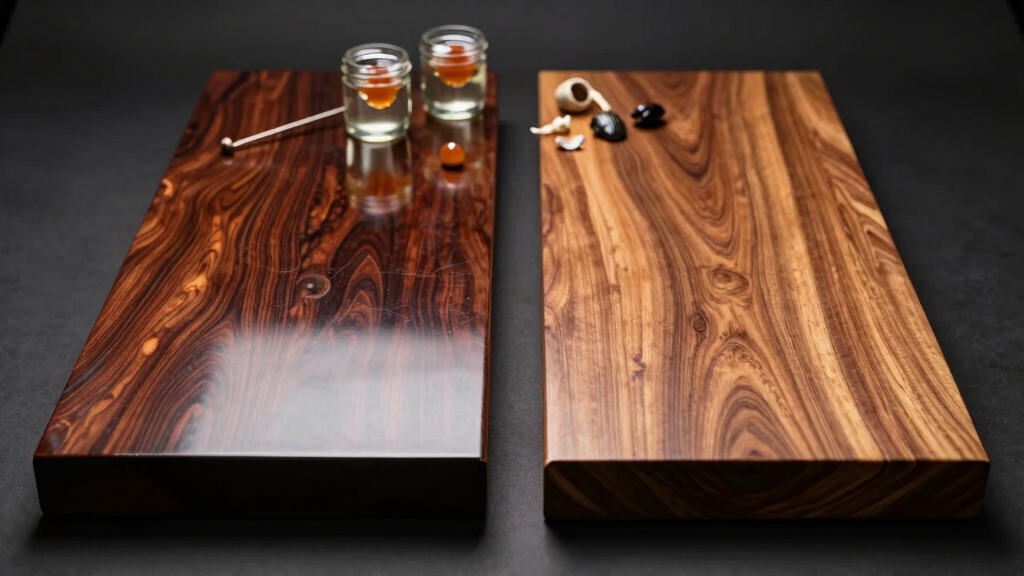
Understanding the composition of shellac and lacquer is essential for selecting the right finish for your project.
Shellac is a natural resin secreted by the female lac beetle, collected, processed, and dissolved in alcohol to form a liquid finish. It dries by evaporation without chemical crosslinking, resulting in a thin, amber-toned film.
Lacquer, in contrast, is a semi-synthetic coating primarily composed of nitrocellulose derived from cellulose, combined with resins and multiple solvents. It also dries by solvent evaporation but offers greater durability due to its synthetic additives.
Shellac’s all-natural origin makes it biodegradable but less robust, while lacquer’s engineered formula provides enhanced hardness and moisture resistance. Knowing these compositional differences lets you weigh environmental impact against performance needs effectively.
For projects requiring a durable protective layer, understanding the drying and curing process of finishes like shellac and lacquer is crucial to achieving optimal results.
How to Apply Shellac and Lacquer for Best Results?
When it comes to applying shellac, you’ll have a few different options at your disposal. You can brush it on, wipe it, pad it, or even spray it.
Just keep in mind that shellac dries pretty quickly—within minutes, in fact! And if you’re looking to apply another coat, you won’t have to wait long either; it’ll be ready for a recoat in under an hour. So, you really need to work swiftly to get the best results.
Now, when you’re dealing with lacquer, the game changes a bit. You really want to stick to spraying it to avoid any unwanted bubbles or drag marks.
It’s all about keeping those coats nice and thin, too. You’ll be able to recoat every 15 to 30 minutes, which is great for getting that smooth finish you’re after.
Understanding these application methods and their drying times is key to achieving a flawless finish with both shellac and lacquer. Happy finishing!
Keep in mind that shellac acts as a versatile sealer that prevents stain bleed-through and bonds well under other topcoats, including lacquer, making it an excellent preparatory layer for durability and adhesion versatile sealer.
Application Techniques Comparison
Although both shellac and lacquer serve as evaporative finishes, their application demands distinct techniques to achieve ideal results.
You’ll find shellac versatile; you can brush, wipe, pad, or spray it, but you must work quickly to avoid streaks since it dries within minutes.
Recoating is forgiving, allowing multiple layers within an hour.
Lacquer, conversely, requires spraying to prevent bubbles and brush marks due to its thinner consistency.
You’ll apply multiple thin coats, recoating every 15-30 minutes for peak layering.
Lacquer thinners offer solvent evaporation control, helping you manage flow and leveling.
When using shellac, alcohol cleanup is straightforward, while lacquer demands stronger ventilation due to noxious fumes.
Mastering each finish’s specific application method guarantees durability and a flawless, smooth surface.
Proper ventilation and safety precautions are essential when applying lacquer because of its noxious fumes.
Drying Times And Tips
Since shellac dries within minutes, you must work swiftly to prevent streaks and guarantee an even coat.
Apply shellac using smooth, continuous strokes, maintaining a wet edge to avoid lap marks.
Recoat after 30 to 60 minutes for peak adhesion, as shellac bonds by melting into the previous layer.
Lacquer, however, dries faster, typically within 15 to 30 minutes, and requires multiple thin coats applied by spraying to minimize bubbles and brush marks.
Its thinners contain solvents evaporating at varying rates, allowing better drying control.
Work in well-ventilated spaces to mitigate lacquer’s stronger fumes.
Both finishes dry by solvent evaporation without curing, so avoid heavy application to prevent runs or sagging.
Mastering these drying traits guarantees a durable, smooth finish for either coating.
For projects like live edge tables, consider epoxy coatings that offer UV resistance and long-term durability for enhanced protection.
Shellac and Lacquer Drying Times and Thinners
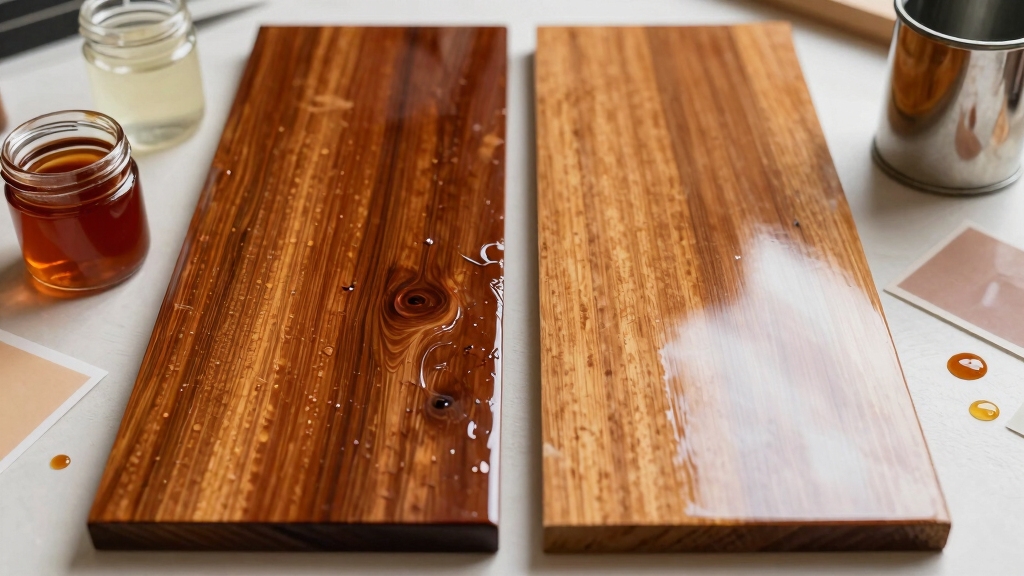
Typically, shellac dries rapidly due to its alcohol-based solvent, leaving little room for adjusting drying speed. This demands swift application to avoid streaks.
In contrast, lacquer uses a blend of solvents in its thinner, allowing you to control evaporation rates and drying times more precisely. This flexibility lets you adapt to temperature and humidity, optimizing finish quality.
Both finishes evaporate their solvents, but shellac’s drying is fixed, while lacquer’s thinner offers modulation.
| Finish Type | Drying Time | Thinner Composition |
|---|---|---|
| Shellac | 30–60 minutes | Alcohol (ethanol or methanol) |
| Lacquer | 15–30 minutes | Multiple solvents (acetone, toluene, etc.) |
| Control | Limited | Adjustable via thinner blend |
Understanding these differences helps you select the right finish and method for your project’s environment. For projects involving kitchenware or food-contact surfaces, selecting finishes that fully cure to form a chemically inert film is essential to ensure safety.
Durability and Resistance: Shellac Vs Lacquer
Controlling drying times with the right thinner affects the durability of your finish. Lacquer offers superior resistance and hardness compared to shellac, making it ideal for high-wear surfaces. You’ll find these distinctions critical when selecting your finish:
Lacquer withstands moisture, heat, and household liquids more effectively. Shellac resists alcohol and moderate heat but clouds easily under damage.
Lacquer forms a stronger, harder film that endures frequent contact. Shellac’s natural composition means it requires regular maintenance to preserve clarity.
Lacquer’s synthetic resin matrix provides exceptional longevity and toughness.
For wood finishing projects requiring natural, flexible protection, tung oil finishes offer deep penetration and moisture resistance that differ from lacquer and shellac surface films.
Repairing Shellac vs Lacquer: Ease and Methods
When you’re working with shellac, it’s pretty straightforward to repair it. You can just apply a new coat that melts right into the existing finish. This makes spot repairs easy and efficient—definitely a win!
On the other hand, lacquer can be a bit trickier. Repairs need a lot more precision, and you often end up having to strip and respray because lacquer is harder and less forgiving.
For both finishes, maintaining a smooth surface by sanding between coats can improve adhesion and prolong the life of the repair.
Shellac Repair Techniques
Although lacquer repairs often demand stripping and respraying due to their hardened, crosslinked surface, shellac offers a more straightforward approach.
When repairing shellac, you rely on its solubility in alcohol, allowing new layers to fuse seamlessly with existing ones. This ease reduces downtime and complexity.
Key shellac repair techniques include:
- Spot sanding damaged areas lightly without cutting through the finish.
- Applying fresh shellac with a brush or pad over the repair zone.
- Using denatured alcohol to blend edges for smooth shifts.
- Recoating entire panels if larger sections are affected.
- Polishing with fine abrasives post-drying to restore gloss.
This method’s reversibility and quick cure time make shellac repairs practical and efficient, contrasting sharply with lacquer’s demanding refinishing requirements.
For long-lasting results, ensure the surface is thoroughly cleaned and dried before applying new finish layers to promote proper adhesion and durability, as emphasized in best practices for wood maintenance and finishing cleaning and drying.
Lacquer Repair Challenges
Shellac’s ease of repair sets a high standard that lacquer struggles to meet. When you damage lacquer, you can’t simply apply a fresh coat.
Lacquer’s solvent evaporation forms a non-melting film, preventing new layers from fusing seamlessly. You often need to strip or sand the affected area before recoating, which risks unevenness or visible shifts.
Furthermore, lacquer requires multiple thin coats applied by spraying to maintain uniformity, complicating spot repairs. Thinner blends used in lacquer formulations can dissolve existing layers unpredictably, making touch-ups challenging.
In contrast, shellac’s alcohol-based composition softens under fresh application, allowing quick, invisible repairs. So, while lacquer offers superior durability, you must accept increased repair complexity and prep work to maintain its finish integrity.
This demands both skill and appropriate tools for effective lacquer restoration. Unlike shellac, lacquer does not form a polymerized film, which accounts for its repair difficulties.
Appearance and Finish: Shellac’s Warm Glow Vs Lacquer’s Clarity
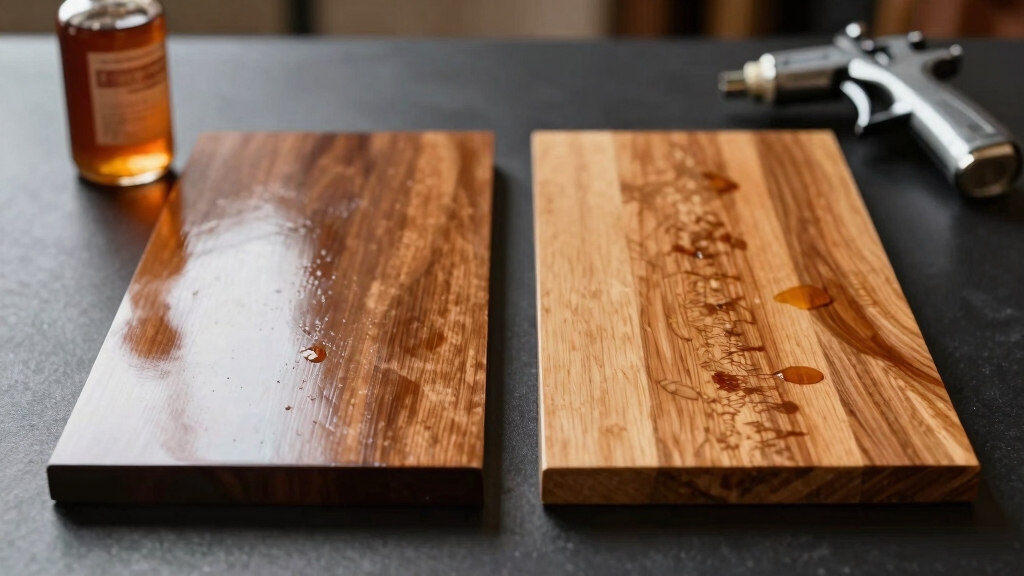
While both finishes achieve high gloss, you’ll notice that shellac imparts a distinctive warm amber glow that deepens the wood grain’s appearance. This enhances its natural character.
In contrast, lacquer dries crystal clear without yellowing, preserving the wood’s original color and providing a neutral, modern look.
When evaluating appearance and finish, consider these points:
- Shellac’s warmth enriches vintage or traditional woods, adding depth.
- Lacquer’s clarity suits contemporary styles requiring color fidelity.
- Shellac blocks wood contaminants, ensuring a uniform finish.
- Lacquer’s sprayed application creates a smoother, more even surface.
Both finishes offer high gloss, but lacquer allows varied sheen levels. Your choice depends on whether you prioritize shellac’s inviting warmth or lacquer’s pristine clarity.
For projects involving pressure-treated wood, understanding the moisture content is essential to ensure proper adhesion and a durable finish.
Best Uses of Shellac and Lacquer for Wood Projects
When deciding which finish to go with for your wood project, consider the specific demands of the application.
Use shellac when you need a quick-drying, easily repairable finish that enhances wood grain with a warm amber tone.
Shellac provides a fast-drying, easily repairable finish that enriches wood with a warm amber glow.
It’s ideal for fine furniture, antiques, and surfaces requiring frequent maintenance or spot repairs.
Shellac’s alcohol resistance makes it suitable for decorative pieces exposed to spirits.
Conversely, choose lacquer for projects demanding superior durability, moisture resistance, and a clear, non-yellowing finish.
Lacquer excels on cabinetry, high-use furniture, and commercial interiors where hardness and chemical resistance matter.
Its spray application guarantees a smooth, uniform coat, critical for flawless results.
Understanding these performance characteristics helps you optimize finish selection based on durability, appearance, and maintenance needs.
This alignment with your project’s functional and aesthetic goals is essential.
Choosing Shellac or Lacquer for Your Project
Because each finish offers distinct properties, choosing shellac or lacquer depends heavily on your project’s specific requirements for durability, appearance, and maintenance. You should evaluate:
- Durability needs: lacquer excels against moisture and wear; shellac is less durable but easier to repair.
- Application method: shellac allows brushing or wiping; lacquer requires spraying for best results.
- Drying time: shellac dries quickly but demands fast application; lacquer recoats faster with multiple thin coats.
- Desired finish: shellac imparts warm amber tones; lacquer provides a clear, non-yellowing surface.
- Maintenance plan: shellac eases spot repairs by melting into existing layers; lacquer often needs full refinishing.
Assess these factors against your project’s environment and usage to select the finish that optimally balances performance and aesthetic goals.
Frequently Asked Questions
Can Shellac and Lacquer Be Mixed for a Custom Finish?
You can’t effectively mix shellac and lacquer for a custom finish because their chemical compositions and drying mechanisms differ markedly.
Shellac dissolves in alcohol and dries by evaporation without crosslinking, while lacquer uses multiple solvents and dries faster, forming a harder film.
Trying to combine them often results in poor adhesion, uneven drying, and finish failure. Instead, choose one based on durability or repair needs to guarantee a stable, lasting coat.
Are Shellac and Lacquer Safe for Children’s Furniture?
You can use shellac for children’s furniture safely because it’s natural, low in toxicity, and cleans up with alcohol. It’s indoor-safe if you guarantee proper ventilation during application.
Lacquer, however, contains stronger solvents and emits noxious fumes, making it less suitable for kids’ furniture unless fully cured and applied in well-ventilated areas.
Always allow finishes to cure completely before use to minimize exposure risks for children.
How Do Temperature and Humidity Affect Shellac and Lacquer Drying?
You’ll find shellac drying faster in warm, low-humidity conditions since alcohol evaporates quickly.
However, high humidity slows this, risking tackiness and streaks.
Lacquer benefits from moderate temperatures; cold slows solvent evaporation, causing longer drying times and potential defects.
Excessive heat speeds drying but may cause cracking.
Humidity affects lacquer less due to solvent blends but still can influence finish smoothness.
Controlling environment secures peak drying and finish quality.
What Are the Environmental Impacts of Shellac Versus Lacquer?
You’ll find shellac more environmentally friendly since it’s a natural resin from lac beetles, biodegradable and renewable.
Its alcohol solvent evaporates quickly, reducing volatile organic compound (VOC) emissions.
Lacquer, being synthetic and solvent-heavy, releases higher VOCs, contributing to air pollution and health risks.
Its production involves petrochemicals, increasing fossil fuel dependency.
Can Shellac or Lacquer Be Used on Non-Wood Surfaces?
Yes, you can use both shellac and lacquer on non-wood surfaces, but each suits different materials.
Shellac adheres well to primed metal, plaster, and some plastics, offering a warm, amber finish but less durability.
Lacquer excels on metal, plastic, and glass, providing a tough, clear coat with superior resistance.
Maximize Beauty and Longevity with the Right Finish
When deciding between shellac and lacquer, consider that shellac’s natural composition makes it biodegradable, breaking down in weeks under the right conditions. Lacquer forms a durable plastic film lasting years. This contrast impacts your project’s longevity and environmental footprint.
By understanding their chemical makeup, drying times, and repairability, you can precisely match the finish to your woodwork’s needs. This ensures peak performance and aesthetic appeal tailored to your specific application.