How to Sharpen a Paint Scraper: Power of a Perfect Edge
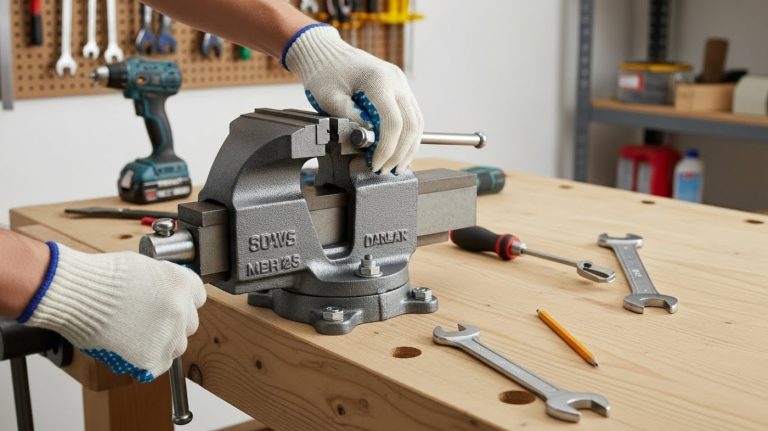
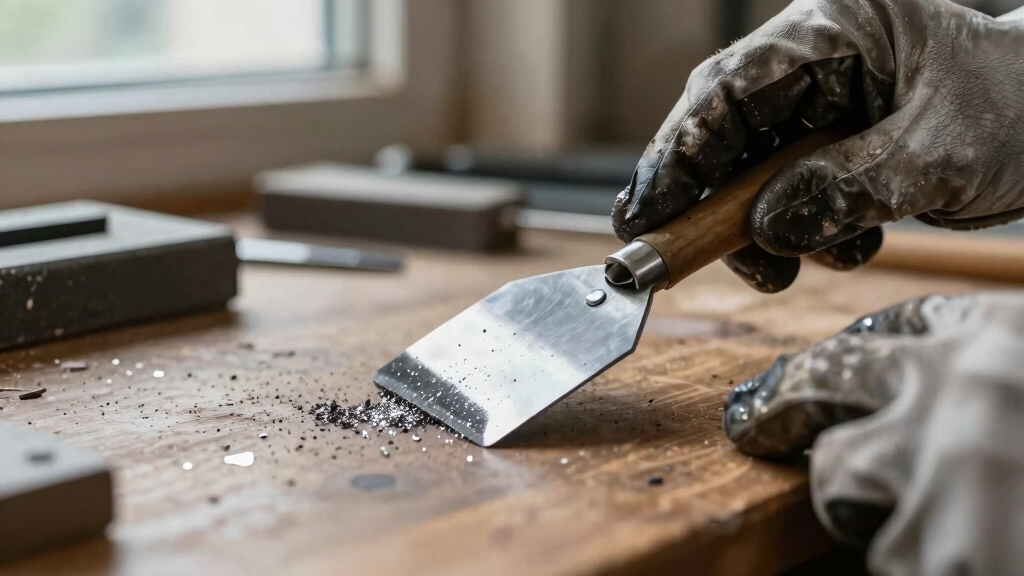
To sharpen your paint scraper, first clamp it vertically in a vise. File the edge square at 90 degrees using a fine file, maintaining the original bevel angle without over-filing.
Hone the bevel with a sharpening stone to smooth out file marks, then use a burnisher at about a 30-degree angle to roll a slight burr, improving cutting performance.
Keep the scraper sharp with frequent burr touch-ups during use. Master this process to boost efficiency and achieve cleaner results.
Key Takeaways
- File the scraper edge square at 90 degrees using a fine file, maintaining the original bevel contour with controlled, even strokes.
- Hone the filed edge with a sharpening stone to remove file marks and polish the bevel for a smooth burr formation.
- Roll a slight burr by burnishing at approximately a 30-degree angle with a hardened steel rod, using light, consistent pressure.
- Refresh the burr regularly during use, especially every five minutes during heavy paint removal, to maintain cutting efficiency.
- Inspect the scraper edge frequently for clean wood curls instead of powdery residue, indicating the need for another sharpening cycle.
Why Sharpening Your Paint Scraper Saves Time and Effort?
When you keep your paint scraper sharp, you’ll spend less time battling stubborn paint and finishes. A sharp edge produces clean curls of wood shavings instead of frustrating powdery residue.
A properly sharpened scraper features a precise burr edge, allowing effective wood shaving with optimal advantage. This edge reduces effort by slicing through material cleanly rather than crushing it.
Frequent sharpening maintains this burr, preventing dullness and preserving tool efficiency during prolonged use. Compared to conventional scrapers, you can easily restore the burr, extending your scraper’s life through regular maintenance.
Keeping the edge sharp means you avoid repeated passes, save energy, and achieve a smoother finish quicker. This makes your scraping tasks more productive and less taxing overall. Using abrasive materials like sandpaper can help maintain the sharpness effectively between uses.
How to Tell When Your Paint Scraper Needs Sharpening?
Maintaining a sharp edge keeps your scraper efficient, but you’ll notice its performance fading as it dulls. To identify when sharpening is necessary, watch for specific signs during use.
A dull scraper fails to produce clean wood curls and instead leaves powdery residue. Pay attention to the burr’s condition; it diminishes after heavy scraping. Additionally, if your scraper leaves smudges or residue rather than smooth shavings, it’s time to sharpen.
- Produces powdery wood shavings instead of curls
- Burr edge flattens or disappears after use
- Leaves residue or smudges on surfaces
- Performance drops during tough paint or finish removal
Checking for these indicators guarantees you maintain an effective, sharp scraper edge. Regular maintenance and proper sharpening techniques are essential to prolong the life and effectiveness of your tool.
Tools Needed to Sharpen a Paint Scraper Properly
Gather the right tools before you sharpen your paint scraper to guarantee a precise and efficient edge.
You’ll need a bench grinder equipped with a fine abrasive wheel running at slow speed to avoid overheating the metal.
Prepare a bastard number five file, featuring coarse and fine sides, for initial shaping and refining.
Include a single-cut, second-cut, or smooth fine file to hone the cutting edge accurately.
A sharpening stone is essential to remove file marks and polish the bevel.
Finally, have a burnisher or a hardened steel rod ready to roll the burr, creating the hook needed for peak scraping performance.
Make sure you clamp the scraper vertically in a vise to maintain control and consistent angles during filing.
Regular maintenance, including cleaning and lubrication, can significantly prolong the life and efficiency of your tools, similar to the benefits seen with blade lubrication.
How to Sharpen and File Your Paint Scraper Edge?
Let’s dive into sharpening and filing your paint scraper edge!
First things first, you’ll want to file the scraper edge square at 90 degrees. It’s super important to maintain that original bevel contour, so just remember to use controlled strokes—go from the sides toward the center.
Once you’ve finished filing, it’s time to hone that edge using a sharpening stone. This step is crucial because it helps remove any file marks and gives the surfaces a nice polish. Trust me, your scraper will thank you for it!
Now, for the final touch, you’ll want to create a burr. To do this, roll a burnisher at a 30-degree angle. Just be sure to give it a slight crown; this will really optimize your scraping performance.
For best results, make sure to keep your tools clean and free from rust and debris to maintain sharpness and effectiveness.
And there you have it! Your scraper will be ready to tackle any paint job with ease.
Filing Techniques Explained
Begin filing your paint scraper by holding the file square at a 90-degree angle to the tool’s faces. This guarantees you maintain the original bevel contour without rounding or distorting the edge.
Work the file evenly from both sides toward the center to preserve the scraper’s point. Use your thumb under the scraper to feel and control the correct filing angle, avoiding excess metal removal.
Maintain steady, controlled strokes aligned with the bevel. Apply light to moderate pressure; excessive force dulls the file.
File only a few passes until you feel a slight burr forming. Keep the file clean to prevent clogging and uneven abrasion.
These precise filing techniques prepare the edge for honing and burr creation, guaranteeing efficient scraping performance. Using a diamond sharpening stone after filing can further refine and maintain a razor-sharp edge efficiently.
Honing And Burr Creation
After filing, polish the scraper’s edge and faces with a sharpening stone to remove file marks and refine the bevel intersection. Use light, controlled strokes to assure a smooth surface without rounding the edge.
Next, create the burr by rolling the edge with a burnisher at roughly a 30-degree angle. Apply gentle pressure, focusing on producing a slight crown along the burr to prevent digging points during use.
This small, raised burr enhances cutting leverage and assures efficient wood shaving. Avoid excessive pressure, which can deform the edge or remove the burr entirely.
Maintain the burr’s integrity to optimize scraping performance. Regular honing and burr creation keep your scraper sharp, reducing effort and improving finish quality in paint and wood removal tasks.
Consistent maintenance and careful sharpening not only improve performance but also extend the tool’s lifespan and reduce the need for frequent replacements.
How to Hone and Burnish Your Paint Scraper for a Sharp Edge?

Hone the edge and scraper faces carefully with a sharpening stone to polish the intersection surfaces and remove all file marks. This step guarantees a clean, smooth base for burr formation.
Next, use a burnisher or hardened steel rod to roll the burr:
Hold the scraper firmly and position the burnisher at a 30-degree angle to the edge.
Apply light, consistent pressure while rolling the burnisher along the edge from heel to toe.
Create a slight crown on the burr to avoid digging points that can gouge the surface.
Repeat the process until you feel a fine, raised burr along the entire edge.
Regular maintenance, similar to band saw tire cleaning, helps prolong the life and effectiveness of your tools.
How to Maintain the Burr on Your Paint Scraper While Working?
To keep your paint scraper working like a charm, you really need to refresh that burr regularly while you’re using it.
It’s super important to hold the scraper at that sweet 30-degree angle.
This helps maintain the burr’s shape and gives you the leverage you need.
Every now and then, take a moment to check for signs that it’s getting dull.
If you notice it starting to lose its edge, just adjust your angle a bit or give it a quick burnish.
This way, you can keep everything in tip-top shape and ensure you’re getting the best performance out of your scraper.
Regular maintenance is key to prolonging tool life and ensuring consistent performance, similar to how applying paste wax benefits woodworking tools.
Frequent Burr Refreshing
Regularly rejuvenating the burr on your paint scraper guarantees consistent cutting performance during extended use. As the burr dulls with scraping, refreshing it keeps the edge keen without full resharpening.
Use a burnisher or hardened steel rod to maintain the hook by applying light pressure to roll the burr back into shape. Work at a consistent angle to avoid flattening the burr. Renew every 5 minutes during heavy use to prevent performance drop. Inspect the burr visually and by test scraping for crisp curls.
This frequent maintenance prevents the burr from degrading into a flat edge, which causes powdery residue and inefficient scraping.
By incorporating burr refreshing into your workflow, you prolong the scraper’s cutting life and guarantee cleaner, controlled material removal. For optimal results, always apply precision and care when maintaining the burr to ensure professional performance.
Proper Angle Maintenance
Although maintaining the correct angle can seem subtle, it’s essential for preserving the burr’s sharpness while you work.
Hold your paint scraper consistently at a 30-degree angle during use and sharpening. This angle guarantees the burr remains intact and effective without digging into the wood.
When burnishing, roll the steel rod lightly at this angle to reinforce the burr without flattening it. Avoid excessive pressure, which can crush the burr and reduce cutting efficiency.
While filing, keep the bevel at 90 degrees to the scraper’s face to maintain the original contour. Use your thumb under the scraper to gauge and steady this angle.
Regularly check the burr’s condition and adjust your position to maintain optimal leverage and clean shavings throughout your project.
Taking consistent technique during maintenance helps ensure the burr remains sharp and effective for longer periods.
Quick Sharpening Tips During Heavy Paint or Finish Removal
When tackling heavy paint or finish removal, sharpening your paint scraper every five minutes prevents edge dullness and maintains efficient performance.
Regular touch-ups keep the burr sharp, ensuring clean curls instead of powdery residue. Follow these quick sharpening tips:
Clamp the scraper vertically in a vise for stable file access. Use light pressure with a fine file, maintaining the original bevel angle.
Hone the edge with a sharpening stone to remove file marks before burnishing. Roll a slight burr at a 30-degree angle with a burnisher to restore the hook.
These steps help you maintain a sharp edge on the job, reducing downtime and improving scraping efficiency without extensive tool preparation. Keep your scraper sharp to work faster and cleaner during tough paint removal.
Common Paint Scraper Sharpening Mistakes to Avoid
Maintaining a sharp paint scraper during heavy use demands careful technique, but even experienced users can fall into common sharpening errors that reduce tool effectiveness.
Avoid filing at inconsistent angles; always keep the file square at 90 degrees to the scraper faces to preserve the original bevel.
Don’t over-file; excess metal removal weakens the edge and shortens tool life.
Skipping stone honing after filing leaves rough marks, preventing a smooth burr from forming.
Neglecting the burnishing step or applying excessive pressure when rolling the burr can cause uneven edges that dig into surfaces.
Also, avoid sharpening sporadically; maintain frequent, light touch sharpening every five minutes during heavy scraping to keep the burr intact.
Proper technique guarantees clean shavings and prolongs paint scraper performance.
Frequently Asked Questions
Can I Sharpen a Paint Scraper Without a Bench Grinder?
Yes, you can sharpen a paint scraper without a bench grinder by using files and sharpening stones.
Secure the scraper vertically in a vise, then use a bastard number five file to restore the edge at a 90-degree angle, maintaining the bevel contour.
Follow with a finer file to smooth the edge, then remove file marks with a sharpening stone.
Finally, use a burnisher or steel rod to roll a burr for peak scraping performance.
How Do Different Scraper Shapes Affect Sharpening Technique?
You’ll find that about 70% of scraper edge shapes require adjusting your sharpening angle.
For flat scrapers, keep the file square at 90 degrees and maintain a consistent bevel.
Curved or rounded scrapers need gentler filing along the contour to preserve shape.
Pointed scrapers demand careful side-to-center strokes to keep the tip sharp.
Always use light pressure and frequent honing to maintain the original edge geometry for peak performance.
Is It Safe to Sharpen a Scraper by Hand Only?
Yes, it’s safe to sharpen a scraper by hand only, provided you use proper tools and techniques.
Use a file to maintain the original bevel at 90 degrees, working from the sides toward the center.
Follow with a sharpening stone to remove file marks, then roll a burr with a burnisher at about 30 degrees.
Avoid excessive pressure or removing too much metal to preserve the edge and guarantee effective performance.
Can Paint Scraper Sharpening Damage Delicate Wood Surfaces?
No, a properly sharpened paint scraper won’t damage delicate wood surfaces if you maintain the correct technique.
You should hold the scraper at about a 30-degree angle and use light pressure to create wispy shavings, preventing gouging.
Avoid excessive burr size or overly aggressive sharpening, which can create digging points.
Regularly honing and controlling the burr shape guarantees smooth, safe scraping without harming delicate wood grain or finishes.
How Often Should I Replace a Paint Scraper Instead of Sharpening?
You should replace a paint scraper only when its blade is severely warped, cracked, or excessively worn beyond sharpening.
Frequent sharpening maintains the edge and prolongs tool life, so replace it if damage compromises structural integrity or if sharpening no longer restores a clean, sharp burr.
For routine use, sharpen every five minutes during heavy scraping, and expect to replace the scraper only after multiple sharpening cycles fail to improve performance.
Upgrade Your Results with a Razor-Sharp Scraper
By sharpening your paint scraper regularly, you’ll save time and reduce effort, debunking the myth that dull tools can still perform well.
A keen edge removes paint more efficiently, preventing surface damage and fatigue. Remember to hone and maintain the burr for consistent results.
With proper technique and timely sharpening, you’ll keep your scraper working like new, turning tough jobs into smooth, manageable tasks every time you pick it up.