How to Make Wood Pellets: Easy DIY Method at Home
To make wood pellets, start by selecting clean, uniform feedstock free from contaminants. Crush the wood into small, consistent particles smaller than the pellet diameter.
Then dry the material to 10–20% moisture. Feed it into the pellet mill, where heat and pressure soften lignin to bind fibers into dense pellets.
Cool pellets immediately to solidify the structure and screen out fines before packaging. Proper maintenance guarantees quality and efficiency. Learn how each step optimizes pellet durability and performance.
Key Takeaways
- Select clean, consistent wood feedstock free from metals, stones, and plastics to ensure pellet quality and protect equipment.
- Reduce wood size by crushing, chipping, and milling into uniform fine sawdust smaller than pellet diameter (2–3mm).
- Dry wood material to 10–20% moisture using rotary dryers or other controlled methods for optimal pellet molding.
- Compress sawdust in a pellet mill under high pressure and heat to activate lignin as a natural binder forming dense pellets.
- Cool pellets immediately after extrusion, then screen, weigh, and package in airtight bags to preserve durability and prevent contamination.
Selecting the Best Wood Waste for High-Quality Pellets

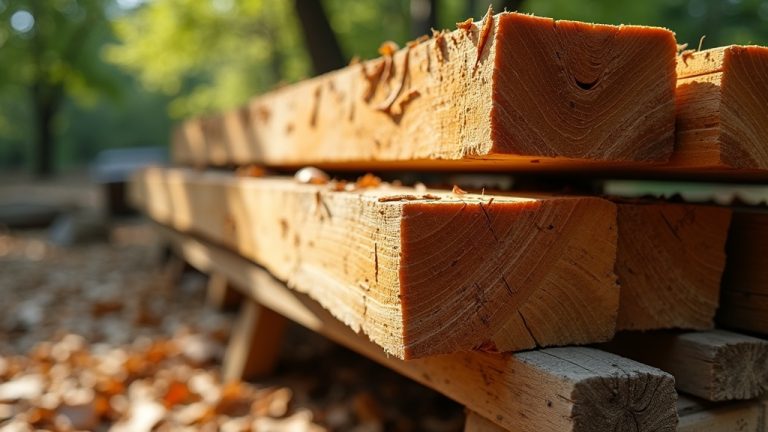
When selecting wood waste for high-quality pellets, prioritize materials like shavings, sawdust, and chips that have consistent particle size and low moisture content.
Uniform particle size guarantees efficient compression and pellet density. Low moisture, ideally below 20%, prevents pellet degradation during processing.
Avoid heterogeneous materials, as irregular sizes reduce pellet quality and increase wear on equipment. Additionally, select wood waste free from contaminants such as metals, stones, and plastics, since these can damage machinery and compromise pellet purity.
Opt for clean, dry feedstock that maintains lignin integrity, the natural binder essential for pellet formation. By focusing on these criteria, you guarantee stable pellet structure, improved combustion performance, and extended equipment lifespan throughout production.
Using materials with water-resistant properties can enhance pellet durability in humid conditions.
Preparing and Sorting Raw Wood Materials for Pellet Production
Building on your selection of high-quality wood waste, the next step involves preparing and sorting raw materials to guarantee peak feedstock consistency.
After selecting quality wood waste, prepare and sort raw materials to ensure consistent, high-quality feedstock.
You’ll start by weighing and sampling the wood to determine moisture content. Then, separate wet and dry sawdust to optimize storage and prevent quality degradation.
Meticulous cleaning removes impurities such as stones, metals, and other contaminants, assuring feedstock purity. Sorting further classifies materials by size and type, facilitating uniform processing downstream.
- Weigh and sample incoming wood for moisture analysis
- Separate wet and dry sawdust to prevent quality degradation
- Remove foreign objects like stones, metals, and debris
- Sort materials by size and type for consistent feedstock
This preparation assures the raw wood is clean, homogenous, and ready for efficient pellet production. Regular maintenance and cleaning are essential to prevent rust and maintain material integrity throughout processing equipment.
Crushing and Reducing Wood for Pellets to Uniform Size
To ensure efficient pellet production, it’s essential to reduce wood materials to a consistent particle size. So, you’ll want to begin by crushing logs into smaller blocks. After that, you can chip and pulverize the wood to get those uniform sawdust dimensions you’re aiming for.
Keeping that size uniformity is really important! It plays a big role in achieving consistent pellet density and quality during the pelletizing process. So, taking the time to get it right will pay off in the end! Using tools that maintain consistent contact during processing can help ensure uniform particle size and improve overall efficiency.
Wood Size Reduction
Start by crushing wood logs into smaller blocks using a wood crusher, which prepares the material for further size reduction.
Next, feed these blocks into a wood chipper that slices them into manageable chips.
Then, use a hammer mill to pulverize the chips into sawdust finer than the pellet size, ensuring consistency.
This process breaks down lumps and knots, homogenizing the feedstock for uniform pellet production.
- Wood crusher reduces logs to small blocks
- Wood chipper processes blocks into uniform chips
- Hammer mill pulverizes chips into fine sawdust
- Material homogenized to eliminate lumps and knots
For optimal efficiency, selecting equipment with the appropriate engine power ensures smooth operation and consistent size reduction.
Particle Size Uniformity
Although crushing and reducing wood involves multiple steps, achieving particle size uniformity is critical for producing high-quality pellets. You need consistent particle size to guarantee uniform density and efficient pelletizing.
Start by crushing logs into small blocks, then chip them into chips under 6mm. Use a hammer mill to pulverize chips into fine sawdust smaller than pellet diameter, breaking lumps and homogenizing the material.
| Process Step | Particle Size Goal |
|---|---|
| Wood crusher | Blocks < 50mm |
| Wood chipper | Chips < 6mm |
| Hammer mill | Sawdust < pellet diameter (2-3mm) |
Uniform particles improve pellet strength, reduce mill wear, and optimize binder activation during extrusion. This is essential for pellet durability and quality. Maintaining optimal particle size also minimizes wear on processing equipment, extending its lifespan.
Screening Wood to Remove Impurities Before Pelletizing
When it comes to screening wood, it’s super important to do a thorough job of removing impurities like metals and stones. These unwanted materials can really damage your equipment and negatively impact the quality of your pellets.
To tackle this, using vibrating screens and separators is a smart move. They effectively filter out contaminants before you even start milling. This step is really critical if you want to maintain clean feedstock and ensure consistent pellet density.
Additionally, employing equipment with high-efficiency filtration systems can further protect your machinery and improve pellet quality.
Importance of Screening
Consistently screening wood feedstock before pelletizing plays an essential role in ensuring pellet quality and equipment longevity.
By removing impurities like metals, stones, and oversized particles, you protect pellet mill components from damage and maintain smooth operation. Clean, uniform raw material also guarantees consistent pellet density and strength, reducing production downtime.
When you screen wood feedstock, you can expect to remove:
- Sharp metal fragments that can damage rollers and dies
- Heavy stones that cause abrasive wear
- Oversized wood chunks that disrupt pellet consistency
- Fine dust and debris that affect pellet binding
Additionally, maintaining proper material consistency during screening helps prevent equipment wear and ensures high-quality pellets.
Methods for Impurity Removal
Protecting pellet mill components and ensuring uniform pellet quality depend heavily on effective impurity removal.
You must first screen the wood feedstock to eliminate metals, stones, and foreign objects that can damage equipment or degrade pellet integrity.
Use vibrating screens to filter out fines and small contaminants after cooling.
Magnetic separators effectively extract ferrous metals, while stone separators identify and remove dense impurities.
Conduct this screening immediately after material reception and before milling to maintain a clean feedstock.
Proper impurity removal not only safeguards the pellet mill’s rollers and dies but also prevents irregular pellet density and reduces downtime.
For enhanced operational efficiency, regularly check connections of your screening and separation equipment to ensure optimal performance.
Drying Wood Chips and Sawdust for Pellet Stability
Reducing moisture content in wood chips and sawdust is essential for producing stable, high-quality pellets. You need to lower moisture to the ideal 10-20% range to guarantee proper pellet molding and durability.
Lowering moisture in wood chips and sawdust to 10-20% ensures strong, durable pellets.
Use rotary or drum dryers for efficient drying. Chips dry slower than sawdust and require larger drying capacity. Small-scale operations might rely on sun drying but with less control over moisture levels.
Focus on feeding material uniformly into the rotary dryer for consistent drying. Monitor moisture levels with precise sensors. Adjust dryer temperature and airflow to prevent overheating.
Separating chips and sawdust allows for tailored drying times and capacities. Proper drying maintains pellet integrity, prevents mold, and optimizes combustion performance.
For best results, employ non-invasive moisture meters to accurately track moisture content without damaging the material surface.
Pelletizing Wood With a Pellet Mill
Sure! Here’s a more conversational version of your text:
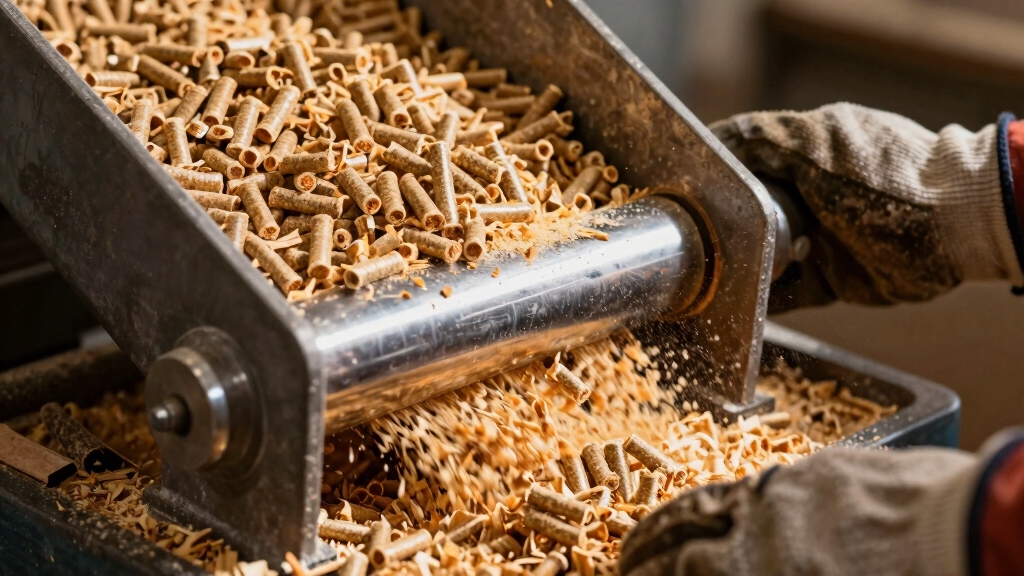
So, once you have your wood material all set and ready, you’ll feed it into the pellet mill. What happens next is pretty cool: the rollers apply high pressure and temperature, compressing the wood against a die. This process actually softens the lignin, which acts like a natural binder. As the material gets pushed through small holes, it forms those dense little pellets we’re after.
Now, understanding how extrusion and compression work is super important. It helps you control things like pellet size, density, and durability. So, keeping an eye on those mechanics can really make a difference in your final product! Using the right mixing speed during pelletizing can also improve uniformity and quality.
Pellet Mill Mechanics
Operating a pellet mill involves feeding the prepared wood material into a chamber where rollers press it through a die under extreme pressure and temperature.
Inside, the rollers apply intense force, pushing the fibrous material through tiny die holes, which shape the pellets. The heat generated softens the lignin, a natural binder, allowing the pellets to form solid, dense cylinders without additives.
Visualize the process:
- Rollers compress wood fibers to about four times their original density.
- Die holes measure roughly 2 millimeters in diameter.
- Pressure can reach approximately 45,000 PSI.
- Temperature inside the chamber often nears 200°F.
This precise mechanical action guarantees uniform pellet size and density, critical for consistent fuel quality and efficient combustion.
Extrusion and Compression
When wood material passes into the pellet mill, powerful rollers exert extreme pressure and heat to compress and extrude it through small die holes. This process transforms loose fibers into dense, uniform pellets.
The rollers apply pressure around 45,000 PSI and heat up to approximately 200°F. This softens the lignin in the wood, which acts as a natural binder.
As the material is forced through die holes roughly 2 millimeters in diameter, the fiber compresses nearly 400%, forming compact pellets. A knife trims these pellets to lengths between 1/10 and 2/10 inches.
This extrusion and compression phase guarantees consistent pellet density and durability, critical for efficient combustion and storage stability. Mastering this step is key to producing high-quality wood pellets.
Cooling and Hardening Wood Pellets Correctly
Although the pelletizing process generates significant heat and pressure that softens lignin, allowing it to bind fibers, the pellets remain fragile until they cool and harden properly.
You need to cool pellets immediately after extrusion to solidify their structure and prevent deformation.
Cooling also reduces surface stickiness caused by residual lignin sap, ensuring pellets maintain shape and durability.
Use room temperature air for about 15 minutes to achieve peak hardness and stability.
Focus on these key aspects during cooling and hardening:
- Uniform airflow distribution around pellets to avoid uneven cooling.
- Maintaining ambient temperature to prevent cracking.
- Avoiding pellet pile-up that traps heat and moisture.
- Continuous agitation or tumbling to enhance air contact and prevent clumping.
Proper cooling guarantees pellets are structurally sound and ready for subsequent screening and packaging steps.
Screening and Packaging Finished Wood Pellets
Begin screening finished wood pellets immediately after cooling to guarantee product consistency and quality. Use vibrating screens to separate fines and broken pellets, ensuring only full-sized pellets move forward.
Screening also removes residual dust, enhancing pellet purity and appearance. Once screened, weigh pellets accurately and proceed to packaging. Use airtight, moisture-resistant bags to prevent pellet degradation during storage and transport.
Applying a thin layer of vegetable oil before packaging helps reduce dust and improve pellet durability.
| Step | Equipment | Purpose |
|---|---|---|
| Screening | Vibrating screen | Remove fines and dust |
| Weighing | Automated scale | Guarantee precise packaging |
| Packaging | Bagging machine | Seal pellets airtight |
| Lubrication | Vegetable oil spray | Reduce dust, enhance durability |
Maintaining Pellet Quality and Consistency
Making consistent pellet quality requires strict control over moisture content, particle size, and raw material purity throughout production.
You must monitor these parameters closely to avoid pellets that crumble, overheat, or burn inefficiently. Maintain uniform particle size by thorough crushing and screening.
Keep moisture levels between 10-20% for ideal lignin activation. Purity is essential; removing stones and metals prevents damage and contamination.
Focus on these key steps:
Regular sampling and moisture measurement during drying.
Uniform grinding with hammer mills to guarantee consistent particle size.
Continuous screening to eliminate foreign materials.
Controlled pellet mill conditions, including temperature and pressure.
Common Wood Pellet Production Problems and Solutions
When you encounter issues like inconsistent pellet density, excessive fines, or equipment wear, identifying the root cause quickly is crucial to maintaining production efficiency.
Inconsistent density often results from uneven moisture content or particle size; guarantee thorough drying and uniform hammer mill pulverization.
Excessive fines typically indicate die wear or improper screen separation. Regularly inspect and replace worn dies and maintain vibrating screen efficiency.
Equipment wear, especially in rollers and dies, reduces compression pressure, causing poor pellet formation. Schedule routine maintenance and lubrication, including vegetable oil application.
Contaminants like stones or metals can damage machinery and degrade pellets. Implement strict screening protocols after reception and before milling.
Addressing these problems promptly minimizes downtime and secures consistent pellet quality throughout production.
Frequently Asked Questions
What Is the Environmental Impact of Wood Pellet Production?
You should know wood pellet production impacts the environment by consuming energy during drying and pelletizing, which may cause emissions if non-renewable sources are used.
However, using wood waste reduces landfill use and promotes sustainable forestry. Proper impurity removal prevents equipment damage and pollution.
If managed well, pellet production offers a lower-carbon alternative to fossil fuels. Inefficient processes or sourcing can lead to deforestation and air quality concerns.
How Much Energy Is Consumed During Pellet Manufacturing?
You typically consume around 100 to 150 kWh of energy per ton of wood pellets produced. The crushing, drying, and pelletizing stages demand the most power, especially drying, which requires significant thermal energy.
Efficient screening and cooling also add to the total consumption. Optimizing moisture content before drying can lower energy use. Using waste heat or renewable energy sources can further reduce your overall energy footprint during manufacturing.
Can Wood Pellets Be Made From Non-Wood Biomass Materials?
You can think of non-wood biomass as nature’s patchwork quilt—agricultural residues, grasses, and even nutshells.
Yes, you can make pellets from these materials, but their chemical composition differs.
You’ll need to adjust drying, size reduction, and pelletizing conditions to accommodate lower lignin content and variable moisture.
Add binders or modify pressure and temperature to guarantee pellet durability and energy density comparable to traditional wood pellets.
What Safety Precautions Are Needed During Pellet Production?
You need to wear protective gear like gloves, goggles, and dust masks to prevent injury and inhalation of fine particles.
Make sure proper ventilation to avoid dust explosions.
Keep ignition sources away from dust collection areas.
Regularly maintain and inspect equipment to prevent mechanical failures.
Use lockout/tagout procedures during maintenance.
Install fire suppression systems.
Train all operators on emergency protocols and safe handling of raw materials and machinery.
How Do Storage Conditions Affect Pellet Shelf Life?
Storage conditions substantially affect your pellet shelf life by controlling moisture and contamination.
You need to keep pellets in a dry, cool environment to prevent moisture absorption, which causes swelling, mold, and reduced combustion efficiency.
Avoid exposure to direct sunlight and humidity, as these can degrade pellet integrity.
Proper ventilation and sealed packaging help maintain pellet quality, ensuring they remain dense, stable, and burn efficiently over extended storage periods.
Precision at Every Step Builds Better Wood Pellets
By selecting the right wood waste and carefully preparing, drying, and screening your materials, you’ll forge wood pellets as strong and reliable as steel.
Crushing and cooling them properly seals in quality, while vigilant packaging preserves their integrity.
Think of the process as a finely tuned machine; each step is essential to avoid common production snags. With consistent attention, you’ll produce pellets that burn efficiently, ensuring your efforts fuel success every time.