Best Way to Clean Teak Furniture for Long-Lasting Beauty
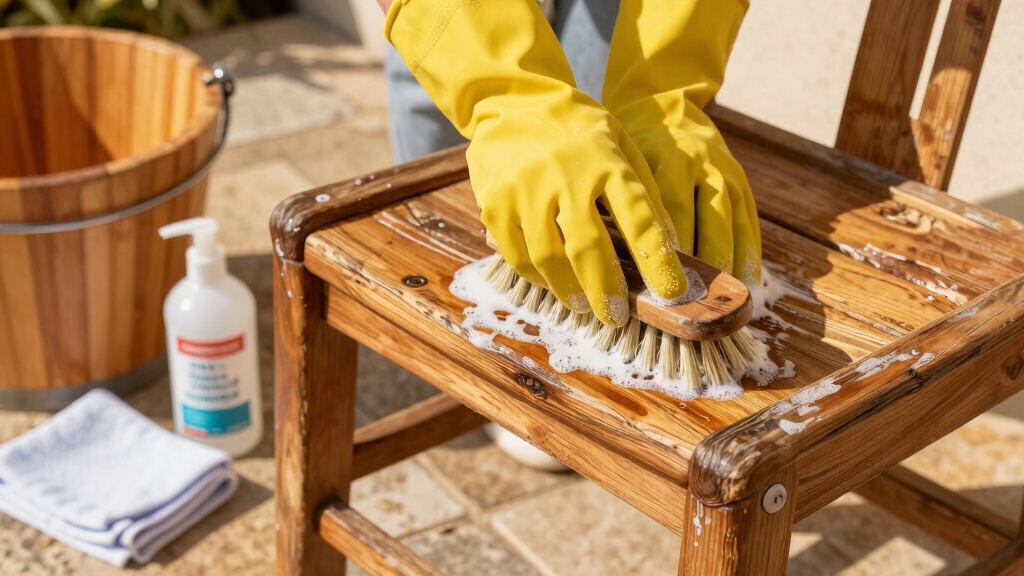
You clean teak furniture best by gently scrubbing with a soft-bristle brush and mild soap mixed with water, always working along the grain to protect its natural oils.
For stubborn stains or mildew, use a diluted vinegar solution or a teak-specific cleaner, followed by thorough rinsing and drying.
Light sanding once or twice a year refreshes the surface before sealing or oiling to maintain its rich color and durability. Proper technique and care extend teak’s beauty for decades; discover exactly how to keep your furniture pristine.
Key Takeaways
- Dust teak furniture gently every few weeks using a soft cloth or microfiber duster to prevent dirt buildup without damaging the wood.
- Clean with a mild soap and water solution, scrubbing gently along the grain, then rinse thoroughly to avoid residue and maintain natural oils.
- For mold or mildew, scrub with a soft-bristle brush and mild soap, then apply a diluted vinegar solution and rinse well for stubborn spores.
- Use a two-part teak cleaner to deep clean and brighten the wood, followed by thorough drying and application of teak sealer or protector.
- Sand lightly once or twice yearly after cleaning to remove weathered gray layers and restore smoothness, sanding along the grain with fine-grit sandpaper.
Understanding Teak Wood Characteristics

Because teak wood combines density, hardness, and dimensional stability, it stands out as an exceptional material for outdoor furniture.
Teak’s unique blend of density, hardness, and stability makes it perfect for durable outdoor furniture.
Its density of about 650–660 kg/m³ and Janka hardness near 1,100 lbf provide substantial mass and resistance to dents.
With low shrinkage and a T/R ratio around 2, teak maintains dimensional stability even with humidity shifts. Proper surface preparation, including sanding along the grain, helps maintain teak’s smooth finish and durability.
You’ll notice its natural oils repel water, enhancing rot and mold resistance, while silica content gives the surface a mildly abrasive texture and non-skid properties.
The wood’s average dried weight is approximately 41 lbs/ft3 (655 kg/m3), contributing to its substantial feel and sturdiness.
This wood resists fungal decay, termites, and marine borers, especially in heartwood, which is richer in protective extractives than sapwood.
Its strength and durability make teak ideal for long-lasting outdoor use, though expect natural weathering that darkens and eventually silvers the surface without compromising structure.
Essential Tools and Cleaning Products
Gathering the right tools and cleaning products is essential to maintaining your teak furniture’s natural beauty and longevity. Use soft-bristle brushes and nylon detailers to clean without harming fibers.
It is important to avoid harsh chemicals that can strip natural oils and cause fading or cracking of teak wood.
Select biodegradable teak cleaners and pH-neutral soaps that preserve natural oils. Equip yourself with nitrile gloves, eye protection, and accurate measuring tools for safe, precise application.
Avoid harsh abrasives and high-pressure washers to prevent damage. Regular maintenance is key to preventing buildup and prolonging the life of your wood’s finish, similar to how regular maintenance helps in rust prevention on circular saw blades.
| Tool Category | Recommended Items | Purpose |
|---|---|---|
| Brushes & Scrubbers | Soft-bristle brush, nylon detailers | Remove dirt, mildew; clean grooves safely |
| Cloths & Towels | Microfiber cloths, chamois | Apply cleaners, buff, and dry without lint |
| Cleaning Chemicals | Teak cleaner, oxygen bleach | Remove stains and brighten without damage |
| Protective Gear | Gloves, eye protection | Assure safe handling of chemicals |
Routine Cleaning Procedures for Teak Furniture

Regularly following routine cleaning procedures will keep your teak furniture looking its best and extend its lifespan.
Start with gentle dusting every few weeks using a soft cloth or microfiber duster. Lightly dampen it for sticky spots but avoid excess moisture.
Dust weekly using a soft-bristle brush or clean cloth to remove surface dust and debris. Applying a food-safe wood sealer after cleaning can help protect the wood from moisture and stains.
Next, clean with a mild soap solution. Mix dish soap with water, scrub gently along the grain using a soft brush or sponge, then rinse thoroughly to prevent residue buildup.
For light stains or grime, add a splash of white vinegar to your soapy water, applying carefully and rinsing well.
Finally, ensure complete drying by wiping with a clean cloth and allowing airflow beneath covers after rain to prevent moisture damage. Consistent care preserves teak’s natural oils and vibrant appearance.
Techniques for Removing Mold, Mildew, and Black Spots
When you spot fuzzy white, green, or gray colonies or flat dark stains on your teak furniture, you’re likely dealing with mold, mildew, or black spots.
These are common issues in shaded, damp crevices like joints, undersides, and cushion seams.
Start by scrubbing gently with a soft-bristle brush and a mild soap solution, rinsing thoroughly.
For persistent growth, apply a vinegar-water mix (1 cup vinegar per gallon) to kill spores without harming wood.
Use diluted oxygen-based bleach or oxalic acid for deep stains, following safety instructions carefully.
Avoid pressure washers, which damage teak pores.
Target tight spots with a toothbrush and, if stains penetrate, lightly sand with 120–220 grit sandpaper along the grain.
Always wear gloves and ensure good ventilation when using chemical cleaners to protect yourself and your furniture.
Using the right tools and accessories can also improve cleaning efficiency and protect delicate teak surfaces during maintenance.
Methods to Restore Teak’s Natural Color
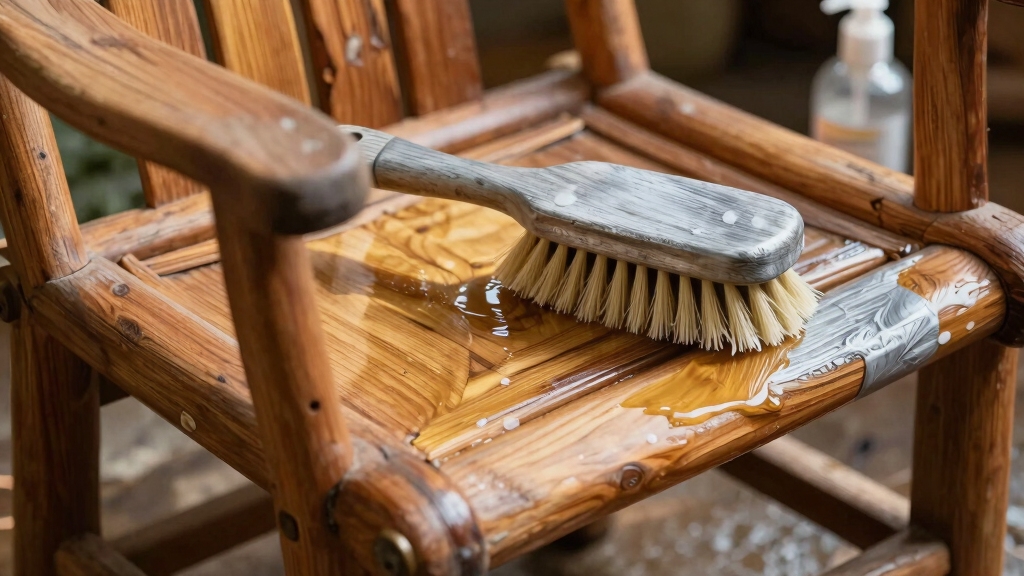
Bringing back teak’s natural color involves carefully selecting and applying the right cleaning and finishing products designed specifically for this durable wood.
Start by thoroughly wetting your teak furniture with a garden hose. Then, apply a two-part teak cleaner: the first removes dirt and grime, while the second brightens the wood, restoring its rich golden brown hue.
This method is effective because the products restore faded surfaces without the need for sanding. Using a water-based finish afterward can help enhance the wood’s grain and provide subtle protection.
After the furniture dries completely, proceed with one of these methods:
- Use a teak cleaner kit like DiTEC, which includes a cleaner, brightener, and a protectant that shields teak from UV, water, and dirt for up to six months.
- Apply a teak sealer in your preferred tone to maintain color and provide long-lasting protection.
- Regularly treat with teak oil every three months to preserve sheen and prevent cracking.
- Finish with a teak protector for enhanced texture and elegance.
When and How to Sand Teak Furniture?
Although sanding teak furniture might seem intimidating, it’s an essential step to maintain its smooth surface and vibrant appearance.
You should sand once or twice yearly to remove rough spots, stains, or gray weathered layers caused by sun and dust.
Always clean the surface first with teak cleaner or soap, remove cushions, and let it dry completely before sanding. Proper maintenance like regular cleaning helps extend the wood’s lifespan and prevents buildup.
Because teak is a dense, oily hardwood, it naturally resists rot and insect damage, but sanding helps maintain its protective surface layer.
Work in small sections, inspecting texture for consistency. Sand lightly along the wood grain using smooth, even strokes.
Avoid power tools to prevent heat damage; start with 80-grit sandpaper for weathered areas, then progress to 150-grit for a fine finish. After sanding, brush away dust thoroughly and allow the wood to air dry.
This careful process preserves teak’s natural beauty without clogging its pores.
Applying Sealants, Oils, and Protective Finishes
Protecting your teak furniture with the right finish enhances its appearance and extends its lifespan against outdoor elements. Choosing between oils, sealants, or varnishes depends on your furniture’s use and exposure.
Using the right finish on teak furniture boosts beauty and durability, tailored to its use and exposure.
Here’s how to apply them effectively:
- Prepare the surface by cleaning thoroughly and ensuring it’s dry and free of old finishes to allow even penetration.
- Select your finish: use sealants for water repellency and color retention, oils for indoor warmth, and varnishes for durable, abrasion-resistant protection. Keep in mind that varnishes generally consist of a drying oil plus a resin, which impacts their durability and finish.
- Apply thin, even coats with a lint-free cloth or brush, following manufacturer instructions on drying times and recoating methods.
- Test on a hidden area first to confirm color and adhesion. Always ensure proper ventilation and PPE when using solvent-based products.
Maintenance Schedule for Longevity
Maintaining teak furniture goes beyond applying the right finishes. You need a consistent care routine to keep it looking its best and lasting for decades.
Start by allowing new teak to weather uncovered outdoors for 2-4 weeks in shade to enhance natural oils. This initial weathering helps the natural oils repel moisture and prepare the wood for long-term outdoor exposure.
Using proper dust and debris management techniques during cleaning can also preserve the surface integrity.
Clean your furniture at least once a year with mild soap and a soft-bristle brush, rinsing thoroughly and air-drying completely.
Lightly sand with 120-grit sandpaper once or twice yearly to smooth rough spots and maintain that warm honey color. Always clean before resealing every 2-3 years.
Protect your furniture from extreme weather and direct sun by using covers and wiping spills immediately. Following this schedule can extend your teak’s life to 50-70 years, far surpassing synthetic alternatives.
Safety Tips for Handling Cleaning Chemicals
When you’re cleaning your teak furniture, it’s super important to wear the right protective gear. Think chemical-resistant gloves and eye protection—these will help keep your skin and eyes safe from irritation.
Also, make sure you’re in a well-ventilated area. This is especially crucial if you’re working with cleaners that contain bleach or ammonia, as those can give off some pretty harmful fumes.
Because oxalic acid is sometimes used for deep stain removal, handling it with care and proper protection is essential.
Wearing a dust mask can further protect you from inhaling any airborne particles during the cleaning process.
By taking these simple precautions, you can handle those cleaning agents safely and keep yourself and your lovely furniture protected.
Personal Protective Equipment
Always wear the appropriate personal protective equipment (PPE) to guarantee yourself from the hazards posed by cleaning chemicals used on teak furniture. Proper PPE minimizes risks of chemical burns, irritation, and inhalation hazards.
Using protective eyewear is crucial to guard your eyes from exposure to harmful substances. Masks with activated carbon layers can help filter vapors and odors when using chemical cleaners.
Follow these essential tips:
- Wear nitrile gloves for general cleaning; switch to neoprene or butyl gloves when handling strong bleach or alkalines. Inspect gloves before each use and change between tasks to avoid contamination.
- Use splash-resistant safety goggles or a face shield. Regular glasses won’t protect you from harmful splashes.
- Don long-sleeve chemical-resistant clothing and closed-toe, non-slip shoes to shield skin and prevent slips on wet surfaces.
- If product labels warn of respiratory hazards, wear a NIOSH-approved respirator and ensure proper fit and filter replacement.
Taking these steps keeps you safe and confident while cleaning teak furniture.
Proper Ventilation Practices
Because cleaning chemicals can release hazardous vapors and aerosols, you must make certain proper ventilation to protect yourself and others.
Whenever you handle volatile cleaners like ammonia or bleach, use a local exhaust system or fume hood to capture vapors at the source. Keep at least 6 inches clearance between your work and the hood face, and maintain the sash at the recommended height for peak airflow.
Laboratory hoods are the primary protection for workers handling chemical vapors and should be used whenever reasonable.
Ensure general ventilation provides a minimum of six air changes per hour, with airflow directed from clean to contaminated zones. Avoid recirculating exhausted air indoors. Positioning work near exhaust vents without obstruction also improves dust collection efficiency.
Regularly inspect and maintain ventilation systems, checking hood face velocity and replacing filters as needed. Position cleaning tasks near exhaust vents without blocking them to prevent vapor buildup.
This approach reduces inhalation risks and guarantees a safer cleaning environment.
Frequently Asked Questions
Can Teak Furniture Be Cleaned During Winter or Only in Warm Weather?
You can clean teak furniture during winter, but you need to make sure temperatures stay above freezing and allow 24–36 hours for drying.
Use mild soap and water for surface cleaning, avoiding harsh chemicals unless a warm day with full drying time is forecast.
Always rinse thoroughly and avoid applying oils or sealers in cold, damp conditions to prevent poor adhesion and tackiness.
Store removable pieces indoors if possible for safer cleaning.
How Do I Prevent Bird Droppings From Staining Teak?
You can’t stop bird droppings from landing, but you can shield your teak like a knight’s armor.
Apply teak shield or sealer regularly to create a protective barrier against stains.
Use waterproof, UV-resistant covers when furniture’s idle, and elevate pieces for airflow to prevent moisture buildup.
Remove bird attractants nearby, and always dry furniture fully before covering.
These steps help keep your teak looking pristine despite feathered visitors.
Is It Safe to Use Vinegar on Teak Furniture?
Yes, you can safely use vinegar on teak furniture as long as you dilute it properly.
Mix equal parts white vinegar and warm water, then apply gently with a soft cloth or sponge, scrubbing along the grain.
Avoid using undiluted vinegar or harsh brushes. Always rinse thoroughly and dry the surface afterward to prevent residue.
This method cleans effectively without damaging the wood, preserving teak’s natural beauty over time.
Can I Clean Teak Furniture Indoors Without Ventilation?
You absolutely can’t clean teak indoors without ventilation unless you want your furniture to turn into a moldy swamp monster overnight!
Without proper airflow, moisture gets trapped, causing warping, mildew, and damage.
If you must clean inside, open windows, use fans, or move the piece briefly outdoors to dry.
Always avoid plastic covers and make sure air circulates freely to keep your teak looking its best and lasting longer.
How Long Should Teak Dry Before Using After Cleaning?
You should let your teak furniture dry to the touch for at least one hour after cleaning, but wait a full day before using it to make sure it’s completely dry and ready for service.
If you plan to seal it, allow even longer, often splitting cleaning and sealing over two days.
Keep in mind, cooler or damp weather can extend drying time considerably, so always check the wood feels dry and lightens before use.
Maintain Teak Furniture Easily With the Right Cleaning Method
Caring for your teak furniture is like tending a timeless masterpiece. Attention and the right techniques reveal its enduring beauty. By regularly cleaning, gently sanding, and applying protective finishes, you’ll preserve that warm, golden glow reminiscent of ancient ship decks.
Embrace this ritual, and your furniture will reward you with lasting elegance and resilience, standing strong through every season.
Remember, consistent maintenance and safety precautions keep your teak looking its best for years.