
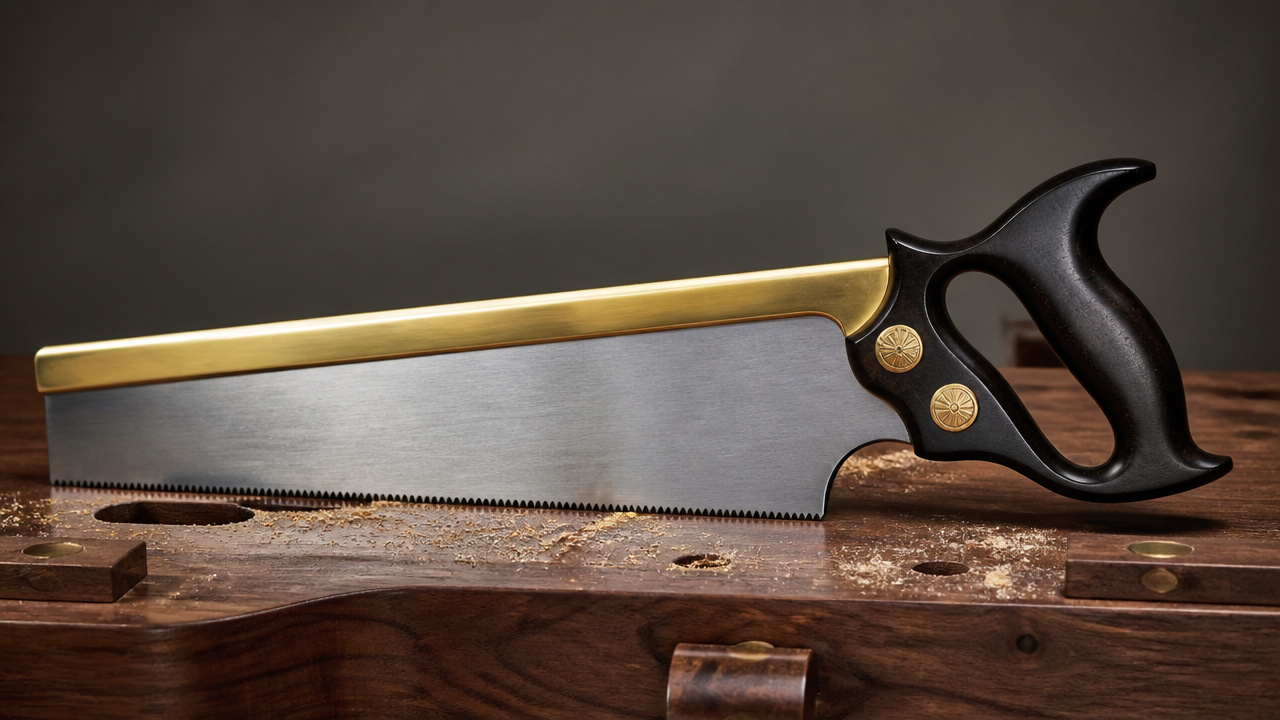
Best Tenon Saw Reviews: Top 10 Picks for Precision Cuts
The frustration of wrestling with a tenon saw that’s either too stiff or too floppy is real. Blades that flex under pressure ruin cuts, and handles that aren’t comfortable cause hand fatigue fast. It’s maddening when your saw just can’t keep up with the precision joinery you need.
The Spear & Jackson 12-Inch Traditional Brass Back Tenon Saw locks blade rigidity with its brass back to prevent flex during deep cuts. The Irwin 10507424 XP3055-250 swaps rigidity for cutting ease, using triple-ground teeth to slice smoothly on both push and pull strokes.
The JORGENSEN 10″ Dovetail Reversible Tenon Saw targets ambidextrous users with its spring-loaded, flip blade alongside super sharp 13 TPI teeth, making it perfect for flush cuts and intricate work.
| Image | Name | Editor's Rating | Price |
|---|---|---|---|
|
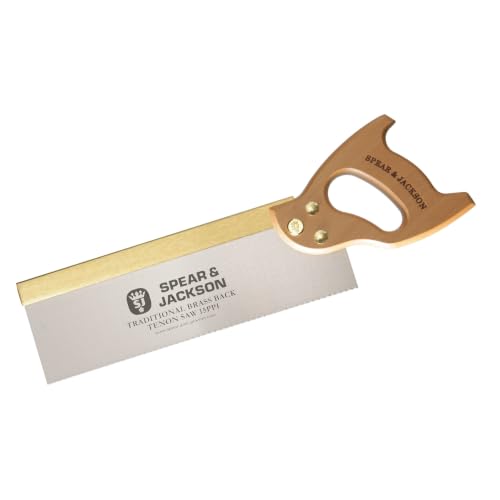
Spear & Jackson Saw Tenon 12 inch x 15 ppi
|
|
|

|
Irwin 10507424 XP3055-250 12TPI Tenon Saw, 250mm
|
|
|
|
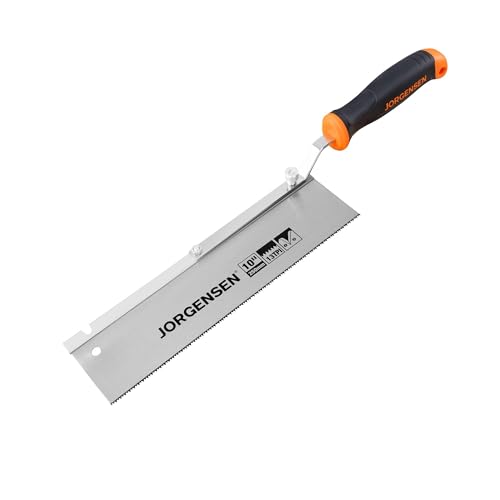
JORGENSEN 10" Dovetail Reversible Saw, Professional Cutting ...
|
|
|
|
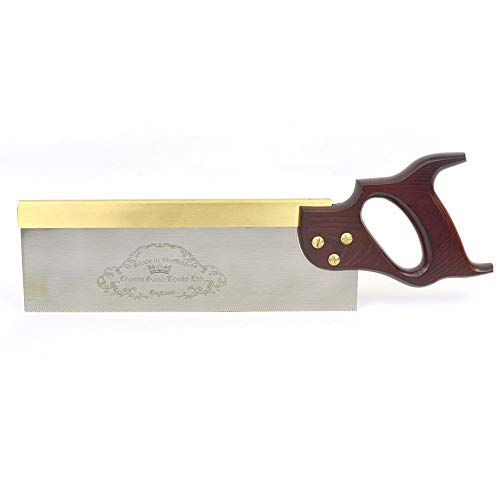
CROWN 195 12" 305mm Tenon Saw Brass Back, 13 TPI - Full Hand...
|
|
|
|
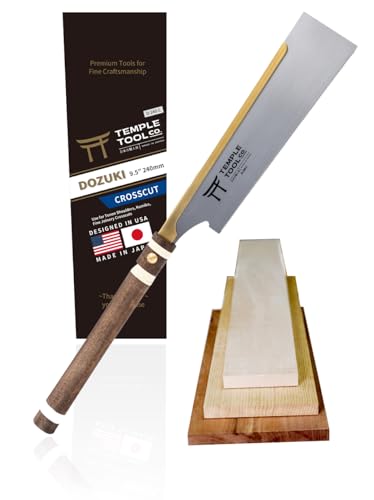
Temple Tool Co. Japanese Pull Saw - Crosscut 9.5 - Hand Saw ...
|
|
Discover the Best Tenon Saws for Precision Woodworking
Mastering fine woodworking demands the right tenon saw tailored to your needs. Explore how cutting precision, comfort, and design innovations elevate your joint and dovetail projects.
1. Spear & Jackson 12-Inch Traditional Brass Back Tenon Saw
- Universal teeth for general use, cuts along and across the grain
- Brass back for maximum rigidity
- For joint cutting & sawing small pieces of wood and wood based materials

When precision meets tradition, the Spear & Jackson Tenon Saw stands out as a reliable choice that turns joint cutting and small wood projects into a straightforward task. Its 12-inch blade combines a classic fox tail shape with universal teeth designed for both cross-cut and rip-cut functions, breaking the assumption that a handsaw optimized for both grain directions must compromise on efficiency.
The brass back adds essential rigidity, preventing blade flex during deep cuts and ensuring each stroke stays true. This firmness is critical in achieving smoother joints that fit perfectly without forcing the wood. The handle, crafted from durable wood and secured with rivets, offers a grip that feels natural but firm, encouraging effective control and less fatigue.
Constructed of high carbon steel, the blade maintains sharpness through tough use with precision cross-ground teeth made especially to retain their edge longer. Users will find this saw demands minimal maintenance compared to finer-toothed counterparts that dull quickly or chip under pressure.
While built primarily for woodcutting, its shape and cutting angle of 60 degrees deliver versatility for various woodworking tasks beyond tenons, making it an indispensable tool whether you’re shaping small panels or joints. Its manual operation keeps the process tactile and precise, reinforcing feedback that power tools often mask.
Best for: Woodworkers seeking a robust tenon saw with traditional design features that handle both detailed joint cutting and general woodworking tasks effectively.
What We Like:
- Brass back guarantees blade rigidity for straighter cuts.
- Universal teeth design allows for clean cuts along and across the grain.
- Comfortable wooden handle ensures control and reduces hand fatigue.
- High carbon steel blade maintains edge sharpness longer under regular use.
- Traditional fox tail blade shape aids in versatile woodworking applications.
Specification:
| Specification | User Benefit |
|---|---|
| Blade Length: 12 inches | Provides sufficient cutting depth for common woodworking joints. |
| Blade Material: High Carbon Steel | Ensures durable sharpness and resistance to dulling. |
| Teeth Per Inch (PPI): 15 | Balances speed with smooth, precise cuts on wood. |
| Brass Back | Prevents blade flex, maintaining accuracy across cuts. |
| Handle Material: Wood with Rivets | Offers a stable, comfortable grip for prolonged use. |
| Cutting Angle: 60 degrees | Optimizes tooth contact for effective rip and crosscuts. |
| Power Source: Manual | Allows for precise control based on user technique. |
2. Irwin 10507424 XP3055-250 12TPI Tenon Saw – Precision & Comfort for Fine Carpentry
- This triple-ground tooth technology (TGT) not only increases efficiency but also optimises cutting...
- Hardpoint tenon saw with soft-grip handle for user comfort
- The ideal choice for fine carpentry and can be used with a mitre box. Size: 250mm (10 in)Teeth...
Choosing the best tenon saw can be trickier than you think. Many assume a saw is only as good as its blade length or tooth count, but in reality, factors like cutting efficiency and user comfort often dictate your results. The Irwin 10507424 XP3055-250 challenges this by integrating technology designed specifically to ease your workload.
This tenon saw’s triple-ground tooth technology (TGT) isn’t just a fancy term—it actively improves cutting on both push and pull strokes. So, instead of forcing your way through wood, the saw helps you glide, reducing strain and improving control. The 12 teeth per inch offer a balance between speed and smoothness, ideal for detailed carpentry.
Durability is key, and this saw delivers with a high-angled nose that enhances blade stability during use, keeping cuts precise. Its hardpoint blade is built to last, handling regular use without dulling quickly. The soft-grip, ultrasonic-welded handle fits comfortably in hand, offering a secure hold that lessens fatigue during longer tasks.
Designed for fine carpentry and mitre box compatibility, it specializes in woodwork that demands precision. It’s not just another handsaw—you’ll notice how this tool feels designed to work with you, not against you. Though it’s lightweight, weigh in at just over 5 ounces, it doesn’t cut corners on performance or user experience.
Best for: Woodworkers and carpenters seeking a balance of precision and ease for joinery and fine cutting tasks.
What We Like:
- Triple-ground tooth technology enhances cutting on both push and pull strokes.
- High-angled nose improves blade stability for cleaner, precise cuts.
- Soft-grip, ergonomic handle reduces hand fatigue during extended use.
- Hardpoint blade designed for durability and consistent performance.
- Perfect length (250mm) for detailed work and mitre box compatibility.
Specification:
| Specification | User Benefit |
|---|---|
| Triple-ground tooth technology (TGT) | Makes cutting smoother and less effortful on both push and pull strokes. |
| 12 Teeth Per Inch (TPI) | Balances speed with fine cut quality for detailed carpentry. |
| High-angled nose | Enhances blade stability, resulting in more precise cuts. |
| Soft-grip rubber handle | Improves comfort and grip to reduce hand fatigue. |
| Blade length – 250mm (10 inches) | Compact size ideal for fine joinery and use with a mitre box. |
| Lightweight design (5.28 ounces) | Eases handling and control during extended work periods. |
3. JORGENSEN 10″ Dovetail Reversible Tenon Saw with Spring-Loaded Blade and Ergonomic Handle
- Reversible Blade: Our 10" dovetail jamb saw features a spring-loaded design that enables you to...
- Straight Cutting: Reversible dovetail jamb saw adapt steel carbon back prevents bending for strong...
- Bi-material Handle: Handle is marked JORGENSEN on each jamb saw, it's made of PP+TPR material, the...
Finding a saw that cuts precisely whether you’re right- or left-handed can be frustrating. The JORGENSEN 10″ dovetail reversible saw challenges that limitation with a clever spring-loaded blade design that flips easily for ambidextrous use.
This saw delivers sharp, accurate cuts every time thanks to its 13TPI double ground teeth made from long-lasting SK5 high carbon steel. The blade’s thin 0.6mm width and flexible nature mean flush cuts happen smoothly, avoiding snags that often spoil woodwork.
Built for strength, the saw features a steel carbon back that reinforces the blade to prevent bending and maintain perfectly straight cuts. This durability is essential when working on tight door frames or detailed millwork where precision counts.
Comfort matters on long projects, and the bi-material handle combines polypropylene and rubber to reduce hand fatigue and enhance grip control. Whether indoors or outdoors, this saw glides through wood cleanly, making tough jobs more manageable.
Its versatility extends to tile installation and prep, making it a handy tool beyond typical woodworking. The included plastic tooth protector ensures safe storage, preserving the blade’s sharpness between uses.
Best for: Woodworkers and DIYers seeking a reliable tenon saw that adapts seamlessly to left- or right-handed cutting, especially for door framing and detailed carpentry.
What We Like:
- Spring-loaded reversible blade suits both right- and left-handed users
- Reinforced steel back keeps cuts straight and blade rigid
- Sharp, induction-hardened teeth hold their edge longer
- Ergonomic two-material handle reduces hand strain
- Flexible blade enables flush cuts without snagging
Specification:
| Specification | User Benefit |
|---|---|
| Blade Length: 10 inches | Allows precise control in tight spaces and detailed cuts |
| Blade Material: High carbon steel (SK5) | Stays sharp longer and resists damage under heavy use |
| Teeth per inch (TPI): 13 double ground, induction hardened | Offers clean, smooth cuts with less effort |
| Handle Material: Polypropylene + thermoplastic elastomers | Delivers a soft, secure grip to minimize hand fatigue |
| Spring-loaded Blade Design | Quickly switches cutting side to suit all users and angles |
| Steel carbon reinforced back | Keeps blade stable and straight for consistent accuracy |
| Blade Thickness: 0.6mm | Enables flush cutting without jamming or binding |
4. CROWN 195 12″ Tenon Saw with Brass Back and Beechwood Handle
- Exceptional quality tool from Crown Hand Tools Ltd, Sheffield, England
- Resharpenable High Carbon Steel Blade
- Fagus Sylvatica Germany Handle secured with Screws
When precision in joinery is non-negotiable, the CROWN 195 Tenon Saw steps up with a blend of classic craftsmanship and practical durability. It isn’t just about cutting wood; it’s about mastering those fine tenons with accuracy and control.
This saw features a resharpenable high carbon steel blade, allowing it to maintain sharpness over an extended period without compromising on clean cuts. The blade is stiffened with a brass back — a detail that minimizes blade flex and enhances cutting stability even during demanding tasks.
Ergonomics matter here: the handle is crafted from Fagus Sylvatica beechwood imported from Germany, secured firmly with screws to withstand rigorous use. Its full handle design provides steady grip and balance, reducing hand fatigue on lengthy projects.
With 13 teeth per inch, this saw strikes a balance between speed and a fine finish, which is critical for joinery work demanding smooth and accurate cuts. While its weight of 1.7 pounds might feel substantial, that heft adds to the controlled, deliberate strokes it encourages.
Maintenance is straightforward due to the blade’s resharpenable property, ensuring this tool remains a reliable fixture in your workshop for years. The 12-inch blade length offers versatility across a range of woodworking needs without sacrificing maneuverability.
Best for: Woodworkers seeking a durable tenon saw that offers precision and longevity through classic materials and thoughtful design.
What We Like:
- Sharpenable carbon steel blade extends usability beyond typical saw lifespans.
- Brass back design delivers enhanced rigidity and precise cutting control.
- Secure and traditionally crafted beechwood handle for firm, comfortable grip.
- Balanced 13 TPI blade supports both speed and fine finish in cuts.
- Weight provides stability for accurate, controlled sawing motions.
Specification:
| Specification | User Benefit |
|---|---|
| Blade Length: 12 inches | Offers versatile reach suited for various woodworking projects. |
| Blade Material: High Carbon Steel | Resists wear and can be resharpened for extended tool life. |
| Teeth Per Inch: 13 | Balances speed with a clean, precise cut ideal for fine joinery. |
| Handle Material: Fagus Sylvatica Beechwood | Provides durable and comfortable grip for prolonged use. |
| Brass Back Stiffening | Keeps the blade stable to improve accuracy in cuts. |
| Item Weight: 1.7 pounds | Weight contributes to steady and controlled sawing strokes. |
| Full Handle Design | Enhances control and reduces hand fatigue during long tasks. |
5. Temple Tool Co. Japanese Pull Saw – Precision Tenon Saw for Fine Joinery
- USE FOR TENON SHOULDERS, KUMIKO, FINE JOINERY CROSSCUTS: This japanese pull saw has crosscut teeth...
- PREMIUM HIGH-QUALITY COMPONENTS: Featuring a dark brown solid wood handle made of Wingnut (in the...
- ACCURATE & EFFORTLESS CUTTING: Cuts on the pull stroke which allows for a thin narrow-kerf blade and...
Not all tenon saws deliver the precision needed for fine joinery, especially when it comes to tenon shoulders and intricate cuts like Kumiko. Many traditional saws rely on push strokes, which can be clunky and less accurate. The Temple Tool Co. Japanese Pull Saw defies this norm by cutting on the pull stroke, allowing you to maintain control and accuracy with every cut.
This saw’s thin, narrow-kerf blade glides through wood smoothly, reducing effort and minimizing tear-out. Its 25 TPI crosscut teeth are specifically designed for delicate joinery work, providing crisp, clean shoulder cuts essential for snug fittings. You won’t be struggling to maintain the line or wasting material from splintering edges.
Crafted from premium Japanese steel, the blade holds sharpness far longer than typical saws, ensuring your cuts remain effortless over extended projects. The handle, made from wingnut wood with tasteful brass details, fits comfortably in your hand, delivering ergonomic ease whether you’re a beginner or experienced woodworker.
Beyond function, this saw carries a legacy of skilled craftsmanship from a historic Japanese city known for over a century of saw making expertise. It’s a tool designed not just for cutting, but for those who value the art of woodworking joined with superior performance.
Best for: woodworkers focused on precise joinery, including tenon shoulders and Kumiko, who want a blend of traditional craftsmanship and modern efficiency.
What We Like:
- Pull stroke design enables greater control and finer cuts
- High-quality Japanese steel blade stays sharp and durable
- Ergonomic wingnut wood handle for a comfortable grip
- Specialized 25 TPI crosscut teeth ideal for clean tenon shoulders and fine joinery
- Handcrafted in Japan by expert artisans with a rich woodworking heritage
Specification:
| Specification | User Benefit |
|---|---|
| Blade Length: 9.5 inches | Optimal size for handling detailed cuts without sacrificing control |
| Blade Material: Japanese steel | Maintains sharpness and allows for clean, precise cuts in various wood types |
| Number of Teeth: 237 (25 TPI) | Fine-toothed blade ensures smooth crosscut performance for joinery |
| Handle Material: Wingnut wood with brass components | Ergonomic and durable, offering comfortable grip and aesthetic appeal |
| Blade Shape: Flat | Provides stability and accuracy during cuts |
| Dimensions: 21″L x 2.7″W x 0.8″H | Compact size balances reach and maneuverability for precise work |
| Power Source: Hand powered | Gives the user full control over the cutting speed and pressure |
| Included Components: Protective case | Protects the blade during storage and transport |
6. Lynx Thomas Flinn Taytools British 12 Inch Tenon Saw with Beech Handle

- This saw is made by Thomas Flinn of Sheffield England the last traditional saw and plane maker in...
- Saw plate is made from Sheffield allow spring steel and taper ground providing a good balance of...
- The saw plate is held straight and true by a thick, solid brass spine. The folded brass back means...
When precision in fine woodworking matters, a rip-cut tenon saw like this one from Lynx Thomas Flinn stands out by defying common expectations about saw rigidity and ease of use. Many think a thinner blade must compromise strength, but this saw’s design challenges that notion effectively.
This 12-inch tenon saw features a blade made from Sheffield alloy spring steel, celebrated for holding an edge while remaining sharpenable without excessive effort. It’s tapered ground to strike a balance between straight cuts and manageable sharpening, helping woodworkers maintain control and clean lines in joint work.
The solid brass back spine is thick and folded, creating tension that keeps the blade stiff and accurately aligned for delicate rip cuts. This reduces binding and chatter, making it a reliable choice for precise cuts up to just over 3 inches deep.
Its handle, crafted from stained European Beech, offers a traditional feel with durability, enhanced by brass button screws for secure assembly. This saw maintains lightweight convenience without sacrificing robustness, making it easy to handle during extended use.
Maintenance revolves around periodic sharpening and keeping the blade dry to prevent rust, a straightforward routine that preserves its performance over time. This saw is designed not just as a tool, but as a dependable partner for joinery and detailed wood shaping.
Best for: Woodworkers and artisans seeking a classic, durable tenon saw engineered for accurate rip cuts in fine joinery.
What We Like:
- Precision-sharpened 15 TPI blade tailored for rip cutting
- Folded brass spine offers excellent blade tension and straightness
- Stained European Beech handle crafted for durability and comfort
- Balanced design combining rigidity with lightweight handling
- Blade made from Sheffield alloy spring steel ensures long-lasting sharpness
Specification:
| Specification | User Benefit |
|---|---|
| Blade Length: 12 inches | Allows accurate control for typical tenon and joinery cuts |
| Teeth per Inch: 15 TPI | Delivers fine, clean rip cuts with minimal tear-out |
| Blade Material: Sheffield alloy spring steel | Combines edge retention with ease of sharpening |
| Handle Material: Stained European Beech | Provides a comfortable, durable grip with classic appearance |
| Brass Back Spine | Ensures blade remains straight and rigid during cuts |
| Cutting Depth: 3-1/8 inches | Suits thick material and precise tenon joint depths |
| Blade Shape: Rectangular with taper ground | Optimizes cut smoothness and blade strength |
7. Robert Sorby Select RS-5412K Professional Tenon Saw 12” x 13 TPI
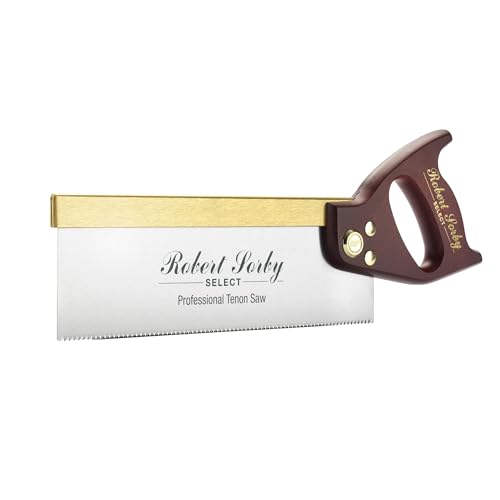
- 12” (305mm) hardened and tempered carbon steel blade with a brass back for lasting strength and...
- 13TPI resharpenable blade for prolonged use in wearing environments
- Brass screws for corrosion resistance
When precision meets durability, the Robert Sorby Select RS-5412K Professional Tenon Saw stands out from ordinary handsaws. Its 12-inch blade crafted from hardened and tempered carbon steel offers a level of strength that few tenon saws achieve, making it ideal for demanding woodworking tasks.
This saw’s 13 teeth per inch (TPI) blade is designed for resharpening, ensuring you keep a razor-sharp edge for longer periods without replacing the blade. The addition of a brass back maintains straightness and counters blade fatigue during precise cuts.
The wooden handle is more than just a traditional aesthetic; it provides an ergonomic grip that enhances control and reduces fatigue during extended use. Brass screws resist corrosion, maintaining the saw’s solid assembly over time, even in humid conditions.
Engineered primarily for woodworkers, this tool excels in creating clean, tight tenon joints. Its rectangular blade shape contributes to smooth, accurate cuts on various wood surfaces, making it a reliable partner for professional joinery or detailed carpentry.
Overall, this tenon saw blends functionality with classic design, giving users a confidence boost from the first cut through to the last. Although hand-powered, it offers the finesse and durability demanding projects require.
Best for: woodworkers seeking a precision tenon saw with enduring sharpness and a professional-grade handle.
What We Like:
- Resharpenable 13 TPI carbon steel blade for sustained sharpness
- Brass-backed blade ensuring rigidity and accurate cuts
- Ergonomic wooden handle that balances comfort and control
- Brass screws providing long-term corrosion resistance
- Compact 12-inch size suitable for detailed joinery work
Specification:
| Specification | User Benefit |
|---|---|
| Blade Length – 12 inches (305mm) | Maneuvers easily for precise, fine cuts in woodworking joints |
| Blade Material – Hardened carbon steel | Delivers durable, sharp cutting performance with wear resistance |
| Teeth Per Inch (TPI) – 13 | Balances smoothness and speed for clean, controlled tenon cuts |
| Brass Backing | Prevents blade bending ensuring straight, accurate cuts |
| Ergonomic Wooden Handle | Improves grip comfort and control during prolonged use |
| Brass Screws | Resist rust, maintaining saw integrity over time |
| Weight – 725 grams | Light enough for maneuverability without sacrificing stability |
8. Taytools Lynx Thomas Flinn 10 Inch Tenon Saw with Stained Beech Handle

- This saw is made by Thomas Flinn of Sheffield England the last traditional saw and plane maker in...
- Saw plate is made from Sheffield allow spring steel and taper ground providing a good balance of...
- The saw plate is held straight and true by a thick, solid brass spine. The folded brass back means...
When precision meets tradition, the Taytools Lynx Thomas Flinn tenon saw stands apart from the usual mass-produced options. Crafted by the last traditional saw and plane maker in the UK, this saw carries the legacy of Sheffield’s renowned metalwork.
The saw’s 10-inch blade is tapered ground from Sheffield alloy spring steel, striking a balance between long-lasting sharpness and ease of re-sharpening. Its rigidity is enhanced by a thick, solid brass spine that holds the blade under consistent tension, reducing blade flex and offering clean, straight cuts every time.
Designed specifically for rip cutting, its 13 TPI makes it ideal for slicing along wood grain with accuracy, while the maximum depth of cut, 2-3/8 inches, is suitable for common tenon sizes. The stained European Beech handle provides a comfortable grip secured with brass button screws, blending ergonomic design with classic aesthetics.
Durability is built-in not only by material choice but also by design – the folded brass back adds strength without adding excessive weight, making it easier to handle over longer work sessions. Maintenance is straightforward, thanks to the blade’s quality steel that responds well to sharpening.
This tenon saw solves the problem of wobbling blades causing imprecise joinery cuts, giving woodworkers the confidence to produce sharp, tight joints. It’s a tool that respects traditional craftsmanship while being perfectly capable in modern workshop settings.
Best for: Woodworkers seeking a traditional, high-precision tenon saw with excellent edge retention and balance for rip cuts.
What We Like:
- High-quality Sheffield alloy spring steel blade offers durable sharpness and ease of sharpening
- Sturdy brass spine maintains blade tension and stability during cuts
- Ergonomic stained beech handle combines comfort with traditional style
- 13 TPI tooth count ideal for smooth, precise rip cutting on tenons
- Compact 10-inch blade fits typical tenon dimensions without sacrificing control
Specification:
| Specification | User Benefit |
|---|---|
| Blade Material: Alloy steel | Ensures long-lasting sharpness with easier sharpening maintenance |
| Blade Length: 10 inches | Offers control and is suitable for typical tenon joint depths |
| Teeth Per Inch (TPI): 13 | Designed for efficient rip cutting along wood grain |
| Handle Material: Stained European Beech | Provides a comfortable grip with a classic look |
| Brass Spine | Keeps blade straight and rigid for accurate cuts |
| Maximum Depth of Cut: 2-3/8 inches | Accommodates most tenon sizes with clean cutting depth |
| Weight: 16 ounces | Light enough for precise control without fatigue |
9. Lynx Thomas Flinn Taytools British 12 Inch Tenon Saw with Stained Beech Handle
- This saw is made by Thomas Flinn of Sheffield England the last traditional saw and plane maker in...
- Saw plate is made from Sheffield allow spring steel and taper ground providing a good balance of...
- The saw plate is held straight and true by a thick, solid brass spine. The folded brass back means...
Not every saw claimed to be the best tenon saw lives up to the task of precise joinery. The Lynx Thomas Flinn Taytools 12 Inch Tenon Saw, crafted by the last traditional sawmaker in Sheffield, England, challenges the usual compromises between sharpness and durability.
Its blade boasts Sheffield alloy spring steel, taper-ground to balance long-lasting edge retention with the ease of sharpening — a rare find that addresses the frustration of frequent blade maintenance. The thick brass back reinforces rigidity, ensuring clean, true cuts without the saw plate flexing or the handle feeling off-balance.
The saw’s European beech handle is thoughtfully stained and finished, providing both comfort and a classic look, secured with solid brass screws that add durability where you need it most. With 13 teeth per inch and a cross-cut filing, it’s designed to slice through joints with a depth up to 3-1/8 inches, delivering precision for the fine work required in tenon and mortise joinery.
Its hand-powered design keeps you connected to the wood, letting you control each cut without the noise or mess of power tools. This tool embraces old-world craftsmanship yet fits seamlessly into modern woodworking projects that demand exact cuts and reliable performance.
Best for: woodworkers seeking a traditional yet sharply precise tenon saw that combines durability with fine control for intricate joinery.
What We Like:
- Blade made from superior Sheffield alloy spring steel balances sharpness and long-lasting edge
- Solid brass back adds rigidity, ensuring straight and reliable cuts
- Stained European beech handle designed for comfortable grip and durability
- 13 teeth per inch with cross-cut filing ideal for clean joinery cuts
- Classic hand-powered design offers fine control without power tools
Specification:
| Specification | User Benefit |
|---|---|
| Blade Material | High carbon steel holds sharpness and resists wear between sharpenings |
| Blade Length | 12 inches providing adequate reach for most tenon and joint cuts |
| Teeth Per Inch (TPI) | 13 TPI allows precise, clean cuts in cross-grain wood |
| Handle Material | Stained European beech offers a comfortable and sturdy grip |
| Brass Back | Thick brass spine adds stability and reduces blade flex for accuracy |
| Cutting Depth | 3-1/8 inches maximum depth works well for thick wood pieces |
| Weight | 1.7 pounds keeps the saw balanced and easy to maneuver |
| Power Source | Hand powered gives better tactile control and intentional cutting pace |
10. Z-saw DOZUKI FINE P1.0 (150mm) Japanese Pull Tenon Saw for Precision Woodworking

The Z-saw DOZUKI FINE P1.0 challenges typical expectations of a tenon saw by blending razor-sharp precision with a lightweight design. This is not just another saw; it’s tailored for woodworkers who demand accuracy in every cut, especially in joinery tasks like dovetail and tenon work.
Its blade, honed from high-speed steel, features an extremely fine 151-tooth count that allows for smooth, clean cuts without splintering delicate wood surfaces. The pull-stroke action means cuts are effortless, offering control that push saws rarely provide.
Despite its fine teeth, this saw is robust enough to handle various woodworking tasks requiring precision. The rectangular blade shape combined with a sturdy beechwood handle ensures both durability and comfortable grip — critical for extended projects.
Maintenance is straightforward as the saw resists common wear through quality materials and design. Because of its lightweight 150-gram build and compact 15 cm blade, it’s highly maneuverable, enhancing finesse over brute strength.
Those seeking a tenon saw that elevates joinery quality will find this tool a valuable addition. It’s crafted not for rough cuts but for the refined hands needing perfect edges and tight fits every time.
Best for: Experienced woodworkers focused on precision joinery requiring smooth, fine cuts in hardwoods and softwoods.
What We Like:
- Extremely fine teeth for precise, clean cuts in joinery
- High-speed steel blade ensures sharpness over extended use
- Lightweight and balanced for comfortable handling
- Pull-stroke design reduces effort and improves control
- Elegant beechwood handle adds durability and grip comfort
Specification:
| Specification | User Benefit |
|---|---|
| Blade Material: High Speed Steel | Maintains edge sharpness for consistent fine cuts |
| Number of Teeth: 151 | Allows smoother, cleaner cuts in wood for precision work |
| Blade Length: 15 centimeters | Compact size improves control for detailed tasks |
| Handle Material: Wood (Beechwood) | Offers comfortable grip and durable build for prolonged use |
| Blade Shape: Rectangular | Enhances stability and straight cutting lines |
| Item Weight: 150 g | Lightweight design reduces fatigue during fine cutting |
Key Specs Compared: Top Tenon Saw Features and Materials
| Product Name | Blade Length | Teeth Per Inch (TPI) | Blade Material | Handle Material |
|---|---|---|---|---|
| Spear & Jackson Brass Back Tenon | 12 inches | 6 TPI | High Carbon Steel | Wood |
| Irwin XP3055-250 Tenon Saw | 10 inches | 12 TPI | Welded Steel | Rubber |
| Jorgensen Reversible Dovetail Saw | 10 inches | 130 TPI | High Carbon Steel (SK5) | PP + Thermoplastic Elastomers |
| Crown 195 Brass Back Tenon Saw | 12 inches | 156 TPI | Carbon Steel | Beechwood |
| Temple Tool Co. Japanese Pull Saw | 9.5 inches | 237 TPI | Japanese Steel | Wingnut Wood |
| Lynx Thomas Flinn British Rip Saw | 12 inches | 15 TPI | Alloy Steel | Beechwood |
| Robert Sorby Select Professional Saw | 12 inches | 13 TPI | High Carbon Steel | Wood |
| Taytools British Rip Tenon Saw | 10 inches | 130 TPI | Alloy Steel | Beechwood |
How to Pick the Best Tenon Saw for Precise and Comfortable Cuts?

Choosing a tenon saw is more nuanced than just blade length or teeth per inch. The saw you select impacts not only precision but how comfortable your work feels after hours of cutting. Here are critical factors that shape the performance and ease of a tenon saw.
Blade Material and Sharpness Retention
The blade material sets the foundation for a tenon saw’s longevity and cutting accuracy. High carbon steel and specialized alloy steels lead the pack because of their hardness and ability to hold a keen edge. This is a make-or-break feature; a dull blade leads to tearing and inaccurate joints.
Superior tenon saws like the Robert Sorby use hardened and tempered high carbon steel designed to withstand aggressive sharpening cycles while maintaining edge retention. Japanese saws often feature thin, narrow-kerf blades with Japanese steel providing a fine tooth finish that excels at delicate joinery.
Ignoring blade material quality results in frequent re-sharpening or replacement, disrupting workflow and compromising cut quality. A blade that dulls rapidly can cause frustration and extra effort in woodworking projects.
Teeth Per Inch (TPI) and Tooth Design
TPI defines how many teeth your saw blade has per inch—directly influencing the finish of your cut and the material thickness it suits best. Lower TPI, around 6 to 15, is typical for rip cuts, removing wood quickly but with rougher edges. Higher TPI above 13 favors cross-cutting with finer, cleaner finishes necessary for tight joints.
Specialized tooth designs like the triple-ground tooth technology in the Irwin XP3055-250 improve cutting efficiency across both push and pull strokes. This design reduces effort and enhances smoothness without increasing TPI. The Jorgensen reversible saw’s double ground teeth sharpen precision for flush cuts while accommodating different user preferences.
Choosing the wrong TPI or tooth geometry can lead to inefficient cuts, excessive chipping, or binding in the wood, which ultimately hurts joint fit and overall craftsmanship.
Blade Length and Rigidity
The typical tenon saw blade ranges from 9.5 to 12 inches, balancing reach and control. Blade length influences how far you can cut in a single stroke and how stable the cut remains. Rigidity prevents blade flex, which throws off accuracy, especially in deeper tenons.
Brass backs as seen on the Spear & Jackson and Crown 195 models stiffen the blade, reducing flex without adding heavy weight. Meanwhile, alloys like Sheffield spring steel provide similar rigidity with lighter blades, as featured on Lynx Thomas Flinn saws. The thickness and tapering also factor into a blade’s resistance to bending and ability to cut smoothly.
Neglecting blade support leads to wandering cuts, increased user fatigue, and compromised joinery alignment. A saw blade bending mid-cut undermines fine work, forcing excessive corrections and slowing progress.
Handle Comfort and Ergonomics
A handle’s shape and material directly affect grip, vibration absorption, and long-term comfort during repetitive cuts. Poor ergonomics increase hand strain and reduce control, hampering precision on detailed cuts like tenons.
Wooden handles, like those on many traditional saws such as the Spear & Jackson and Robert Sorby, offer warmth and solid grip. Modern blends of polypropylene and thermoplastic elastomers—as used on the Jorgensen saw—combine durability with soft-touch comfort. Rubberized grips enhance vibration damping, seen on the Irwin XP3055-250 tenon saw, easing fatigue without sacrificing control.
Ignoring handle design can cause blisters, hand cramps, and less accurate cuts, particularly on longer projects where comfort translates to steadiness and consistency in results.
Cutting Stroke Type: Push vs. Pull
Most traditional European tenon saws cut on the push stroke, which feels natural to many but requires a thicker blade to resist bending. Japanese-style saws cut on the pull stroke, allowing for thinner blades that slice precisely without the blade fouling or bowing.
The Temple Tool Co. Japanese pull saw demonstrates how pulling eases control and reduces tear-out thanks to its thin kerf and high TPI. Push stroke saws like the Lynx Thomas Flinn models use sturdier blades to maintain rigidity under pressure, benefiting tougher hardwood cuts.
Choosing the wrong stroke for your hand preference or work style makes cuts harder to control and reduces overall precision, potentially ruining critical joinery work.
Re-sharpening and Maintenance
How easy it is to sharpen your saw blade directly impacts the tool’s lifespan and the money you’ll spend over time. A blade that’s simple to maintain keeps your saw cutting smoothly, making it a core factor when choosing a tenon saw.
Blades made from high-quality carbon steel or alloy steel usually support several sharpening cycles without losing their edge. For instance, the Crown 195 and Robert Sorby models feature blades specifically designed to be re-sharpened. Some, like the Jorgensen, offer spring-loaded reversible blades, which double their effective life and allow quick turning or replacement.
Ignoring maintainability means dull blades will slow your work and force you to buy replacements more often. This not only cuts into your productivity but drives up long-term costs, making maintenance a crucial consideration for durable performance.
Ambidextrous Use and Versatility
Choosing a saw that accommodates both right- and left-handed users is crucial for comfort and precise cuts. Many tenon saws have fixed blade angles or teeth set up that favor one hand, limiting usability. This factor becomes a key point for anyone seeking flexibility in their woodworking tools.
The Jorgensen 10-inch dovetail reversible saw features a unique spring-loaded blade that flips effortlessly. It incorporates double ground teeth, allowing consistent cutting performance no matter which hand you use. This design not only improves control but also suits shared workshop environments where different users handle the same tool.
Ignoring ambidextrous design can lead to awkward handling and reduced accuracy. You might find yourself making inefficient adjustments or switching tools often, which hampers workflow and overall satisfaction. Prioritizing versatility eliminates these hassles and enhances your woodworking experience.
Frequently Asked Questions
What should I look for when choosing the best tenon saw?
Blade length, teeth per inch (TPI), and handle comfort are key factors determining a tenon saw’s suitability. A longer blade, like 12 inches, offers better reach for larger projects, while TPI affects cut smoothness and speed.
For fine joinery, saws with higher TPI (above 12 TPI) excel, enabling clean, precise cuts without tear-out. Handle materials, such as beechwood or rubber, influence grip comfort, especially during extended use.
Test the feel in your hand before purchase and prioritize a saw with a stiff blade or a brass back to reduce flex during critical cuts.
How does TPI impact the performance of a tenon saw?
Teeth per inch (TPI) directly control the finish and speed of cuts. Higher TPI, such as the 25 or more found on the Temple Tool Co. Japanese Pull Saw, produces finer, smoother cuts ideal for delicate tenons and joinery.
Lower TPI saws cut faster but leave a rougher finish; for instance, the Spear & Jackson saw with 6 TPI suits general woodworking where speed outweighs ultra-fine precision.
Match TPI to your project needs: use higher TPI for detailed work and lower TPI for quicker, rough cuts to balance efficiency and accuracy.
Why might a brass back be important on a tenon saw blade?
A brass back adds rigidity to the blade, preventing flex during deep or precise cuts. This rigidity helps maintain straighter, more accurate cuts, which is crucial for tenons that must fit tightly.
Many traditional models like the Spear & Jackson and Crown 195 use a thick brass spine, enhancing blade stability without compromising ease of handling.
Be cautious with saws lacking this reinforcement if you require high-precision cuts; blade flex can cause uneven joints and additional sanding.
Can a reversible tenon saw improve workflow for both right- and left-handed users?
Reversible tenon saws with spring-loaded blades, like the JORGENSEN 10″, cater to ambidextrous use, offering sharp cuts regardless of hand orientation. This versatility is valuable in shared workshops or when switching dominant hands during tasks.
The thin, 0.6mm blade reduces snagging and ensures flush cuts, improving efficiency for both right- and left-handed woodworkers.
Ensure the blade is sharply maintained for reversible use; dull blades can negate the benefits of ambidextrous design.
Are Japanese pull saws better for fine joinery compared to traditional push saws?
Japanese pull saws cut on the pull stroke, offering superior control and accuracy, which is ideal for fine joinery like tenons and miters. Their thinner blades produce minimal kerf and reduce wood tear-out.
The Temple Tool Co. saw, with its thin narrow-kerf blade and 25 TPI, exemplifies this advantage by enhancing precision in delicate work.
Acquire familiarity with the pull stroke technique, as it differs from push saws and may require practice for best results.
Finding the Right Tenon Saw to Enhance Your Woodworking
The gap between rough cuts and precise joinery closes when you select a tenon saw that matches your project’s demands. Choosing the right blade length and tooth configuration transforms your work, resulting in consistently cleaner cuts and improved efficiency across various tasks.
For general mortise and tenon joints, a saw with a 12-inch blade and moderate TPI suits most woodworkers, while those focusing on intricate, delicate details benefit from thinner blades with higher tooth counts. Your choice should align with whether speed or precision is your priority.
Maintain peak performance by regularly cleaning and sharpening your saw blade, especially if it has a brass back to ensure maximum stiffness. Avoid applying excessive force during cuts, as this can lead to flexing that diminishes accuracy and risks damage to your workpiece.
Last update on 2026-10-19 / Affiliate links / Images from Amazon Product Advertising API


