What Is a Wooden Mallet Used For: A Complete Guide
You use a wooden mallet to deliver controlled, gentle strikes that drive chisels and shape wood without damaging tool handles or workpieces. Its softer impact prevents splitting and marring, vital for fine joinery like mortises and dovetails.
The mallet absorbs shock, offering precision and reducing fatigue during repetitive tasks. Whether assembling delicate joints or carving, choosing the right mallet head and hardwood type guarantees efficiency.
Explore further to understand its design, applications, and maintenance.
Key Takeaways
- Wooden mallets deliver controlled, gentle strikes ideal for woodworking tasks like shaping, carving, and assembling delicate joints.
- They protect chisel handles and blades by absorbing shock and preventing damage during repetitive striking.
- Wooden mallets provide precise blows essential for fine joinery such as mortises, tenons, and dovetails without marring surfaces.
- Their design reduces user fatigue and improves accuracy when working with hand tools for extended periods.
- Wooden mallets are used to assemble and adjust wood components gently, avoiding splitting or deforming materials.
What Is a Wooden Mallet and Why Use One?

While you might be familiar with metal hammers, a wooden mallet serves a distinct purpose in woodworking and related crafts.
Unlike metal hammers, wooden mallets deliver controlled force that’s ideal for driving chisels without risking damage to the tool handles.
You’ll find they provide more precise blows, which is essential when working on fine joinery like mortises, tenons, and dovetails.
The mallet’s hardwood construction absorbs impact effectively, allowing you to maintain better control when cutting with or across the grain.
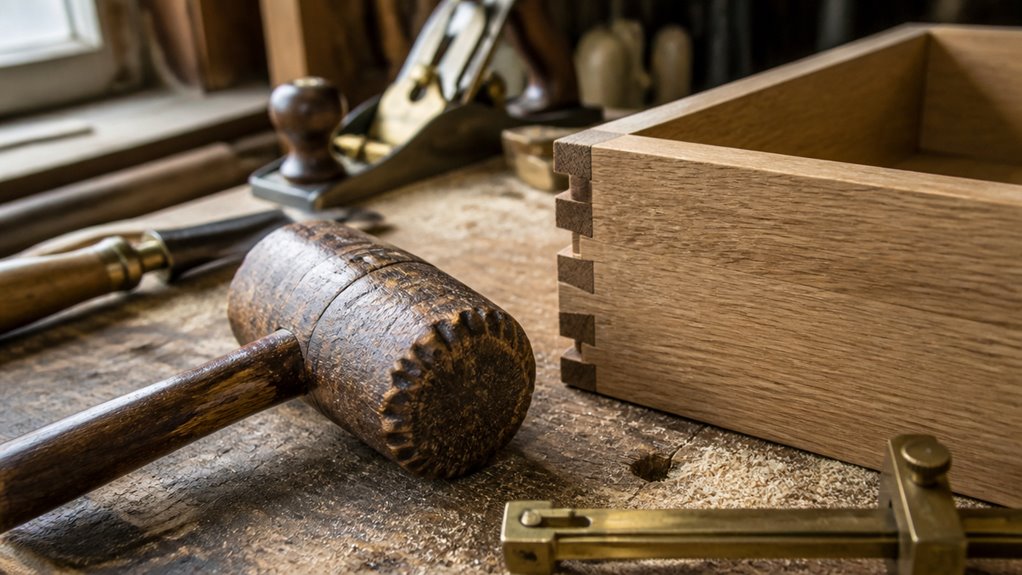
Additionally, their design is often rectangular for joinery or round-headed for carving, ensuring repeated striking with consistent energy transfer.
Their hardwood construction offers durability and minimizes surface marring while providing ergonomic benefits for extended use.
How Wooden Mallets Protect Your Chisels?
You know how important your chisels are for precise woodworking, right? Well, taking care of their handles is super vital. That’s where wooden mallets come into play.
They provide softer impacts, which really helps reduce the risk of damaging those handles compared to using metal hammers.
Plus, using a wooden mallet means you’re applying a controlled force. This not only extends the life of your tools but also keeps your accuracy on point while you work. It’s a win-win!
Using the right tool for each task, much like choosing between a jack plane and smoothing plane, ensures optimal performance and care for your woodworking tools.
Soft Impact Protection
When striking chisels, wooden mallets deliver force without the harsh impact metal hammers impose. This helps you preserve the integrity of your tools. Their softer striking face absorbs shock, reducing stress on chisel blades and handles.
This controlled impact prevents micro-fractures and extends tool life, especially during repetitive tasks like carving or joinery.
| Feature | Wooden Mallet | Metal Hammer |
|---|---|---|
| Impact Force | Controlled, softer blows | Hard, high-impact strikes |
| Tool Protection | Minimizes blade and handle damage | Increased risk of damage |
| Control | Enhanced precision on delicate tasks | Less control, more bounce |
Using a wooden mallet lets you apply precise, measured force. This safeguards your chisels for consistent, reliable performance. For optimal results, pairing a wooden mallet with properly sharpened tools and correct technique ensures smooth, controlled work with minimal damage to the wood and tools, similar to using fine shavings in hand planing.
Preventing Handle Damage
The softer impact of wooden mallets not only preserves chisel blades but also protects the handles from splitting or denting.
When you strike chisels with metal hammers, the hard blow can cause handle fractures or dents, weakening the tool’s lifespan.
Wooden mallets deliver controlled, evenly distributed force that absorbs shock, reducing stress on chisel handles.
This gentle impact prevents micro-cracks and structural damage, especially in hardwood-handled chisels.
Additionally, wooden mallet faces minimize rebound, giving you better control and decreasing the chance of accidental slips that could damage handles.
Using tools with appropriate impact control helps maintain both tool performance and longevity.
Driving Mortises and Paring Joints With Wooden Mallets
When you’re driving mortises or paring joints, it’s super important to apply controlled force. You really want to avoid damaging your chisels or the wood, right? That’s where a wooden mallet comes in handy. It allows you to deliver those precise, measured blows that keep your cuts clean and accurate.
Plus, having that kind of control not only boosts your efficiency but also enhances the overall quality of your joinery. So, next time you’re working on a project, remember how much a good wooden mallet can make a difference! Using the right tools with consistent contact and pressure is key to preventing damage and ensuring precision.
Controlled Force Application
Although driving chisels requires precision, wooden mallets give you controlled force that prevents handle damage and guarantees accurate cuts.
When you work on mortises or pare joints, the mallet’s hardwood head delivers consistent, measured impacts that reduce shock to the chisel handle.
This control helps you maintain steady blows, essential for clean, efficient wood removal without splitting or bruising the timber.
Unlike metal hammers, wooden mallets absorb some strike energy, minimizing bounce and improving your tool’s stability.
You’ll find this especially useful when working across or with the grain, where excessive force risks tool or wood damage.
For long-lasting woodworking tools and surfaces, using natural restorative waxes can help protect and nourish the wood after your work.
Precision in Joinery
You rely on a wooden mallet’s controlled force to achieve precision in joinery tasks like driving mortises and paring joints. Its softer striking face lets you apply measured impacts, reducing the risk of damaging chisel handles or wood fibers.
This control is vital when working with delicate joints such as mortise-and-tenon or dovetails, where accuracy determines fit and strength.
When using a wooden mallet for precision joinery, consider these key points:
- Deliver consistent, moderate blows to guide chisels without overdriving.
- Maintain better control when cutting across or with the grain to prevent tear-out.
- Use a hardwood mallet to transfer energy efficiently while minimizing bounce and tool wear.
This approach guarantees clean, precise cuts and tight-fitting joints every time. Additionally, understanding the cutting capacity of your tools ensures you use the appropriate force and technique for different woodworking tasks.
Joinery Assembly and Disassembly With Wooden Mallets
Tap wooden components together with a mallet to achieve tight, precise joinery without damaging the timber edges.
You use a wooden mallet to seat dowels and pins firmly, ensuring joints fit snugly and hold under stress.
It’s essential when assembling or disassembling furniture, as the mallet applies pressure evenly without crushing wood surfaces.
The mallet’s hardwood face delivers controlled force that helps you maintain accuracy during fit-up.
Selecting the right tool with appropriate clamping force can complement the use of a wooden mallet for secure joinery.
| Task | Benefit |
|---|---|
| Seating dowels | Tight, secure joints |
| Knocking components | Damage prevention |
| Disassembling joints | Gentle, non-destructive force |
| Applying pressure | Precise fit-up control |
| Furniture assembly | Efficient, safe tapping |
Use the mallet’s design to protect your work while achieving professional results.
Why Wooden Mallets Are Great for Carving and Sculpting?
Striking gouges and chisels with a wooden mallet lets you shape wood forms efficiently while maintaining control overeach blow.
The broad, gentle impact of a wooden mallet minimizes the risk of tool damage, making it ideal for carving and sculpting.
You’ll appreciate its ability to deliver precise strikes without the harshness of metal hammers, which can cause unintended splits or dents.
Here’s why wooden mallets excel in carving and sculpting:
- They provide controlled force to shape and rough out wood forms without overstriking.
- Their hardwood faces transfer energy effectively while preserving the integrity of your gouges and chisels.
- The mallet’s design supports repetitive, delicate hand-tool work, giving you consistent results with less fatigue.
Using a wooden mallet assures accuracy and longevity in your carving tools.
Additionally, consulting comprehensive guides on woodworking techniques can help you maximize the effectiveness of your wooden mallet in various projects.
Wooden Mallets in Traditional Woodworking Crafts and Boat Building?
Craftsmen rely on wooden mallets to assemble and fine-tune components in traditional woodworking and boat building, where precision and gentle force are essential.
You use wooden mallets to seat dowels, pins, and pegs firmly without damaging timber edges, maintaining joint integrity.
When working on mortise-and-tenon or dovetail joints, you’ll find that wooden mallets deliver controlled strikes, preventing tool handle damage and avoiding surface marring.
Their hardwood construction transfers energy efficiently while minimizing bounce, giving you better control over tight-fit assemblies.
In boat building, wooden mallets help you adjust delicate planks and frames, applying force without splitting or deforming wood.
Using wooden mallets alongside joinery techniques like mortise-and-tenon joints enhances precision and reduces the risk of damaging the wood during assembly.
Common Hardwood Types Used for Wooden Mallets
Choosing the right hardwood for a wooden mallet is essential to guarantee durability and effective energy transfer during use. You want a hardwood that withstands repeated impact without splitting or excessive wear.
Here are three common hardwoods used for mallets:
- Hickory: Offers excellent shock resistance and strength, making it ideal for heavy-duty striking while minimizing handle damage.
- Ash: Known for its toughness and flexibility, ash provides a good balance between hardness and resilience, reducing bounce on impact.
- Beech: Dense and fine-grained, beech delivers a hard striking surface with minimal deformation, ensuring efficient energy transfer.
Each wood’s density and grain structure directly affect mallet performance. Selecting one suited to your work intensity and tool protection needs is key.
How to Choose the Right Wooden Mallet?
Identify the primary tasks you’ll perform with your wooden mallet before making a selection. Choose a mallet size and head shape based on your work: rectangular heads suit joinery, while round heads fit carving.
Consider hardwood types like hickory or ash for durability and controlled striking. Weight affects control; heavier mallets deliver stronger blows but may tire you faster.
| Task Type | Recommended Mallet Features |
|---|---|
| Woodworking & Chisels | Rectangular head, medium weight |
| Joinery Assembly | Flat-faced, balanced weight |
| Carving & Sculpting | Round head, lighter weight |
| Tool Protection | Hardwood face, moderate weight |
| General Use | Durable hardwood, ergonomic grip |
Match these parameters to your needs for precise, efficient, and safe tool use.
Maintaining Your Wooden Mallet for Longevity
To make certain your wooden mallet performs reliably over time, you’ll need to implement regular maintenance practices that protect its structure and striking surfaces.
First, inspect the mallet before each use for cracks or splits in the hardwood, which can compromise its integrity.
Regularly check your mallet for cracks or splits to ensure its strength and reliability.
Second, apply a light coat of linseed oil or a similar wood conditioner periodically to prevent drying and warping.
Third, store the mallet in a dry, stable environment away from extreme temperatures and humidity fluctuations to avoid dimensional changes.
Following these steps will extend the mallet’s lifespan, preserve its striking efficiency, and maintain the precision necessary for fine woodworking tasks.
Proper upkeep helps guarantee your mallet remains a dependable tool for joinery, carving, and assembly work.
Frequently Asked Questions
Can Wooden Mallets Be Used for Metalworking Tasks?
Yes, you can use wooden mallets for certain metalworking tasks, especially where you need gentle, controlled impacts to shape or chase metal without causing damage.
They’re ideal for delicate work like decorative chasing or tapping sheet metal, where a metal hammer might deform the surface.
Just keep in mind that wooden mallets won’t deliver the force needed for heavy forging but excel in precision tasks requiring softer, repeatable strikes.
Are Wooden Mallets Suitable for Sports Like Cricket Bat Fitting?
If precision is a craftsman’s heartbeat, then yes, wooden mallets suit sports like cricket bat fitting perfectly.
You’ll use their controlled, gentle strikes to shape bats without damaging the wood.
Their hardwood construction transfers energy efficiently, letting you apply pressure evenly without crushing edges.
This makes wooden mallets invaluable for fine adjustments in cricket bat fitting, where you need delicate, accurate force rather than the harsh impact a metal hammer delivers.
How Does the Design Differ Between Joiner’s and Carver’s Mallets?
You’ll notice that joiner’s mallets typically have rectangular heads, designed to deliver broad, controlled force for tasks like joinery assembly.
Carver’s mallets, on the other hand, feature round heads to better suit detailed carving with gouges and chisels.
This rounded design allows for more precise, gentle strikes, making it ideal for shaping wood without damaging delicate tools or surfaces.
The head shape directly influences control and impact type.
Can Wooden Mallets Be Used to Tap Sheet Metal Safely?
You can gently encourage sheet metal into shape using a wooden mallet, as its soft striking face avoids harsh impacts.
This controlled tapping minimizes surface blemishes and prevents metal distortion.
However, you’ll want to make certain the mallet’s hardwood head is in good condition to deliver consistent, precise blows.
While it’s not a substitute for specialized metalworking tools, a wooden mallet offers a safer, more delicate touch for light metal forming tasks.
What Is the Typical Lifespan of a Wooden Mallet Under Heavy Use?
Under heavy use, your wooden mallet typically lasts between one to three years.
Its lifespan depends on the wood quality, frequency of strikes, and maintenance.
Hardwoods like hickory or ash endure better, but repeated force will eventually cause dents or cracks.
You can extend its life by avoiding excessive moisture, repairing minor damage promptly, and rotating striking surfaces to distribute wear evenly.
Replace it once structural integrity weakens.
Why a Wooden Mallet Is Essential for Woodworking
Just like a skilled painter trusts their brush, you rely on your wooden mallet to shape precision in woodworking.
It’s more than a tool; it’s your partner in craftsmanship, protecting your chisels and ensuring clean joints.
Choosing and maintaining the right mallet keeps your work sharp and efficient.
Embrace this timeless companion, and you’ll find your projects standing strong, echoing the careful hands of artisans past and present.