

Best Bandsaw Blade Choices: Top 10 for Precision Cutting
Wrestling with dull bandsaw blades ruins smooth cuts and wastes valuable time. Constant blade swapping or poor edge retention halts your workflow and spoils project precision. Finding tough blades that slice reliably without wear remains frustrating.
The DEWALT High-Durability Portable Band Saw Blades use a cobalt-infused high-speed steel edge to resist heat and wear for longer life. The Lenox Durable Portable Band Saw Blades combine bi-metal flexibility with reinforced Tuff Tooth design for sharper, longer-lasting metal cuts.
BOSCH 59-1/2 inch Heavy-Duty Stationary Wood Band Saw Blade offers precision tooth geometry tailored for dense wood cutting while balancing heat reduction and blade longevity.
| Image | Name | Editor's Rating | Price |
|---|---|---|---|

|
DEWALT Portable Band Saw Blade, 32-7/8-Inch, .020-Inch, 24 T...
|
|
|

|
LENOX Tools Portable Band Saw Blades, 44-7/8" x 1/2" x .020"...
|
|
|

|
BOSCH BS5912-6H 59-1/2 in. 6 TPI Heavy-Duty Stationary Band ...
|
|
|
|
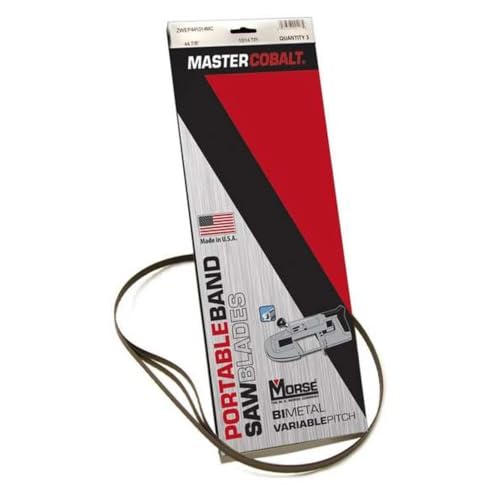
Morse Master Cobalt Bi-Metal Portable Band Saw Blade 44 7/8 ...
|
|
|
|
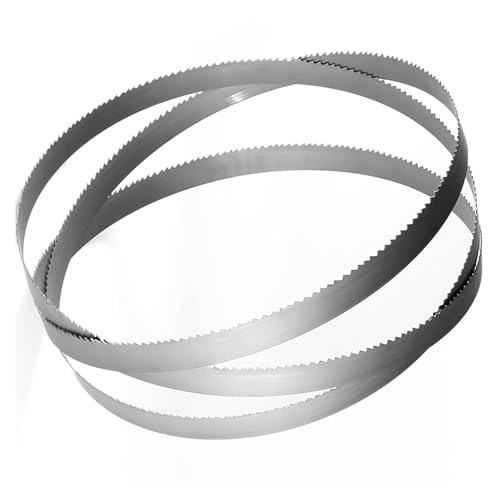
JET Bi-Metal Bandsaw Blade, 3/4" x .035" x 93" x 6-10VT (414...
|
|
Choosing the Best Bandsaw Blade for Durability and Precision
Selecting the right bandsaw blade is key to achieving clean, efficient cuts while maintaining blade longevity. Explore options designed for strength, sharpness, and specialized applications.
1. DEWALT High-Durability Portable Band Saw Blades 32.87-Inch 3-Pack
- Matrix II high speed steel edge of the band saw blade is designed for heat and wear resistance
- 8% Cobalt Content For Added Durability & Wear
- Rc 65-67 Tooth Hardness For Increased Wear Resistance

Finding a blade that can keep up with frequent cutting demands without losing edge or strength can be deceptively challenging. These blades feature a Matrix II high speed steel edge specially engineered for outstanding resistance to heat and wear, making them ideal for repetitive, intense jobs.
Built with 8% cobalt content, the blades deliver enhanced durability and lifespan, standing up against the common wear that often shortens blade usability. Their teeth boast a hardness rating of Rc 65-67, bringing excellent wear resistance that retains sharpness across demanding metal cuts.
Backing the cutting edge is an alloy steel plate designed for fatigue resistance, so the blades maintain structural integrity even under continuous strain and twisting forces. This crucial feature helps prevent premature breakage.
Offered in a three-pack, these portable saw blades from DEWALT balance precision and endurance for handheld band saw tools. Their 24 teeth per inch configuration allows fine control and smooth cutting of metal.
Count on consistent performance whether tackling thick or thin materials that require reliable, heat-resistant edges. Perfect for professionals focusing on metalworking tasks with tight tolerances.
Best for: Metal fabricators and field technicians needing robust, long-lasting portable blades for varied cutting applications.
Pros:
- Heat and wear resistant Matrix II high speed steel edge
- 8% cobalt enhances blade durability
- Highly hardened teeth for extended sharpness retention
- Alloy steel backer protects against fatigue and twisting
- Convenient 3-pack supply for continuous work
Cons:
- May require frequent replacements if used extensively on very hard metals
2. Lenox Durable Portable Band Saw Blades 44-7/8″ x 1/2″ x .020″, 14 TPI, 5-Pack
- High speed steel teeth provide a strong, long lasting cutting edge
- Shatter Resistant
- Bi-metal blades bend and resist breaking and extend blade life
Experience sharper, longer-lasting cuts with blades engineered from high-speed steel, designed to stay tougher through continuous use. These blades employ a bi-metal construction, allowing flexibility without sacrificing resilience—so they bend instead of break when you push limits.
Lenox’s exclusive Tuff Tooth design means each tooth is reinforced for enhanced durability, reducing the need for frequent blade changes. The shatter-resistant construction provides peace of mind when working with tougher metals or demanding projects.
Measuring 44-7/8 inches in length and half an inch in width with a fine-tooth count of 14 TPI, these blades are versatile enough for precision work yet robust against wear. Lightweight yet strong, they optimize the balance between control and endurance.
Engineered to fit standard portable band saws, this five-pack ensures you’re stocked for multiple tasks, helping you maintain efficiency without unexpected downtime. Craft your metalworking projects with blades that embody resilience and precision, courtesy of Lenox.
Best for: Professionals and hobbyists tackling medium to hard metals who need dependable blades that combine flexibility and long life.
Pros:
- High-speed steel teeth for extended sharpness
- Bi-metal build resists bending and breaking
- Shatter-resistant for safer, durable use
- Includes five blades for sustained project readiness
- Tuff Tooth reinforcement boosts longevity
Cons:
- The 14 TPI tooth count is optimized for metal and may be too coarse for very fine woodworking.
- Blades sized for standard portable saws may not fit specialized band saw models.
3. Bosch 59-1/2 inch Heavy-Duty Stationary Wood Band Saw Blade with 6 TPI
- ENGINEERED FOR WOOD CUTTING: Optimized tooth geometry for heavy-duty applications
- DURABLE BLADE DESIGN: Combines material and processes to deliver a blade that is designed to...
- PREMIUM MATERIALS: Constructed with quality materials, helping to resist heat buildup for long blade...
Cutting through dense wood often demands more than just a sharp edge—it requires precision built into the blade itself. Bosch addresses this by engineering a stationary saw blade that balances durability and cutting efficiency through advanced laser-cutting technology.
Optimized tooth geometry ensures every slice meets the exacting demands of heavy-duty woodworking. The design minimizes heat buildup, enhancing the blade’s lifespan and maintaining clean cuts across prolonged use. Crafted with premium materials, this blade resists wear that typically challenges lesser blades during intense cutting sessions.
Its dimensions and sturdy 6 TPI (teeth per inch) make it well-suited for a variety of standard stationary band saws, providing versatility without compromising performance. The robust black finish hints at its industrial-grade quality and readiness for demanding tasks.
As part of Bosch’s line, this blade delivers consistent accuracy and longevity, crucial for any woodworking professional or enthusiast aiming to get the job done efficiently and reliably.
Best for: Woodworkers requiring a reliably rugged and precise cutting blade for stationary band saw applications.
Pros:
- Durable design withstands heavy-duty cutting
- Optimized tooth geometry for cleaner cuts in wood
- Precision laser-cut manufacturing enhances accuracy
- Fits standard stationary band saws easily
- Constructed to resist heat buildup over long cutting sessions
Cons:
- Blade thickness may limit use to specific woodworking materials
- Lower tooth count might slow cuts on softer or thinner materials for some users
4. MK Morse Industrial Cobalt Bi-Metal Portable Bandsaw Blades 3-Pack 44-7/8″
- Made in the USA
- Shock resistant cutting edge for cutting any machinable metal
- Variable tooth pitch for broader range of applications
Cutting through various metals often tests the limits of your portable saw blades, especially when durability and precision are essential. These blades stand out by combining a shock resistant edge designed explicitly for metalwork, ensuring you won’t face unexpected breakage or dulling when tackling tough materials like stainless steel or carbon steel.
Engineered with a variable tooth pitch, the blade adapts better than most fixed-tooth designs, allowing smoother cuts across a wide spectrum of metals and plastics. This feature reduces the vibration that typically causes rough finishes and user fatigue, providing cleaner cuts and longer working comfort.
Crafted in the USA, these blades are perfectly sized at 44 7/8 inches with a half-inch width and a thickness of 0.020 inches, fitting most portable band saw models, including compact saws. The cobalt bi-metal composition blends toughness and flexibility, maintaining sharpness during heavy use.
MK Morse’s design prioritizes consistent performance and longevity, which means you can expect less downtime from blade changes while maintaining a high-quality cut finish. Packaged as a convenient set of three, these blades are ready to keep your tools productive without frequent reorders. Each blade delivers resistance to cutting fatigue and improved durability for demanding shop and field applications.
Best for: Professionals and hobbyists tackling metal cutting tasks using portable bandsaws who value blade durability and versatility.
Pros:
- Shock resistant cutting edge prolongs blade life
- Variable tooth pitch for smooth results on diverse materials
- Reduced vibration enhances cut quality and user comfort
- Compatible with most portable band saws including compact models
- Made in the USA with high-grade cobalt bi-metal construction
Cons:
- Thickness may not suit extremely fine precision cutting needs
5. JET Durable Bi-Metal Bandsaw Blade 3/4″ x .035″ x 93″ for Precision Metal Cutting
- Compatibility: Designed to fit JET HVBS-7MW, J-3410, HVBS-710G/S, and HBS-812G bandsaws
- Versatile Cutting: Bi-metal bandsaw blades are great for carbon steels, light alloy steels, mold...
- 3/4" x .035" x 93" x 6-10VT
Balancing versatility and toughness is crucial when cutting various metals, and a blade’s composition directly impacts your results. Crafted with a bi-metal design, this JET blade combines high-speed steel teeth with a flexible alloy steel backing to endure rigorous use without breaking or dulling quickly. Its 10 teeth per inch make it suitable for slicing through carbon steels, light alloys, and tool steels with clean, accurate cuts.
Measuring 3/4 inch in width with a thickness of just .035 inch, it fits perfectly in select JET bandsaws like the HVBS-7MW and J-3410 models, ensuring stable tension and consistent performance. The blade length of 93 inches accommodates a broad range of metalworking projects where precision and durability are required.
Unlike some blades that sacrifice strength for flexibility, this one maintains a robust edge thanks to its bi-metal construction, reducing the need for frequent replacements. Its manufacturing by JET, a reputable name in tools, also speaks to its dependable build quality and longevity.
By choosing a blade designed for tougher materials, you minimize the risk of damage to your workpiece and improve cut smoothness. This proactive approach leads to better finishes and less post-cut cleanup, enhancing your workshop efficiency.
Best for: Metalworkers requiring a resilient and versatile cutting blade for varied steel and alloy projects.
Pros:
- Bi-metal construction ensures durability and sharpness retention
- Compatible with multiple JET bandsaw models for versatility
- Excellent for cutting a range of metals including carbon and tool steels
- Stable 3/4″ width supports precise, straighter cuts
- 10 TPI configuration balances speed and finish quality
Cons:
- May not be optimal for extremely fine or delicate cuts requiring higher TPI blades
6. POWERTEC 3-Pack Bandsaw Blade Set 93.5-Inch for Woodworking and Soft Metals

- SET INCLUDES: (1) 93-1/2-Inch by 1/2-Inch by 6TPI Wood Bandsaw Blade, (1) 93-1/2-Inch by 1/8-Inch by...
- FUNCTION: This bandsaw blades set is perfect for re-sawing, rip cut, cross cut, curve cut and...
- DESIGN: A precision cutting tool is constructed with an optimal geometric tooth arrangement that...
Cutting through tough hardwood or soft metals can quickly reveal how subtle differences in blade design change your results. This assortment offers three distinct blade types, each engineered to handle different cutting challenges without switching tools constantly.
Crafted with premium carbon steel, the blades resist heat buildup and maintain sharp edges longer, allowing smooth, accurate cuts at higher speeds. One blade features a 6 TPI tooth design for aggressive ripping, while another with 14 TPI is made for fine scroll work and stationary cuts where precision reigns.
Each 93.5-inch blade fits a variety of trusted stationary band saw brands, including Delta and Jet, ensuring broad compatibility. The precision tooth geometry optimizes cutting forces, minimizing binding and extending blade life during demanding tasks.
Whether re-sawing thick boards, slicing curves on plastics, or shaping non-ferrous metals, this set provides reliable options for diverse cutting needs. The combination setup encourages choosing the right blade for the job instead of assuming one blade fits every purpose.
Powertec delivers a durable solution balancing strength and flexibility so you can concentrate on the cut rather than changing equipment.
Best for: Woodworkers and hobbyists requiring versatile blade options for both fine detail and robust ripping on multiple materials.
Pros:
- Set includes blades with multiple tooth counts for diverse cutting styles
- High-grade carbon steel offers heat resistance and durability
- Compatible with many 14″ band saw models, simplifying blade selection
- Optimized tooth geometry for smooth, high-speed cuts
- Suitable for wood, plastic, and light metals
Cons:
- Limited to 93.5-inch blade length, which may not fit all saw models
- Thinner blades might require more frequent maintenance under heavy use
7. FOXBC Durable 44-7/8 Inch Bi-Metal Portable Bandsaw Blades 3-Pack for Milwaukee & Dewalt
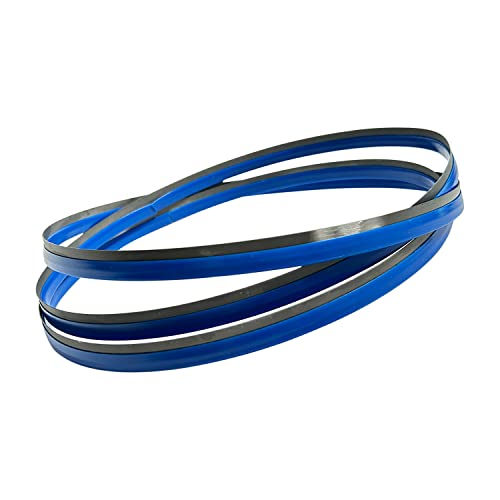
- FOXBC 44-7/8 Inch long, 1/2 Inch wide, 0.020 Inch thick, 10/14 TPI Portable bandsaw blades
- Fits all band saws requirling a 44-7/8-Inch long blade
- Compatible for Milwaukee M18 FUEL/Corded
Cutting through metals between 3/16 and 5/16 inches requires a blade that won’t slow you down or wear out quickly. These FOXBC blades combine M42 high-speed steel construction with a bi-metal design for exceptional heat resistance and durability. That means your cuts stay cleaner and your blade lasts longer, even under heavy use.
A 10/14 TPI tooth setup balances speed with precision, allowing smooth slicing on a variety of metals without bogging your saw. The 44-7/8 inch length and half-inch width make these blades widely compatible, fitting popular models from Milwaukee, Dewalt, Bosch, and others with ease.
Each pack includes three blades engineered for portable band saws, providing you with ready-to-use replacements that maintain consistent cutting performance. FOXBC’s focus on heat-treated steel also reduces the chances of blade warping or premature dulling, so your workflow stays efficient.
Strong heat resistance and weld strength allow these blades to retain sharpness longer, making them ideal for professional and serious DIY use. The thoughtfully crafted dimensions ensure the blade tracks smoothly along the guides without much adjustment.
Best for: Those needing reliable, long-lasting portable band saw blades suited for cutting medium-thickness metal materials with precision and minimal downtime.
Pros:
- Constructed from premium, heat-resistant M42 bi-metal steel
- 10/14 TPI tooth count optimizes balance between speed and smoothness
- Wide compatibility across multiple major portable band saw brands
- Includes three blades for extended readiness and replacement
- Designed for cutting 3/16 to 5/16 inch metal thickness efficiently
Cons:
- The 44-7/8 inch length limits use to compatible saw models, might requiring careful size matching
8. Starrett Duratec SFB Carbon Steel Band Saw Blade for Metal and Wood Cutting

- Idea Use - The Duratec SFB Carbon Band Saw Blade is ideal for economical cutting on easy-to-machine...
- Choose The Correct Blade - With a wide range of widths, tooth pitches and shapes, our carbon band...
- Built to Last - Starrett Duratec blades are made from carbon steel with a flexible back. The blade...
Cutting through a variety of materials without switching blades requires a balance of strength and precision. The Starrett Duratec SFB offers a carbon steel design with a flexible back, enabling it to endure demanding cuts while maintaining sharpness for detailed work.
Engineered with a regular tooth, raker set, and neutral rake, this blade excels in mechanical shops, toolrooms, and woodworking environments. Its 3/4-inch width and 6 teeth per inch allow for stable, smooth cuts on both ferrous and nonferrous metals, as well as wood and softer materials.
Built to last yet economical, it provides excellent value by being compatible with manual and gravity-fed horizontal or vertical machines. The blade’s length of 138 inches and .032-inch thickness offer versatility across various band saw setups.
Starrett’s reputation for quality craftsmanship shines through in this tool, ensuring consistent performance where reliability matters most. Its black finish adds durability while the carbon steel composition delivers a reliable cutting edge on multiple surface types.
Best for: Metalworkers and woodworkers needing a durable, adaptable blade for routine cutting tasks across diverse materials.
Pros:
- Durable carbon steel construction with a flexible back for toughness and sharpness
- Compatible with a wide range of band saw machines
- Effective on multiple materials including metals, wood, plastic, and stone
- Regular tooth pattern designed for smooth, controlled cuts
- Economical and easy to weld, making it budget-friendly to maintain
Cons:
- Limited tooth pitch might not be ideal for ultra-fine cutting tasks
- Carbon steel may dull faster than bi-metal options in heavy industrial use
9. ONIGUARD Milwaukee Compatible 35-3/8″ Bi-Metal Blades for Thick Metal Cutting 3-Pack
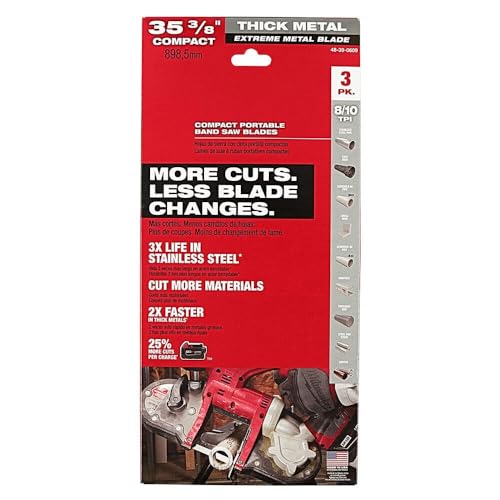
- Portable Band Saw Blade, For Use With Saw Type Portable Band Saws, Primary Material Application...
- FEATURES: 3X Life in Stainless Steel Cuts More Materials Aggressive tooth design for 2X Fatser cuts...
- SPECIFICATIONS: Length: 11.26" Height: 0.5" Width: 11.26"
Cutting thick metals without the right blade feels tougher than it has to be. These rugged bandsaw blades deliver an aggressive tooth pattern that speeds through dense stainless steel and alloys without bogging down. The durable bi-metal construction balances flexibility and wear resistance, perfect for demanding metal cutting tasks.
Engineered to fit popular portable band saws, the 35 3/8 inch length combined with a variable 8-10 teeth per inch pattern adapts to different thicknesses smoothly, improving both efficiency and finish. Each blade works across a broad range of metals, including aluminum, soft alloys, and solid steel stocks, cutting cleanly with reduced vibration.
ONIGUARD’s optimized tooth design ensures more precise cuts with each pass, while the blades themselves withstand heavier workloads, lasting significantly longer over stainless steel compared to standard versions. This 3-pack keeps you ready for extended projects and varied metal types without frequent blade swaps.
Equipped with compact, half-inch wide blades and metal tips crafted for durability, this set pushes performance without compromising compatibility or control. Expect fewer interruptions, faster throughput, and cleaner edges with every job.
Best for: Professionals and DIYers tackling thick metal materials with portable band saws requiring a versatile, long-lasting cutting accessory.
Pros:
- Aggressive tooth design speeds up cutting in tough metals
- Bi-metal build combines strength with flexibility
- Variable 8-10 TPI efficiently handles multiple thicknesses
- Fits Milwaukee portable band saws easily
- Three blades included for continuous work without downtime
Cons:
- May be less ideal for extremely fine or delicate cuts
10. Dark Stone DS23279 Durable 64-1/2″ x 1/2″ Bi-Metal Bandsaw Blade with 6 TPI

Handling tough materials often demands a blade that balances strength and precision, especially when cutting metal or stone. The 64-1/2 inch length and width deliver a robust fit for many bandsaw models. Engineered with bi-metal construction combining high-speed steel with flexible backing, this blade offers enhanced durability for extended cutting life.
With only 6 teeth per inch, it excels in cutting through thicker, harder materials efficiently without clogging. The stainless steel composition helps reduce corrosion, maintaining sharpness across varied uses. Dark Stone integrates thoughtful design to minimize blade breakage and maintain smooth operation.
While many blades struggle with toughness and flexibility, this one precisely balances both, supporting long, straight cuts on stubborn materials. Its thickness of 0.5 inches contributes to stability and limits blade wander, a crucial factor for accuracy in demanding projects.
Users benefit from consistent tooth geometry designed to cut cleanly without excessive friction, making this a reliable choice for professional and serious DIY use. The silver finish is more than aesthetic—it also aids in heat dissipation during prolonged use.
Best for: Craftsmen and hobbyists tackling heavy-duty projects that require a blade tough enough for both metal and stone cutting.
Pros:
- Durable bi-metal blade resists wear and extends blade life
- 6 TPI configuration optimized for efficient cutting of hard, thick materials
- Stainless steel construction helps resist corrosion and maintain edge sharpness
- 0.5-inch thickness enhances cutting stability and controls blade drift
- Suitable for a wide range of cutting applications including metal and stone
Cons:
- Lower tooth count may not provide the smoothest finish on very thin materials
- Blade rigidity might limit flexibility for intricate curves
Key Specs Compared: Top Best Bandsaw Blade Features
| Product Name | Material Type | Dimensions (L x W x Thick) | Teeth Per Inch (TPI) |
|---|---|---|---|
| DEWALT Portable Cobalt Blade | Cobalt | 32.87″ x 0.2″ x 0.02″ | 24 TPI |
| Lenox Classic Bi-Metal Blade | Blend | 44.8″ x 44.8″ x 0.02″ | 14 TPI |
| BOSCH Heavy-Duty Wood Blade | Blend | 59.5″ x 0.38″ x 0.12″ | 6 TPI |
| Morse Industrial Cobalt Blade | Cobalt | 20″ x 7″ x 0.02″ | 3 |
| JET Bi-Metal 6-10VT Blade | Metal | 93″ x 0.04″ x 0.04″ | 10 |
| POWERTEC Wood & Metal Assortment | Wood, Metals | 93.5″ x 0.5″ x 0.03″ | 6 TPI |
| FOXBC Bi-Metal 10/14 TPI Blade | Bi-Metal M42 | 44.88″ x 0.5″ x 0.5″ | 12 |
| Starrett Duratec Carbon Steel Blade | Carbon Steel | 138″ x 0.75″ x 0.03″ | 14 TPI |
What Makes a Bandsaw Blade Truly the Best for Your Cutting Needs?

Picking the right bandsaw blade can feel like navigating a maze, especially with so many types available. Key features dramatically influence how well a blade performs and how long it lasts, affecting the quality and efficiency of your cuts.
Getting the wrong blade means frequent replacements, poor cuts, or even damage to your machine, turning a simple job into a frustrating ordeal. Knowing what to focus on saves time, money, and effort in your woodworking or metal cutting.
Material Composition: The Backbone of Blade Durability
The material from which a bandsaw blade is made dictates its flexibility, strength, and heat resistance. This factor essentially decides how well a blade handles wear and tear during cutting tasks.
Many top blades use bi-metal construction, combining high-speed steel teeth with a flexible alloy steel backing, like the JET Bi-Metal Blade. These materials leverage steel’s toughness and high-speed steel’s hardness to resist dulling and breakage. Others, such as the DEWALT portable blade, integrate 8% cobalt content into the matrix, raising heat tolerance and lifespan.
Ignoring the significance of material composition risks blade failure under intense job demands. Inferior materials bend out of shape or wear down quickly, resulting in rough cuts and the need for early blade swaps.
Teeth Per Inch (TPI): Tailoring the Cut to Your Material
TPI directly influences the cutting speed and finish quality. A higher TPI means more teeth engage the material, yielding smoother cuts, while lower TPI blades remove material faster but with rougher edges.
For example, the DEWALT blades with 24 TPI excel in fine, precise metal cutting, whereas the BOSCH wood blade offers a coarse 6 TPI tooth spacing optimized for aggressive wood ripping. Variable tooth pitches, like on MK Morse blades, adjust the spacing along the blade, smoothing cuts across mixed materials.
Using a blade with an unsuitable TPI causes inefficient cutting—either bogging down the saw with too fine teeth or leaving jagged edges with teeth that are too coarse for the workpiece.
Blade Thickness and Width: Stability vs. Flexibility Balance
A blade’s thickness and width shape how rigid or flexible it is during cutting. Wider, thicker blades maintain stability on long, straight cuts, especially in hardwood, while thinner blades navigate tighter curves and intricate shapes more easily.
For instance, the POWERTEC 0.5″ wide blades provide sturdy performance on hardwood and soft metals, while the narrower 0.02″ thick DEWALT blades offer flexibility in portable saws working on metal pipes or profiles. Thickness also affects heat buildup—thicker blades dissipate heat slower, increasing warping risk.
Picking a blade that’s too thin may cause chatter and inaccurate cuts, whereas an overly thick blade can strain the saw on curves or delicate materials, limiting versatility and control.
Tooth Design and Geometry: Precision Engineered Cutting Edges
The shape and set of the teeth determine how a blade interacts with the material’s fibers or grain, impacting cut smoothness and blade longevity. Tooth geometry matters equally for metals and wood.
BOSCH’s laser-cut blades feature optimized tooth geometry enabling clean slices with reduced heat buildup. The Starrett Duratec uses a combination of regular tooth, raker set, and neutral rake angles to handle multiple materials. MK Morse’s variable tooth pitch adds shock absorption for smoother metal cuts without tooth breakage.
Ignoring tooth design nuances often means dulling teeth quicker and increased vibration, which leads to jagged cuts and can jeopardize the final piece’s finish and structural integrity.
Blade Length Compatibility: Matching Your Saw’s Requirements
Blade length is a critical factor in getting your bandsaw to run smoothly. It determines how well you can tension the blade and keep it tracking true along the wheels. Using a blade that’s too long or too short disrupts this balance and impacts performance.
Blades come in various lengths to fit different saw models. For instance, a JET bandsaw might require a blade around 93 inches, while smaller portable saws like DEWALT use blades close to 33 inches. These measurements ensure the blade wraps the wheels correctly and stays tight during cuts.
Ignoring blade length compatibility causes issues like loose tension, off-center tracking, and even blade slippage. This not only degrades the cut quality but can also increase wear on the saw and create safety hazards during use. Always confirm your saw’s recommended blade length before purchase or replacement.
Cutting Application and Material Type: Match Blade to Your Task
The best bandsaw blade is one designed for your specific cutting tasks—wood, metals, or mixed materials demand different blade strengths and tooth patterns. Mismatch here dramatically affects performance.
For dense hardwoods, blades like POWERTEC’s variety pack offer specialized options for hardwood and soft metals, while FOXBC blades constructed from M42 high-speed steel with bi-metal design cater to metals between 3/16 and 5/16 inches thick. Blades like Starrett’s Duratec handle both wood and metal by balancing carbon steel’s flexibility and sharpness.
Ignoring this factor either wears down the blade fast or produces imprecise cuts, causing frustration and additional costs for blade replacements and project fixes.
Heat Resistance and Wear Properties: Lasting Sharpness for Heavy Use
Bandsaw blades must handle intense friction that generates heat, which can dull teeth quickly and cause the blade to warp. Good heat resistance ensures the blade stays sharp longer, maintaining cutting accuracy over time. This factor is critical for jobs involving hard or dense materials where heat buildup is inevitable.
Many top blades use cobalt or M42 high-speed steel teeth that withstand high temperatures without losing hardness. Bi-metal blades combine a tough backing with these hard teeth, offering flexibility that prevents cracking under thermal stress. Specialized tooth geometries reduce friction, which keeps blades cooler and lasting longer during demanding cuts.
Ignoring this can quickly lead to blunt teeth, warped blades, and lower-quality cuts. That means you’ll spend more on replacements and waste time stopping to switch blades. Ensuring strong heat and wear resistance preserves blade life and keeps projects running smoothly.
Frequently Asked Questions
What type of bandsaw blade material is best for cutting metal?
Bi-metal and cobalt blades tend to excel when cutting metals due to their balance of flexibility and hardened cutting edges. These materials withstand heat and wear better than standard steel, maintaining sharpness across repetitive metal cuts.
For instance, a cobalt blade with around 8% cobalt content offers enhanced durability, crucial when working on tough metals like stainless steel. Bi-metal blades with heat-treated teeth also resist breakage and bending under pressure.
Avoid using carbon steel blades for heavy metal cutting to prevent rapid dulling. Choose a blade with a suitable Teeth Per Inch (TPI) count based on metal thickness for cleaner cuts.
How do teeth per inch (TPI) affect cutting performance?
TPI directly influences the speed and smoothness of cuts. A lower TPI (around 6 TPI) is ideal for thicker, rough cuts like hardwood or soft metals, permitting faster material removal. Higher TPI (above 14 TPI) suits thin materials where finer, precise cuts matter.
For example, a 24 TPI cobalt blade effectively handles thin metal sheets without chipping, while a 6 TPI blade from Bosch is optimized for heavy-duty wood, offering broad, aggressive cutting strokes.
Matching TPI to your material thickness prevents blade binding or premature wear. Change blades accordingly if you switch between thick and thin materials frequently.
Can I use one bandsaw blade for both wood and metal cutting?
Some blades, like the Starrett Duratec or POWERTEC assortments, are engineered to cut both metal and wood, thanks to their carbon steel or bi-metal design. These blades offer flexible backings and a tooth pattern geared toward multi-material performance.
However, compromises in cutting speed or finish quality might occur compared to specialized blades. The tooth geometry and material hardness are fine-tuned differently for wood versus metal.
Use hybrid blades for occasional mixed tasks, but for frequent use, switching to dedicated wood or metal blades will yield cleaner, longer-lasting results. Always consider cutting speed and feed rate adjustments.
What blade dimensions should I consider for a portable bandsaw?
Blade length and width must match your bandsaw model—portable bandsaws often use blades around 44-45 inches long and widths of 0.02 to 0.03 inches. Thickness usually ranges around 0.02 inches for flexibility without sacrificing strength.
For example, the DEWALT portable blade is 32.87 inches long with a high 24 TPI, suitable for compact metal cutting, while Lenox offers a 44.8 inch length favored in many portable units.
Consult your saw’s manual before purchasing blades. Installing the wrong length or thickness can cause tracking issues, increased wear, or dangerous blade breakage.
How does tooth design impact cutting smoothness and blade life?
Tooth design—including pitch variation and tooth shape—significantly affects the smoothness of cut and blade durability. Blades with variable tooth pitch help reduce vibration, leading to cleaner cuts and extended blade life, especially when working with mixed materials.
For example, the MK Morse blade’s variable tooth pitch adapts to different metals, providing smoother cuts compared to fixed-tooth blades. The Lenox Tuff Tooth design also strengthens teeth for enhanced longevity and consistent performance.
Choose blades with tooth designs that match your cutting needs. Avoid blades lacking vibration-absorbing features when cutting delicate materials to prevent rough results and premature blade wear.
Finding the Perfect Bandsaw Blade for Your Cutting Needs
The right bandsaw blade significantly improves cutting accuracy and efficiency, addressing the common challenge of inconsistent or rough cuts. By matching blade material and tooth configuration to your project, you unlock cleaner edges and prolonged blade durability, enhancing overall woodworking or metalworking outcomes.
Woodworkers aiming for speedy rip cuts should choose blades with fewer teeth per inch, while those working with metals benefit from high-TPI options like cobalt blades for their heat resistance and edge retention. Additionally, bi-metal blades provide flexible performance for users tackling a variety of materials.
Begin by verifying your bandsaw’s compatibility with the blade size to ensure proper tracking. Remember to maintain correct tension and sharpness, and avoid forcing the blade through material to reduce wear and prevent damage.
Last update on 2026-10-19 / Affiliate links / Images from Amazon Product Advertising API


