How to Treat Wood for Ground Contact: DIY Method Explained
To treat wood for ground contact, start by removing bark and ensuring balanced moisture for better preservative absorption.
Use pressure-treated wood with high copper-based chemical retention to resist moisture, fungi, and insects.
Apply brush-on preservatives like copper naphthenate on all cut or drilled areas and coat buried portions with bitumen-based products.
Improve site drainage by placing gravel under posts and avoid direct soil contact when possible.
Follow these basics to protect wood effectively, with advanced steps available for longer-lasting durability.
Key Takeaways
- Use pressure treatment with copper-based preservatives to deeply penetrate and protect wood against decay, fungi, and insects in ground contact.
- Remove bark, balance moisture, and incise dense wood species to improve preservative absorption before treatment.
- Apply brush-on copper naphthenate or similar preservative to all fresh cuts, end grains, and the buried portion of posts.
- Grade site properly and place gravel in post holes to ensure drainage and prevent moisture pooling around wood.
- Coat buried wood areas with bitumen-based or oil-based coatings to create a water-resistant barrier and reduce moisture absorption.
Why Ground Contact Wood Needs Special Treatment?
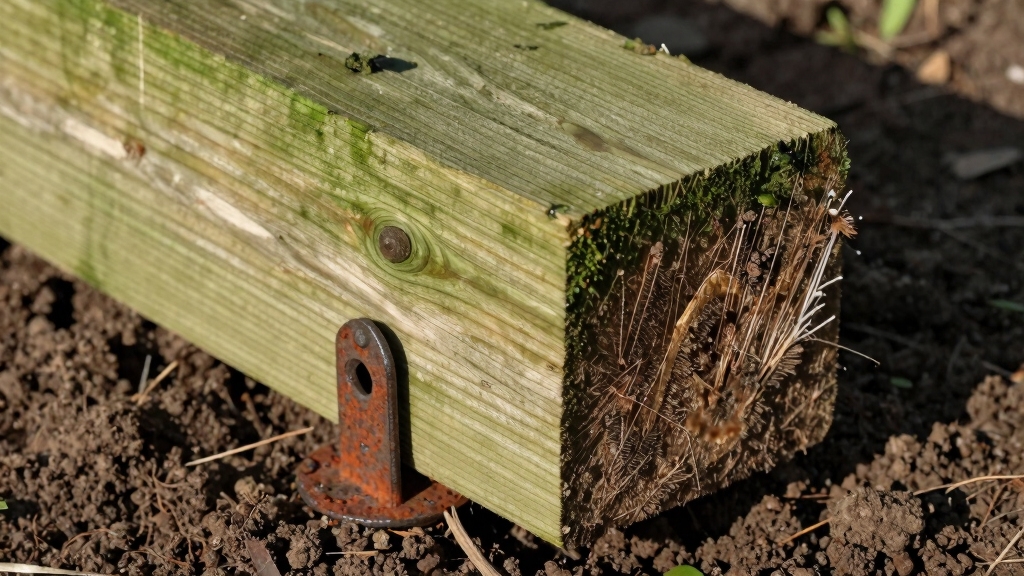
Because wood in ground contact faces constant exposure to moisture, soil organisms, and fluctuating conditions, it needs special treatment to prevent rapid decay.
When wood touches soil, it absorbs moisture, which encourages fungal growth and attracts insects like termites.
Wood in contact with soil absorbs moisture, promoting fungi and attracting wood-damaging insects like termites.
These factors quickly break down untreated wood, reducing its strength and lifespan.
You can’t rely on natural resistance for most species; untreated wood typically lasts only a few years underground.
Additionally, temperature and humidity changes cause the wood to swell and shrink, creating cracks that let moisture and organisms inside.
Without proper protection, structural components like fence posts or piers will fail prematurely.
Understanding these risks helps you appreciate why ground contact wood demands more durability, ensuring safety and reducing costly replacements.
Using materials with pressure-treated lumber or specialized coatings can significantly extend the lifespan of wood in ground contact.
How Pressure Treatment Protects Wood in Soil?
Pressure treatment prolongs the life of wood used in soil by forcing preservatives deep into its cellular structure.
When you put wood in a sealed autoclave, a vacuum removes air and moisture from the cells. This allows preservatives to penetrate both the cell walls and lumens thoroughly.
This process creates a chemical barrier that resists decay, fungi, and insect damage. You’ll find that treated wood can last 20 to 25 years even in damp soil conditions.
The high retention level of preservatives in ground-contact wood guarantees protection against constant moisture exposure and biological threats.
Proper drying and sealing of the wood before use are important to ensure long-lasting protection and reduce the risk of peeling or decay.
Preparing Wood for Treatment: Debarking, Moisture, and Incising
Preparing wood properly before treatment guarantees the preservatives penetrate deeply and effectively.
First, remove bark using ring debarkers or rosserheads to expose the wood, allowing chemicals to reach the surface better.
Begin by removing bark with ring debarkers or rosserheads to ensure better chemical absorption.
Next, check moisture content; wood must be neither too wet nor too dry to absorb preservatives properly. Ideally, moisture should be balanced for efficient treatment.
Finally, incising helps by pressing sharp steel teeth into the wood’s sides. This process creates tiny channels, improving chemical penetration, especially in dense or resistant species like Douglas fir over two inches thick.
Skipping these steps can reduce preservative retention and compromise wood protection.
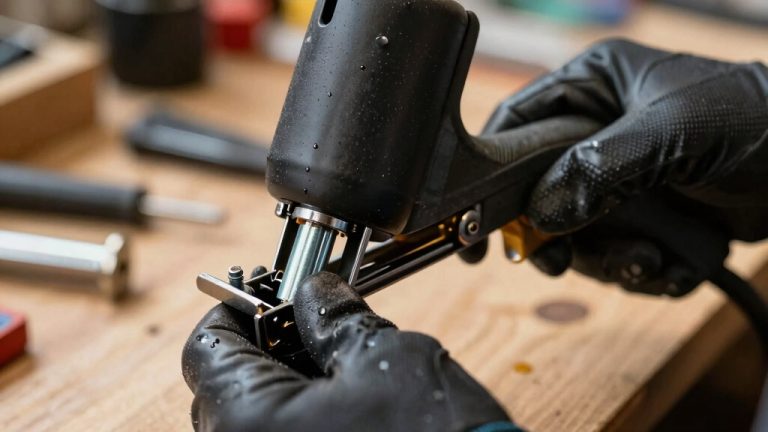
For optimal results, consider using tools with low vibration technology to reduce operator fatigue during the preparation process.
Choosing the Right Preservative Chemicals for Ground Contact
When you’re picking preservatives for wood that’s in contact with the ground, copper-based treatments are a solid choice. They provide strong protection and tend to last a long time, which is definitely a plus.
Now, borate treatments can be effective against decay and termites, but here’s the catch: they’re not the best option if the wood stays wet all the time. So, keep that in mind when you’re considering your options.
Also, you might come across isothiazolones. These are often used to boost the effectiveness of pressure-treated wood, especially in tough conditions. They can really help enhance the durability of your wood in challenging environments.
For wood finishes that come into contact with food surfaces, using fully cured tung oil ensures safety due to its durable, water-resistant, and chemically inert film.
Copper-Based Preservatives Benefits
Many wood projects that involve ground contact benefit greatly from using copper-based preservatives due to their proven durability and protection.
Copper compounds, like copper naphthenate, penetrate wood fibers effectively, creating a strong barrier against fungi, decay, and insects.
You’ll find these preservatives especially useful for posts, fences, and docks exposed to moisture and soil.
Their oil-based nature helps them resist leaching and maintain protection longer than some alternatives.
When pressure-treated with copper preservatives, wood meets ground-contact standards, ensuring up to 20-25 years of service life in harsh conditions.
Plus, they’re compatible with various application methods—brush, spray, or pressure treatment—making them versatile for your project’s needs.
Using copper-based preservatives is a practical choice to extend wood longevity and reduce maintenance. For enhanced protection, applying a sealer or varnish after treatment can lock in preservatives and further guard against moisture and wear.
Borate Treatment Limitations
Although borate treatments penetrate wood deeply and target decay organisms effectively, they come with important limitations you should consider before choosing them for ground contact applications.
Borates are water-soluble, so they can leach out when wood is exposed to constant moisture or direct soil contact. This reduces their long-term effectiveness in ground-contact situations where wet conditions prevail.
You’ll also find borates don’t provide much protection against insect attack unless combined with other chemicals.
Because of this, borate-treated wood often requires an additional exterior barrier or coating to keep moisture away and maintain preservative retention.
For reliable, long-lasting ground contact use, borate treatments alone aren’t your best choice.
Instead, weigh your site conditions carefully and consider preservatives designed specifically for continuous exposure to soil and water.
When working with wood in wet or rainy environments, it is important to ensure proper protection as moisture can lead to tool malfunction and user injury if combined with inadequate safety measures.
Isothiazolones Role Explained
Since selecting the right preservative chemical directly impacts wood durability in ground contact, understanding isothiazolones is essential.
Isothiazolones, including MIT and CMIT, serve as effective biocides in pressure-treated wood, targeting fungi and bacteria that cause decay.
They work by disrupting microbial cell functions, preventing rot and extending wood life in moist soil conditions.
When combined with copper-based preservatives, isothiazolones enhance overall protection without compromising wood strength.
You’ll find them especially useful in full-cell pressure treatments, where chemical penetration is critical.
Keep in mind, isothiazolones resist leaching better than some alternatives, but they still require proper application and retention levels to guarantee long-term performance.
Using isothiazolones correctly helps you maintain wood integrity, making them a valuable choice for ground-contact preservation.
For optimal safety and longevity, it is important to maintain proper ventilation and dust control when working with treated wood in enclosed spaces.
The Pressure Treatment Process for Ground Contact Wood
You guarantee wood lasts in ground contact by subjecting it to a rigorous pressure treatment process that drives preservatives deep into its structure.
First, the wood is placed inside a sealed autoclave where a vacuum removes air and moisture from the wood’s lumens.
Wood is sealed in an autoclave where a vacuum extracts air and moisture from its lumens.
Then, under high pressure, preservative chemicals like copper-based solutions are forced into the wood cells, filling both the cell walls and lumens in the full-cell method.
This thorough infusion extends the wood’s service life to 20-25 years in moist environments.
Before treatment, wood moisture content is checked, and species like Douglas fir are incised to improve preservative uptake.
After injection, excess chemicals drain out, leaving the wood well protected for ground contact use.
To ensure safety during handling and cutting of treated wood, it is important to wear protective gear to minimize exposure to dust and chemicals.
Ground Contact Applications: Posts, Poles, and More
When you’re picking wood for ground contact, it’s really important to understand the treatment levels. This helps you match the durability to what your project actually needs.
For things like posts, poles, and other common uses, you’ll want higher preservative retention. This is crucial since they’ve to deal with soil moisture and decay.
Also, think about giving your posts a little extra love to make them last longer. Applying protection to cut ends is a smart move, and don’t forget about using proper installation techniques. They can really make a difference!
Using materials with waterproof adhesives and proper sealing can significantly improve moisture resistance and extend the life of your wood in ground contact applications.
Treatment Levels Explained
Although pressure treatment extends wood’s lifespan, different ground contact applications demand specific treatment levels to guarantee durability. For example, posts and poles buried in the ground require higher chemical retention than above-ground lumber to resist decay and insect damage.
Ground-contact wood typically has twice the preservative retention compared to above-ground types. Utility poles, fence posts, and bridge timbers receive full-cell, high-retention treatment to ascertain long-term performance in wet soil conditions. The treatment penetrates deeply, often enhanced by incising, which creates tiny grooves for better preservative absorption.
Knowing the correct retention level helps you select wood that withstands harsh environments without premature failure. Always match the wood’s treatment level to your project’s exposure to moisture and soil to maximize protection and service life.
Common Wood Applications
Posts, poles, and similar wood components face constant exposure to moisture and soil, demanding robust treatment to prevent decay.
You’ll find these wood pieces in fence posts, utility poles, bridge timbers, and piers. All require high-retention, full-cell pressure treatment to withstand harsh ground contact conditions.
Ground-contact lumber holds twice the preservative compared to above-ground types, ensuring longer service life. Southern yellow pine posts, for example, last 5-10 years underground without extra protection.
Copper naphthenate and other oil-based preservatives provide durable defense against fungi and insects. When selecting wood for these applications, focus on pressure-treated options designed specifically for ground contact.
This reduces rot risk and maintains structural integrity. Your investment lasts longer and performs safely in demanding environments.
For enhanced protection, consider applying solid color stains that offer waterproof finishes and UV resistance to further guard wood surfaces exposed to outdoor elements.
Enhancing Post Durability
In challenging ground-contact conditions, you can markedly extend the life of wood posts and poles by selecting the right pressure treatment and applying additional protective measures.
Choose full-cell, high-retention treatments like copper naphthenate or oil-based preservatives to guarantee deep chemical penetration.
Before installation, treat cut or drilled surfaces promptly to maintain protection. Incising the wood before treatment enhances preservative absorption, especially for dense species like Douglas fir.
After setting posts, apply a bitumen-based coating around the ground-contact area to create a moisture barrier.
To reduce water pooling, place gravel at the bottom of the post hole and consider plastic post protectors or barriers to separate wood from soil fungi.
These steps help prevent decay, insect damage, and extend service life well beyond standard expectations.
DIY Protection Tips for Ground Contact Wood Posts
Often, taking a few simple steps before and after installing your wood posts can substantially extend their lifespan in ground contact.
Start by applying a deep-penetrating preservative to the lower portion of each post before setting it in the ground.
This extra barrier boosts protection against moisture and decay.
Once installed, coat the buried area with a bitumen-based product to create a thick, moisture-resistant layer.
To further reduce rot risk, add gravel at the bottom of the hole for drainage, keeping water away from the wood.
Avoid leaving untreated cuts or drilled surfaces exposed; treat them promptly to maintain full protection.
These straightforward actions help you safeguard your wood posts effectively, ensuring they last longer and stay structurally sound under harsh ground contact conditions.
Protecting Cut and Drilled Surfaces on Treated Wood
When you cut or drill into treated wood, it’s really important to apply preservative right away to any exposed surfaces. This helps keep the wood protected by stopping moisture from getting in and causing decay in those areas where the treatment has been compromised.
If you notice significant damage, don’t worry! You can repair it with the right coatings to get that durability back. It’s all about keeping your wood in great shape for the long haul!
Immediate Preservative Application
Apply preservative immediately to any cut or drilled surfaces on pressure-treated wood to maintain its protective barrier.
When you cut or drill into treated wood, you expose untreated fibers vulnerable to moisture and decay.
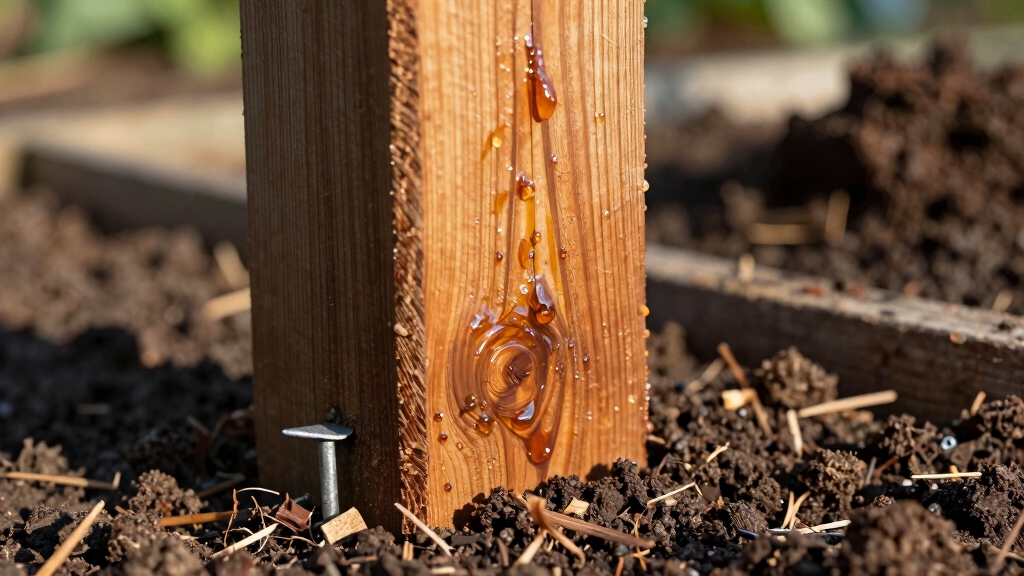
Use a brush-on copper naphthenate or similar preservative designed for ground contact. Coat all fresh cuts thoroughly, covering edges and end grains.
Don’t wait; treat the wood before installation or as soon as possible after cutting. This stops decay organisms and insects from invading exposed areas.
For drilled holesed fill the cavity with preservative to seal internal surfaces. Be sure to follow product instructions for drying times and reapplication if needed.
Immediate preservative application keeps the wood’s durability intact, extending the lifespan of your ground-contact project.
Preventing Moisture Ingress
Since cut and drilled surfaces break the wood’s protective barrier, you need to seal them promptly to prevent moisture from seeping in.
Moisture entering these exposed areas accelerates decay and compromises the treatment’s effectiveness. To protect these vulnerable spots, follow these steps:
- Apply a brush-on preservative immediately to all cut or drilled surfaces, ensuring full coverage.
- Use bitumen-based or oil-based coatings to create a thick, water-resistant layer that repels moisture.
- Reapply preservatives periodically, especially after heavy rain or seasonal changes, to maintain protection.
Repairing Treatment Damage
Sealing cut and drilled surfaces promptly helps prevent moisture ingress. However, these areas still remain vulnerable after treatment.
You should apply a suitable preservative immediately to any exposed wood to maintain protection. Brush-on copper naphthenate or a borate-based treatment works well. Avoid delays, as untreated spots can absorb moisture and invite decay.
Use this quick guide to protect damaged surfaces:
| Action | Reason |
|---|---|
| Apply preservative soon | Prevents moisture absorption |
| Use compatible chemicals | Guarantees treatment effectiveness |
| Recoat large cuts | Maintains chemical retention |
| Avoid sanding treated wood | Preserves existing protection |
Following these steps helps extend the wood’s life, especially where ground contact increases exposure risks.
Barrier and Coating Solutions for Ground Contact Wood
When protecting wood in ground contact, using effective barrier and coating solutions can markedly extend its lifespan by blocking moisture and fungal intrusion.
To maximize durability, you should:
- Apply bitumen-based coatings to create a thick, moisture-resistant layer. Focus especially on the portion of posts buried underground to reduce water absorption.
- Use plastic post protectors or polyethylene sheets to physically separate wood from soil. This prevents fungi and insects from reaching the wood surface.
- Immediately treat any cut or drilled surfaces with a preservative. This maintains the wood’s chemical protection and prevents decay initiation points.
Combine these approaches for best results, ensuring wood stays dry and chemically protected where it meets the soil. These barriers complement pressure treatment, enhancing wood’s service life in challenging ground contact conditions.
Site Preparation Tips to Extend Wood Life in Ground Contact
Before installing wood in ground contact, preparing the site properly can greatly reduce moisture exposure and prolong the wood’s lifespan.
Start by grading the area to ensure water drains away from the wood, preventing pooling around posts or beams.
Begin by grading the site to direct water away, avoiding pooling near wood posts or beams.
Place a layer of gravel at the bottom of post holes to improve drainage and reduce soil moisture contact.
You can also use plastic post protectors or bitumen-based coatings to create a moisture barrier between the wood and soil.
Avoid direct soil contact when possible by setting wood on concrete blocks or footings.
Finally, keep the surrounding area clear of vegetation and debris that trap moisture.
These steps help minimize rot and extend the service life of your ground-contact wood installations effectively.
Frequently Asked Questions
How Can I Safely Dispose of Old Pressure-Treated Wood?
You should never burn old pressure-treated wood because it releases toxic chemicals. Instead, contact your local waste facility about hazardous waste disposal options.
Many areas have special collection days or designated drop-off sites for treated wood. If disposal services aren’t available, you can cut the wood into manageable pieces and wrap it in heavy plastic to prevent chemical leaching.
Then dispose of it according to local regulations to protect people and the environment.
Are There Environmental Concerns With Chemicals Used in Wood Treatment?
Yes, you should be aware that chemicals like copper naphthenate and borates can impact the environment if they leach into soil or water.
These preservatives protect wood but may harm nearby plants and aquatic life.
To minimize risks, handle treated wood carefully, avoid burning it, and dispose of it properly through designated facilities.
Taking these steps helps protect the environment while benefiting from wood’s extended durability.
Can Treated Wood Be Painted or Stained After Installation?
Think of treated wood as a shielded warrior.
You can paint or stain it after installation, but you need to wait until the wood is dry and free of surface residue.
If you apply paint or stain too soon, it won’t adhere properly.
Clean the surface, then use a quality exterior paint or stain formulated for pressure-treated wood.
This helps preserve the wood’s appearance and adds an extra layer of protection against moisture and UV damage.
What Is the Best Way to Handle Treated Wood Dust or Sawdust?
You should handle treated wood dust carefully by wearing a dust mask and gloves to avoid skin contact and inhalation.
Always work in a well-ventilated area or outdoors.
Clean up sawdust promptly using a vacuum with a HEPA filter or damp cloth to minimize airborne particles.
Avoid burning treated wood or sawdust, as it releases harmful chemicals.
Dispose of scraps and dust according to local regulations to keep yourself and the environment safe.
How Do Treatment Standards Vary by Country or Region?
Treatment standards vary by region due to local climate, pest risks, and regulations.
In the US, you’ll find specific retention levels for ground contact wood under AWPA standards.
Europe uses EN standards focusing on chemical types and environmental impact.
Australia emphasizes termite resistance with strict guidelines.
When working internationally, you need to check local codes to confirm the preservative type and retention rates meet regional requirements for durability and safety.
Fortify Your Posts: Smart Treatment for Maximum Durability
Treating wood for ground contact is like building a fortress for your posts. Each step, from pressure treatment to sealing cut surfaces, acts as a strong wall against moisture and decay.
Neglecting any part leaves gaps for damage to creep in. By choosing the right preservatives, preparing your wood properly, and applying protective coatings, you’re ensuring your wooden fortress stands tall and durable, no matter what the soil throws at it.