How to Load a Nail Gun: Quick Setup Tips for DIYers
Before loading your nail gun, always disconnect its power source and wear protective eyewear. Open the magazine by pressing the release button and slide it open, inspecting for jams or debris.
Insert correctly sized nails with heads facing the nose, then close and securely lock the magazine. Reconnect power only after confirming the magazine is fully engaged.
Finally, test fire into scrap wood to make certain of proper function. Following these steps will help you avoid common issues and optimize performance.
Key Takeaways
- Disconnect the nail gun from power or remove the battery before opening the magazine to ensure safety.
- Press the magazine release button and slide or pull back the magazine to expose the loading channel.
- Inspect the magazine for debris or stuck nails before placing the nail strip with heads facing the gun’s nose.
- Slide the nail strip fully into the magazine, then engage the spring pusher to apply consistent pressure.
- Push the magazine firmly until it clicks and tug gently to confirm it is securely locked before reconnecting power.
Safety Tips Before Loading Your Nail Gun

Before you start loading your nail gun, make sure you disconnect it from any power source like an air compressor or battery pack to prevent accidental firing.
Always wear protective eyewear to shield your eyes from flying debris.
Check the manufacturer’s guidelines to confirm you’re using the correct nail size and type, which helps avoid jams and damage.
Inspect the safety tip to assure it’s working properly. It must prevent nails from firing unless pressed firmly against your work surface.
Once you load the nails, test fire into scrap wood to verify everything functions smoothly.
Taking these precautions keeps you safe and prevents costly mistakes during operation.
Don’t rush; focus on safety first every time you handle your nail gun.
Additionally, understanding your nail gun’s tool-free jam clearing feature can save time and avoid damage if a nail gets stuck.
How to Identify Key Nail Gun Components?
First off, let’s find the nail magazine. This is usually located on the bottom or side of your nail gun, and it’s where you’ll load your nails. Super important to know!
Next up, we’ve the safety tip. This little feature is crucial because it prevents accidental firing—so you’ll need to press it firmly against your work surface before you can shoot any nails. Safety first, right?
Finally, get to know the trigger and any control dials. Familiarizing yourself with these components will help ensure you can operate the gun safely and effectively. Happy nailing!
Additionally, understanding the depth adjustment mechanisms can help you control how deeply the nails are driven for a precise finish.
Nail Magazine Location
A key step in loading your nail gun is locating the nail magazine, which is usually found at the bottom or side of the tool.
This is the component that holds the nails and feeds them into the firing chamber. Look for a long, narrow slot or compartment designed to fit nail strips.
You’ll often see a release button or latch nearby, which opens the magazine for loading. Inside, you’ll find a spring pusher that pushes the nails forward as you use them.
Identifying the magazine correctly helps prevent jams and guarantees smooth operation.
Before loading, make sure you can access this area easily and understand how the magazine opens and closes.
This knowledge sets you up for a safe and effective nail gun loading process. For enhanced precision and efficiency, consider tools with adjustable guides that streamline your workflow.
Safety Tip Function
Although it might seem small, the safety tip plays a vital role in preventing accidental nail discharge. You’ll find it located near the nose of the nail gun, where it must be pressed firmly against the work surface before the gun will fire.
This mechanism ensures nails don’t shoot out unless the gun is properly positioned, reducing the risk of injury. When identifying the safety tip, look for a spring-loaded part that retracts under pressure.
It’s essential that this component moves freely and isn’t damaged or obstructed. Before you load nails, inspect the safety tip to confirm it functions as intended.
Many professional-grade nailers also incorporate dual activation safety designs to prevent unintended firing and enhance user protection.
Trigger and Controls
Once you’ve checked the safety tip for proper function, it’s important to familiarize yourself with the trigger and other controls.
The trigger is your main control for firing nails. Squeeze it only when the safety tip is pressed firmly against the work surface.
Locate the trigger switch just behind the handle for easy access. Identify the drive depth adjustment dial, usually near the trigger or on the side, to control how deep the nail drives into the material.
Also, find the magazine release latch to open and load nails safely. On pneumatic models, check the air pressure dial to match the nail size and material.
Knowing these controls guarantees safe, efficient operation and helps prevent accidental discharge or jams during use. For enhanced safety, look for models equipped with contact safety pins to reduce accidental firing.
Preparing the Magazine for Nail Loading
Alright, let’s get started with loading the magazine.
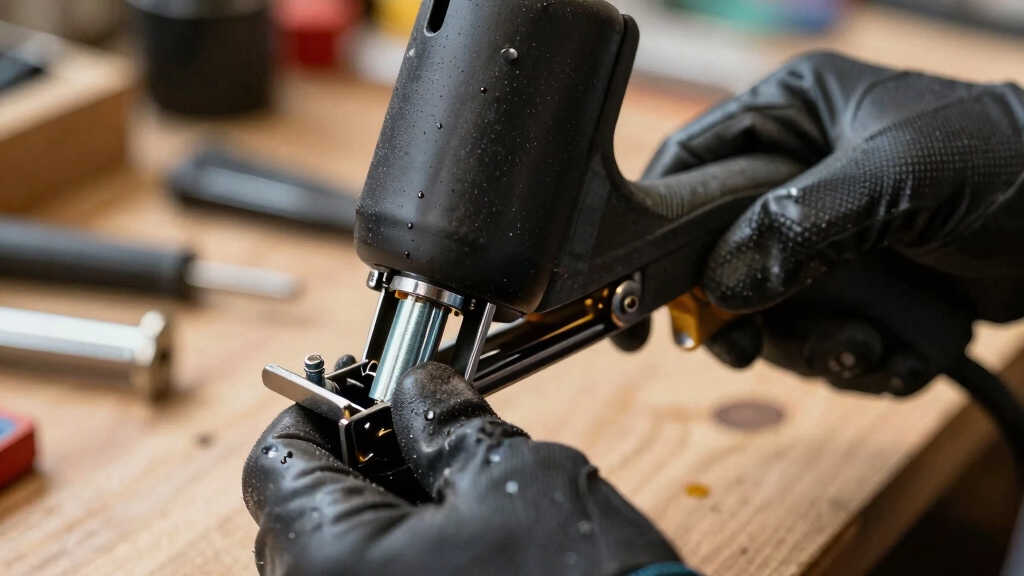
First things first, press that magazine release button and slide the magazine open all the way to reach the loading area.
Take a quick look inside while you’re at it. You want to check for any stuck nails or jams that might give you trouble later on.
Clearing any jams before you load up will help ensure everything feeds smoothly and keeps those misfires at bay.
Also, always make sure to work on a stable surface to prevent accidents and maintain control while loading.
Opening The Magazine
To open the magazine for loading, press the release button and slide the magazine open or down until it locks in place. This exposes the area where you’ll insert the nails.
Before you proceed, make sure the nail gun is disconnected from its power source to prevent accidental firing.
Pull the magazine fully back to access the loading channel clearly. If your model is cordless, remove the battery now.
Take a quick look inside for any debris or obstructions, but don’t worry about jams here—that’s for the next step.
Opening the magazine properly guarantees smooth nail feeding and prevents damage.
Keep your movements deliberate and avoid forcing the magazine if it feels stuck. Check for manufacturer instructions if needed.
Now you’re ready to load nails safely and effectively.
For best results, proper preparation and maintenance ensure reliable operation, similar to how surface preparation is essential in wood finishing for optimal absorption and performance.
Inspecting For Nail Jams
Before loading nails, you should inspect the magazine for any jams that could cause feeding issues.
Disconnect the power source and open the magazine fully. Look for bent or stuck nails and clear debris or dirt inside the chamber.
Use the jam release latch if your nail gun has one to free any nails caught in the track. Make certain the spring pusher moves smoothly without obstruction, as it feeds nails forward.
A clean, jam-free magazine prevents misfires and damage.
Proper maintenance and regular inspection of components, such as the spring pusher, ensure reliable feeding mechanisms and safe operation.
| Inspection Point | What to Check |
|---|---|
| Magazine Track | Clear of bent or stuck nails |
| Jam Release Latch | Functions properly |
| Spring Pusher | Moves smoothly without blockage |
| Debris/Dirt Inside | No buildup affecting movement |
Regular inspection keeps your nail gun reliable and safe.
Choosing the Right Nails for Your Nail Gun
Select nails that match your nail gun’s specifications to guarantee smooth operation and avoid jams.
Check the manufacturer’s guidelines for the right size, length, and gauge. Using nails that don’t fit can cause misfires or damage your tool.
Choose nails with heads facing the gun’s nose or trigger, ensuring they align level with the nozzle. This prevents upside-down loading and feeding issues.
Avoid mixing nail types or strip styles, as inconsistencies lead to jams. Confirm nail heads point correctly to maintain straight shooting and reliable performance.
Always buy nails designed for your specific nail gun model. Following these steps keeps your nail gun running efficiently and extends its lifespan.
Using the right nails is essential before you proceed to load them.
Adjust Nail Gun Drive Depth and Air Pressure
Fine-tune your nail gun’s drive depth and air pressure to match the material and nail size for peak performance. Adjusting these settings guarantees nails penetrate properly without damaging the surface or jamming the tool.
Optimize your nail gun’s drive depth and air pressure for flawless fastening without damage or jams.
Start by setting the drive depth dial. Set it deeper for hard materials and shallower for softer ones.
Next, regulate air pressure on pneumatic models to deliver enough force without overdriving nails.
Keep these tips in mind:
- Increase drive depth for thick wood; decrease for delicate materials.
- Set air pressure according to nail length and gauge.
- Use manufacturer recommendations as a baseline.
- Test settings on scrap wood before starting your project.
- Adjust incrementally to avoid over- or under-driving nails.
This balance gives you clean, secure fastening every time. Always ensure your tool is in good condition and check safety features like the work clamp before use.
Load Nails Correctly
Load the nails carefully to ensure smooth operation and avoid jams. Start by aligning the nail strip so the heads face the nail gun’s nose or trigger, ensuring proper orientation.
Slide the strip into the magazine until it stops firmly. Push down on the nails to set them flat and aligned. Next, lift the spring pusher above the nails and release it to apply pressure, keeping nails tight against the magazine.
If loading multiple strips, repeat this process sequentially until the magazine is full. Double-check that all nails sit evenly and firmly in place, avoiding any misalignment or gaps.
This precise loading prevents nail jams and guarantees consistent firing during use, saving you time and frustration on the job. Always inspect your tool and maintain it regularly to ensure optimal operation and safety.
Secure the Magazine After Loading Nails
Push the magazine forward firmly until it clicks into place, guaranteeing it’s securely locked. This step is critical to avoid nail misfeeds or jams during operation.
After securing the magazine, perform these quick checks:
- Tug gently on the magazine to confirm it won’t slide open.
- Inspect alignment to guarantee nails sit evenly in the track.
- Verify the spring pusher applies consistent pressure against the nails.
- Check for any visible gaps between the magazine and gun body.
- Make sure the release latch fully engages without obstruction.
Reconnect Power Safely
Sure! Here’s a more conversational version of the text:
—
Hey there! Before you reconnect the power, let’s make sure everything is good to go. First, double-check that the magazine is securely closed and locked in place.
You don’t want any surprises, right?
Once you’re confident that the nails are seated properly and the magazine won’t pop open unexpectedly, go ahead and reconnect the air hose or battery pack.
Taking these steps ensures that your nail gun is all set for safe and effective use. Happy nailing!
Verify Magazine Closure
After loading the nails, make sure you close the magazine firmly by pushing it forward until you hear a secure click. This guarantees the nails stay in place and feed correctly during use. Don’t rush this step; an improperly closed magazine can cause jams or misfires.
Once closed, check the following:
- Tug gently on the magazine to confirm it’s locked.
- Inspect for any gaps between the magazine and nail gun body.
- Make sure nails are still aligned and not pinched.
- Verify the spring pusher applies consistent pressure on the nails.
- Assure the magazine release button or latch is fully engaged.
Taking these steps guarantees your nail gun operates safely and efficiently before you reconnect power.
Restore Power Connection
Reconnect your nail gun to its power source only once you’re certain the magazine is securely closed and all safety checks are complete.
For pneumatic models, attach the air hose firmly to avoid leaks. If you use a cordless nail gun, reinstall the battery pack fully until it clicks into place.
Double-check connections to prevent accidental disconnections during use. Keep your fingers clear of the trigger and safety tip while restoring power.
After reconnecting, handle the nail gun cautiously, as it’s now ready to fire. Before starting your project, test fire into a scrap piece of wood to confirm proper operation.
If the nail gun doesn’t function correctly, disconnect power again and troubleshoot. Always prioritize safety during this step to avoid unintended firing or injury.
Test Fire Your Nail Gun After Loading
Point your nail gun at a scrap piece of wood and press the safety tip firmly against the surface. This guarantees the gun is ready to fire safely.
Then, squeeze the trigger to test fire and confirm nails feed and shoot correctly. If the nail gun fires smoothly, you’re set to proceed. If not, avoid forcing it.
Here’s a quick checklist for test firing:
- Confirm safety tip engages to prevent accidental shots.
- Check nails eject straight without bending or jamming.
- Listen for unusual sounds signaling internal issues.
- Observe nail depth for proper penetration.
- Guarantee the magazine stays securely locked during firing.
Test firing helps prevent mishaps and guarantees your nail gun operates efficiently before real use.
Troubleshooting Common Nail Gun Loading Problems
If your nail gun won’t load properly, don’t panic. Most issues have straightforward fixes.
First, make sure you disconnected the power source before loading. Check that you’re using the correct nail size and type; wrong nails cause jams or misfeeds.
Inspect the magazine for stuck nails or debris and clear jams using the release latch. Make certain the nail strip is aligned correctly, with heads facing the proper direction.
If the spring pusher isn’t applying enough pressure, lift it and release firmly. Also, confirm the magazine is fully closed and locked.
If problems persist, double-check the safety tip isn’t engaged improperly, blocking nail release. Address these points step-by-step, and you’ll usually get your nail gun loading smoothly again in no time.
Frequently Asked Questions
Can I Use Different Nail Types With the Same Nail Gun Model?
You can use different nail types with the same nail gun model only if they match the manufacturer’s specifications for size, length, and gauge.
Using the wrong nails can cause jams, misfires, or damage.
Always check your nail gun’s guidelines before switching nail types.
Make certain the heads fit properly and the nails align correctly in the magazine to guarantee smooth operation and avoid costly repairs.
How Often Should I Clean My Nail Gun Magazine?
You should clean your nail gun magazine after every few uses or whenever you notice feeding issues or jams.
Regular cleaning prevents dirt, dust, and debris buildup that can cause misfires or damage.
Always disconnect the power source before cleaning.
Use a dry cloth or compressed air to clear the magazine and check for stuck nails.
Staying on top of this maintenance keeps your nail gun reliable and extends its lifespan.
What Is the Best Way to Store Unused Nails?
You don’t want your nails throwing a wild party in a damp, dusty corner, right?
Keep unused nails in their original packaging or airtight containers to avoid rust and bending.
Store them in a cool, dry place, away from moisture and direct sunlight.
Label each container clearly by size and type, so you won’t waste time digging through a chaotic mess when you need them.
Simple, practical, and frustration-free.
Can a Nail Gun Be Used Without a Safety Tip?
No, you shouldn’t use a nail gun without a safety tip. The safety tip prevents accidental nail release and protects you from injury.
Without it, the nail gun can fire unexpectedly, increasing the risk of serious harm. Always make sure the safety tip is intact and functioning properly before use.
If it’s damaged or missing, replace it immediately to maintain safe operation and avoid accidents on the job.
How Do Temperature Changes Affect Nail Gun Performance?
Temperature changes affect your nail gun by impacting air pressure and battery efficiency.
In cold weather, air compressors produce less pressure, causing weaker nail driving.
Batteries drain faster, reducing power.
In hot conditions, overheating can cause jams or malfunctions.
You should adjust air pressure settings and keep batteries warm or cool as needed.
Regularly test fire to guarantee consistent performance despite temperature shifts.
The Final Step to Flawless Nail Gun Performance
Loading your nail gun correctly is like tuning a fine instrument. It guarantees smooth, precise performance every time.
By following safety tips, choosing the right nails, and properly securing the magazine, you’ll avoid jams and mishaps.
Don’t forget to adjust drive depth and test fire before work. With these steps, your nail gun will work reliably, keeping your projects on track and yourself safe. Stay sharp and handle your tool with care.