Can You Put Tung Oil Over Stain? A Complete Finish Guide
You can apply tung oil over stain only if the stain is fully dry and properly cured, typically waiting 24–72 hours or longer depending on the stain type. Applying tung oil too soon traps moisture, causing bubbling, cloudiness, or tackiness.
Make certain the surface is clean and smooth, and test a small area first to check for color and adhesion issues. Proper preparation and timing help you achieve a durable, even finish. Explore the best methods to optimize your wood’s protection and appearance.
Key Takeaways
- Tung oil can be applied over stain only if the stain is fully cured and dry to prevent adhesion and drying issues.
- Applying tung oil too soon traps moisture, causing cloudiness, bubbling, tackiness, and uneven finish.
- Test on a small area first to check for color changes, sheen alteration, and absorption differences.
- Multiple thin coats of tung oil with proper drying time (3–7 days) ensure better penetration and durable finish.
- Proper surface preparation and extended drying (at least 72 hours after staining) are critical for successful tung oil application.
Understanding Tung Oil and Its Properties

Although tung oil shares similarities with other drying oils, its unique chemical composition sets it apart. Alpha-eleostearic acid makes up 82% of its fatty acid content. This fatty acid features an 18-carbon chain with three conjugated double bonds, which makes tung oil highly sensitive to autoxidation, enabling rapid polymerization.
Tung oil’s high alpha-eleostearic acid content drives rapid polymerization through sensitive autoxidation.
Linoleic acid (8.5%), palmitic acid (5.5%), and oleic acid (4.0%) complete its fatty acid profile.
When exposed to air, tung oil undergoes oxidation, forming irreversible cross-linked polymer bonds that convert it from liquid to a durable, flexible solid. This polymerized film resists moisture effectively without additional sealers. Its density at 25°C is 0.937 g/ml, contributing to its penetration and finish characteristics.
Heat treatment enhances viscosity and film quality, but curing relies primarily on oxidation.
Applied in thin coats, tung oil consolidates wood surfaces, producing a transparent, matte finish that highlights wood grain while maintaining flexibility and resistance to alkali and marring.
How Oil-Based Stains Interact With Tung Oil?
When you apply tung oil over an oil-based stain, the stain’s binder layer can substantially limit the oil’s ability to penetrate the wood fibers. This often results in reduced absorption and a less effective finish.
The binder forms a film that hinders tung oil from bonding deeply, which may cause uneven absorption and a blotchy appearance. While tung oil can enhance color richness and water resistance on stained surfaces, it might alter the stain’s matte texture and sheen.
It is important to test stain on a sample before applying tung oil to the entire project to avoid unexpected results. Additionally, ensuring that the surface is clean and free of debris improves the oil’s ability to interact effectively with the wood.
To integrate color and finish, mixing tung oil with small amounts of oil-based stain or solvents helps maintain tung oil’s properties while applying a tinted finish.
Testing on a sample is essential since incompatibility can lead to longer curing times or tacky surfaces, affecting overall finish quality and durability. Proper application techniques, such as applying the oil evenly and avoiding over-saturation, are crucial for achieving an optimal finish and preventing common issues related to surface protection.
Drying and Curing Times for Stain and Tung Oil

When it comes to applying stains and tung oil, there’s a bit of a process you need to follow. First off, make sure that the stains you’ve applied are completely dry. This usually takes anywhere from 1 to 24 hours.
If you jump the gun and apply tung oil too soon, you might run into some adhesion problems down the line. Proper drying also helps avoid trapping moisture, which is a common issue when the surface is not fully prepared.
Now, let’s talk about tung oil. It’s not a quick-drying finish; in fact, it can take anywhere from 2 to 3 weeks to cure properly. This curing time allows the oil to fully polymerize, which is what gives you that durable finish you’re looking for. Because tung oil is best suited for porous surfaces, it penetrates deeply to provide optimal protection.
If you apply the tung oil too soon, you risk trapping moisture and solvents underneath. This can lead to uneven surfaces and, unfortunately, extended drying times. Understanding the importance of drying times is crucial to achieving a smooth, lasting finish.
Stain Drying Duration
Since proper drying and curing of stain are critical before applying tung oil, you need to guarantee the stain has fully dried to the touch and cured within the wood fibers to prevent finish issues. Using tools like a belt sander beforehand can help prepare the wood surface for better stain absorption.
Oil-based stains typically require 12 to 24 hours to dry to the touch, with a conservative full cure time of 24 to 72 hours depending on conditions.
Water-based stains dry faster, within 1 to 6 hours, but still benefit from at least 24 hours of curing to ensure proper setting.
Temperature, humidity, wood species, and stain coats influence drying duration considerably.
Ideal weather conditions like warm, sunny days with low humidity can significantly speed up the drying process.
Avoid applying tung oil while the stain feels tacky or is insufficiently cured, as this causes uneven absorption, bleeding, or poor adhesion.
Always test on a scrap piece and follow manufacturer guidelines to determine ideal stain drying and curing times before proceeding.
Tung Oil Curing Time
Although stain drying and curing establish the base for tung oil application, understanding tung oil’s own drying and curing timeline is essential for achieving a durable finish.
Typically, tung oil reaches surface dryness within 12-24 hours under ideal conditions of 70-80°F and 50% humidity. However, full polymerization requires 2-3 weeks.
This curing phase forms a resilient barrier that far surpasses mere surface dryness. It is important to note that the drying process involves polymerization, which is inherently slow with tung oil.
Applying thin coats ensures proper absorption and curing. Thick layers prolong drying and can trap moisture, causing tackiness. Proper surface preparation and moisture content below 13% are critical to avoid finish issues.
Commercial tung oil products with additives dry faster, often within 24 hours. In contrast, pure tung oil can remain soft for months without accelerators.
Environmental factors like temperature, humidity, and airflow critically influence both drying speed and final hardness.
Therefore, controlling these variables is key for perfect tung oil curing over stained wood. Maintaining ventilation and safety precautions during curing also helps optimize the finish quality.
Impact of Inadequate Drying
When tung oil is applied over stain that hasn’t fully dried, it can compromise the finish’s adhesion and durability.
Wet stain traps moisture and solvents beneath the tung oil, causing cloudiness, bubbling, and a tacky surface that may never fully cure.
You risk color bleeding and uneven appearance because the stain hasn’t set properly.
Water-based stains typically need 24 hours to dry.
Oil-based stains require 48–72 hours.
Gel stains may take longer depending on humidity and temperature.
Applying tung oil too soon leads to peeling, flaking, and reduced protective qualities.
To avoid these issues, verify the stain surface feels dry, uniform, and free of tackiness, with no solvent odor, before proceeding.
Proper drying safeguards the finish’s longevity and aesthetic integrity.
Additionally, it is important to strip to bare wood before applying tung oil, as applying over stained or finished surfaces is not recommended.
Risks of Applying Tung Oil Over Existing Stain
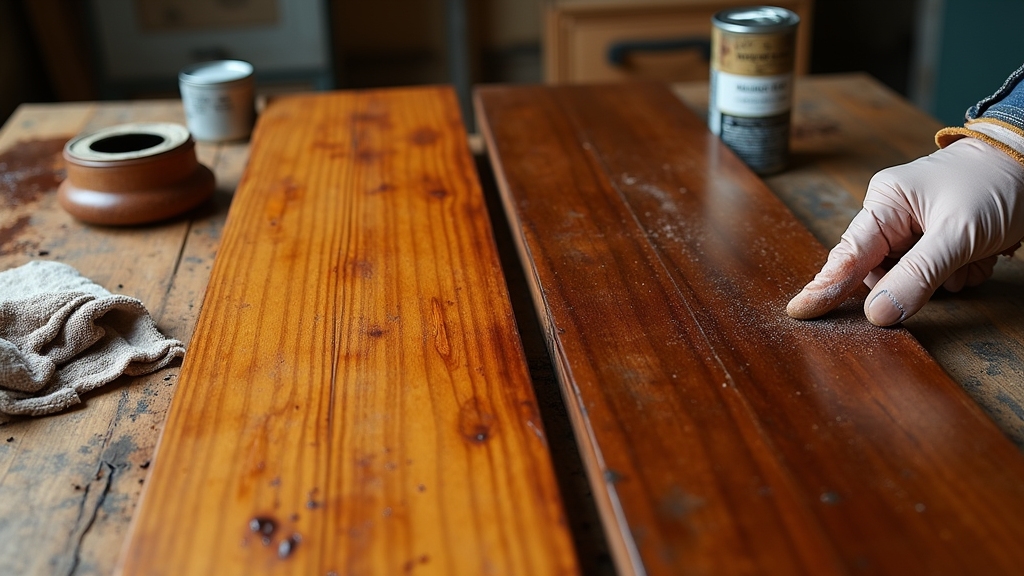
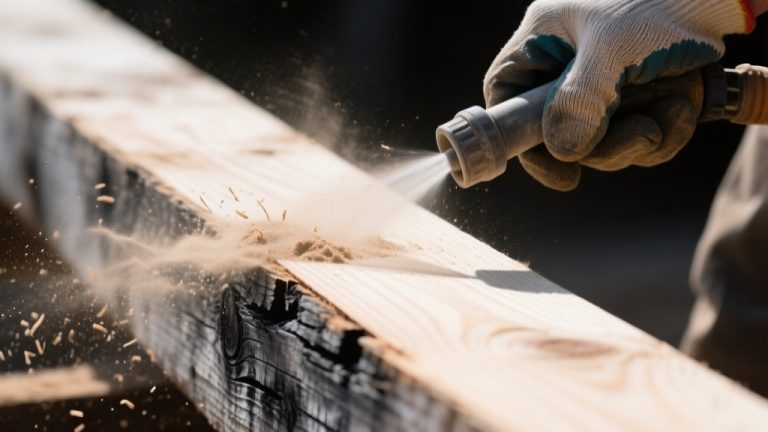
You need to carefully assess compatibility before applying tung oil over an existing stain, as oil-based stains can hinder proper adhesion and reduce durability without a protective topcoat. Many professional woodworkers prioritize dust extraction systems to maintain a clean and safe workspace during finishing.
The stain’s composition influences tung oil’s ability to penetrate and bond effectively, making surface preparation critical to avoid peeling or uneven curing. Proper surface preparation is essential because tung oil highlights the wood grain rather than hiding imperfections.
Additionally, tung oil’s amber tint and sheen may alter the stain’s original color and matte finish, affecting visual consistency.
Applying tung oil over stain also extends drying times due to oxygen-dependent polymerization, potentially complicating project timelines.
Without adequate testing on inconspicuous areas, you risk compromised water resistance and incomplete protection, as untreated stain layers mightn’t form a reliable barrier when coated solely with tung oil.
Recommended Topcoats for Stained Wood
When you’re finishing stained wood, one of the best options out there’s polyurethane. It really boosts the wood’s natural beauty while giving you fantastic durability and clarity.
Plus, it offers strong protection, which is always a bonus! For optimal results, it’s often recommended to thin polyurethane with mineral spirits to achieve a more even, streak-free finish.
Now, if you’re looking for something a bit different, shellac is a great choice too. It acts as a versatile sealer, which is super helpful in preventing any stain bleed-through. It also plays nicely under various topcoats, including lacquer.
Polyurethane Benefits
Although selecting the right topcoat can be challenging, polyurethane stands out for stained wood due to its superior durability, versatility, and aesthetic enhancement.
Its ability to form a tough, water-resistant barrier is comparable to the protection provided by tungsten carbide tips in saw blades, ensuring long-lasting defense against wear and damage.
It forms a tough, water-resistant barrier that defends against scratches and stains, while offering various application methods and finishes to suit your project.
Available in water-based and oil-based formulas, whether you prefer oil- or water-based, polyurethane delivers strong protection and visual appeal.
| Feature | Oil-Based Polyurethane | Water-Based Polyurethane |
|---|---|---|
| Durability | High scratch and water resistance | Good durability, faster drying |
| Aesthetic | Amber tint, warm finish | Clear, natural wood color |
| Application | Brush or spray | Brush, spray, easy cleanup |
| Maintenance | Long-lasting, requires ventilation | Low odor, easy cleaning |
| Environmental Impact | Higher VOC emissions | Low VOC, eco-friendlier |
Shellac and Lacquer
Since shellac and lacquer each offer unique properties, choosing the right topcoat for stained wood depends on your project’s specific needs.
Shellac enhances color depth with a warm amber tone, dries in about an hour, and is easy to apply by brushing or wiping.
Proper maintenance practices, including regular cleaning, can help preserve finishes like shellac for longer periods.
Lacquer dries faster, around 30 minutes, and provides a durable, crystal-clear finish that preserves stain color well. It’s typically sprayed for a smooth coat but demands good ventilation due to strong fumes.
The application of lacquer benefits from coating and lubrication technologies that reduce friction and enhance durability.
Both require thinning before application.
Shellac is non-toxic and environmentally friendly, while lacquer’s solvents are flammable and hazardous.
You’ll want to weigh durability, application method, and safety when selecting between these two topcoats for stained wood.
Alternatives for Color Adjustment on Stained Surfaces
How can you effectively adjust color on stained wood surfaces treated with tung oil? Start by considering oil-based dyes like TransTint or Japan colors, which integrate better with tung oil than conventional stains.
Apply one to two clear tung oil coats first to create an even film that prevents uneven color absorption.
Remember, adding small amounts of oil-based stain (5-10%) to tung oil can subtly alter color without chemical issues.
Always allow a minimum 72-hour drying time on stains before tung oil application to avoid pigment re-dissolution.
- Use oil-soluble dyes for initial color adjustments
- Apply clear tung oil coats before toning
- Limit stain-to-tung oil ratio to 5-10%
- Observe proper drying times (24-72 hours)
- Choose tung oil variants based on desired amber tones
For best results, ensure thorough mixing and test your tinted mixtures on scrap wood to assess color and compatibility before full application, as proper pigment dispersion is crucial for uniform color and finish.
Proper Surface Preparation Before Applying Tung Oil
Before applying tung oil, make certain the wood surface is completely clean, dry, and free of dust or contaminants. Regular checks for surface damage can help ensure the finish adheres properly.Remove all existing finishes, varnishes, wax, or stains completely, typically using solvents like white spirit. Applying pure tung oil over stains or finishes isn’t advisable.
Clean outdoor wood with specialized cleaners such as teak cleaner; use wood-specific cleaners indoors to eliminate grime.
Sand the surface starting with 120-grit, progressing to 220-grit or finer. Polishing to 600-grit enhances oil adhesion and clarity. Using a random orbital sander can speed up this process efficiently.
Planing or scraping can substitute sanding. Avoid sanding once you begin applying tung oil.
Ensure the surface is smooth to maximize penetration and finish quality. Proper preparation guarantees a durable, even, and well-penetrated tung oil finish on bare wood.
Tips for Achieving Durable Finishes Over Stain
When applying tung oil over stained wood, guaranteeing the stain is fully cured and dry is essential to achieve a durable finish without tackiness or blotching.
To maximize protection and longevity, apply multiple thin coats with adequate drying time between each. Use wiping techniques to remove excess oil and prevent uneven surfaces. Proper curing (typically over 30 days) ensures the oil forms a waterproof, inert film that resists moisture and prevents leaching.
Consider mixing tung oil with a thinner to speed drying and improve penetration. Testing a small area beforehand helps anticipate color shifts and sheen changes. Pure tung oil is eco-friendly and provides a natural matte finish that enhances the wood’s appearance.
- Verify stain dryness before application
- Apply thin, even coats of tung oil
- Allow 3–7 days drying between coats
- Wipe off excess oil after each coat
- Test on inconspicuous wood sections for color and sheen effects
These steps ensure a resilient, moisture-resistant finish that highlights wood grain and maintains aesthetic integrity.
Common Mistakes When Combining Tung Oil and Stain
Although tung oil enhances wood’s natural beauty, combining it improperly with stains often leads to adhesion failures, blotching, and uneven coloration.
You must apply stains before tung oil since tung oil seals the wood, preventing proper stain absorption. Avoid applying tung oil too thickly or before the stain fully cures to prevent sticky surfaces and white haze. It is also important to allow tung oil to cure fully for several days to weeks before applying any topcoats or additional finishes to ensure proper adhesion and durability of the finish proper curing time.
Also, never apply water-based stains over tung oil due to chemical incompatibility.
| Mistake | Cause | Result |
|---|---|---|
| Applying tung oil first | Tung oil seals wood surface | Stain won’t penetrate |
| Thick tung oil coats | Impedes curing | Sticky finish |
| Insufficient curing time | Rushing application | Blotches and peeling |
| Using water-based stains | Chemical incompatibility | Adhesion failure |
Follow proper sequence and curing times for ideal finish integrity.
Frequently Asked Questions
Can Tung Oil Be Mixed With Stain Before Application?
Yes, you can mix small amounts of oil-based stain with pure tung oil to slightly alter color without causing major issues.
Keep stain pigment low, as heavy concentrations introduce varnish binders that hinder absorption and affect finish quality.
Always test mixtures on sample wood to ensure compatibility and desired color intensity.
Adjust pigment-to-solvent ratios carefully to control darkness, preventing uneven finishes or chemical conflicts in your project.
Does Tung Oil Change the Color of the Stain Over Time?
Yes, tung oil can slightly change the stain’s color over time, typically darkening it a bit as it cures.
You’ll notice the finish deepens and gains subtle richness without significant yellowing or ambering, unlike other oils.
The stain’s original hue generally remains stable, especially with proper curing and maintenance.
Factors like stain type, number of coats, and environmental conditions may influence minor color shifts, but overall, tung oil preserves the stain’s look effectively.
Is Tung Oil Safe for Outdoor Stained Wood Surfaces?
Yes, tung oil is safe for outdoor stained wood surfaces.
When fully cured, it forms a non-toxic, durable barrier that repels water, mold, and bacteria without harming the wood or stain.
Make sure the stain is compatible, preferably oil-based, and the surface is properly prepared.
Apply multiple coats under suitable conditions for full curing.
Tung oil enhances protection and maintains wood’s natural appearance without releasing harmful VOCs, making it ideal for outdoor use.
How Does Humidity Affect Tung Oil Drying on Stained Wood?
Humidity considerably slows tung oil drying on stained wood, extending curing times up to a week or more at high moisture levels.
Since tung oil needs oxygen to cure, excess humidity limits oxygen penetration and introduces water molecules that interfere chemically, causing tackiness and uneven sheen.
To guarantee proper drying, keep relative humidity between 50%-60%.
Apply thinner blends and avoid thick coats to promote consistent penetration and adhesion on stained surfaces.
Can Tung Oil Be Removed if Applied Over Stain?
Yes, you can remove tung oil applied over stain, but it’s challenging.
Mechanical sanding is your most reliable method since tung oil penetrates wood and bonds with stain layers.
Chemical strippers might soften the finish but risk damaging or altering the stain, especially if it’s not fully cured.
For best results, combine gentle chemical stripping with sanding, understanding you may need full refinishing to restore the wood’s original surface.
Choosing the Right Approach When Applying Tung Oil Over Stain
You can apply tung oil over stain, but you need to make certain the stain is fully dry and compatible to avoid adhesion issues.
For example, a woodworker once rushed tung oil over a semi-wet oil-based stain, causing uneven curing and blotchy finish. To get durable, even results, properly prepare the surface and consider using a clear topcoat after tung oil.