Best Corded 7 1/4 Sliding Miter Saws: Top 2 Picks Reviewed
Juggling a large miter saw in a cramped workshop is a daily hassle. You struggle to make precise cuts while avoiding clutter. The bulky design steals valuable space and slows your progress.
The SKIL 10 Amp 7-1/4 Inch Single Bevel Sliding Miter Saw features a compact rail system to fit tight spots. The WEN 7.25-Inch Sliding Compound Miter Saw uses a dual-rail slide for greater cutting range without bulk. Both models include LED guides to enhance accuracy in small spaces.
The DEWALT DW715 counters vibration with a heavy-duty build for smoother cuts in demanding projects.
| Image | Name | Editor's Rating | Price |
|---|---|---|---|

|
SKIL 10 Amp 7-1/4" Single Bevel Miter Saw with Compact Rail ...
|
|
|
|
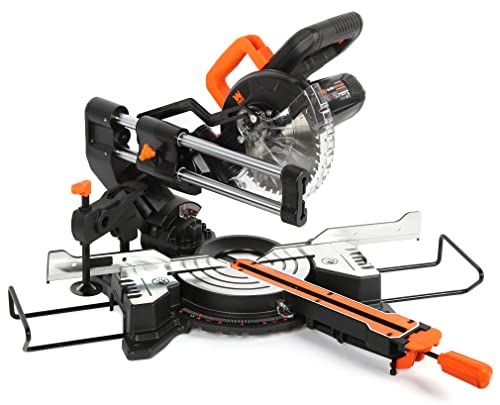
WEN MM0713 9.5-Amp 7.25-Inch Single Bevel Compact Sliding Co...
|
|
Explore the Best Corded 7 1/4 Sliding Miter Saws for Precision Cutting
Maximizing space without compromising on performance is key when selecting a corded 7 1/4 sliding miter saw. Explore models designed for precision, power, and efficiency in tight work areas.
1. SKIL 10 Amp 7-1/4 Inch Single Bevel Sliding Miter Saw with LED Precision Lighting
- MAXIMUM CUTTING CAPACITIES - Up to 2x10 crosscut at 0; up to 3-1/2-inch crown moulding nested; up to...
- FIXED COMPACT RAIL SYSTEM - Minimizes the saw’s benchtop-to-wall footprint for working in tight...
- LED SHADOW LINE - Delivers precise cuts with greater accuracy than lasers whether you're cutting...

Working near walls or in cramped workshops often forces trade-offs in tool size or capability. Designed with a fixed compact rail system, this saw condenses its footprint, allowing precise cuts flush against surfaces without sacrificing performance.
Equipped with a 10 Amp motor that spins at up to 4,800 RPM, it powers through wood projects delivering smooth, clean edges on materials like crown molding and baseboards. The innovative LED shadow line offers cutting precision surpassing traditional lasers, making it easier to align and execute accurate angled cuts.
Adjustable miter settings ranging from 0 to 47 degrees on the left and up to 50 degrees on the right provide versatility for complex trim or framing tasks. Its quick miter lock and work clamp streamline setup, ensuring materials stay secure during operation for safer, more reliable results.
Weighing under 25 pounds, this Skil saw remains portable and easy to position without compromising stability. Single bevel sliding capability grants depth and angle for detail-focused woodworking projects that demand flexibility.
Best for: Craftsmen and hobbyists needing a compact yet powerful saw for precise angled cuts in tight spaces.
Pros:
- Fixed compact rail system minimizes bench space usage
- LED shadow line for enhanced cut visibility
- Strong 10 Amp motor ensures fast, clean cutting
- Wide miter angle range with quick locking mechanism
- Lightweight design for easy transport and storage
Cons:
- May require additional stand for enhanced stability during larger projects
2. WEN 7.25-Inch Sliding Compound Miter Saw with Dual-Rail Slide System and LED Guide
- Powerful 9.5-amp motor crosscuts boards up to 11.5 inches wide and 2.5 inches thick
- Unique dual-rail slide system allows for compact operation flush against the wall while minimizing...
- Miter 45 degrees in either direction (featuring 9 miter stops) or bevel 45 degrees to the left
Compact workshop spaces often demand tools that combine power with a minimal footprint. The WEN 7.25-inch sliding compound saw’s unique dual-rail slide system lets you position it flush against walls without sacrificing cutting capacity. It handles wide boards up to 11.5 inches and thick stock up to 2.5 inches with a robust 9.5-amp motor.
Traditional sliding miter saws can be bulky, but WEN’s design cleverly keeps the saw compact and easy to transport thanks to an onboard carrying handle and integrated clamp assembly. You get a full range of miter options with 9 stops at 45 degrees each way and a bevel that tilts 45 degrees to the left.
Precision gets a boost from the onboard LED cutline guide that clearly marks the blade’s path for every cut, ideal for detailed trim work or framing. The included 7.25-inch carbide-tipped blade spins at 4500 rpm, providing smooth, clean cuts on various wood types. Dust management is addressed with a port and dust bag to keep your workspace tidy.
With two table extensions included, this tool expands to support longer pieces, making it versatile for multiple projects. WEN’s thoughtfully engineered saw balances performance with portability, aiming to meet the needs of carpenters who value accuracy and space efficiency.
Best for: Woodworkers and renovators who need a tool that offers precise angled cuts in tight spaces without compromising cutting power.
Pros:
- Compact dual-rail slide minimizes footprint
- Strong 9.5-amp motor handles wide, thick boards
- LED cutline guide enhances cutting accuracy
- Multiple miter stops and bevel tilt expand versatility
- Includes dust port and onboard carrying handle for convenience
Cons:
- Compact size may feel less stable for heavy-duty or large stock cutting
Key Specs Compared: Top Corded 7 1/4 Sliding Miter Saws
| Product Name | Power | Blade teeth | Cutting Angles | Weight |
|---|---|---|---|---|
| Skil 10 Amp Single Bevel | 10 Amp, 1200 watts, 4800 RPM | 24 teeth, carbide blade | Miter: 0-47° left, 0-50° right; Bevel: 0-45° left | 31 lbs |
| WEN 9.5 Amp Single Bevel | 9.5 Amp, 7079 watts, 4500 RPM | 40 teeth, high speed steel blade | Miter: 45° left/right; Bevel: 45° left | 14.7 kg (~32.4 lbs) |
Which Features Matter Most for the Best Corded 7 1/4 Sliding Miter Saw?

Choosing a reliable 7 1/4 sliding miter saw isn’t just about raw power. Several design and functional elements play critical roles in daily woodworking tasks. Understanding these factors helps pick a saw that fits your workspace, type of projects, and precision needs.
Motor Power and Performance
The motor sets the foundation of any corded sliding miter saw’s capability. It dictates how smoothly and quickly the blade spins, impacting the type and thickness of materials you can handle. A motor with inadequate power can bog down, leading to rough cuts and reduced lifespan.
Look for saws with motors rated around 9.5 to 10 amps, capable of spinning blades at speeds nearing 4,500 to 4,800 RPM. For example, the SKIL model clocks in at 10 amps and 4,800 RPM, offering robust torque to cut through dense hardwoods smoothly, while the WEN’s 9.5 amp motor balances power with energy efficiency. The motor’s wattage translates electrical consumption into mechanical drive, affecting long-term reliability.
Ignoring motor specs means accepting slower cuts, frequent stalls, or overheating, especially when working with thick or adhesive materials. This can lead to frustrating interruptions and premature wear on the saw’s components.
Sliding Mechanism and Rail Design
The sliding feature determines a saw’s cutting capacity, enabling longer crosscuts without repositioning the material. The rail system’s design draws a clear line between smooth operation and annoying jams or instability. A compact, rigid slide means better control and consistent precision over time.
Take the SKIL’s fixed compact rail system, which cleverly compresses its footprint. This allows it to sit flush against walls when workspace is tight without sacrificing slide length. In contrast, WEN’s dual-rail slide system uses two parallel rails to spread the load evenly, reducing wobble while cutting wider boards up to 11.5 inches. Such dual rails bolster stability during sliding and help maintain accurate angles on compound cuts.
Missing out on solid sliding rails results in decreased cutting control, possible blade misalignment, and subpar miter joint accuracy that will appear in visible imperfect cuts.
Blade Specifications and Cutting Precision
The blade’s size, tooth count, and material strongly affect cut quality and speed. While 7 1/4 inch blades are standard, the number of teeth influences finish smoothness. A saw with too few teeth tends to cause rougher edges, requiring extra sanding.
For instance, the SKIL’s blade comes with 24 carbide-tipped teeth, optimized for durability and cleaner cuts on finish trim materials. In comparison, the WEN uses a 40-tooth high-speed steel blade, offering finer cuts though potentially wearing faster on harder woods. Carbide blades hold their edge longer but add cost, while high-speed steel blades are easier to replace.
Blade selection affects frustration levels—poor precision means more wasted material and time fixing mistakes, which can escalate quickly when tackling intricate crown molding or angled cuts.
Cutting Angles and Bevel Range
The range of miter and bevel angles a saw can handle dictates versatility on compound cuts. Wider angle ranges let you tackle more complex trim and framing angles without switching tools or adding manual adjustments.
The SKIL saw provides miter angles sweeping from 0-47° left to 0-50° right and a bevel that tilts up to 45° left, allowing nuanced compound cuts for crown molding. WEN’s model has symmetric miter angles at 45° left and right and a bevel of 45° left as well, which covers standard framing but might limit some elaborate profiles. The ability to bevel on only one side simplifies setup but reduces flexibility compared to dual bevel saws.
Choosing narrower angle ranges can box you in, forcing extra clamping or manual finishing work to get joints to fit, slowing project completion and increasing error risk.
Portability and Weight
Though corded tools aren’t totally portable, weight and size still impact maneuverability and storage. A lighter saw reduces fatigue when moved around a job site or workshop, while a compact design helps fit into tight spaces or transport vehicles.
The SKIL saw weighs about 31 pounds, making it relatively easy to handle for a sliding miter saw with its power. The WEN model is slightly heavier at approximately 32.4 pounds (14.7 kg), partially due to its dual-rail system. Both include compact features like carrying handles or rail systems that keep footprint tight—essential for anyone working out of a small garage or mobile shop.
Ignoring weight can lead to awkward setups or even injuries when lifting bulky, heavy tools repeatedly. Oversized saws also consume valuable workspace, disrupting workflow and causing clutter accidents.
Frequently Asked Questions
What advantages does a 7 1/4 inch blade offer on a sliding miter saw?
A 7 1/4 inch blade balances cutting capacity with tool compactness. It handles most trim and molding cuts efficiently, making it suitable for both DIY and light professional work. The blade size limits how wide and thick the material can be, but sliding features compensate by extending the crosscut capacity.
For instance, the WEN saw’s dual-rail slide system allows cutting wider pieces up to 11.5 inches despite the smaller blade size. The slide mechanism effectively increases reach beyond the blade diameter.
When choosing, consider your workspace constraints—a compact sliding model like these keeps the footprint manageable without sacrificing functionality.
How does motor power impact the performance of these 7 1/4 sliding miter saws?
Motor power directly influences the saw’s ability to cut through dense or thick wood without bogging down. A higher amp motor delivers consistent speed, translating into cleaner cuts and less strain on the blade. SKIL’s 10 Amp motor runs faster at 4800 RPM, offering an edge in smoother performance.
In contrast, the WEN’s 9.5 Amp motor is slightly less powerful but still strong enough for most wood projects. The tradeoff might be noticed under heavy load or prolonged use.
Regular maintenance of blade sharpness complements motor power to maintain peak cutting quality over time.
What role does bevel functionality play on a single bevel sliding miter saw?
Single bevel saws tilt in one direction only, typically left, allowing angled bevel cuts combined with miter adjustments for compound angles. This functionality covers most common trim and framing tasks but can limit versatility compared to dual bevel models.
The SKIL model bevels left up to 45° and offers miter adjustments left and right, suitable for crown molding installation. Users must flip the workpiece to achieve bevels in the opposite direction.
For quick bevel angle changes, consider whether flipping material is practical for your workflow to avoid unnecessary hassle.
How does the sliding mechanism impact the cut capacity and portability?
The sliding feature extends the effective reach of a 7 1/4 inch blade, making wider crosscuts possible without upsizing the blade diameter. Systems vary: SKIL uses a compact fixed rail design while WEN opts for a dual-rail system to maximize smooth sliding motion.
While sliding mechanisms add to weight—the WEN weighs about 32.4 lbs—both models remain portable enough for job-site transport and storage. Compactness is prioritized to fit close to walls.
Keep rails clean and lubricated for steady operation and to prevent binding during sliding cuts.
Are LED guides useful in improving cutting accuracy on these saws?
LED cutting guides project a shadow line of the blade to enhance cut layout precision. This is especially helpful in low-light conditions or when working close to reference edges. SKIL integrates an LED shadow line improving visibility and accurate blade positioning.
WEN also features an LED guide but typically doesn’t claim the same precision-enhancing shadow line effect as SKIL. Users relying on fine trim work may benefit from these visual aids.
Regularly verifying blade alignment is recommended since guides assist but don’t replace proper saw calibration.
Choosing the Ideal Corded 7 1/4 Sliding Miter Saw for Precision and Power
The right corded 7 1/4 sliding miter saw can elevate your woodworking, closing the gap between rough and precise cuts to deliver consistent, high-quality results. This tool brings versatility and accuracy to your projects, making challenging angles much easier to handle.
For those working within limited space, the SKIL 10 Amp model offers a compact yet powerful solution. Meanwhile, the WEN’s dual-rail system is suited for users prioritizing portability and the ability to cut wider materials, fitting well with both hobbyists and professionals.
Consider your workshop size and project requirements carefully before purchase. Ensuring regular blade upkeep and selecting a saw aligned with your cutting needs are essential to maintaining both safety and optimal performance.
Last update on 2026-11-15 / Affiliate links / Images from Amazon Product Advertising API