Can You Put Polyurethane Over Lacquer: Avoid Common Mistakes
You can put polyurethane over lacquer only if the lacquer is fully cured, usually six weeks or more, and meticulously prepared.
You’ll need to sand the surface smoothly, clean off all contaminants, and apply thin, even polyurethane coats to reduce peeling, bubbling, or cracking caused by trapped gases and chemical incompatibility.
Using shellac as a barrier can improve adhesion and durability. If you want lasting finish quality and how to handle risks, there’s more to explore.
Key Takeaways
- Polyurethane over lacquer often causes bubbling, peeling, and cracking due to trapped gases and chemical incompatibility.
- Lacquer must be fully cured (typically 6+ weeks) and properly sanded to reduce off-gassing and adhesion problems before applying polyurethane.
- Using a shellac barrier between lacquer and polyurethane prevents trapped gases, improves adhesion, and reduces peeling risks.
- Testing a small area first is essential to assess compatibility and finish integrity before full polyurethane application over lacquer.
- Alternatives like shellac, alkyd varnish, or sanding to bare wood avoid polyurethane-lacquer issues and provide longer-lasting finishes.
Why Polyurethane and Lacquer Are Chemically Incompatible?
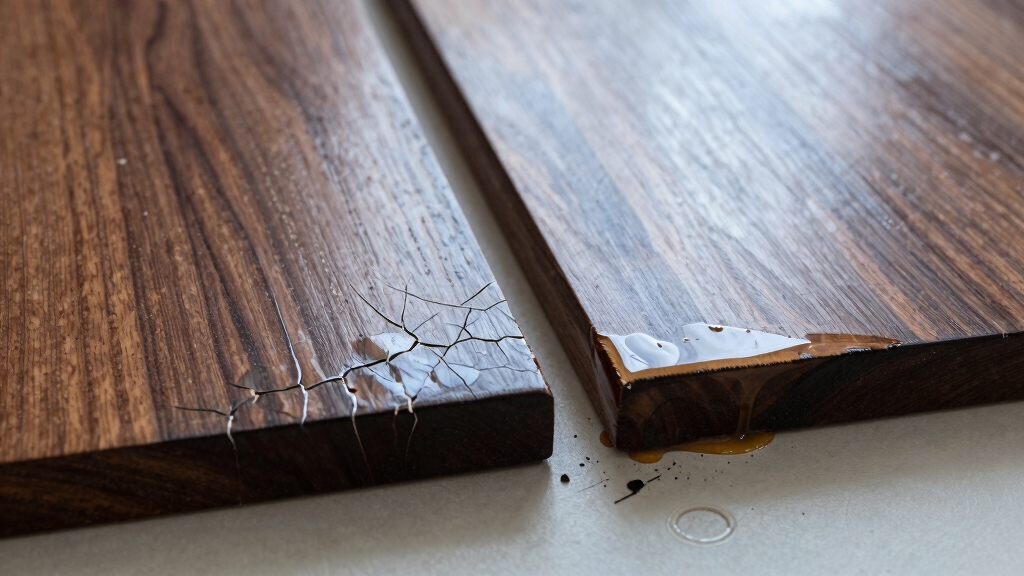
Although you might be tempted to apply polyurethane over lacquer for added durability, these two finishes are chemically incompatible. This causes significant adhesion problems.
Applying polyurethane over lacquer often leads to poor adhesion due to their chemical incompatibility.
Lacquer continues to release gases for years. When you seal it under polyurethane’s hard, impermeable layer, those trapped gases create bubbles and lifting.
Polyurethane is a rock-hard finish and can’t flex with the softer lacquer beneath. This leads to cracking and peeling from the differential hardness.
This incompatibility means the polyurethane often fails within one to five years, detaching entirely. Even if the lacquer feels cured, residual solvents and ongoing gas-off undermine polyurethane adhesion.
Professionals strongly advise against applying polyurethane directly over lacquer unless you take extensive surface preparation or use intermediary layers. Failure mechanisms are rooted deeply in their chemical and physical properties.
Proper surface preparation is essential to improve adhesion and reduce finish defects when working with incompatible finishes.
When Is It Safe to Apply Polyurethane Over Lacquer?
When you want to apply polyurethane over lacquer, safety depends on several critical factors, primarily the condition and preparation of the lacquer surface.
The lacquer must be fully cured, typically six weeks or more, to minimize trapped gases that cause peeling.
You need to sand the lacquered surface thoroughly with fine-grit sandpaper (220-grit) to create proper adhesion “tooth.”
Then clean it meticulously with lacquer thinner or mineral spirits.
Removing all dust with a tack cloth is essential before applying polyurethane.
Applying thin, even coats of polyurethane and allowing each to dry properly reduces stress on the lacquer beneath.
Despite these precautions, experts caution that polyurethane over lacquer remains risky due to chemical incompatibility.
Testing on a small area first is vital to assess adhesion and finish integrity before committing to the entire project.
It is also important to ensure the surface is free from contaminants and fully cured to promote proper adhesion.
How Lacquer’s Gas-Off Causes Polyurethane Finishes to Fail?
Hey, let’s talk about lacquer and why it can be a problem when you use polyurethane finishes over it. You see, lacquer doesn’t just dry and stop there. It continues to release gases for quite a while after it seems dry; this process is called gas-off.
Now, if you go ahead and seal that active lacquer with polyurethane, those trapped gases can create some real issues. They push against the hard polyurethane layer, which can lead to bubbling and lifting. It’s like the lacquer is saying, “Hey, I’m still here!”
This internal pressure is actually the main reason why polyurethane finishes often fail when applied over lacquer. You might find them peeling off in just a few years. So, it’s definitely something to keep in mind if you’re considering your finishing options! For better adhesion and durability, some professionals recommend using a water-based topcoat over properly cured lacquer instead of polyurethane.
Lacquer Gas-Off Explained
Since lacquer continues to release gases long after application, you need to understand how this off-gassing affects any finish applied over it. Lacquer’s gas-off traps volatile compounds underneath a polyurethane layer, causing bubbles, lifting, and eventual peeling. This incompatibility stems from polyurethane’s hard, impermeable surface, which seals in gases that should escape.
| Lacquer Gas-Off Property | Effect on Polyurethane Finish |
|---|---|
| Continuous gas release | Traps gases, creating pressure |
| Long off-gassing period | Causes delayed finish failure |
| Volatile solvents | React chemically with polyurethane |
| Gas buildup | Leads to bubbling and lifting |
You’ll find that unless the lacquer is fully cured and gas-free, polyurethane applied over it will fail prematurely due to these trapped gases. Understanding the importance of proper curing is essential to ensure finishes form a chemically inert, durable film that prevents such issues.
Polyurethane Lifting Mechanism
Although polyurethane provides a tough, impermeable barrier, it traps the volatile gases continuously released by the underlying lacquer. This causes pressure to build beneath the finish.
Lacquer off-gasses solvents and other volatile compounds for years, even after curing. When you seal this ongoing gas release under polyurethane, the trapped gases have nowhere to escape.
This generates internal pressure that pushes against the rigid polyurethane layer, leading to bubbling, lifting, and eventual peeling. Because polyurethane hardens into a rock-like finish, it can’t flex to accommodate the expanding gases, unlike lacquer’s more flexible nature.
Over time, typically within one to five years, this stress compromises the polyurethane’s adhesion, causing visible failure. Understanding this mechanism clarifies why applying polyurethane directly over lacquer is a high-risk endeavor that professionals generally advise against. Using a beeswax-based restorative wax as an intermediate treatment can help condition the wood and reduce adhesion issues before refinishing.
Preparing a Lacquer Surface for Polyurethane Coating
When preparing a lacquer surface for a polyurethane coating, ensuring the lacquer is fully cured is critical to preventing future finish failure.
Lacquer typically requires at least six weeks to cure completely, allowing most solvents and gases to dissipate.
Next, sand the lacquer lightly with 220-grit sandpaper to create a “tooth” that promotes polyurethane adhesion.
Avoid aggressive sanding that could expose bare wood, which polyurethane won’t bond to properly.
After sanding, thoroughly clean the surface with lacquer thinner or mineral spirits to remove dust, oils, and contaminants.
Use a tack cloth to eliminate residual particles before application.
Maintaining good ventilation during curing and application helps reduce dust contamination and improves adhesion.
Step-by-Step Guide to Applying Polyurethane Over Lacquer
After thoroughly preparing your lacquer surface as described, you can begin applying the polyurethane coating with care to reduce the risk of adhesion failure.
Stir the polyurethane gently, never shake, to avoid bubbles. Use a high-quality brush, roller, or spray for thin, even coats.
Apply the first coat lightly, allowing it to dry per manufacturer instructions, usually several hours. Once dry, sand the surface lightly with 220-grit sandpaper to promote adhesion.
Remove all dust with a tack cloth. Repeat this process for two to three thin coats, sanding between each.
Finally, let the last coat cure fully in a dust-free environment. Remember, patience and precision are essential to minimize the risk of peeling or bubbling when applying polyurethane over lacquer.
Ensure the surface is completely dry and clean before applying each coat to achieve optimal adhesion.
Common Problems When Applying Polyurethane Over Lacquer
You’ll often run into issues like peeling, bubbling, and cracking when applying polyurethane over lacquer due to their chemical incompatibility.
Lacquer continues releasing gases for years, and sealing it under polyurethane traps these gases, causing bubbles and lifting.
This trapped gas pressure eventually leads to peeling, often within one to five years. Additionally, polyurethane’s rigid hardness contrasts with lacquer’s softness, creating stress that results in cracking or a crackled finish.
If the lacquer isn’t fully cured and properly sanded, adhesion fails, increasing risks of wrinkling and softening.
Even with careful surface prep, the fundamental chemical mismatch makes long-term durability unlikely. Understanding these inherent problems is essential before attempting to apply polyurethane over lacquer, as ignoring them almost guarantees finish failure.
For safer and more durable results, consider using a water-based clear coat designed for compatibility with various finishes instead.
Shellac as a Barrier Between Lacquer and Polyurethane
You know, shellac can really be a game changer when it comes to finishing your projects. It acts as a fantastic chemical barrier between lacquer and polyurethane, helping to sidestep any compatibility problems.
What’s great about shellac is its natural makeup. It sticks nicely to lacquer and sets up a solid surface for the polyurethane to bond with. This means you won’t have to worry about any bubbling or peeling down the line.
Just remember to apply a thin, even coat of shellac. This not only seals in the gases from the lacquer but also boosts the durability of your final finish. It’s a simple step that can make a big difference! For best results, ensure the surface is properly prepared by lightly sanding before applying shellac to enhance adhesion.
Shellac’s Chemical Compatibility
Consider applying a coat of shellac as an effective chemical barrier when finishing over lacquer with polyurethane.
Shellac’s unique chemical composition allows it to bond well with lacquer while creating a stable, compatible surface for polyurethane application.
It seals in residual solvents and gases emitted by the lacquer, preventing them from becoming trapped under the polyurethane layer.
This minimizes the risk of bubbling, peeling, or cracking that typically occurs when polyurethane is applied directly over lacquer.
Because shellac is alcohol-based and compatible with both finishes, it acts as an intermediary that mitigates chemical incompatibility.
Applying shellac also avoids the need for extensive sanding to bare wood, preserving the lacquer’s integrity.
This ensures the polyurethane adheres firmly and cures properly, extending the finish’s durability.
For best results, apply thin, even coats and allow proper drying time to maintain the curing and adhesion of the polyurethane.
Application Benefits of Shellac
Applying a coat of shellac between lacquer and polyurethane creates an essential chemical barrier that enhances adhesion and prevents common finish failures.
Shellac’s compatibility with both finishes stops the polyurethane from directly interacting with the lacquer, eliminating bubbling, peeling, and cracking.
When you use shellac, you:
- Seal in lacquer gases, preventing trapped vapor from lifting the polyurethane.
- Create a smooth, bondable surface that improves polyurethane adhesion.
- Avoid the hardness mismatch that causes crackling between lacquer and polyurethane.
- Speed up the finishing process by allowing polyurethane application without extended lacquer curing.
This intermediate shellac layer acts as a reliable buffer, letting you confidently apply polyurethane over lacquer without risking long-term finish failure.
It’s a professional solution that balances chemical compatibility and mechanical bonding.
Better Alternatives to Polyurethane for Protecting Lacquer Finishes
Although polyurethane offers a tough, durable finish, it often fails when applied over lacquer due to chemical incompatibility and trapped gases. To protect lacquer finishes effectively, consider alternatives like shellac or alkyd varnish, which bond well without causing bubbling or peeling.
Here’s a quick comparison:
| Finish Type | Benefits |
|---|---|
| Shellac | Excellent adhesion; compatible with lacquer |
| Alkyd Varnish | Durable; water and scratch resistant |
| Lacquer | Self-compatible; smooth gas-off |
| Sanding + Poly | Requires removing lacquer; complex process |
Using shellac or alkyd varnish guarantees your finish lasts longer without the failures caused by polyurethane. If you want the polyurethane look, sanding down to bare wood before application is essential but labor-intensive.
How to Fix Peeling or Bubbling Polyurethane Over Lacquer
When you notice peeling or bubbling in polyurethane applied over lacquer, the damage typically stems from trapped gases and chemical incompatibility beneath the surface. To fix this, you need to address both the compromised finish and the underlying lacquer conditions.
Start by carefully removing the affected polyurethane layer with fine sandpaper, avoiding damage to the lacquer base. Then, thoroughly clean the surface with lacquer thinner to remove dust and contaminants.
Consider applying a shellac sealer to isolate the lacquer from polyurethane. Finally, reapply polyurethane in thin, even coats, allowing adequate drying time between layers to reduce stress and bubbling.
- Remove peeling polyurethane by sanding gently
- Clean surface thoroughly with lacquer thinner
- Use shellac as a barrier coat before reapplication
- Apply polyurethane in thin coats, allowing full drying
Frequently Asked Questions
Can Polyurethane Be Safely Applied Over Water-Based Lacquer?
You can apply polyurethane over water-based lacquer, but you must make certain the lacquer is fully cured, usually several weeks, to avoid adhesion issues.
Lightly sand the surface with fine-grit sandpaper to create a bonding “tooth,” then clean thoroughly.
Use thin polyurethane coats and allow each to dry completely.
Testing on a hidden area is vital since water-based lacquer is more compatible, yet caution and proper prep prevent peeling or bubbling over time.
How Long Should Polyurethane Cure Before Applying Lacquer Over It?
You should let polyurethane cure for at least 24 to 48 hours before applying lacquer over it, but ideally wait up to a month for full curing. This guarantees the polyurethane hardens completely, minimizing the risk of solvent interaction and finish failure.
Lightly sanding the polyurethane with fine-grit sandpaper before applying lacquer will improve adhesion. Remember, testing on a small area first is essential since lacquer solvents can soften uncured polyurethane.
Does Temperature Affect Polyurethane Adhesion on Lacquer Surfaces?
You might think warmer temperatures always help polyurethane stick better, but when applying it over lacquer, the truth is more nuanced.
Temperature does affect adhesion; too cold and the polyurethane won’t cure properly. Too hot can cause it to dry too fast, leading to bubbles or poor bonding.
Ideally, keep the environment between 65-75°F with moderate humidity to promote even drying and reduce stress on the incompatible lacquer surface beneath.
Can Sanding Alone Guarantee Polyurethane Adhesion on Lacquer?
Sanding alone can’t guarantee polyurethane adhesion on lacquer.
While sanding creates the necessary “tooth” for bonding, you must also make certain the lacquer is fully cured—often six weeks or more.
Thoroughly clean the surface to remove dust and contaminants.
Even then, chemical incompatibility remains a risk.
Without addressing lacquer’s gas-off properties and possible trapped gases, polyurethane may still lift or peel despite proper sanding.
Are There Specific Polyurethane Types Better Suited for Lacquer Bases?
Only certain water-based polyurethanes are somewhat better suited for lacquer bases, as they’re less likely to cause chemical reactions.
However, even these carry a risk of bubbling or peeling over time.
Oil-based polyurethanes generally worsen adhesion issues due to their hardness.
To improve success, you should use a shellac barrier coat between lacquer and polyurethane.
The Secret to a Flawless Polyurethane Finish
You can apply polyurethane over lacquer, but you must prepare the surface thoroughly. Use shellac as a barrier and allow proper drying time to avoid peeling and bubbling.
You can’t rush the process, skip surface preparation, or ignore lacquer’s gas-off effects. By respecting these steps, you protect your finish and guarantee durability.
Achieving a flawless look requires precision, patience, and proper technique. These elements make all the difference.