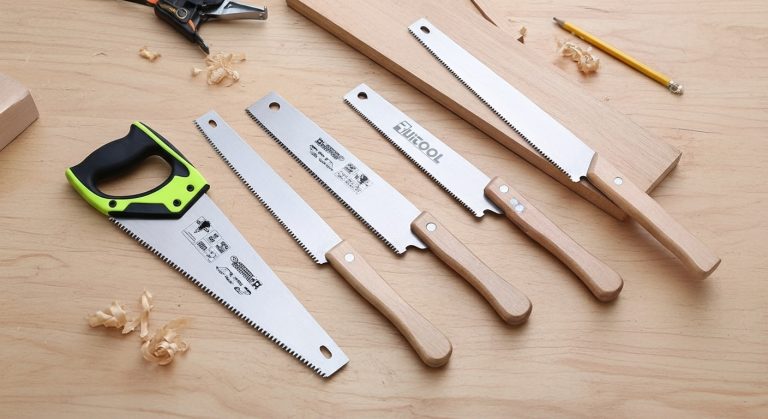
Best TPI For Cutting Wood: Expert Tips to Choose the Perfect Blade
Nothing kills momentum like a saw blade that drags or tears through wood. Rough edges ruin timelines and waste precious material. Every cut feels like a fight instead of progress.
The KEENTECH 9-Inch Reciprocating Saw Blades feature a bold 5 TPI for fast, powerful cuts in thick and green wood. The BOSCH T344D blades focus on smoothness with 6 TPI, delivering cleaner, straighter cuts on various wood types.
The IRWIN Bi-Metal blades bring 10 TPI to the table, perfect for detailed work and sharp, precise finishes.
| Image | Name | Editor's Rating | Price |
|---|---|---|---|

|
SS SHOVAN Japanese Hand Saw, 6 Inch SK5 Double Edge Pull Saw...
|
|
|
|
KEENTECH 9 Inch Cr-V Reciprocating Saw Blade 5-Pack for Wood...
|
|
|
|
BOSCH T344D 5-Piece 6 In. 6 TPI Speed for Wood T-Shank Jig S...
|
|
|
|
Goshine 9 Inch Wood Pruning Reciprocating Saw Blades, Fleam ...
|
|
|
|
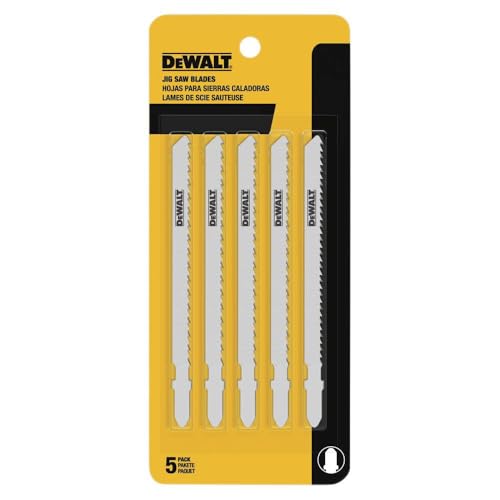
DEWALT DW3750-5 4-Inch 6 TPI Fast Wood Cut Cobalt Alloy Stee...
|
|
Discover the Best TPI for Cutting Wood with Precision Blades
Mastering the teeth per inch (TPI) on saw blades can dramatically elevate your woodworking precision and efficiency. Explore how different TPI settings cater to various cutting needs and techniques.
1. SS SHOVAN Japanese Hand Saw – Precision Double Edge Pull Saw with 11/17 TPI for Fine Wood Cutting
- JAPANESE HAND SAW: The sawtooth is processed by the high frequency quenching machine imported from...
- HIGH QUALITY MATERIAL: Our SK5 high carbon steel saw blade ensures extremely fine cut surfaces with...
- 2-IN-1 PULL SAW: This double sided japanese saw has two sides with teeth, one with teeth of 11 TPI...
Choosing the right saw can completely change how your wood projects come together. The SS SHOVAN Japanese Hand Saw offers an intriguing approach to cutting wood that challenges the belief all hand saws are roughly the same. With double edges featuring different TPI counts, it invites you to rethink how teeth per inch impact your cut quality and speed.
This 6-inch SK5 high carbon steel blade is designed for precision—quenched to a hardness of HRC60-63 for ultimate cutting sharpness and durability. Its pull-action design minimizes binding, giving you smoother results than traditional push saws. The 11 TPI side lets you blaze through longitudinal cuts quickly, while the 17 TPI side is crafted for slower, detailed crosscuts that deliver a refined finish.
The wooden handle shaped from lightweight beech wood offers ergonomic comfort and control, making it excellent for fine, small-scale work. Whether you’re trimming flush to a wall or handling delicate wood crafting, this saw is made to fit naturally in your hand and reduce fatigue.
Maintenance is simple due to the hard-wearing teeth and corrosion-resistant blade, so your tool stays reliable over time. Its compact size and dual functionality make it a practical companion for woodworking, crafting, gardening, or plumbing tasks involving wood or PVC.
Best for: Woodworking enthusiasts and professionals seeking a durable, versatile hand saw optimized for fine, precise cutting.
What We Like:
- Dual-edge design with 11 and 17 TPI teeth for versatile cutting needs
- High-frequency quenched SK5 carbon steel blade ensures long-lasting sharpness
- Ergonomic beech wood handle provides excellent grip and reduces hand fatigue
- Pull saw action reduces binding for smoother, more controlled cuts
- Compact 6-inch blade size ideal for flush cuts and detailed woodworking
Specification:
| Specification | User Benefit |
|---|---|
| Blade Material: SK5 High Carbon Steel | Maintains sharpness for precise, clean cuts with less effort |
| Teeth Per Inch (TPI): 11 / 17 Double Edge | Allows fast rough cuts and fine detailed cuts with a single tool |
| Blade Hardness: HRC60-63 | Enhances durability and wear resistance for longer blade life |
| Handle Material: Beech Wood | Lightweight and shaped for comfortable grip during extended use |
| Blade Length: 6 Inches | Compact size perfect for maneuvering in tight spaces and flush cutting |
| Cutting Action: Pull Saw | Reduces binding and improves precision by cutting on pull stroke |
| Color: Silver | Standard finish that resists corrosion and visible wear |
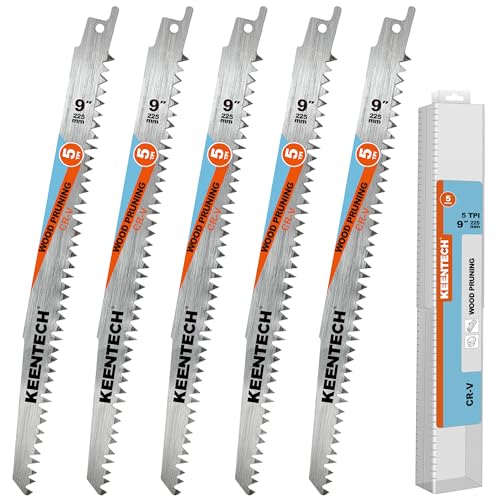
2. KEENTECH 9-Inch Cr-V Reciprocating Saw Blade 5-Pack – Optimized 5 TPI for Wood Cutting
- 9" Pruning Blades: Ideal for cutting tree branches, limbs, roots or green lumbers with a diameter...
- Cr-V (Chrome-Vanadium) Steel: Cr-V steel surpasses HCS (High-Carbon Steel) in terms of toughness...
- High-Frequency Heat Treatment: Featuring a blackened outlook, high frequency heat treatment can...
Choosing the right TPI can transform your wood cutting experience, yet many users overlook how critical it truly is. The KEENTECH 9 Inch Cr-V Reciprocating Saw Blade brings a specialized 5 TPI setup designed specifically for aggressive and efficient wood cutting.
These blades excel at slicing through tree limbs and green lumber up to 7.5 inches thick without bogging down. Unlike standard blades, the 5 TPI fleam-ground teeth cut fast and clear wood fibers efficiently, reducing binding and speeding progress.
Crafted from rugged Chromium Vanadium steel, these blades resist wear, heat, and rust, making them reliable for demanding outdoor conditions. The high-frequency heat treatment stiffens the teeth, extending cutting life well beyond typical blades.
Compatibility is never a question; the universal 1/2 inch shank fits all major reciprocating saws, including Milwaukee Sawzall and DEWALT. The deep gullets clear debris swiftly, ensuring smoother cuts and less downtime for cleaning.
Maintenance is straightforward thanks to the blade’s durable construction and corrosion resistance, meaning you can focus more on cutting and less on upkeep. This pack of five keeps you prepared for multiple projects without frequent replacements.
Best for: Users needing a durable, sharp blade optimized for cleanly cutting wood and pruning tasks on reciprocating saws.
What We Like:
- Sharp 5 TPI design ideal for fast, efficient wood cutting
- High-frequency heat treatment for extended blade life
- Chromium Vanadium steel offers superior toughness and rust resistance
- Universal shank fits most major reciprocating saw brands
- Deep gullets quickly remove chips to prevent clogging
Specification:
| Specification | User Benefit |
|---|---|
| 5 TPI Fleam Ground Teeth | Ensures fast, smooth cutting on wood without binding |
| 9-Inch Blade Length | Enables reaching deeper cuts and larger limbs |
| Chromium Vanadium Steel | Enhances durability and resists rust for outdoor use |
| High-Frequency Heat Treatment | Improves wear resistance, extending cutting performance |
| 1/2-Inch Universal Shank | Works with a broad range of reciprocating saw models |
| Deep Gullets | Clears cut material efficiently to maintain blade speed |
3. BOSCH T344D 5-Piece 6 In. 6 TPI Jig Saw Blades – Fast, Straight Wood Cuts
- Designed for straight and very fast cuts in soft and hard wood up to 4 In. thick
- 6 TPI tooth profile for exceptionally fast wood cutting
- High carbon steel construction for long life in wood

Cutting wood quickly without sacrificing straightness has always been a challenge, especially when dealing with various hardwoods and softwoods. This is where blade choice, particularly the TPI setting, becomes crucial. The BOSCH T344D jig saw blades bring clarity to that dilemma by offering a specialized 6 TPI design.
These blades are built to make fast, clean cuts up to 4 inches thick, perfect for a range of wood types including plywood and OSB. Featuring high carbon steel construction, they maintain sharpness and resist wear, extending blade life even under rigorous use.
With an overall length of 6 inches—5 inches of it usable—these blades fit T-shank jig saws, targeting straight, rapid wood cuts without excessive splintering or dragging. Their tooth profile is optimized specifically to balance speed and finish quality in wood cutting projects.
Maintenance is straightforward due to the durable steel used; the blades don’t dull quickly and require minimal upkeep to stay effective. The pack of five ensures you have enough blades on hand for ongoing projects without frequent replacements.
Best for: Woodworkers seeking fast, straight cuts in both soft and hard wood materials using a jig saw.
What We Like:
- 6 TPI tooth design enables rapid cutting with clean edges
- High carbon steel offers durability and sustained sharpness
- Fits standard T-shank jig saws for versatile use
- Suitable for wood up to 4 inches thick, including plywood and OSB
- Five blades per pack for multiple projects without hassle
Specification:
| Specification | User Benefit |
|---|---|
| 6 Teeth Per Inch (TPI) | Delivers swift, straight cuts ideal for medium thickness wood |
| 6 Inch Blade Length | Offers sufficient reach for various cutting depths and tasks |
| High Carbon Steel Material | Ensures blade durability and longer life during wood cutting |
| T-Shank Design Compatibility | Works with most standard jig saws for easy replacement |
| 5-Piece Set | Provides multiple blades to reduce downtime during projects |
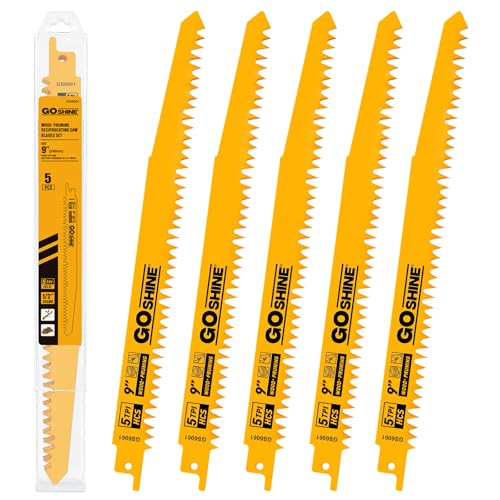
4. Goshine 9 Inch 5 TPI Wood Pruning Reciprocating Saw Blades for Efficient Wood Cutting
- 【Longer Lifespan with Next-Gen High-Carbon Steel】 Crafted from next-generation high-strength...
- 【Faster Cutting, Less Effort】 Features Dual-Angle Tooth Drive Technology, with alternating teeth...
- 【Dual-Sided Sharpened Teeth & 5 TPI Design】 Each tooth is precision-sharpened on both sides...
Cutting wood often feels like a battle against time and tool wear. What if your saw blades could actually outlast the job while slicing through branches effortlessly? The Goshine 9 Inch Wood Pruning Reciprocating Saw Blades challenge the idea that blades wear out quickly and struggle with tougher wood.
Constructed from next-gen high-carbon steel, these blades resist bending and breakage, holding their sharp edge far longer than typical blades. Their 0.05-inch thick body is engineered for durability, making them a reliable choice for regular wood cutting chores.
The magic lies in the blade’s 5 TPI (teeth per inch) configuration combined with dual-angle tooth drive technology. This setup is not just about aggression—it maximizes cutting speed while maintaining control, cutting through wood smoothly and reducing heat build-up. It’s a smart design that balances fast cuts with blade longevity.
Beyond the specs, these blades work well on green wood, dry wood, and even wet conditions, expanding their usefulness for outdoor pruning and landscaping. Plus, universal compatibility means they fit seamlessly with major reciprocating saw brands, eliminating worries about fitting.
Best for: homeowners and professionals tackling tree trimming, branch pruning, and versatile wood cutting tasks with a need for durable, fast-cutting blades.
What We Like:
- Next-gen high-carbon steel offers enhanced wear resistance and durability.
- Dual-angle teeth drive efficient, smooth cutting with less effort.
- 5 TPI design excels in aggressive, fast wood removal without excessive heat.
- Works effectively on wet, dry, and green wood, providing versatile use.
- Universal shank fits most major reciprocating saw brands for easy setup.
Specification:
| Specification | User Benefit |
|---|---|
| Blade Length (9 inch) | Suits deep cuts in branches and wood of various sizes |
| 5 Teeth Per Inch (TPI) | Optimizes fast and aggressive cutting while controlling smoothness |
| Material: High-Carbon Steel | Provides long-lasting sharpness and resists wear |
| Thickness (0.05 inches) | Offers strength to prevent bending and breakage during tough cuts |
| Dual-Angle Tooth Design | Enhances cutting speed and reduces effort by improving tooth engagement |
| Universal Shank Compatibility | Fits a wide range of reciprocating saw brands without adapters |
| Weight (0.42 Pounds) | Light enough for maneuverability yet sturdy for control |
5. DEWALT DW3750-5 4-Inch 6 TPI Fast Wood Cut Cobalt Alloy Steel T-Shank Jig Saw Blade (5-Pack)
- Precision ground teeth stay sharper longer and deliver smooth, clean cuts
- Deeper gullets with increased free space remove more material for faster cutting
- T-shank design fits all Bosch and DEWALT jig saws
Choosing the right teeth per inch (TPI) for cutting wood can dramatically affect your project’s precision and speed. The DEWALT DW3750-5 offers a thoughtful balance with its 6 TPI blade, designed to deliver smooth and efficient wood cuts without unnecessary effort.
These blades are crafted from cobalt alloy steel, giving them a robust edge that stays sharp far longer than common alternatives. This durability means you spend less time replacing blades and more time maintaining a consistent cut quality.
Each blade features precision ground teeth and deeper gullets that enhance material removal. This design reduces friction and overheating, enabling faster cutting across various wood types with minimal splintering or tear-out.
The standardized T-shank fits all Bosch and DEWALT jig saws, making swaps quick and hassle-free. Whether you’re tackling fine detail work or rough cuts, this blade adapts effortlessly for controlled, clean finishes every time.
Best for: Woodworkers seeking a reliable jig saw blade that balances speed and smoothness for fast, clean wood cuts.
What We Like:
- Long-lasting sharpness from cobalt alloy steel construction
- Efficient material removal with deeper gullets for faster cutting
- Precision ground teeth for consistent smooth cuts
- Compatible T-shank design fits Bosch and DEWALT jig saws
- Pack of five blades ensures readiness for multiple projects
Specification:
| Specification | User Benefit |
|---|---|
| 6 Teeth Per Inch (TPI) | Optimizes speed and smoothness for wood cutting |
| Cobalt Alloy Steel Material | Extends blade life and maintains sharper edges longer |
| Deeper Gullets | Improves chip clearance for faster and cleaner cuts |
| T-Shank Design | Ensures easy fitting on all Bosch and DEWALT jig saw models |
| 5 Blades per Pack | Provides spare blades to keep projects moving without delay |
Key Specs Compared: Top TPI for Cutting Wood Hand Saw and Blades
| Product Name | Blade Material | Blade Length | TPI (Teeth Per Inch) | Handle / Shank Type |
|---|---|---|---|---|
| SS SHOVAN Japanese Double Edge Pull Saw | SK5 Carbon Steel | 4.5″ | 11 / 17 TPI (Double-Sided) | Wooden Handle |
| KEENTECH 9″ Cr-V Reciprocating Saw Blades | Chromium Vanadium Steel | 9″ | 5 TPI | Universal 1/2″ Shank |
| BOSCH T344D Jig Saw Blades | High Carbon Steel | 6″ | 6 TPI | T-Shank |
| Goshine 9″ Wood Pruning Reciprocating Blades | High Carbon Steel | 9″ | 5 TPI | Universal Shank |
| DEWALT DW3750-5 Jig Saw Blades | Cobalt Alloy Steel | 4″ | 6 TPI | T-Shank |
How to Pick the Best TPI for Cutting Wood That Matches Your Project Needs?

Choosing the right teeth per inch (TPI) on your saw blade isn’t just a detail—it completely shapes how clean and fast your cuts will be. The ideal TPI balances cutting speed, finish quality, and blade durability, suited to the wood type and thickness you’re working with.
Knowing how to pick the best TPI can save frustration and improve your woodworking precision on every project, from rough pruning to fine joinery.
TPI Count: Finding the Sweet Spot Between Speed and Smoothness
TPI refers to how many teeth appear in each inch of a saw blade. This number is pivotal because it directly influences how fine or rough the cut will be, and how quickly you can cut through the wood.
Lower TPI blades, like 5 to 6 teeth per inch, have fewer, larger teeth designed to remove material rapidly, making them ideal for thick, soft wood or pruning. Higher TPIs such as 11 to 17 translate to finer teeth spaced closer together, perfect for precise, smooth cuts in thinner hardwoods or detailed joinery work.
Ignoring TPI can mean using a blade that either bogs down from too fine teeth or tears the wood fibers with teeth too coarse, resulting in rough cuts or slower progress that wastes time and wears down tools.
Material Compatibility: Matching TPI to Wood Density and Grain
Wood density and grain structure dramatically affect how a blade’s TPI performs. Denser hardwoods like oak or maple demand a blade with higher TPI to create smooth cuts without splintering, while softwoods like pine tolerate lower TPI blades that chew through faster.
Example: The SS SHOVAN Japanese saw’s 11/17 TPI double-edge is tailored for fine wood types, letting craftsmen slice cleanly along grain lines. Conversely, the Goshine blade with 5 TPI handles typical pruning tasks where speed over accuracy matters more.
Failing to consider wood type often leads to tear-out or binding. Using too low a TPI on hardwood risks rough finishes and broken teeth, whereas overly fine teeth struggle to clear chips in softwoods, heating up the blade unnecessarily.
Cutting Thickness: How Thin or Thick Wood Determines Ideal TPI
The thickness of your workpiece influences the TPI you need for effective cuts. Thin wood demands higher TPI blades to prevent splintering and achieve clean edges, while thick wood benefits from lower TPI blades designed to clear sawdust and reduce clogging.
For instance, the BOSCH T344D blades with 6 TPI work well on medium-thick plywood or OSB up to about 4 inches, balancing speed and smooth edges. Meanwhile, a 5 TPI blade excels at cutting thick green wood branches or beams of 7 inches or more without bogging down.
Using the wrong TPI for your wood thickness can cause inefficient cutting, either by forcing multiple passes or dulling your blade rapidly from overheating and friction.
Blade Material and Hardness: Enhancing TPI Effectiveness and Longevity
The steel type and heat treatment of your blade profoundly impact how well it keeps its teeth sharp and functional at the chosen TPI. Durable blade materials combined with the right TPI keep cuts consistent for longer periods.
Look at DEWALT’s cobalt alloy blades with 6 TPI. Their advanced alloy resists dulling, enabling clean wood cuts without frequent blade changes. Similarly, SK5 carbon steel in Japanese saws endures fine teeth wear for precision cuts, while high carbon steel blades give a good balance for lower TPI blades to maintain aggressive cutting shapes.
Skipping blade material considerations may lead to frequent losses in cutting quality even with optimal TPI, as teeth dull or break prematurely, resulting in jagged cuts and wasted blade purchases.
Blade Design and Tooth Geometry: How Shape Complements TPI for Specific Cuts
Beyond TPI, the shape and angle of teeth—known as tooth geometry—work in tandem to optimize cutting effectiveness. Different designs suit ripping (cutting along the grain) or crosscutting (across the grain), amplifying the capabilities of your chosen TPI.
For example, fleam-ground teeth on the KEENTECH 5 TPI reciprocating blade are angled specially to slice cleanly through tree limbs. On finer blades such as the SS SHOVAN, precision tooth profiles allow for delicate slicing with clean edges, even at high TPI.
Neglecting tooth design means paying a price in cut quality despite correct TPI selection, with blades tearing fibers or digging inefficiently into your wood, causing effort and frustration.
Cut Type and Saw Compatibility: Choosing TPI Based on Tool and Cut Style
Your saw type and intended cut style shape what TPI blade fits best. Reciprocating saws often pair with lower TPI blades (5 TPI) for rough cuts and demolition, while jig saws typically use mid to higher TPI (6 to 11) for fine woodworking and curves.
Consider that the DEWALT and BOSCH jig saw blades at 6 TPI provide an excellent mix of speed and detail control on small thickness wood panels. Meanwhile, larger reciprocating saw blades by Goshine and KEENTECH with 5 TPI tackle bulk wood cutting faster but rougher. These brand-specific blades optimize performance based on the tool’s cutting motion and tooth count.
Disregarding compatibility risks poor performance—too high TPI on a reciprocating saw slows cutting and can overload the motor; too low TPI on a jig saw reduces control and finishing quality.
Budget and Blade Longevity: How TPI Choices Affect Cost in the Long Run
Blade cost must factor in how TPI influences how long a blade stays sharp and effective before replacement. Generally, blades with lower TPI and robust tooth shapes last longer in rough cuts but sacrifice finish quality, whereas higher TPI blades wear down faster but deliver finer results.
The Goshine pruning blades, with 5 TPI and high carbon steel, provide durability for budget-conscious users cutting wood aggressively, while SS SHOVAN’s fine 11/17 TPI edges demand more care but reward with superior accuracy. More specialized coatings and alloys, like DEWALT’s cobalt, lengthen blade life even at mid-range TPIs.
Ignoring longevity in your TPI choice leads to frequently swapping blades—adding costs and downtime that can outpace any upfront savings from cheaper or ill-suited blades.
Frequently Asked Questions
What is the ideal TPI for cutting hardwood versus softwood?
Hardwood typically requires blades with higher TPI, usually around 11 to 17 TPI, to achieve clean, precise cuts. This helps reduce splintering because the finer teeth take smaller bites out of dense material. Conversely, softwood performs better with lower TPI blades such as 5 to 6 TPI, which remove material faster and prevent blade clogging.
For example, the SS SHOVAN double edge pull saw offers 11 and 17 TPI suited for fine hardwood cutting, whereas Goshine blades at 5 TPI excel at quick pruning in softwood.
Consider your specific wood type when choosing TPI; avoid low TPI on hardwood to prevent rough finishes.
How does TPI affect cutting speed and smoothness?
Lower TPI blades like those with 5 teeth per inch cut through wood faster but create rougher edges. Higher TPI blades ranging from 11 to 17 TPI offer smoother, more controlled cuts but require slower feed rates. This trade-off directly affects both cutting speed and finish quality.
For instance, KEENTECH’s 5 TPI blades slice aggressively through thick green lumber, improving speed, while the DEWALT 6 TPI blades balance speed and smoothness for general woodworking.
Use lower TPI blades for rapid cuts and switch to higher TPI blades if finish quality matters most.
Can I use a blade with mixed TPI for woodworking?
Blades with mixed TPI like the SS SHOVAN saw—which features 11 TPI on one edge and 17 TPI on the other—offer versatility for varying tasks. This flexibility allows switching between rough cuts and fine detail work without changing blades.
The double-edged design lets you start a cut aggressively and finish with precision on hardwood or delicate pieces, making it convenient for multitask projects.
Keep blades sharp and flip edges carefully to maintain performance and avoid dulling.
Why do some reciprocating saw blades have lower TPI for woodcutting?
Reciprocating saw blades like KEENTECH and Goshine use 5 TPI to optimize aggressive wood cutting. Lower TPI reduces clogging and friction on fast, back-and-forth motions, which helps slice through thicker branches and green wood efficiently.
These blades also tend to be thicker and more robust to resist bending during heavy pruning or demolition tasks, making them durable under stress.
Reserve low TPI recips for rough cuts; avoid them where precision or smooth edges are necessary.
What role does blade material play alongside TPI in wood cutting?
The blade material affects durability and cutting performance when paired with TPI. High carbon steel or SK5 steel blades, like those in the SS SHOVAN and BOSCH sets, hold sharp teeth longer despite higher TPI counts. Cobalt alloy steel, as in DEWALT blades, excels in maintaining sharpness for sustained efficiency.
Material choice ensures the teeth don’t dull quickly, especially important if using aggressive or fine TPI settings under tough conditions.
Match blade material and TPI according to wood hardness and cutting frequency for best results.
Finding the Perfect TPI for Your Woodworking Projects
Selecting the correct TPI (teeth per inch) dramatically improves both the quality and speed of your cuts, closing the gap between rough and precise results. Choosing the right blade means your saw can perform with greater efficiency and produce cleaner edges, which is crucial for achieving professional finishes on any wood type.
If your work involves fine details or delicate joinery, blades with a high TPI (typically 11 to 17 teeth per inch) are the best match. Conversely, blades with a lower TPI around 5 or 6 excel in fast, aggressive cuts for thicker or rougher lumber. Selecting the blade based on your project’s requirement ensures optimal cutting performance.
Always pair the blade’s TPI to the wood’s density and thickness to maximize results. Be mindful that using high TPI blades on dense or green wood may cause premature wear. Regular maintenance and proper blade selection are essential for clean, efficient cuts and blade longevity in your workshop.
Last update on 2026-09-23 / Affiliate links / Images from Amazon Product Advertising API