Is Walnut Good for Cutting Boards: Pros, Cons & Expert Guide
Walnut makes an excellent cutting board because its moderate hardness balances durability with blade protection. This reduces knife dulling compared to harder woods.
Its end grain construction offers natural self-healing and gentler cutting surfaces that preserve your knives. Walnut also resists warping better than bamboo and delivers rich aesthetics for serving.
With proper oiling, you’ll maintain its resilience and moisture resistance. Understanding its construction, care, and performance helps you maximize walnut’s long-lasting benefits.
Key Takeaways
- Walnut’s moderate hardness (1,010 lbf) balances durability and knife protection, making it ideal for cutting boards.
- End grain walnut offers superior durability and a gentler cutting experience with natural self-healing properties.
- Walnut cutting boards resist warping and cracking well when regularly oiled and properly maintained.
- Regular application of food-safe oils like tung or mineral oil enhances walnut’s water resistance and longevity.
- Walnut’s rich dark tones and attractive grain patterns make it both functional and aesthetically pleasing for kitchen use.
Why Walnut Makes a Tough Cutting Board?
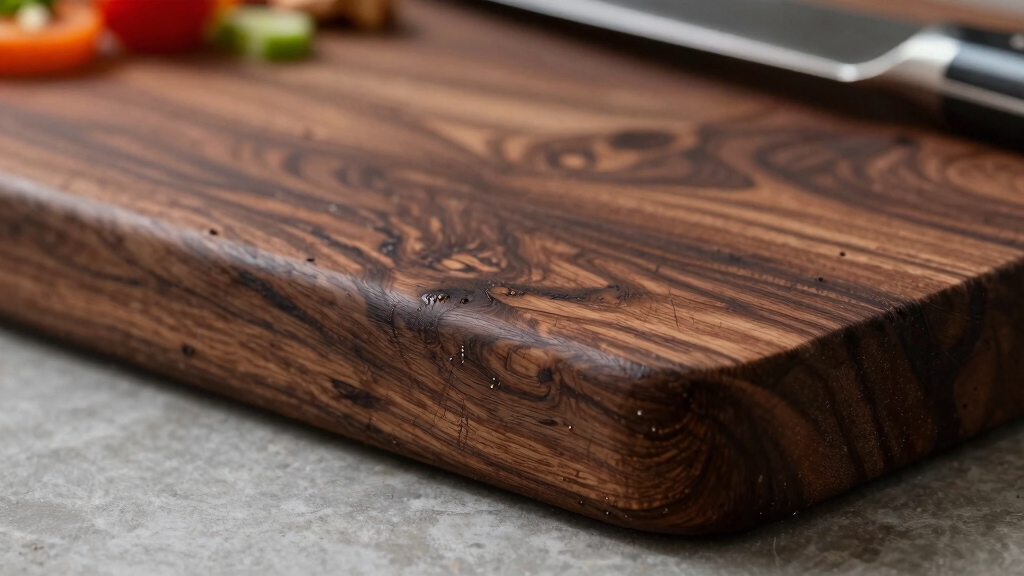
Choosing walnut for your cutting board means investing in a wood known for its balanced toughness and durability.
Walnut rates 1,010 lbf on the Janka hardness scale, fitting perfectly within the ideal 900–1,500 lbf range for cutting boards. This hardness level guarantees resistance to warping, cracking, and splitting when you maintain it properly.
Over time, walnut’s density increases, enabling it to last for decades. However, because of its moderate hardness, shallow knife marks may appear more readily than on maple or oak.
Be aware that repeated heavy impacts can compress the grain faster than on harder woods. Overall, walnut offers a durable surface that withstands daily kitchen use without compromising structural integrity, making it a reliable choice for your cutting board needs.
Its natural resistance to rot and fungal decay further enhances its longevity and hygiene.
How Walnut Cutting Board Hardness Protects Your Knives?
You’re going to love how walnut cutting boards strike that perfect balance when it comes to hardness. They’re tough enough to handle daily wear and tear, but they won’t dull your knives as quickly as some other materials might.
What’s cool about walnut is its moderate softness. Unlike harder woods like maple or oak, walnut helps keep your blade edges sharper for longer. This means you can chop and slice away without constantly worrying about your knives losing their edge.
And let’s not forget about those end grain walnut boards! They really take knife protection to the next level. The way the fibers are oriented allows your blades to slide between them instead of cutting straight across. This little feature helps reduce edge damage, making your knives last even longer.
To keep your walnut board in top shape and enhance its durability, applying a food-grade finish regularly is highly recommended.
Balanced Hardness Benefits Blades
Protecting your knives starts with selecting a cutting board that strikes the right balance in hardness, and walnut excels in this regard.
Walnut’s Janka hardness rating of 1,010 lbf places it in the ideal range. It’s firm enough to withstand daily use yet soft enough to reduce blade wear.
This balanced hardness means your knives won’t dull quickly, unlike when used on harder surfaces like maple or oak.
Additionally, walnut’s moderate density allows your blades to glide smoothly without excessive resistance, preserving sharp edges.
Walnut’s surface absorbs knife impacts without excessive compression, maintaining integrity over time.
Choosing walnut helps you maintain blade sharpness longer while providing a durable, stable cutting surface. This makes it a smart, evidence-based choice for knife care and cutting board performance.
To enhance and protect your walnut cutting board, applying food-safe natural oils like walnut or tung oil can nourish the wood and maintain its durability.
Softness Reduces Edge Dulling
Experience less blade wear over time when using walnut cutting boards, thanks to their moderate softness compared to harder woods like maple or oak.
Walnut rates around 1,010 lbf on the Janka hardness scale, striking a balance that preserves your knife’s edge while maintaining durability.
This moderate hardness means the wood compresses slightly under the blade, reducing friction and preventing the rapid dulling you might see with denser surfaces.
Unlike harder woods that resist blade impressions but cause more edge degradation, walnut’s gentler surface absorbs impact, extending your knives’ sharpness.
By minimizing micro-abrasions and edge chipping, walnut cutting boards protect blades effectively during everyday chopping and slicing tasks.
This makes them a practical choice for those seeking both longevity in their tools and reliable board performance.
Additionally, walnut’s higher resistance to dents compared to cherry wood enhances its durability for frequent kitchen use.
End Grain Knife Protection
Choosing an end grain walnut cutting board means your knife blades interact primarily with vertical wood fibers that compress and separate under pressure, rather than cutting across hard surfaces.
This fiber orientation markedly reduces blade dulling because the knife edge slides between fibers instead of scraping against them.
Walnut’s Janka hardness of 1,010 lbf strikes a balance. It’s firm enough to resist deep gouges yet soft enough to avoid wearing down your knives quickly.
The end grain’s natural self-healing properties also close shallow cuts, maintaining a smoother surface that further protects blades.
Compared to harder woods like maple or oak, walnut’s moderate hardness and end grain design create a gentler cutting experience.
This extends your knives’ sharpness while ensuring durability and longevity for the board itself.
Additionally, proper cleaning and regular oiling are essential to maintain the board’s hygiene and longevity.
Why Walnut Boards Are Great for Cutting and Serving?
You’re going to love walnut boards! They’re not just durable; they can last for decades if you take care of them. Seriously, they resist warping like a champ.
And here’s the thing: their balanced hardness is a game changer for your knives. You won’t have to worry about them dulling too quickly, and cutting on a walnut board just feels nice.
Plus, let’s talk about aesthetics. Those rich, deep tones and gorgeous grain patterns? They make these boards perfect for serving, too. So, you’re not just getting a tool for your kitchen; you’re adding a piece of functional beauty!
Pairing walnut with lighter woods like maple or ash can create a stunning contrast that enhances its natural beauty and warmth, making your cutting board even more visually appealing as part of your kitchen decor. lighter woods
Durability and Longevity
Because walnut rates around 1,010 lbf on the Janka hardness scale, it strikes an ideal balance of durability and resistance to wear for cutting boards.
This moderate hardness helps walnut resist warping, cracking, and splitting when you maintain it properly.
Over time, walnut wood becomes denser, allowing your board to last for decades under regular use.
While shallow knife marks may appear more readily than on harder woods like maple, these marks don’t compromise the board’s structural integrity.
Walnut’s grain compresses gradually under heavy impacts, so avoid excessive force from cleavers to extend longevity.
With consistent oiling and care, you’ll preserve walnut’s resilience and prevent moisture damage, making it a reliable, long-lasting choice for both cutting and serving tasks.
For finishing and maintaining walnut cutting boards, using an oil-based finish like Danish Oil enhances the wood’s natural grain and provides durable protection.
Knife-Friendly Surface
Walnut boards consistently provide a knife-friendly surface by balancing hardness and durability, which helps preserve your blades over time.
With a Janka hardness of 1,010 lbf, walnut sits comfortably in the ideal range for cutting boards. It offers enough resistance to prevent deep gouges but remains soft enough to avoid dulling your knives quickly.
Compared to harder woods like maple or oak, walnut’s moderate hardness means your blades stay sharper longer. The surface produces less noise and feels more comfortable under your knife.
If you choose end grain walnut, the vertical fibers allow blades to slide between fibers, reducing wear on edges.
Although repeated heavy impacts compress the grain faster, regular maintenance guarantees walnut boards remain a reliable, blade-friendly choice in your kitchen.
For optimal longevity and protection, applying tung oil finish can enhance walnut’s durability and water resistance while maintaining its knife-friendly properties.
Elegant Serving Appeal
Bringing out the natural beauty of your kitchen setup, walnut cutting boards double as elegant serving pieces that elevate both function and style. Their rich, deep brown tones and distinctive grain patterns make them visually appealing for presenting charcuterie or appetizers.
Walnut’s moderate hardness guarantees durability while maintaining a refined surface that complements any dining setting. You can rely on these boards not only for cutting but also for sophisticated serving without compromising aesthetics or function.
| Feature | Benefit | Evidence |
|---|---|---|
| Rich color & grain | Visual appeal | Natural deep brown tones |
| Dual-purpose use | Functional & elegant | Serves as cutting & serving |
| Durability | Long-lasting beauty | Resists warping, lasts decades |
For kitchen use, applying a food-safe finish ensures protection while maintaining the board’s natural beauty and safety.
How to Maintain Walnut Cutting Boards for Long Life?
Maintaining your walnut cutting board requires consistent care to preserve its durability and appearance over time.
You should oil it periodically with food-safe mineral oil or a wood conditioner to counteract walnut’s porous grain, which absorbs moisture and oils.
Avoid soaking or putting the board in a dishwasher, as prolonged water exposure leads to warping or cracking.
After washing with mild soap and water, dry it immediately.
Light sanding can restore surface smoothness if knife marks accumulate, but don’t overdo it to prevent thinning the board.
Proper maintenance leverages walnut’s natural resilience, preventing compression of its grain and preserving its balanced hardness.
This protects your knives while ensuring longevity.
These steps maximize your board’s lifespan, keeping it functional and visually appealing for decades.
For enhanced protection and moisture resistance, consider applying food-safe tung oil periodically as part of your maintenance routine.
Understanding Walnut Cutting Board Construction Types
After establishing effective care routines, it’s important to understand how different construction types affect your cutting board’s performance and durability.
Walnut cutting boards typically come in end grain, edge grain, and face grain constructions, each with distinct characteristics influencing longevity and knife-friendliness.
| Construction Type | Durability | Maintenance |
|---|---|---|
| End Grain | Highest; vertical fibers absorb cuts, self-healing | Requires regular oiling, higher cost |
| Edge Grain | Moderate; horizontal grain resists warping | Easier upkeep, less expensive |
| Face Grain | Least durable; prone to scratches and dents | Frequent sanding needed |
Selecting the right type depends on your balance between durability, maintenance effort, and budget. End grain offers superior longevity, while edge grain provides practical value.
How Walnut Stands Up to Water and Warping?
Walnut cutting boards demonstrate a notable resistance to warping and cracking when properly cared for, thanks to their inherent flexibility and moderate porosity.
While walnut is more porous than some hardwoods, its flexibility and density minimize deformation under typical kitchen moisture exposure. You must avoid prolonged water contact and always dry the board immediately after washing to prevent swelling or warping.
Regular application of food-safe mineral oil fills the wood’s pores, enhancing moisture resistance and maintaining structural integrity.
Compared to softer woods, walnut’s moderate hardness helps it withstand stresses from liquid absorption without compromising shape.
Over time, its dense fibers become more compact, improving stability. With consistent maintenance, you can expect a walnut board to resist water-induced damage effectively, avoiding common issues like cracking or significant warping.
How Walnut Compares to Maple, Oak, and Bamboo?
Understanding how walnut holds up against moisture and warping sets the stage for evaluating its performance relative to other popular cutting board materials like maple, oak, and bamboo.
Walnut offers a moderate hardness of 1,010 lbf on the Janka scale, softer than maple and oak but harder than bamboo. This balance protects your knives while ensuring durability.
Compared to bamboo, walnut is less prone to splintering but requires more maintenance due to its porosity. Here’s what you should consider:
- Walnut resists warping better than bamboo but less than oak.
- Softer surface reduces knife dulling compared to maple and oak.
- Rich dark tones hide stains better than lighter woods.
- Requires regular oiling unlike bamboo, which is more water-resistant.
- End grain walnut boards provide superior longevity versus common edge grain maple.
Is Investing in a Walnut Cutting Board Worth It?
Investing in a walnut cutting board offers a blend of durability, knife-friendliness, and aesthetic appeal that few alternatives can match.
Walnut’s Janka hardness of 1,010 lbf positions it well within the ideal range for cutting boards. This ensures resistance to warping and cracking with proper maintenance.
You’ll appreciate how its moderate hardness protects your knives longer than harder woods like maple or oak. The rich brown tones and natural grain patterns add elegance, making it both functional and decorative.
While walnut boards come at a premium price, their longevity—lasting decades when cared for—delivers cost-effectiveness over time.
Keep in mind that regular oiling and careful drying are essential to prevent damage. Overall, the investment pays off if you value quality, durability, and style in your kitchen tools.
Frequently Asked Questions
Can Walnut Cutting Boards Be Used for Raw Meat Safely?
You can use walnut cutting boards for raw meat safely, but you must maintain them properly.
Walnut’s moderate porosity means it can absorb liquids, so clean the board thoroughly after each use with hot, soapy water and dry it immediately.
Regular oiling prevents cracking and warping, preserving its durability.
Avoid dishwasher use to maintain integrity.
With proper hygiene and maintenance, walnut boards remain safe and functional for raw meat preparation.
Do Walnut Cutting Boards Have Any Natural Antibacterial Properties?
Walnut cutting boards don’t possess strong natural antibacterial properties like some other woods, so you can’t rely on them alone to kill bacteria.
You’ll need to clean them properly after handling raw meat to prevent contamination.
Regular oiling helps maintain the wood’s surface integrity, reducing bacterial harboring spots.
Using proper sanitation practices alongside walnut boards guarantees safe food prep rather than depending solely on any inherent antimicrobial effects.
Are Walnut Boards Suitable for Commercial Kitchen Use?
Oh sure, if you want your commercial kitchen to sparkle with walnut’s rich charm while quietly demanding royal maintenance!
Walnut boards suit commercial use only if you’re ready for regular oiling and careful drying to prevent warping.
Their moderate hardness protects knives well, but repeated heavy chopping can wear the surface faster than harder woods.
They’re durable and elegant but expect higher costs and upkeep compared to typical commercial-grade boards.
How Heavy Are Typical Walnut Cutting Boards?
Typical walnut cutting boards weigh between 3 to 7 pounds, depending on size and thickness.
Smaller boards around 12×8 inches tend to be lighter, about 3 to 4 pounds.
Larger or thicker end grain boards can weigh 6 to 7 pounds or more.
Walnut’s density and durability contribute to this moderate weight, balancing sturdiness without being overly heavy.
This allows you to comfortably handle it during daily kitchen tasks.
Can Walnut Cutting Boards Be Customized or Engraved?
Think of a walnut cutting board as a quiet canvas, ready for your story to be etched in wood.
Yes, you can customize and engrave it with precision. Walnut’s fine grain and moderate hardness allow detailed engravings without compromising durability.
Its surface holds personalized designs well, making it both functional art and a lasting keepsake. Just make certain to use professional laser or hand engraving techniques to maintain the board’s integrity and beauty.
Invest in Quality with a Walnut Cutting Board
You’ll appreciate walnut cutting boards for their impressive hardness, ranking around 1010 on the Janka scale. They are tough enough to protect your knives yet gentle enough to avoid dulling them quickly.
Their durability and water resistance make them a reliable kitchen companion, especially compared to softer woods like maple. With proper maintenance, walnut boards offer long-lasting performance and aesthetic appeal.
This makes them a smart, evidence-backed investment for both cutting and serving.