Teak Oil vs Tung Oil: Choosing the Right Wood Finish
You’ll find teak oil is a fast-drying synthetic blend with resins providing immediate surface toughness and an amber hue. However, it needs more frequent maintenance, especially outdoors.
Tung oil, on the other hand, is a pure natural oil that cures slowly into a hard, deeply penetrating, waterproof finish with stable, natural color preservation and superior long-term durability.
Both have distinct application and drying protocols, so explore their detailed differences to select the best fit for your wood project.
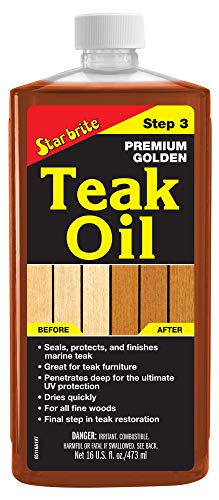
- Advanced tung oil polymers provide maximum protection for teak and other fine woods
- Contains UV absorbers to protect against sun damage, weathering and fading
- Easy to use, fast drying; ideal for boats, pools and wood furniture too


- Easy to Use – Tung oil is a natural oil recognized by craftsmen to offer the ultimate hand-rubbed…
- Permeates – Unlike other finishes that form a film on the wood’s surface, tung oil penetrates deep…
- Protects – Resistant to moisture, alcohol, oil, and everyday wear for lasting beauty and protection…
Key Takeaways
- Tung oil is a pure natural oil that penetrates deeply, curing to a durable, waterproof finish ideal for long-term protection.
- Teak oil is a synthetic blend with resins that dry faster and provide immediate surface toughness but require more frequent maintenance.
- Tung oil maintains wood’s natural color and grain subtly, while teak oil imparts an amber hue and darkens porous woods.
- Tung oil needs multiple thin coats with long drying times, whereas teak oil applies quickly and dries within hours.
- Tung oil is eco-friendly and food-safe; teak oil contains synthetic additives, requiring careful handling and more frequent reapplication.
Quick Comparison of Teak Oil and Tung Oil
| Feature | Teak Oil | Tung Oil |
|---|---|---|
| Composition | Synthetic blend with resins and oils | Pure natural oil from tung tree seeds |
| Drying Time | Fast (hours) | Slow (days per coat) |
| Durability | Hard surface layer, needs frequent maintenance | Deep penetration, long-lasting durability |
| Water Resistance | Good, surface-level protection | Superior, forms waterproof barrier |
| Color Effect | Imparts amber hue, enhances grain | Nearly colorless, preserves natural wood tone |
| Application | Quick, fewer steps, ideal for fast projects | Requires multiple thin coats with sanding between layers |
| Maintenance | Frequent reapplication (every 3–6 months outdoors) | Less frequent (1–2 years) with proper curing |
| Eco-Friendliness & Safety | Contains synthetic additives, handle with care | Eco-friendly, non-toxic, food-safe finish |
| UV Stability | Moderate, may darken over time | Excellent, color remains stable |
What Are the Key Differences Between Teak Oil and Tung Oil?
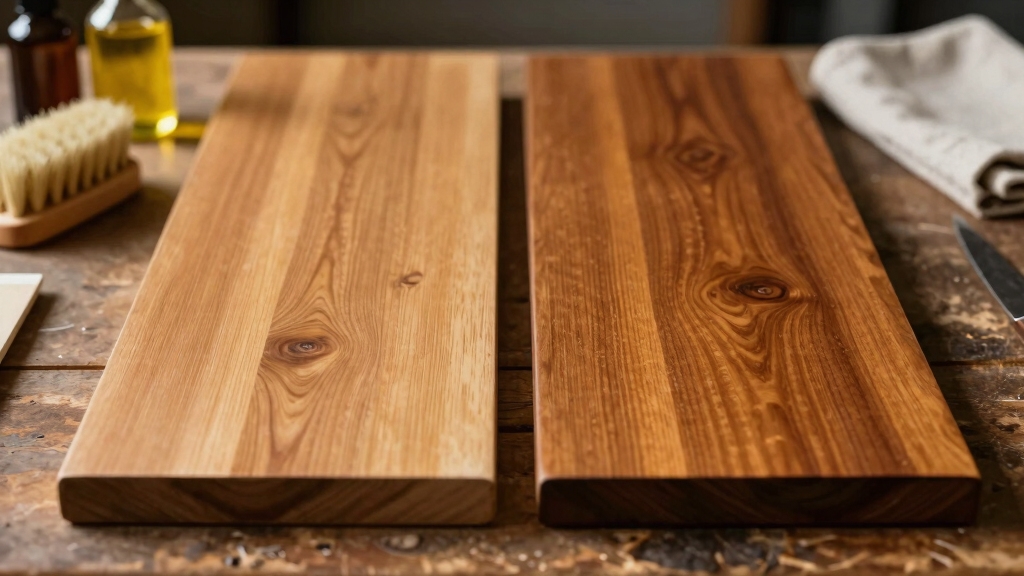
While both teak oil and tung oil serve to protect and enhance wood surfaces, they differ fundamentally in composition, durability, application, and performance.
Tung oil is a pure, natural oil pressed from tung tree seeds, curing through oxidation to form a hard, water-resistant finish without additives.
In contrast, teak oil is a synthetic blend, typically combining linseed or tung oil with resins, varnishes, and sometimes urethane to increase hardness and surface protection.
Teak oil’s formulation targets dense hardwoods like teak but originates from various ingredients, not teak wood itself.
You’ll notice tung oil preserves wood’s natural color due to its nearly colorless nature.
In contrast, teak oil imparts an amber hue, enhancing grain and warmth.
These compositional differences impact how you apply, maintain, and ultimately use each oil for wood finishing.
Tung oil is favored for its food-safe finish and natural deep penetration that offers durable moisture and stain resistance without forming a surface film.
How Do Tung Oil and Teak Oil Compare in Durability?
Because durability is essential for wood finishes, understanding how tung oil and teak oil perform under stress is essential.
Tung oil, when fully cured, forms a harder, more durable finish than teak oil due to its pure plant-based composition that penetrates deeply and oxidizes to create a robust protective layer.
Tung oil cures into a harder, more durable finish by deeply penetrating and oxidizing for robust protection.
This finish resists environmental elements effectively and requires less frequent reapplication.
Conversely, teak oil, a blend of oils and synthetic resins, delivers a tougher, more scratch-resistant surface, especially on hardwoods, but tends to need more frequent maintenance to sustain its protective qualities.
While teak oil’s hardness offers immediate surface resilience, tung oil’s longevity and structural integrity make it a superior choice for long-term durability in demanding applications.
Additionally, unlike teak oil, tung oil cures into a flexible, crosslinked film that improves moisture repellence and requires multiple coats for optimal protection.
Which Oil Offers Better Water Resistance and Moisture Protection?
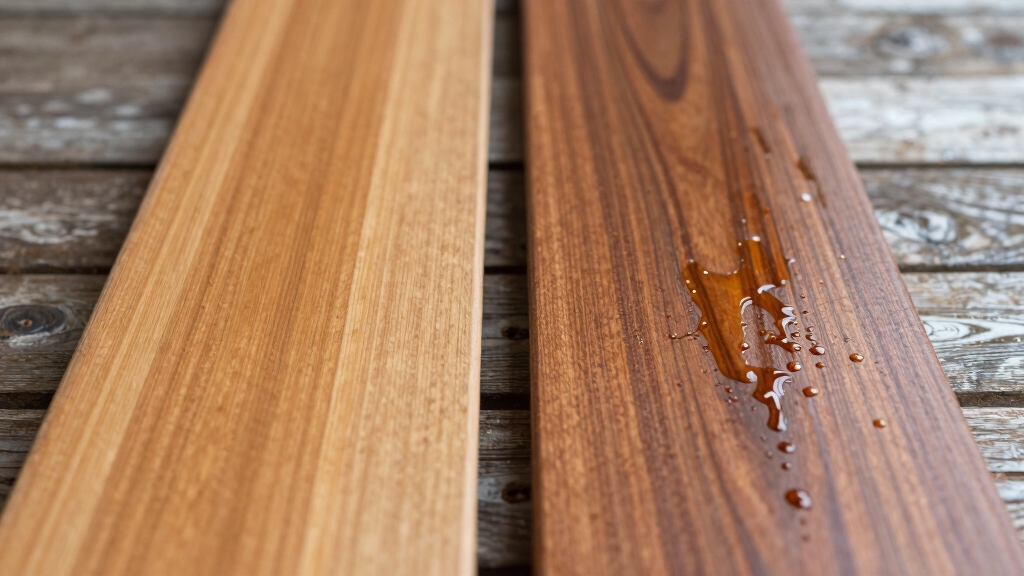
When it comes to water resistance, tung oil really takes the lead over teak oil. You see, tung oil creates a deeply penetrating, waterproof barrier that works wonders in high-humidity environments. It’s like a shield for your wood!
On the other hand, teak oil does provide decent moisture protection and helps keep mold at bay. But here’s the catch: it needs to be reapplied more frequently to keep doing its job effectively. So, if you’re thinking about how your wood will handle moisture and humidity, it’s important to keep these differences in mind. Choosing the right oil can make all the difference! For the best durability, it’s also important to prepare the wood properly before application, including surface readiness to ensure optimal oil absorption.
Water Resistance Comparison
If you need superior water resistance and moisture protection, tung oil stands out as the more effective choice. Its pure, natural composition allows it to penetrate deeply into wood fibers, creating a dense, waterproof barrier that resists moisture, UV rays, and environmental wear.
This barrier is impervious to water, alcohol, and various acids, making tung oil highly reliable in high-humidity or wet conditions. Conversely, teak oil, a blend of oils and synthetic resins, offers good moisture protection but lacks the complete waterproofing tung oil provides.
While teak oil helps prevent mold and surface moisture damage, it forms a less penetrative, more superficial layer that requires frequent reapplication. For long-term, robust water resistance, tung oil’s ability to cure hard and dense makes it the superior option. Proper application and curing over a period of at least 30 days are essential to achieve this durable, waterproof film.
Moisture Protection Levels
Although both tung oil and teak oil offer moisture protection, tung oil provides superior water resistance due to its ability to penetrate deeply into wood fibers and form a dense, waterproof barrier.
When applied correctly with multiple thin coats, tung oil cures through oxidation, creating an impervious layer that resists water, alcohol, and acids.
This deep penetration prevents moisture ingress more effectively than teak oil, which primarily sits closer to the surface due to its resin and varnish additives.
Teak oil does provide good protection against mold and surface moisture but requires more frequent reapplication to maintain efficacy.
If your priority is long-lasting moisture protection with minimal upkeep, tung oil’s natural, plant-based composition guarantees enhanced resistance, making it the best choice for environments exposed to water and humidity.
Additionally, tung oil’s ability to polymerize and form a durable, elastic water-resistant film ensures superior protection against environmental damage compared to surface-level finishes.
Durability In Humidity
Understanding moisture protection is key, but evaluating durability in humid conditions reveals how each oil performs over time under persistent exposure to water and moisture.
Tung oil outperforms teak oil by penetrating deeply and curing into a hard, waterproof barrier that resists humidity, UV damage, and wear.
Teak oil, while offering good moisture resistance and mold prevention, relies on surface coatings that may degrade faster in sustained dampness.
When you choose between them, consider these factors:
Tung oil forms a durable, water-impervious film that minimizes swelling and warping in humid environments.
Teak oil’s synthetic additives provide surface toughness but require frequent reapplication to maintain protection.
Tung oil’s natural oxidation process guarantees long-term integrity even under continuous moisture exposure.
For lasting humidity resistance, tung oil delivers superior durability and minimal maintenance.
Additionally, the polymerization curing process of tung oil ensures a stable and water-resistant finish that integrates with the wood fibers for enhanced protection.
How Do These Oils Affect Wood Color and Appearance?
When you apply tung oil, you’ll notice it remains nearly colorless, preserving the wood’s natural hue without causing discoloration. Its molecular structure allows deep penetration, enhancing the grain subtly while maintaining the original tone.
Tung oil also maintains color stability under prolonged UV exposure, preventing yellowing or darkening. In contrast, teak oil, with its amber resin blend, tends to enrich wood grain prominently, often darkening porous woods and imparting a warmer, richer tone.
This is due to added varnishes and resins that sit partially on the surface, reflecting light differently. If you want a finish that highlights wood grain while adding warmth, teak oil suits well.
For a natural, unaltered look with long-term color fidelity, tung oil is technically superior.
Applying these oils properly involves using a lint-free cloth in a figure-eight pattern along the grain to ensure even absorption and a lasting finish, as recommended in expert oil application techniques.
How Do Application and Drying Times Differ?
Applying tung oil involves multiple careful steps that demand patience and precision. You’ll need to apply five to seven thin coats, allowing each layer to cure properly. Each coat requires wiping off excess oil and light sanding before the next application.
Drying times for pure tung oil can extend two to three days per coat, guaranteeing thorough oxidation and polymerization for durability. Polymerized tung oil speeds this process but still demands attention.
In contrast, teak oil is simpler and faster to apply, making it ideal for outdoor furniture maintenance. Its drying time is quicker, often within hours.
Tung oil needs extensive curing: multiple coats, sanding, and several days drying each. Teak oil allows for faster reapplication and quicker drying. Proper technique with tung oil guarantees a harder, longer-lasting finish. Unlike oils, using a UV-resistant epoxy resin provides a durable, clear, and water-resistant finish that preserves wood beauty over time.
How to Maintain Wood Finished With Teak or Tung Oil?
To keep your wood finished with teak or tung oil looking great, it’s important to clean it regularly. Just grab a soft cloth and some mild detergent—this will help you avoid damaging that protective layer.
Now, when it comes to teak oil, you’ll need to reapply it more often since it has a thinner film. On the other hand, tung oil penetrates deeply, so you can go a bit longer between treatments.
Also, don’t forget about storage! It’s best to keep your finished wood away from extreme humidity and direct sunlight. This will really help preserve its durability and appearance over time.
For optimal results, consider applying multiple coats and allowing adequate drying time between layers to enhance water resistance and protection.
Cleaning Techniques
Maintaining wood finished with teak or tung oil depends heavily on careful cleaning techniques that preserve the integrity of each finish. You’ll want to avoid harsh chemicals or abrasive materials, as these can degrade the oils and compromise protection.
Instead, use gentle methods tailored to the oil type. For both finishes, dust regularly with a soft, dry cloth to prevent buildup. Clean spills promptly using a damp cloth with mild soap, ensuring you dry the surface thoroughly to avoid moisture penetration.
Avoid pressure washing or scrubbing hard, which can remove the protective oil layer and expose wood to damage. Regular maintenance with food-grade mineral oils can help restore natural sheen and prolong the life of the finish.
Reapplication Frequency
Regularly evaluating the condition of your wood finish is essential for determining when reapplication is necessary.
With teak oil, especially on outdoor furniture, you’ll likely need to reapply every 3 to 6 months due to its synthetic blend wearing down under UV exposure and moisture.
Tung oil, by contrast, cures into a harder, more water-resistant layer, allowing you to extend reapplication intervals to 1–2 years, depending on environmental stress.
To maintain protection, inspect for signs like surface dullness, water absorption, or increased roughness.
When these appear, lightly sand the surface and apply a thin fresh coat.
Consistent, timely reapplication preserves the finish’s integrity, enhances durability, and protects the wood from moisture, cracking, and degradation over time.
Storage And Protection
Although both teak and tung oil finishes offer protection, you must store and shield the wood properly to preserve their effectiveness.
Store finished items in a dry, well-ventilated area to prevent moisture buildup, which can weaken the oil’s protective barrier.
Avoid prolonged UV exposure, as it can degrade teak oil’s resin components and gradually alter the finish.
For outdoor wood, cover or bring it indoors during extreme weather to maintain the integrity of the oil finish.
To maintain your wood’s finish, remember to:
- Clean surfaces regularly with a soft cloth to remove dust and contaminants without abrading the finish.
- Reapply oil as needed after thorough surface preparation, especially for teak oil, which wears faster outdoors.
- Avoid harsh chemicals or abrasive tools that can strip or damage the oil finish’s protective layer.
When Should You Choose Tung Oil Over Teak Oil?
If you prioritize a durable, water-resistant finish that preserves the wood’s natural color without yellowing or darkening, you should choose tung oil over teak oil.
Tung oil penetrates deeply, curing through oxidation to form a hard, waterproof barrier that resists moisture, UV rays, and environmental wear.
Tung oil cures through oxidation, creating a durable, waterproof barrier that protects against moisture, UV rays, and wear.
Its nearly colorless nature maintains wood’s original hue, unlike teak oil, which often imparts an amber tone and darkens porous woods.
You should also opt for tung oil when you want long-lasting protection with minimal maintenance since it requires less frequent reapplication than teak oil.
Additionally, tung oil’s natural composition makes it ideal for surfaces exposed to high humidity or frequent contact with water.
In contrast, teak oil’s synthetic additives and faster drying times suit quick projects but don’t match tung oil’s durability and color stability.
Are Teak Oil and Tung Oil Safe and Environmentally Friendly?
When considering safety and environmental impact, tung oil stands out as a natural, non-toxic oil extracted from tung tree seeds. This makes it an eco-friendly choice for wood finishing.
It penetrates deeply into wood fibers, allowing the surface to breathe and preventing cracking without forming a hazardous surface layer.
Teak oil, on the other hand, contains synthetic additives and resins that can introduce toxins depending on the brand and formulation.
Tung oil is safe for surfaces that contact food, while teak oil’s safety varies due to chemical additives. Its biodegradable nature reduces environmental harm during disposal and application.
Teak oil may require careful handling and disposal because of potential toxicity in its blended components.
Choosing tung oil prioritizes ecological responsibility and user safety without compromising wood protection.
What Common Mistakes Should You Avoid When Applying These Oils?
Since both tung oil and teak oil require multiple thin coats for ideal protection, applying thick layers or rushing through drying times undermines their effectiveness.
You should never skip the recommended wiping and sanding between coats, as this guarantees proper adhesion and a smooth finish.
Avoid applying oil on damp or dirty surfaces; moisture and contaminants prevent penetration and cause uneven curing.
When using tung oil, remember that each coat needs up to a week to dry fully.
Impatience leads to tacky, soft finishes.
For teak oil, despite faster drying times, avoid over-application, which can produce sticky surfaces prone to dust accumulation.
Finally, don’t neglect proper ventilation during application to prevent solvent buildup and guarantee safe, efficient curing of both oils.
Frequently Asked Questions
Can Teak Oil or Tung Oil Be Used on Non-Wood Surfaces?
You generally shouldn’t use teak or tung oil on non-wood surfaces.
Both oils are formulated to penetrate wood fibers, enhancing durability and moisture resistance.
On metals, plastics, or ceramics, they won’t bond properly or provide effective protection.
Tung oil’s deep penetration and curing depend on porous materials, while teak oil’s resins require wood absorption.
For non-wood surfaces, opt for coatings designed specifically for those materials to guarantee adhesion and durability.
How Do These Oils Interact With Painted or Stained Wood?
You should avoid applying tung or teak oil directly on painted or stained wood, as these oils penetrate raw wood fibers to cure properly.
On painted surfaces, oils may not adhere well, causing peeling or uneven finishes.
With stained wood, oils can alter the color or cause blotching since they interact with the stain’s pigments.
For best results, apply oils only on bare, untreated wood to guarantee peak absorption and curing.
Are There Specific Tools Recommended for Applying Teak or Tung Oil?
You’ll want to use lint-free cloths or natural bristle brushes for applying both teak and tung oil to guarantee even coverage without streaks.
Foam brushes work well for detailed areas. For tung oil, multiple thin coats require sanding with fine-grit sandpaper between applications, so keep that handy.
Rubber gloves protect your skin, and a clean, dust-free environment aids drying. Avoid synthetic brushes for tung oil to prevent unwanted chemical reactions.
Can Either Oil Be Mixed With Other Finishes or Sealants?
You can mix teak oil with certain varnishes or urethane-based sealants to enhance hardness and durability, as it’s already a blend of oils and resins.
However, pure tung oil is best used on its own because it cures through oxidation and mixing it with other finishes may interfere with this process.
If you’re considering additives, use polymerized tung oil variants designed for compatibility with other finishes to maintain proper curing and protection.
What Are the Storage Requirements for Leftover Teak or Tung Oil?
You should store leftover teak or tung oil in tightly sealed, airtight containers to prevent oxidation and contamination.
Keep them in a cool, dry place away from direct sunlight and heat sources to maintain their chemical stability.
Avoid metal containers for tung oil, as it can react; use glass or plastic instead.
Label the containers with the date of opening. Proper storage extends shelf life and preserves the oils’ protective properties for future use.
Choose the Right Finish for Your Wood Projects
Choosing between teak oil and tung oil depends on your wood’s needs and environment. Tung oil offers superior durability and water resistance, like a sturdy shield, while teak oil enhances color with quicker drying times.
Both require proper maintenance and careful application to avoid common pitfalls. Understanding their distinct properties guarantees you protect and beautify your wood effectively, making your choice as precise as selecting the right tool for a specialized task.
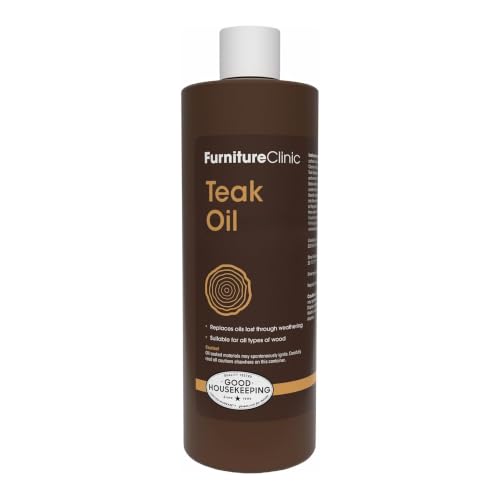
- ENHANCES THE BEAUTY OF THE WOOD: Teak Oil restores the beauty of grey, old and weathered teak…
- PROVIDES PROTECTION: Our high-quality teak oil will protect your indoor and outdoor wooden products…
- SEAL & RESTORES: Use this wood oil to seal unfinished or bare teak and maintain it on an ongoing…

- Crafted from 100% pure tung oil, derived naturally from plant nuts, this wood finish is non-toxic…
- Versatile Tung Oil Finish for Indoor & Outdoor Wood:This multi-purpose tung oil for wood is perfect…
- Durable, Water-Resistant Tung Oil Finish:Our tung oil finish creates a hard, wear-resistant surface…
Last update on 2026-09-08 / Affiliate links / Images from Amazon Product Advertising API